Infineon-Startup-Challenge zu Humanoiden: AdapTronics gewinnt, COSMOKE aus Korea Zweiter
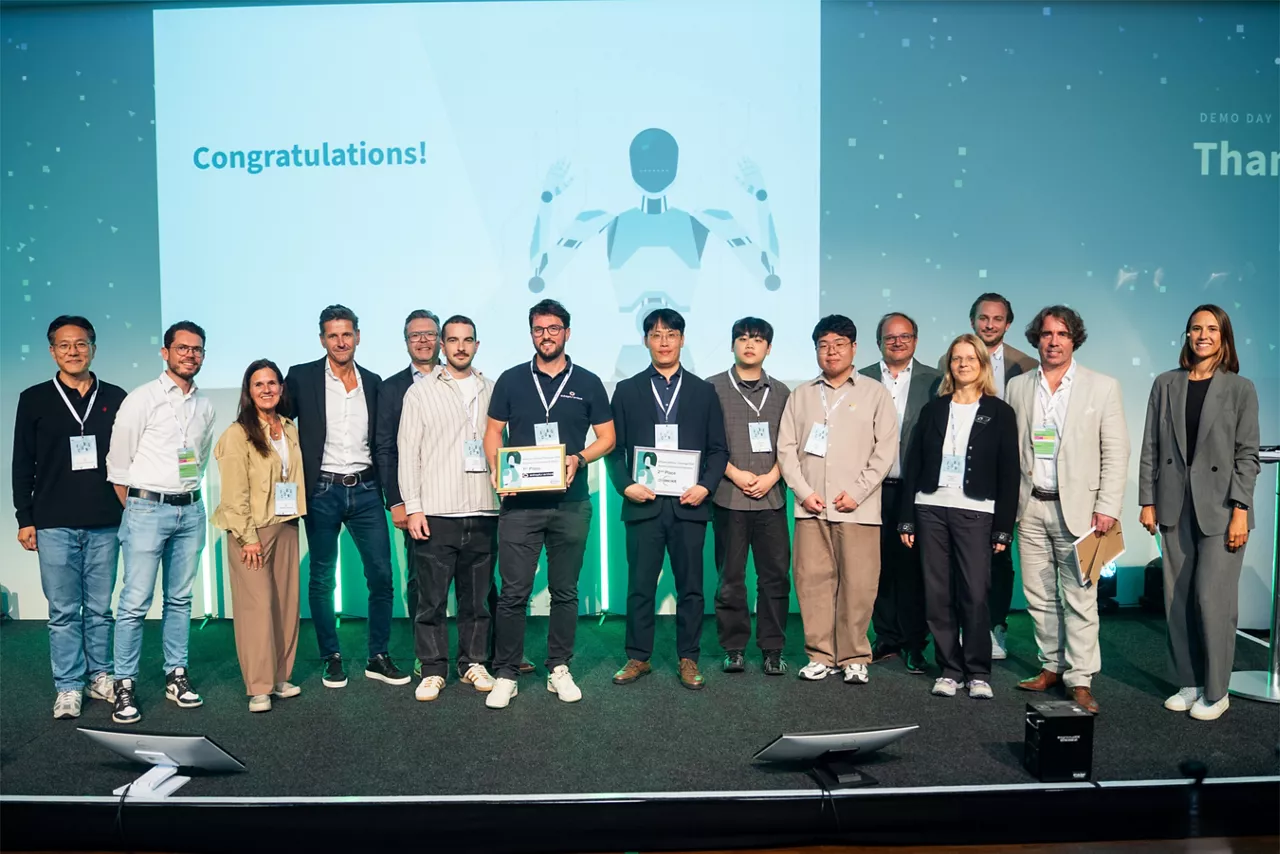
Das italienische Start-up AdapTronics hat die Infineon Startup Challenge 2026 zu Humanoiden gewonnen, vor COSMOKE aus Südkorea mit der magnetischen Tasthaut COSKIN und TECHiFAB aus Deutschland mit Motorsteuerung per In-Memory-Computing, teilte Infineon am 19.
Oktober mit. Über 100 Start-ups aus 29 Ländern bewarben sich, 15 pitchten in Graz.
Infineon Technologies hat am 19. Oktober in München mitgeteilt, dass das italienische Start-up AdapTronics die Infineon Startup Challenge 2026 gewonnen hat, die in diesem Jahr Schlüsseltechnologien für humanoide Roboter zum Thema hatte. Zweiter wurde COSMOKE aus Südkorea mit COSKIN, einer flexiblen magnetischen Tasthaut, Dritter TECHiFAB aus Deutschland mit einer Echtzeit-Motorsteuerung für Roboteraktoren auf Basis von In-Memory-Computing.
Nach Angaben des Halbleiterherstellers bewarben sich mehr als 100 Start-ups aus 29 Ländern. Nach vier Monaten Entwicklung und Mentoring präsentierten 15 Finalisten am Demo Day während der Electronic Based Systems Conference (EBSCON) in Graz vor einer internationalen Jury. Infineon stellte Kits für Umweltsensorik, künstliche Haut, Motorsteuerung und visuelles Feedback sowie eigene KI-Software bereit. Preisgeld oder Beteiligungen nannte das Unternehmen nicht.
Laut Mitteilung erlaubt die Technik von AdapTronics, sehr unterschiedliche Objekte ohne Sauger oder klassische mechanische Greifer zu handhaben; genannt werden auch Logistik, Verpackung und Raumfahrtrobotik. COSKIN soll Humanoiden Berührung, Druck und Kontakt erfassen lassen, für feinfühlige Manipulation und sicherere Zusammenarbeit mit Menschen. AdapTronics wird in das Startup Co-Innovation Program aufgenommen, das im November bei einer Startup Night in München startet; mit weiteren Finalisten sei man im Gespräch.
MEKAWIRE-Analyse: Warum ein Chiphersteller Roboterhände und Tasthaut auswählt
Infineon setzt nicht auf den ganzen Roboter, sondern auf Hand und Gelenk, wo seine Sensoren und Leistungshalbleiter in größter Stückzahl stecken.
MEKAWIRE berichtete am 19. Oktober, dass Infineon Mikrocontroller, GaN-Leistungsstufen und 3D-Magnetsensoren für Humanoidenhände anbietet; eine magnetische Tasthaut ist ein naheliegender Abnehmer genau dieser Sensoren. Dirk Geiger, Leiter des Humanoid-Robotics-Teams, sagte, kein Unternehmen könne die Mischung aus Leistung, Sensorik, Vernetzung, Sicherheit und KI-Rechenleistung allein beherrschen. Das Gegenargument ist die Größenordnung: Im MEKAWIRE-Erklärstück vom 16. Oktober ist die größte Einzelwette im Bereich Robotertastsinn die Serie A von Rhoda AI über 450 Millionen Dollar; ein Platz im Co-Innovation-Programm ist eher technische Unterstützung als Kapital.
Für die deutsche Antriebstechnik ist TECHiFABs dritter Platz das interessantere Signal, weil Rechenlogik direkt in den Antriebsstrang wandert. Zu beobachten sind ein zweiter Co-Innovation-Partner aus dem Finale, die Vorstellung von AdapTronics in München im November und ein erster Kunde für COSMOKEs Tasthaut.
- 100+ applicants from 29 countries, 15 finalists, demo day at EBSCON in Graz
- TECHiFAB (Germany), in-memory-computing motor control for actuators
- COSMOKE (South Korea), COSKIN flexible magnetic tactile skin
- AdapTronics S.r.l. (Italy), gripping without suction cups or mechanical grippers
- Oct 19, 2026, Infineon press release (Munich)
- AdapTronics joins Infineon Startup Co-Innovation Program, kick-off in Munich in November
- Prize money, investment terms
Warum das wichtig ist
The challenge shows where a component supplier thinks humanoid value will sit: in grasping, touch and joint control, the subsystems that consume sensors, microcontrollers and power stages in volume. Infineon gave finalists its own sensing, artificial-skin and motor-control kits, so every winning design is already built around Infineon parts. That is a cheap way to make its chips the default inside start-up hardware before robot makers freeze their bills of materials.
For robot makers the signal is that the hand and skin layer is still open. None of the three winners is a robot company; each sells a subsystem, which is the layer where Korean, Chinese and European start-ups can still compete without building a whole humanoid.
Wettbewerbsanalyse
COSMOKE's magnetic tactile skin competes with optical and visuo-tactile approaches such as Jodell's sensors launched at CIIF on Oct 16 and Rhoda AI's in-house tactile sensor described on Oct 13, both reported by MEKAWIRE. Magnetic skins are thin and flexible, which suits fingers and palms; optical sensors give richer contact images but are bulkier.
AdapTronics' grasping approach competes with suction and mechanical grippers from established automation suppliers, and with dexterous hands from Tesollo, Wonik Robotics and Chinese makers. The release does not say how its method works physically, so a technical comparison is not yet possible.
Bewertungskontext
No valuation, funding round or prize amount was disclosed for any of the three start-ups. For scale, MEKAWIRE's verified robot-touch records run from Tangent Robotics' $4.5 million pre-seed to Rhoda AI's $450 million Series A, and an Infineon co-innovation slot is best read as access to engineering support and a supply relationship rather than capital.
Folgen für die Lieferkette
The kits Infineon supplied (environmental sensing, artificial skin, motor control, visual feedback) correspond to its magnetic sensors, microcontrollers and power semiconductors. A tactile skin such as COSKIN needs many magnetic sensing points per hand, and in-memory motor control sits next to the gate drivers and power stages in every joint. If any winner reaches production, the bill of materials would be Infineon-heavy by design.
Worauf jetzt zu achten ist
1) The Startup Night in Munich in November, where AdapTronics' co-innovation work formally starts. 2) Any second co-innovation agreement with COSMOKE or TECHiFAB, which Infineon said it is discussing. 3) A robot-hand or humanoid customer naming COSMOKE's skin or AdapTronics' gripper.
Analystensicht
Thesis: Infineon is buying optionality on the humanoid hand and joint at very low cost. Confidence: medium, because the release gives no money figures and none of the winners has a disclosed customer. What would change our view: a disclosed investment or a production supply agreement, which would make this a supply-chain move rather than a marketing programme.
Offene Fragen
How many tactile sensing points does COSKIN use per square centimetre, and which Infineon sensor family does it rely on? Will Infineon take equity in AdapTronics through the co-innovation programme? Which robot makers sat on the jury or have tested the finalists' designs?