Infineon's humanoid startup prize goes to Italy's AdapTronics; Korea's COSMOKE is second
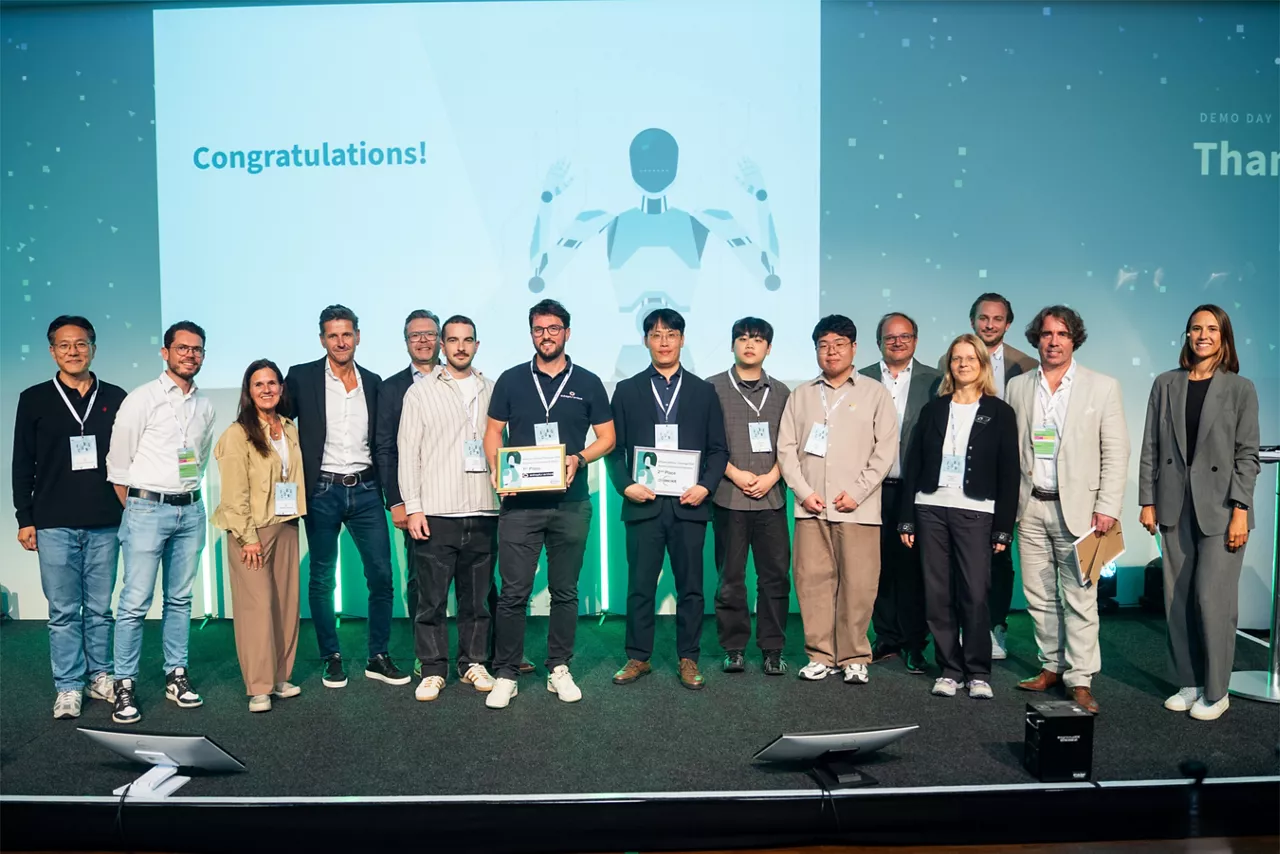
Italian gripping-technology start-up AdapTronics won Infineon's 2026 startup challenge on humanoid robotics, ahead of South Korea's COSMOKE with its COSKIN magnetic tactile skin and Germany's TECHiFAB with in-memory-computing motor control, Infineon said in a press release dated Oct 19.
More than 100 start-ups from 29 countries applied and 15 pitched at a demo day in Graz; AdapTronics joins Infineon's co-innovation programme, with a kick-off in Munich in November.
Infineon Technologies said in a press release dated Oct 19 in Munich that AdapTronics, an Italian start-up, has won the 2026 Infineon Startup Challenge, which this year was built around components for humanoid robots. Second place went to COSMOKE of South Korea for COSKIN, a flexible magnetic tactile-sensing skin, and third to TECHiFAB of Germany for motor control of robot actuators based on in-memory computing.
The chipmaker said more than 100 start-ups from 29 countries applied and 15 were chosen to pitch to an international jury at a demo day held during the Electronic Based Systems Conference (EBSCON) in Graz, Austria, after four months of development and mentoring. Infineon gave the finalists hardware kits for environmental sensing, artificial skin, motor control and visual feedback, plus its own AI development software. It did not disclose prize money or any equity investment.
According to the release, AdapTronics' technology lets a robot handle a wide range of objects without suction cups or conventional mechanical grippers, with logistics, packaging and space robotics named as further uses. COSKIN is meant to give humanoids a sense of touch, pressure and contact for dexterous manipulation and safer work next to people. AdapTronics now enters Infineon's Startup Co-Innovation Program, which formally starts at a Startup Night in Munich in November, and Infineon said it continues to talk to other finalists.
Why a chipmaker is scouting robot hands and skin
Infineon is using the challenge to seed the parts of a humanoid where its sensors and power chips are most exposed, the hand and the joint, rather than the robot itself.
The winners map onto the pitch Infineon made to robot makers this month. MEKAWIRE reported on Oct 19 that Infineon is selling microcontrollers, GaN power stages and 3D magnetic sensors for humanoid hands, and a magnetic tactile skin is a natural customer for exactly those sensors. Dirk Geiger, who leads Infineon's humanoid robotics team, said in the release that no single company can master a humanoid's mix of power, sensing, connectivity, safety and AI compute. The counter-argument is scale: a co-innovation slot is a small commitment next to the sums now going into robot touch, where MEKAWIRE's Oct 16 explainer counts Rhoda AI's $450 million Series A and the KRW 350 billion Wonik Robotics raised for a hand factory among the largest bets.
For Korea, a second place in a European chipmaker's programme gives a little-known tactile start-up direct access to a global sensor supplier, at a time when Korean hand makers such as Tesollo and Wonik Robotics are scaling up. What to watch: whether Infineon announces a second co-innovation partner from the finalists, what AdapTronics shows at the Munich kick-off in November, and whether COSMOKE names a robot-hand customer.
- 100+ applicants from 29 countries, 15 finalists, demo day at EBSCON in Graz
- TECHiFAB (Germany), in-memory-computing motor control for actuators
- COSMOKE (South Korea), COSKIN flexible magnetic tactile skin
- AdapTronics S.r.l. (Italy), gripping without suction cups or mechanical grippers
- Oct 19, 2026, Infineon press release (Munich)
- AdapTronics joins Infineon Startup Co-Innovation Program, kick-off in Munich in November
- Prize money, investment terms
Why it matters
The challenge shows where a component supplier thinks humanoid value will sit: in grasping, touch and joint control, the subsystems that consume sensors, microcontrollers and power stages in volume. Infineon gave finalists its own sensing, artificial-skin and motor-control kits, so every winning design is already built around Infineon parts. That is a cheap way to make its chips the default inside start-up hardware before robot makers freeze their bills of materials.
For robot makers the signal is that the hand and skin layer is still open. None of the three winners is a robot company; each sells a subsystem, which is the layer where Korean, Chinese and European start-ups can still compete without building a whole humanoid.
Rival analysis
COSMOKE's magnetic tactile skin competes with optical and visuo-tactile approaches such as Jodell's sensors launched at CIIF on Oct 16 and Rhoda AI's in-house tactile sensor described on Oct 13, both reported by MEKAWIRE. Magnetic skins are thin and flexible, which suits fingers and palms; optical sensors give richer contact images but are bulkier.
AdapTronics' grasping approach competes with suction and mechanical grippers from established automation suppliers, and with dexterous hands from Tesollo, Wonik Robotics and Chinese makers. The release does not say how its method works physically, so a technical comparison is not yet possible.
Valuation context
No valuation, funding round or prize amount was disclosed for any of the three start-ups. For scale, MEKAWIRE's verified robot-touch records run from Tangent Robotics' $4.5 million pre-seed to Rhoda AI's $450 million Series A, and an Infineon co-innovation slot is best read as access to engineering support and a supply relationship rather than capital.
Supply-chain implications
The kits Infineon supplied (environmental sensing, artificial skin, motor control, visual feedback) correspond to its magnetic sensors, microcontrollers and power semiconductors. A tactile skin such as COSKIN needs many magnetic sensing points per hand, and in-memory motor control sits next to the gate drivers and power stages in every joint. If any winner reaches production, the bill of materials would be Infineon-heavy by design.
Signals to watch
1) The Startup Night in Munich in November, where AdapTronics' co-innovation work formally starts. 2) Any second co-innovation agreement with COSMOKE or TECHiFAB, which Infineon said it is discussing. 3) A robot-hand or humanoid customer naming COSMOKE's skin or AdapTronics' gripper.
Analyst view
Thesis: Infineon is buying optionality on the humanoid hand and joint at very low cost. Confidence: medium, because the release gives no money figures and none of the winners has a disclosed customer. What would change our view: a disclosed investment or a production supply agreement, which would make this a supply-chain move rather than a marketing programme.
Questions you should be asking
How many tactile sensing points does COSKIN use per square centimetre, and which Infineon sensor family does it rely on? Will Infineon take equity in AdapTronics through the co-innovation programme? Which robot makers sat on the jury or have tested the finalists' designs?