Shield AI raises $2 billion at a $12.7 billion valuation and buys Aechelon, the simulation house behind the Pentagon's combat test range
Shield AI is raising $1.5 billion in Series G equity led by Advent International at a $12.7 billion post-money valuation, plus $500 million of fixed-return preferred equity from Blackstone funds. The San Diego company is also buying Aechelon Technology, the simulation provider for the Pentagon's Joint Simulation Environment, to train its Hivemind AI pilot in synthetic worlds.
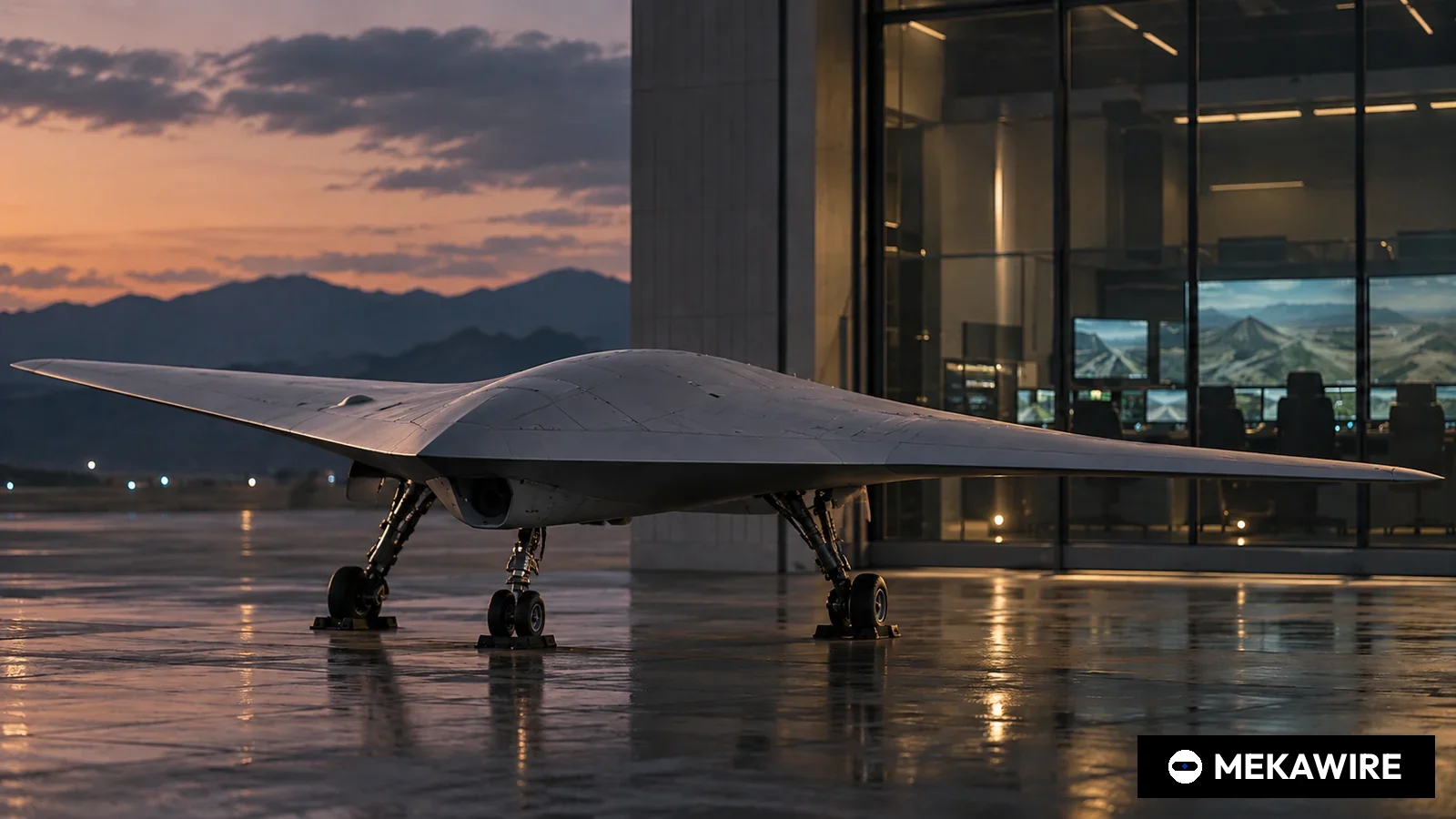
Shield AI, the San Diego maker of the Hivemind autonomy software and the V-BAT drone, said on March 26, 2026 that it is raising $2 billion and buying Aechelon Technology, whose software supplies the simulation inside the Pentagon's Joint Simulation Environment. The package comprises $1.5 billion of Series G equity at a $12.7 billion post-money valuation and $500 million of fixed-return preferred equity from funds managed by Blackstone, according to the company's release.
The new valuation is 2.4 times the $5.3 billion Shield AI disclosed when it raised $240 million in an F-1 round in March 2025, and 4.7 times the $2.7 billion attached to its $200 million Series F in October 2023. Blackstone has also committed a further $250 million delayed draw facility for future growth, which sits outside the $2 billion headline. Advent International leads the Series G, with the Strategic Investment Group of JPMorganChase's Security and Resiliency Initiative as co-lead. Existing investors Snowpoint Ventures, Innovation X Advisors, Riot Ventures, Disruptive and Apandion also took part.
Advent chairman David Mussafer joins Shield AI's board, and JPMorganChase's Todd Combs becomes a board observer. Neither side disclosed what Shield AI is paying for Aechelon. Sagewind Capital, the private equity firm selling the business, said in its own announcement that the deal is expected to close after customary regulatory approvals. Morgan Stanley was Shield AI's financial adviser, and J.P. Morgan Securities advised Aechelon.
Aechelon builds geo-specific flight simulators, physics-based sensor simulation and what it calls synthetic reality environments, used for pilot training, aircraft testing and the validation of autonomous systems, according to Sagewind. The company is the simulation technology provider for the Joint Simulation Environment, or JSE, the government environment the US military uses to test next-generation combat aircraft and autonomy against threats that cannot be replicated on an open range. After closing, Aechelon will run as an independent unit, with co-founder and chief executive Nacho Sanz-Pastor reporting to Shield AI chief executive Gary Steele.
Steele said the acquisition speeds up simulation work for Hivemind, including its support for the JSE, and advances what Shield AI calls its Hivemind Foundation Model for Defense, a domain-specific model trained in simulation and combined with real operational data. The company said the proceeds will pay for the acquisition, Hivemind's simulation work and the next development phases of X-BAT, its autonomous combat jet.
Founded in 2015, Shield AI says Hivemind now runs across 26 vehicle classes, from F-16 fighters and helicopters to drone boats and ground vehicles. On February 13, 2026 the company said the US Air Force had selected Hivemind for mission autonomy risk-reduction work on Anduril's YFQ-44A Fury, one of the Collaborative Combat Aircraft prototypes, with Collins Aerospace and RTX also supplying autonomy software in that phase. On February 26 it reported a first Hivemind flight test aboard the YFQ-44A over the Mojave Desert, completing all required test points. X-BAT, unveiled in October 2025, is a vertical takeoff and landing combat jet flown by Hivemind that Shield AI says can carry a full mission payload more than 2,000 nautical miles.
The round lands in a crowded field of venture-backed defence autonomy companies. Anduril raised $1.5 billion in a Series F in August 2024 to build its Arsenal-1 factory. Saronic, which makes autonomous surface vessels, raised $600 million at a $4 billion valuation in February 2025. In Europe, Munich-based Helsing raised 600 million euros in June 2025 in a round led by Prima Materia, the investment firm of its chairman Daniel Ek. Shield AI's position in the Fury programme is unusual: it is flying its software on a rival's airframe, a test of whether mission autonomy can be bought separately from the aircraft that carries it.
Simulation is central to that pitch because an AI pilot cannot be trained or cleared by flight hours alone. Reinforcement learning agents need millions of simulated engagements, and test authorities need repeatable scenarios with accurate radar, infrared and terrain. Aechelon's databases and sensor models give Hivemind a synthetic world close enough to the real one that behaviours learned there can carry over to the aircraft. It is the same sim-to-real problem civilian robotics companies face when they train humanoids and warehouse arms in software before deploying them.
The financing structure carries its own message. Fixed-return preferred equity pays its holders a set return ahead of common shareholders, which makes it more expensive than ordinary equity, and companies typically use it to raise cash without selling more common stock at the headline price. Shield AI did not disclose revenue, profit or headcount. The CCA work is a risk-reduction phase rather than a production award, Collins remains a competitor in the same phase, and X-BAT had not flown at the time of the announcement.
The next markers are regulatory clearance and closing of the Aechelon deal, further YFQ-44A flights and the Air Force's choice of mission autonomy for CCA production, X-BAT propulsion and first flight milestones, and whether Shield AI draws on Blackstone's $250 million facility.
MEKAWIRE analysis
Shield AI is buying a simulation company because in defence autonomy the training and test environment, more than the airframe, is turning into the scarce asset.
The evidence sits in the deal's own wording. Shield AI ties the purchase to the JSE and to a foundation model trained in simulation, and it spends investor money on Aechelon before X-BAT has flown. Owning the provider of the government's high-fidelity test world gives Hivemind's engineers deeper access to the sensor models and terrain databases against which every CCA autonomy vendor is ultimately judged.
The strongest counter-argument is that the same position invites scrutiny. Aechelon will run independently, and the Pentagon may insist on firewalls that stop Shield AI from gaining any edge from a supplier that also serves its competitors, which would leave Shield AI with a good simulation business but no special advantage.
Bull case: Hivemind wins mission autonomy work on CCA production aircraft, Aechelon's synthetic data gives the foundation model a lead that rivals cannot copy quickly, and the $12.7 billion valuation looks cheap against a software business sold across dozens of airframes.
Bear case: the Air Force keeps autonomy competition open, X-BAT absorbs capital for years before revenue, and the preferred equity's fixed return becomes a drag that common shareholders feel in any eventual listing.
- Signal 1: closing of the Aechelon acquisition and any conditions regulators attach, expected in 2026.
- Signal 2: further Hivemind flights on the YFQ-44A in 2026 and the Air Force's production autonomy decision for CCA.
- Signal 3: X-BAT engine and vertical flight milestones through 2026 and 2027.
- Shield AI
- Series G
- 2026-03-26
- 1500
- 12.7
- Advent International
- Shield AI
- F-1
- 2025-03-06
- 240
- 5.3
- L3Harris, Hanwha Asset Management
- Shield AI
- Series F
- 2023-10-31
- 200
- 2.7
- US Innovative Technology Fund
- Saronic
- Series C
- 2025-02-18
- 600
- 4
- No data
- Anduril
- Series F
- 2024-08-07
- 1500
- No data
- No data
- Helsing
- Series D
- 2025-06-17
- No data
- No data
- Prima Materia
Figures as disclosed in company releases, not estimated. Shield AI Series G excludes $500m preferred equity and the $250m facility. Helsing raised EUR 600m with no USD figure given. Step-up = 12.7 / 5.3 = 2.4x (Series G vs F-1); 12.7 / 2.7 = 4.7x (vs Series F).
As of Oct 1, 2026
- March 26, 2026, San Diego
- Aechelon Technology, from Sagewind Capital; price undisclosed
- $2 billion
- Simulation provider for the Pentagon's Joint Simulation Environment
- Advent International; co-lead JPMorganChase Strategic Investment Group
- $250 million delayed draw (Blackstone)
- 26 vehicle classes
- $1.5 billion at $12.7 billion post-money
- $500 million fixed-return, Blackstone funds
- 2.4x vs $5.3 billion in March 2025
Why it matters
This is the largest private financing Shield AI has disclosed and the first time it has used acquisition to buy a capability rather than build it. The money is aimed at simulation, not hardware, which tells investors where the company thinks the defensible part of autonomy lies: in the synthetic environments that train and certify AI pilots.
For the broader robotics market the deal is a marker that sim-to-real infrastructure has become a strategic asset worth billions in enterprise value. The same logic that drives NVIDIA's Isaac and Cosmos work in civilian robots is now driving consolidation in defence, where the simulation supplier also sits inside government test processes.
Rival analysis
Anduril builds the YFQ-44A on which Hivemind is being tested, so it is at once host platform and competitor. Collins Aerospace and RTX are the incumbent autonomy suppliers in the same CCA risk-reduction phase, bringing prime-contractor scale and certification experience that a venture-backed company lacks.
In Europe, Helsing raised 600 million euros in June 2025 with Saab among its existing investors, while Saronic raised $600 million in February 2025 to build uncrewed surface vessels. Shield AI's distinctive claim is breadth across 26 vehicle classes; the risk is that primes treat autonomy as a feature they integrate in-house rather than a product they buy.
Valuation context
At $12.7 billion post-money, Shield AI's valuation is 2.4 times its March 2025 level of $5.3 billion and 4.7 times the $2.7 billion of October 2023, a compound step-up over about 29 months. No revenue was disclosed, so a revenue multiple cannot be calculated from primary data.
The $500 million of fixed-return preferred equity matters for anyone reading the headline number. Preferred holders sit ahead of common stock and receive a contracted return, so the effective cost of capital is higher than in a plain equity round, and the common-equity value implied by $12.7 billion depends on how that return accrues. The $250 million delayed draw facility adds further senior-ranking capacity.
Supply-chain implications
Aechelon's value lies in geo-specific terrain databases and physics-based sensor models for radar, infrared and electro-optical systems. These are slow to build and require security clearances and long relationships with test ranges, which makes them hard to replicate and puts a premium on owning them.
On the hardware side, Hivemind runs at the edge on processors integrated into each airframe, and X-BAT depends on a fighter-class engine. The company has not disclosed suppliers for compute in this release; watchers should track whether it standardises on a particular edge processor as fleet size grows.
Signals to watch
First, regulatory approval and closing of the Aechelon acquisition, and any structural separation imposed to protect other JSE users. Second, the Air Force's mission autonomy decisions as CCA moves from risk reduction toward production, and whether Hivemind is chosen alongside or instead of Collins.
Third, X-BAT progress from engine tests to vertical flight, which will show how fast the new capital converts into a flying product. Fourth, any draw on Blackstone's $250 million facility, which would signal cash needs beyond the $2 billion raised.
Analyst view
Thesis: Shield AI is positioning itself as the software and simulation layer for military autonomy across many airframes, and the Aechelon deal is the most concrete step yet in that direction. Confidence: medium. The strategy is coherent and supported by a CCA selection and a completed Fury flight test, but there are no disclosed revenues, the CCA work is pre-production, and the preferred equity raises the cost of the bet.
We would raise confidence if Hivemind wins a production autonomy role and Aechelon closes without restrictive conditions. We would lower it if X-BAT timelines slip materially or if the Pentagon keeps autonomy as a multi-vendor competition with no clear share for Shield AI.
Questions you should be asking
What did Shield AI pay for Aechelon, and how much of the $2 billion goes to the purchase rather than to X-BAT?
What is the fixed return on the Blackstone preferred equity, and when can it convert or be redeemed?
Will the Pentagon require a firewall between Aechelon's JSE work and Shield AI's own autonomy teams?
What share of Shield AI's revenue comes from V-BAT hardware versus Hivemind software licences?