Zipline raises more than $600 million at a $7.6 billion valuation as its drone deliveries pass 2 million
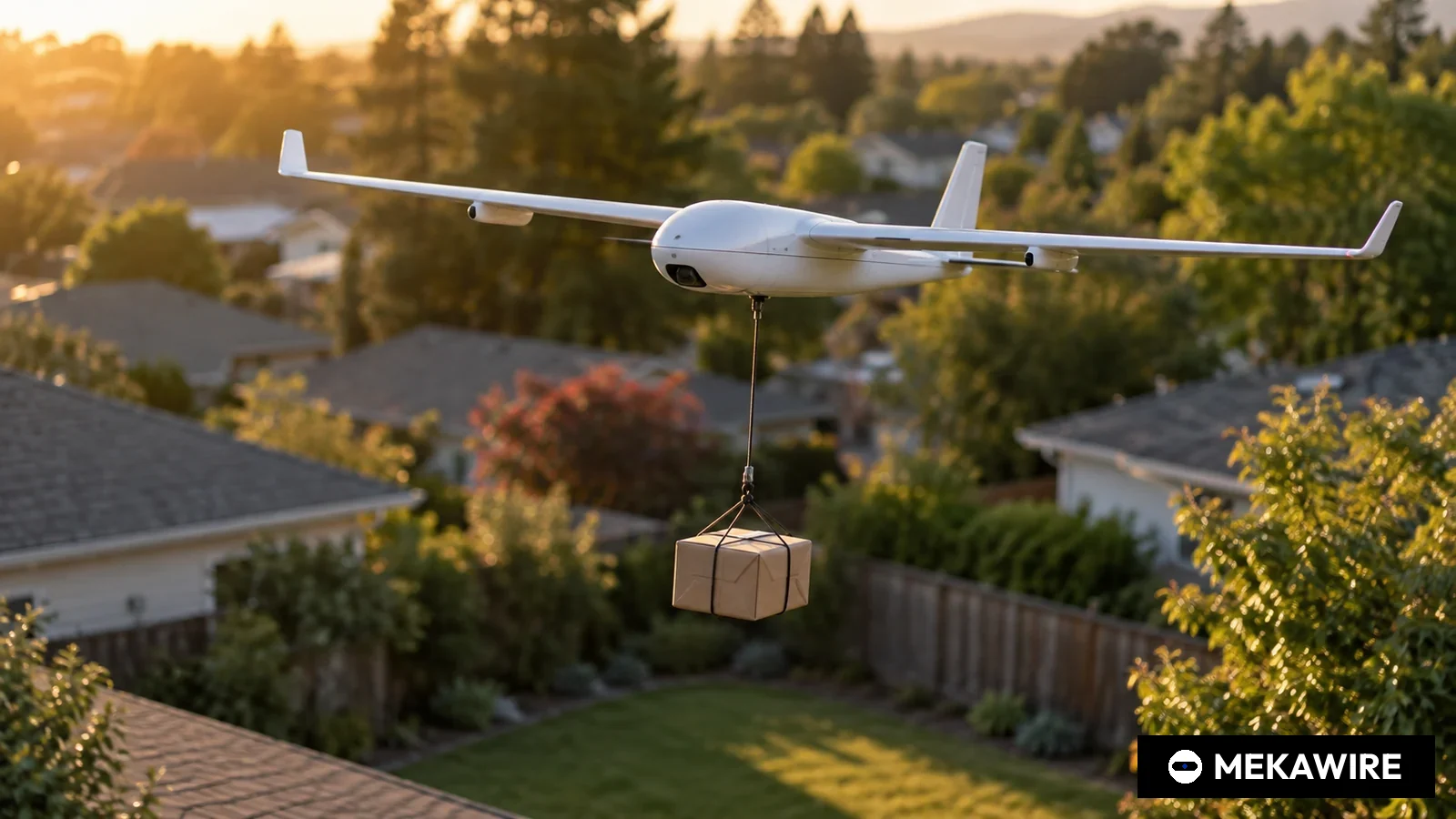
Zipline said on January 21, 2026 that it raised more than $600 million at a $7.6 billion valuation from investors including Fidelity, Baillie Gifford, Valor Equity Partners and Tiger Global. The drone delivery operator has passed two million commercial deliveries, says US volumes grew about 15% a week for seven months, and will launch in Houston and Phoenix before entering at least four new states in 2026.
Zipline, the South San Francisco company that designs, builds and operates autonomous delivery drones, said on January 21, 2026 that it had raised more than $600 million at a valuation of $7.6 billion and had passed two million commercial deliveries. The company said it would start service in Houston and Phoenix in early 2026 and use the new money to enter at least four new US states during the year.
Fidelity Management & Research Company, Baillie Gifford, Valor Equity Partners and Tiger Global took part alongside other existing and new investors, according to Zipline's release. The company did not name a lead investor, give the round a series letter or say how much of the money was new primary capital. Law firm Wilson Sonsini Goodrich & Rosati said separately that it had advised Zipline on the financing.
The operating figures carry most of the weight in the announcement. Zipline said its US deliveries had grown by about 15% week over week for the previous seven months, that it beat its third-quarter daily delivery volume target by roughly 30% and that it hit its fourth-quarter target six weeks early. Its first site in Dallas took 10 weeks to reach 100 deliveries a day, while newer sites reached that level in two days, the company said. Its aircraft have flown more than 125 million autonomous commercial miles and delivered more than 20 million items without a serious injury, according to Zipline, which estimates that driving the same distance would have produced nearly 600 crashes, about 100 injuries and at least one death.
In Houston and Phoenix, eligible customers will be able to order tens of thousands of items through the Zipline app, with deliveries arriving in as little as 10 minutes, the company said. Chief executive and co-founder Keller Cliffton said 2026 would be the year autonomous logistics becomes an everyday service for people in several US states. Phoenix Mayor Kate Gallego said in the release that the launch reflects the city's standing as a hub for advanced technology. Antonio Gracias, founder and chief executive of Valor Equity Partners, said he expects deliveries by autonomous aircraft to become standard within five to ten years.
Zipline began as a medical logistics operator and still describes itself as running the world's largest autonomous delivery system. It says it operates on four continents, makes a delivery somewhere in the world every 30 seconds and serves more than 5,000 hospitals and health facilities. Its website lists Walmart, Chipotle, Wendy's, Little Caesars, Popeyes and Crumbl among its US restaurant and retail partners and counts its flying operations from 2016.
The round arrived ten days after its most direct US rival made its own move. On January 11, Alphabet's Wing said it would add drone delivery at 150 more Walmart stores over the following year, taking the network to more than 270 locations by 2027 and putting the service within reach of more than 40 million Americans. Wing said it would begin in Houston on January 15, so the two companies are entering the same city within weeks. On the ground, Serve Robotics raised $100 million in a registered direct offering in October 2025 to expand sidewalk delivery robots.
The financing also fits a quarter in which investors paid up for autonomy outside humanoids. Saronic raised $1.75 billion at a $9.25 billion valuation for uncrewed vessels on March 31, Shield AI raised $1.5 billion of Series G equity at $12.7 billion on March 26, Bedrock Robotics raised $270 million for autonomous excavators on February 4 and Mytra raised $120 million for warehouse storage robots on January 15. Zipline is the only one of these whose customers are ordinary households.
The technology problem Zipline is selling against is the cost of the last few kilometres. A car trip to deliver a small basket moves more than a tonne of vehicle and needs a driver; a small electric aircraft flying a direct line can do the job with no driver and no road traffic. The difficulty lies in running many aircraft at once over cities: automated flight planning, separation from other airspace users, precise drop-off at a home, and keeping each partner store's packing fast enough that the aircraft is not left waiting. Zipline's claim that new sites now reach 100 daily deliveries in two days instead of ten weeks suggests the site launch process, not the aircraft, has become the scaling lever.
Several questions remain open. Zipline did not disclose revenue, delivery volume per site or unit economics, so the valuation cannot be tested against sales. A 15% weekly growth rate sustained over seven months began from a small US base. Each new metro needs operating approvals from aviation regulators and acceptance from local residents over noise and privacy, and Wing's Walmart rollout means Zipline will face a well-funded competitor in several of its target cities.
The next markers are the Houston and Phoenix launches in early 2026, the identity of the four or more new states, any disclosure of revenue or per-site volumes, and how fast Wing's 150-store Walmart expansion proceeds through 2026.
MEKAWIRE analysis
Zipline's $7.6 billion valuation prices it as the leading US drone delivery operator, and 2026 will show whether its two-day site launch playbook can hold up in new states while Wing expands through Walmart's store base.
The evidence for the valuation is operational rather than financial. Zipline cites a cut in site ramp time from 10 weeks to two days, a third-quarter target beaten by about 30% and a fourth-quarter target met six weeks early. These are the metrics a network business needs before it can multiply sites quickly, and the investor list is dominated by large crossover funds that typically back companies they expect to reach public markets.
The strongest counter-argument is that drone delivery remains a contest decided by retail distribution, not aircraft. Wing has tied itself to Walmart, the largest US retailer, with a plan for more than 270 locations by 2027, and both companies are launching in Houston in the same month. If store partners split their business or squeeze fees, a lead in deliveries may not translate into margins.
Bull case: the new states launch on schedule, sites keep reaching 100 daily deliveries within days, and Zipline's own app becomes a consumer marketplace that captures both retail and restaurant demand, letting it disclose revenue that supports the valuation ahead of a listing.
Bear case: local opposition over noise and regulatory pacing slow metro launches, Wing's Walmart footprint caps Zipline's share of the largest retail channel, and the absence of disclosed revenue makes the next financing harder to price.
- Signal 1: start of Houston and Phoenix service, which Zipline set for early 2026.
- Signal 2: announcement of the at least four new states Zipline plans to enter in 2026.
- Signal 3: Wing's progress toward 270 Walmart locations by 2027, a benchmark for Zipline's own retail reach.
- Zipline
- Drone delivery
- Growth round (unnamed)
- 2026-01-21
- 600
- 7.6
- Shield AI
- Defence autonomy
- Series G
- 2026-03-26
- 1500
- 12.7
- Saronic Technologies
- Autonomous vessels
- Series D
- 2026-03-31
- 1750
- 9.25
- Bedrock Robotics
- Autonomous construction
- Series B
- 2026-02-04
- 270
- No data
- Mytra
- Warehouse storage robots
- Series C
- 2026-01-15
- 120
- No data
- Serve Robotics
- Sidewalk delivery robots
- Registered direct offering
- 2025-10-10
- 100
- No data
Figures as disclosed by each company in its own release; Zipline amount is 'more than $600 million', shown as 600. Valuation shown as — where none was disclosed. Shield AI amount is Series G equity only, excluding $500m preferred equity. Not estimates.
As of Oct 1, 2026
- January 21, 2026, South San Francisco
- 100 deliveries a day in 2 days (first Dallas site: 10 weeks)
- About 15% week over week for seven months
- $7.6 billion
- Houston and Phoenix in early 2026; at least four new states in 2026
- More than $600 million
- Fidelity Management & Research Company, Baillie Gifford, Valor Equity Partners, Tiger Global
- More than 125 million
- More than 2 million
Why it matters
This is the largest financing Zipline has announced and it comes with the most detailed operating data the company has published on its US business. For a sector that spent years in pilot programmes, the combination of two million deliveries, a 15% weekly US growth rate and a two-day site ramp is the clearest public evidence so far that drone delivery can be run as a scaled consumer service rather than a demonstration.
For robotics investors the round matters as a valuation reference point outside humanoids and defence. At $7.6 billion, Zipline sits in the same bracket as the quarter's largest autonomy financings, but unlike Shield AI or Saronic its revenue depends on households and retailers, not government budgets.
Rival analysis
Wing is the rival that matters most in the United States. Its January 11 plan to add 150 Walmart stores and pass 270 locations by 2027 gives it a distribution channel Zipline cannot match through a single retailer, and both companies are opening in Houston in January 2026. Zipline lists Walmart among its own partners, so the two are competing inside the same customer as well as against each other.
On the ground, sidewalk robot operators such as Serve Robotics compete for the same restaurant orders over short distances, with a different cost profile and different regulators. Zipline's pitch rests on speed and range over a few kilometres, where a ground robot is slow and a car is expensive.
Valuation context
Zipline disclosed a $7.6 billion valuation but no revenue, so no revenue multiple can be calculated from primary data. The company also did not say whether $7.6 billion is pre-money or post-money, nor how much of the $600 million plus was primary capital.
Against the quarter's other autonomy rounds, Zipline's valuation is below Shield AI's $12.7 billion and Saronic's $9.25 billion, both defence businesses with large government contracts in view. The presence of large crossover funds such as Fidelity and Baillie Gifford usually signals that backers see a path to public markets.
Supply-chain implications
Zipline says it designs and manufactures its own aircraft, which keeps airframe, autonomy software and fleet operations in one company. That integration helps control cost and safety records but also concentrates manufacturing risk as the fleet grows across new states.
The other side of the supply chain is the partner store. Every delivery begins with a retailer or restaurant packing an order quickly enough for the aircraft, so Zipline's ramp depends on integrating with store operations and order systems, not just on airspace. That is why the shift from ten weeks to two days per site is the more important operational number.
Signals to watch
First, the Houston and Phoenix launches promised for early 2026 and the first site volumes Zipline reports there. Second, the names of the at least four new states, which will show whether Zipline is following Wing into the same markets or seeking open ground.
Third, any revenue, per-site volume or profitability disclosure, which would turn the valuation from a growth story into something measurable. Fourth, the pace of Wing's Walmart rollout through 2026.
Analyst view
Thesis: Zipline has moved from proving drone delivery works to proving it can be launched quickly and repeatedly, and the round funds a land grab in US metros before Wing's Walmart network fills them. Confidence: medium. The operating metrics are strong and come from the company itself, but there is no disclosed revenue, the round's structure is opaque and the main rival is expanding into the same cities.
We would raise confidence if Zipline publishes per-site economics or revenue and opens new states on schedule. We would lower it if launches slip or if Walmart concentrates its drone business with Wing.
Questions you should be asking
How much of the more than $600 million is primary capital, and is the $7.6 billion pre-money or post-money?
What share of Zipline's US deliveries comes from Walmart compared with restaurants and its own app marketplace?
Which states make up the at least four new states planned for 2026?
What is the revenue and margin per delivery today, and how does it change as a site matures?