Saronic raises $1.75 billion at a $9.25 billion valuation to turn uncrewed warships into a shipbuilding business
Austin-based Saronic Technologies said on March 31, 2026 it had closed a $1.75 billion Series D led by Kleiner Perkins at a $9.25 billion valuation, about 2.3 times the $4 billion set in its February 2025 Series C. The autonomous surface vessel maker is putting shipyards at the centre of its plan, including a $300 million expansion in Louisiana and a planned next-generation yard called Port Alpha.
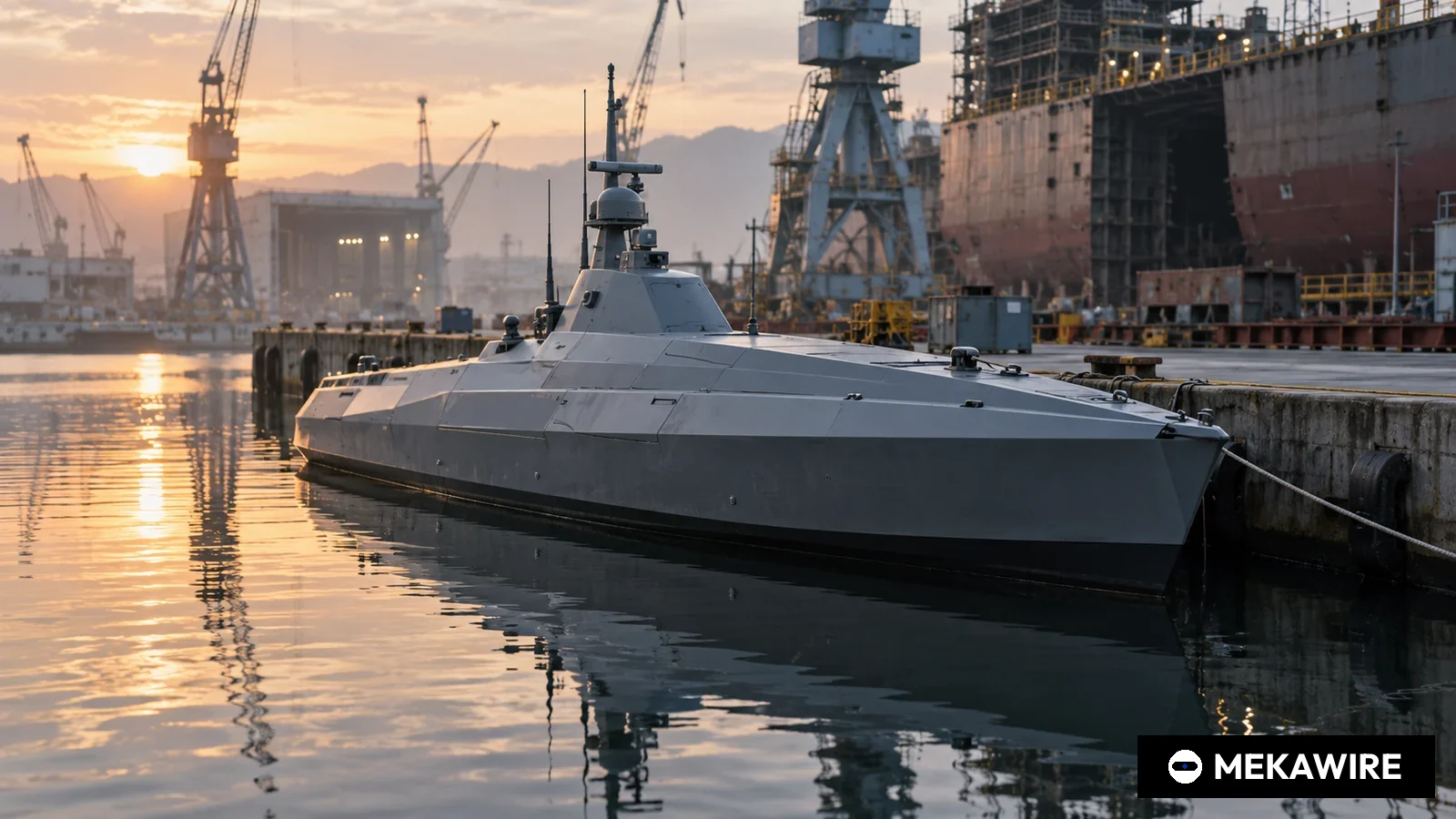
Saronic Technologies, the Austin-based builder of autonomous surface vessels, said on March 31, 2026 that it had closed a $1.75 billion Series D round led by Kleiner Perkins at a valuation of $9.25 billion. The round more than doubles the $4 billion valuation the company carried after its Series C in February 2025.
The round
Four new investors joined, according to the company: Advent International, Bessemer Venture Partners, DFJ Growth and BAM Elevate. Existing backers 8VC, Caffeinated Capital, Andreessen Horowitz, Elad Gil and Franklin Templeton also took part. Saronic said the money will fund the development, expansion and scaled production of its autonomous surface vessels and what it called AI-driven maritime capabilities. It did not break down how the proceeds will be split between engineering and shipyard capacity, and it did not disclose revenue.
Ilya Fushman, a partner at Kleiner Perkins, framed the bet around industrial capacity rather than software alone. In the company's release he said maritime dominance requires the production capacity to field technology at scale, and that the two rarely come together.
What Saronic builds
Saronic's product line runs from the 24-foot Corsair to the 180-foot Marauder, the company said, and it intends to go "beyond" that size. The first Marauder hull was completed in less than six months, according to Saronic. The vessels operate without crews and rely on onboard autonomy software, which lets a navy put hulls to sea without putting sailors aboard.
The financing is as much about steel and welding as it is about code. Saronic said it acquired a shipyard in Louisiana and committed $300 million to a 300,000 square foot expansion there that it expects to create 1,500 jobs. It has expanded its Austin headquarters to more than 500,000 square feet, opened hubs in San Diego and Washington, D.C., and started operations in the United Kingdom and Australia. A further project, Port Alpha, is described by the company as its next-generation shipyard. When it raised its Series C, Saronic said Port Alpha would be designed from the ground up to build medium and large unmanned ships.
Track record since the last round
Saronic said that during 2025 it won a $392 million production contract from the U.S. Navy and that its headcount passed 1,300. Its Series C, announced on February 18, 2025, raised $600 million at a $4 billion valuation and was led by Elad Gil, with General Catalyst joining as a new investor. At that time the company said it had become a unicorn in July 2024 and had acquired a manufacturing facility of roughly 420,000 square feet in Austin.
Co-founder and chief executive Dino Mavrookas argued in the release that the United States has seen a steady erosion of its ability to build ships, and that Saronic's model combines first-principles engineering, advanced manufacturing and software-defined production. He said the new capital would help the company scale U.S. shipbuilding capacity on a timeline not seen since the Second World War.
Competitive context
The deal landed in a week of very large defence autonomy financings. On March 26, 2026, Shield AI, which builds AI pilot software and autonomous aircraft, said it would raise $1.5 billion in Series G equity plus $500 million of fixed-return preferred equity at a post-money valuation of $12.7 billion, led by Advent International. Advent International thus put money into both companies within six days. Anduril Industries said on May 13, 2026 that it had raised a $5 billion Series H. In uncrewed boats specifically, Providence-based HavocAI said in October 2025 that it had added $85 million, taking its total funding to about $100 million, with Lockheed Martin and Hanwha among its backers.
- Saronic
- Series D
- 2026-03-31
- 1750
- 9.25
- No data
- Saronic
- Series C
- 2025-02-18
- 600
- 4
- No data
- Shield AI
- Series G (equity)
- 2026-03-26
- 1500
- 12.7
- 2015
- Anduril Industries
- Series H
- 2026-05-13
- 5000
- No data
- No data
- HavocAI
- Unnamed round
- 2025-10-10
- 85
- No data
- 2024
Figures as disclosed in each company's own announcement; null = not disclosed on a primary page. Shield AI amount excludes $500m fixed-return preferred equity and a $250m delayed draw facility. Saronic step-up = 9.25 / 4.0 = 2.31x.
As of Oct 1, 2026
Why it matters
Autonomous surface vessels are one of the clearest cases of field robotics moving from prototypes to procurement. The constraint is no longer only perception and navigation software, which several rivals offer, but the ability to weld, outfit and test hulls quickly enough to meet military orders. Saronic is spending to own that bottleneck, which is why a shipyard purchase sits at the centre of a venture round.
Risks and open questions
Saronic has not published revenue, delivery numbers or the Navy contract's schedule, so investors are paying $9.25 billion largely for backlog and capacity that is still being built. Defence budgets and programme decisions can shift quickly, and a large shipyard build-out carries execution risk that pure software companies do not face. The company also did not say when Port Alpha will open or where it will be located.
What to watch
The milestones are the start of production at the expanded Louisiana yard, a site and timeline for Port Alpha, further Navy or allied orders for Marauder-class vessels, and whether the new UK and Australian operations turn into contracts with those navies.
MEKAWIRE analysis
Saronic's Series D prices shipbuilding capacity, not autonomy software, as the scarce asset in uncrewed naval robotics.
The evidence sits in the use of funds that Saronic chose to highlight. The release leads with a Louisiana shipyard, a $300 million expansion, 1,500 jobs and a 500,000 square foot headquarters, while autonomy features are described only in general terms. Kleiner Perkins' partner said the same thing in plain language. The valuation step-up of about 2.3 times in roughly 13 months came after a $392 million Navy production award, which is the first sign that the buyer is ordering at volume.
The strongest counter-argument is that shipyards are capital-hungry, low-margin businesses, and that a company valued like a software platform may end up with the economics of a defence contractor. Shield AI, valued at $12.7 billion, sells software and aircraft without owning heavy yards, which suggests investors do not need steel to reward autonomy.
Bull case. If the Navy and allied fleets standardise on large uncrewed hulls, Saronic's integrated yard gives it delivery speed rivals cannot match quickly, and its contract base could grow several-fold. Vertical integration would then look like the moat that justified the price.
Bear case. Procurement slips, or the Navy splits orders across multiple suppliers, leaving Saronic with fixed shipyard costs and a valuation that assumed fast growth. In that case the next round could be flat or require debt.
Signals to watch:
- Production start date for the expanded Louisiana shipyard, which the company has not yet given.
- Any announcement of Port Alpha's site and opening date during 2026.
- U.S. Navy budget documents for fiscal 2027 and the size of follow-on orders for medium and large uncrewed vessels.
- Series D, closed
- $1.75 billion
- more than 1,300
- $9.25 billion
- 24-foot Corsair to 180-foot Marauder
- Kleiner Perkins
- $392 million production contract (2025)
- Advent International, Bessemer Venture Partners, DFJ Growth, BAM Elevate
- $600 million Series C at $4 billion (Feb 18, 2025)
- $300 million, 300,000 sq ft expansion, 1,500 jobs
Why it matters
Saronic's round is one of the largest private financings for a maker of uncrewed surface robots, and it was raised on the back of a shipyard strategy. The company disclosed a Louisiana yard acquisition, a $300 million expansion commitment and a next-generation yard called Port Alpha, which places manufacturing capacity at the centre of the investment case.
For the robotics industry this matters because it shows where defence customers see the bottleneck. Navigation and autonomy stacks for boats are offered by several vendors, while yards capable of building 180-foot hulls quickly are scarce in the United States. Investors are paying for the scarce part.
Rival analysis
Shield AI raised $1.5 billion in Series G equity plus $500 million of fixed-return preferred equity at $12.7 billion post-money on March 26, 2026, led by Advent International, which also joined Saronic's round. Shield AI's focus is aircraft autonomy and simulation, including its planned acquisition of Aechelon Technology, so it competes for the same budgets and talent rather than the same hulls.
Anduril announced a $5 billion Series H on May 13, 2026 and is the broadest defence autonomy rival. In uncrewed boats, HavocAI raised $85 million in October 2025, bringing its total to about $100 million, with Lockheed Martin and Hanwha as backers. HavocAI's smaller capital base suggests it will rely on partners for large hulls, whereas Saronic is building its own yards.
Valuation context
The Series D values Saronic at $9.25 billion, up from $4 billion at the Series C on February 18, 2025, a step-up of about 2.31 times in roughly 13 months (9.25 / 4.0). The only disclosed commercial anchor is a $392 million U.S. Navy production contract, so the valuation is roughly 24 times that single award (9.25 billion / 392 million), a ratio that should be read cautiously because the contract's duration and options were not disclosed.
Shield AI's $12.7 billion valuation, set five days earlier, gives a nearby reference point for defence autonomy. Neither company publishes audited revenue, so comparisons rest on round sizes and disclosed contracts.
Supply-chain implications
The Louisiana expansion, 300,000 square feet with a $300 million commitment, puts Saronic into the U.S. Gulf Coast shipbuilding labour pool, where welders, fitters and marine electricians are in short supply. Hiring 1,500 people there is a supply chain question as much as a financial one.
Autonomous vessels also depend on marine engines, communications links, sensors and onboard compute. Saronic did not name suppliers, so its exposure to imported components and to export-control rules for UK and Australian work remains unclear.
Signals to watch
First, a production start date and output target for the Louisiana yard. Second, a site, budget and timeline for Port Alpha. Third, follow-on Navy orders and the FY2027 budget lines for medium and large uncrewed surface vessels.
Also watch whether the UK and Australian operations lead to orders from the Royal Navy or Royal Australian Navy, and whether Saronic adds debt or government financing to fund yard construction.
Analyst view
Thesis: Saronic is being valued as the leading U.S. builder of uncrewed warships, and the shipyard spend is the core of that claim rather than a side project. Confidence: medium. The capital, the Navy production award and the speed of the first Marauder hull support the thesis, but the absence of revenue, delivery counts and contract details limits how firmly it can be tested.
The most likely path is continued fast growth in orders paired with heavy capital spending through 2027, which could require further large rounds before profitability.
Questions you should be asking
How many vessels has Saronic delivered under the $392 million Navy contract, and over what period does that contract run? What share of the $1.75 billion goes to shipyards versus software and autonomy research?
Where will Port Alpha be built and when will it open? Will the UK and Australian operations build hulls locally or support exports from the United States?