Symbotic buys Walmart's robotics unit for $200 million and wins a 400-system store pickup order backed by $520 million in Walmart development fees
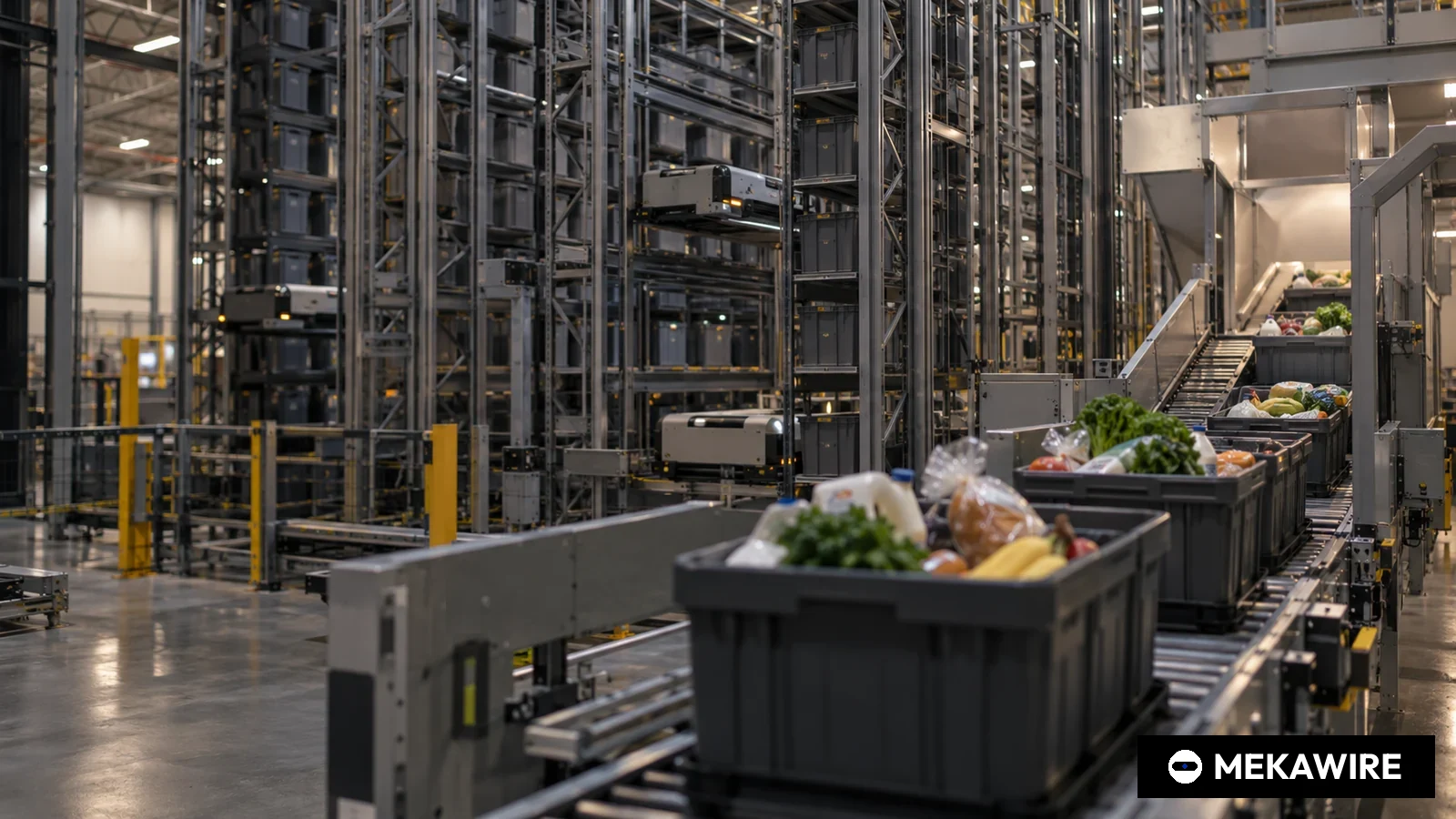
Symbotic agreed on January 15, 2025 to buy Walmart's Advanced Systems and Robotics business for $200 million in cash, plus two contingent payments of $175 million each tied to Walmart's Accelerated Pickup and Delivery (APD) program.
Walmart committed to buy 400 APD systems for its stores, subject to performance metrics, and to pay Symbotic $520 million in development fees, a package Symbotic said could add more than $5 billion to its backlog. The deal closed on January 27, 2025.
Symbotic, the Wilmington, Massachusetts maker of AI-driven warehouse robotics, said on January 16, 2025 that it would acquire Walmart's Advanced Systems and Robotics business (ASR) and sign a commercial agreement to develop, build and install automated order-fulfilment systems at Walmart stores. The purchase agreement was signed on January 15, according to Symbotic's Form 8-K. The deal carries a supplier relationship that already spanned all 42 of Walmart's US regional distribution centres, according to Symbotic's release, into the back rooms of a chain with more than 4,600 US stores.
Symbotic agreed to pay $200 million in cash at closing, subject to customary adjustments for cash, debt and transaction expenses, the 8-K shows. Two further payments of $175 million each are contingent. The first falls due when Walmart accepts the first APD under the commercial agreement; the second when Walmart exercises an option to buy additional systems. Money also flows the other way. Walmart agreed to pay Symbotic $520 million in development fees for prototype work and research, in tranches of $230 million at closing, $165 million on the first anniversary and $125 million on the second.
- Upfront purchase price
- Symbotic
- Walmart
- 200
- Closing (January 27, 2025)
- Contingent payment 1
- Symbotic
- Walmart
- 175
- Acceptance of the first APD
- Contingent payment 2
- Symbotic
- Walmart
- 175
- Walmart exercises option on 200 more APDs
- Development fee, tranche 1
- Walmart
- Symbotic
- 230
- Closing
- Development fee, tranche 2
- Walmart
- Symbotic
- 165
- First anniversary of closing
- Development fee, tranche 3
- Walmart
- Symbotic
- 125
- Second anniversary of closing
- Net to Symbotic at closing
- No data
- No data
- 30
- 230 minus 200
- Net to Symbotic if every payment is made
- No data
- No data
- -30
- 520 minus 550
Figures from Symbotic Form 8-K filings of January 16 and January 28, 2025. Net rows are MEKAWIRE arithmetic: development fees received minus purchase price and contingent payments paid, before customary closing adjustments. Revenue from APD sales is excluded.
As of Oct 3, 2026
Under the commercial agreement, Walmart committed to buy 400 APD systems over several years, a commitment the filing makes conditional on the systems meeting defined performance metrics. Walmart also holds an option on 200 more, which it can exercise within 30 days after the 220th APD is accepted. Symbotic said the program could add more than $5 billion to its backlog and enlarge its US addressable market by more than $300 billion. Pricing, according to the 8-K, is set at implementation cost for materials and labour plus a specified net profit, with separate charges for software maintenance and support and for spare parts. The investor presentation filed with the 8-K adds annual software licence fees with throughput-based escalators.
The contract restricts Symbotic as much as it rewards it. Symbotic may not sell comparable systems to specified Walmart competitors and faces quantitative limits on sales to other third parties, the 8-K says. If it commercialises substantially similar APDs, or the software inside them, with third parties, Walmart may in certain circumstances be owed a royalty. Symbotic must also give Walmart terms that are, in aggregate, substantially no less favourable than those it offers any other customer, and the initial term runs to the twelfth anniversary of signing. While Walmart owns more than 5% of Symbotic's equity it may recommend an independent director candidate, and it keeps a non-voting observer at board meetings.
The waiting period under the Hart-Scott-Rodino Act had expired before signing, and either party could terminate if the deal had not closed by February 14, 2025. Symbotic's second 8-K gives January 27, 2025 as the date of the event, and the company announced completion the next day, ahead of the fiscal second quarter it had first guided. Citi advised Symbotic. Chief executive Rick Cohen said the deal took Symbotic into "automation at the store to support the growth of eCommerce." Greg Cathey, Walmart's senior vice president of transformation and innovation, pointed to the companies' relationship of nearly a decade in supply chain technology.
The acquirer is heavily tied to its seller. In the fiscal year ended September 27, 2025, Symbotic's revenue rose 26% to $2,247 million from $1,788 million, while its net loss widened to $91.0 million from $84.7 million, according to its results release and Form 10-K. Walmart accounted for about 85% of that revenue and held about 13% of Symbotic's common stock, and Symbotic reported backlog of about $22.5 billion. The balance sheet, which carried no goodwill at September 28, 2024, showed $68.7 million of goodwill and $125.8 million of net intangible assets at March 29, 2025, the end of the quarter in which ASR was acquired.
An APD, in Symbotic's description, is a store-attached automation system that stores and retrieves online grocery orders for pickup or delivery. The 10-K says Symbotic is operating several micro-fulfilment systems that it will continue to support, that they handle three temperature zones (frozen, refrigerated and ambient), and that the first prototypes of its next-generation micro-fulfilment solution are planned for installation in calendar 2026. Symbotic's filings do not itemise which teams and assets made up ASR. Walmart had agreed in October 2022 to acquire Alert Innovation, the Massachusetts developer of the Alphabot robotic grocery system, which the two companies had tested at a Walmart market fulfilment centre in Salem, New Hampshire since 2019, according to Alert Innovation's release.
Store-level and urban micro-fulfilment has drawn heavy investment and mixed results. Ocado of the UK and AutoStore of Norway sell cube and grid storage systems to grocers. Fabric raised a $200 million Series C in October 2021, and France's Exotec raised $335 million in a Series D at a $2 billion post-money valuation in January 2022, according to company announcements. Canada's Attabotics, which raised a $71.7 million Series C-1 in November 2022, has since been acquired. None of those rivals has disclosed a single-customer commitment of 400 store systems.
- Symbotic
- US
- 2007
- ASR acquisition, upfront cash
- 200
- No data
- 2025-01-27
- Exotec
- FR
- 2015
- Series D
- 335
- 2000
- 2022-01-17
- Fabric
- US
- 2015
- Series C
- 200
- No data
- 2021-10-26
- Locus Robotics
- US
- 2015
- Series F
- 117
- No data
- 2022-11-29
- Nimble Robotics
- US
- No data
- Series C
- 106
- No data
- 2024-10-23
- Attabotics
- CA
- No data
- Series C-1
- 71.7
- No data
- 2022-11-15
Amounts as disclosed by each company, from the MEKAWIRE company database. The Symbotic row is upfront cash paid for ASR, not a funding round, and is shown for scale only. Unknown values are shown as —. Ocado and AutoStore are listed companies and are omitted.
As of Oct 3, 2026
The risks sit in the conditions. Walmart's 400-system commitment depends on performance metrics that are not public, and the first $175 million contingent payment is due only once an APD passes acceptance, which cannot happen before prototypes are installed. Exclusivity and third-party sales caps limit how far Symbotic can resell the design, while the royalty clause would share some of the upside if it does. Concentration also deepens, because an order book already dominated by Walmart gains another Walmart-only product line.
The next public checkpoints are Symbotic's fourth-quarter fiscal 2026 results and Form 10-K, expected in November 2026 on last year's timetable, which should say whether the 2026 prototype installations happened. The final $125 million development fee falls due on the second anniversary of closing, January 27, 2027. Acceptance of the first APD would trigger the first $175 million contingent payment, and acceptance of the 220th system would open Walmart's 30-day window on the extra 200.
MEKAWIRE analysis
Symbotic bought Walmart's robotics unit on terms under which the cash nearly cancels out, so the value of the deal depends almost entirely on whether its store system passes Walmart's acceptance tests on time.
The evidence is in the payment schedule. At closing Symbotic paid $200 million and received $230 million, a net inflow of $30 million. If every contingent payment is made, Symbotic will have paid $550 million and received $520 million in development fees, a net outflow of $30 million before any APD sales. Walmart has effectively prefunded the engineering of a product it has agreed to buy, while keeping an option that only opens after 220 systems are accepted. For Symbotic the economics come from the cost-plus margin and software fees on hundreds of store systems, not from the acquisition itself.
The strongest counter-argument is that this structure caps Symbotic's upside. The design is locked to one customer by competitor restrictions, quantitative sales limits and a royalty clause, and a most-favoured-customer term means any better price Symbotic offers elsewhere must be matched for Walmart. A supplier that already earns about 85% of revenue from one buyer has made itself more dependent, not less.
Bull case. Prototypes go in during 2026 as the 10-K plans, acceptance follows, and the 400-system order converts into the more than $5 billion of backlog Symbotic outlined, with software fees that rise with throughput. Store automation proven at Walmart scale would also strengthen Symbotic's hand in negotiating the third-party limits over a 12-year term.
Bear case. Prototype or performance slippage delays acceptance, leaving Symbotic carrying ASR's engineering costs on development fees that end in January 2027. Walmart's commitment is conditional, so a system that misses the metrics could leave the order book short of the headline figure while exclusivity still bars sales to Walmart's competitors.
Signals to watch:
- November 2026: Symbotic's fiscal 2026 Form 10-K and results, for confirmation of prototype installations and any change in Walmart's revenue share.
- January 27, 2027: the second anniversary of closing, when the final $125 million development fee is due.
- First APD acceptance, date not yet disclosed: it triggers the first $175 million contingent payment and should appear in an 8-K or quarterly filing.
- January 27, 2025
- 200 more, exercisable within 30 days of the 220th acceptance
- $200 million cash at closing
- 400 systems, subject to performance metrics
- January 15, 2025
- More than $5 billion (Symbotic estimate)
- Two payments of $175 million each
- $520 million ($230m at closing, $165m year one, $125m year two)
- 12 years
- About 85%
Why it matters
The deal moves Symbotic from the distribution centre to the store, where Walmart wants online grocery orders staged automatically for pickup and delivery. Symbotic put the US addressable market added by the program at more than $300 billion. Whatever the true figure, the move puts Symbotic's storage and retrieval robotics into a format that is closer to the customer and installed in far larger numbers than regional distribution centres, of which Walmart has 42 in the US.
It also shows how a large retailer now prefers to own automation outcomes without owning the engineering organisation. Walmart sold the unit, agreed to fund its continued development and kept commercial control through exclusivity, royalties and most-favoured pricing. For other retailers, it is a template for moving in-house robotics teams to a vendor while keeping the rights that matter.
Rival analysis
In grocery micro-fulfilment Symbotic now competes with grid and cube storage vendors such as Ocado and AutoStore, with Fabric, which raised a $200 million Series C in 2021, and with Exotec, which raised $335 million at a $2 billion post-money valuation in 2022. The 400-system commitment gives Symbotic a production volume none of these rivals has disclosed from a single customer.
The flip side is that the exclusivity terms shut Symbotic out of selling comparable systems to specified Walmart competitors, leaving that demand to rivals. A grocer competing with Walmart that wants store-level automation will by contract look elsewhere, which may help Ocado, AutoStore integrators and Exotec more than the headline suggests.
Valuation context
Measured by cash, the acquisition is close to self-funding. Symbotic paid $200 million and received $230 million in development fees on the same day, and the full schedule nets to a $30 million outflow if both $175 million contingent payments are made. The value Symbotic is buying is the expected margin on 400 to 600 store systems plus recurring software fees.
Symbotic's own balance sheet shows the accounting footprint. Goodwill went from nil at September 28, 2024 to $68.7 million at March 29, 2025, and net intangible assets rose from $3.7 million to $125.8 million over the same period. Against fiscal 2025 revenue of $2,247 million and backlog of about $22.5 billion, the potential $5 billion APD addition would be material but not transformative on its own.
Supply-chain implications
APD systems will need structure, storage robots, conveyance and refrigeration equipment sized for store footprints across three temperature zones, built at a cadence of hundreds of units over several years. The cost-plus pricing in the 8-K passes material and labour inflation through to Walmart, which shields Symbotic's margin from component cost swings.
Installation inside or beside live stores is a different discipline from greenfield warehouse projects, with tighter sites and operating hours. Symbotic's ability to industrialise installation crews and spare-parts logistics across hundreds of locations will matter as much as the robot design.
Signals to watch
Symbotic's fiscal 2026 Form 10-K, expected in November 2026, should state whether the planned 2026 prototype installations took place. The second anniversary of closing on January 27, 2027 brings the final $125 million development fee.
Any 8-K or quarterly disclosure of the first APD acceptance would trigger a $175 million payment to Walmart and mark the start of commercial roll-out. Watch also for disclosure of the 220th acceptance, which opens Walmart's 30-day option window on 200 more systems.
Analyst view
Thesis: the ASR deal is a Walmart-funded product program with an acquisition attached, and its value to Symbotic shareholders is governed by acceptance timing rather than purchase price. Confidence: medium.
Reasons for medium confidence: the payment terms and commitments are disclosed in detail in the 8-K, but the performance metrics, the per-system price and the timetable for acceptance are not public, and Symbotic's filings to date describe prototypes only as planned for calendar 2026. The thesis would weaken if Symbotic disclosed a large third-party APD sale or if the order were cut back.
Questions you should be asking
What performance metrics must an APD meet for acceptance, and who certifies them? How many of Symbotic's roughly 2,000 employees came from ASR, and which ASR products remain in service?
How tight are the quantitative limits on third-party sales, and which retailers count as specified competitors? Did the $165 million first-anniversary development fee arrive in January 2026 on schedule, and how is it recognised in revenue?