Runway gibt Praxis-1 frei: 27-Mrd.-Parameter-Robotermodell erreicht 46,2 Prozent
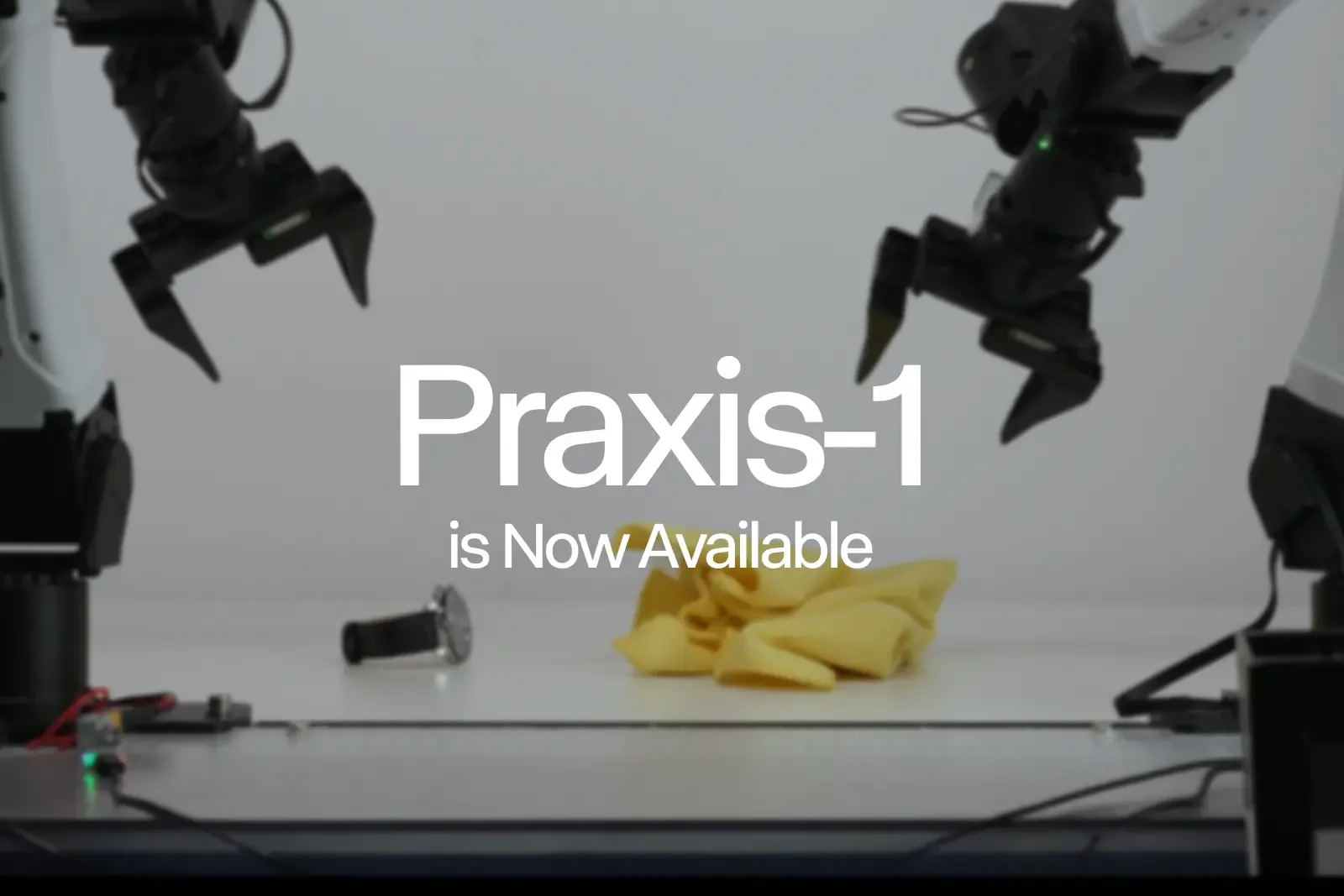
Runway teilte am 11. November mit, dass sein Weltaktionsmodell Praxis-1 für Roboter mit offenen Gewichten unter der Apache-2.0-Lizenz verfügbar ist, auch für kommerzielle Nutzung. Nach Firmenangaben erreicht das Modell auf NVIDIAs Benchmark RoboLab-120 eine Erfolgsquote von 46,2 Prozent über 1.200 Durchläufe, gegenüber 28,0 Prozent für pi0.5 von Physical Intelligence, und nach Feinabstimmung auf Googles RT-1-Roboter 80,0 Prozent auf SimplerEnv.
Der US-Videomodellanbieter Runway hat Praxis-1 am 11. November für alle Entwickler freigegeben, teilte das Unternehmen mit. Gewichte, Inferenz- und Feinabstimmungscode stehen unter Apache 2.0 und dürfen kommerziell genutzt werden. Vorgestellt wurde das Modell am 30. September; die Partner Noble Machines, Standard Bots und Ultra setzen es auf einem laufenden Humanoiden, einem Sechsachs-Industriearm und einem zweiarmigen Lagerroboter ein.
Ein Modell, das Bild und Bewegung zugleich vorhersagt
Praxis-1 ist ein Mixture-of-Experts-Diffusionstransformer mit 27 Mrd. Parametern, der die nächsten Videobilder und die nächsten Roboteraktionen gemeinsam vorhersagt. Das GitHub-Repository enthält Checkpoints für Einarm-, Zweiarm- und SO-101-Aufbauten samt NVFP4-Varianten; der Schnellstart verlangt eine GPU mit mindestens 80 GB Speicher. Nach Runways Zahlen liegt Praxis-1 auf RoboLab-120 mit 46,2 Prozent vor FLUX 3 Action (42,9), NVIDIA Cosmos3 Nano (36,8) und pi0.5 (28,0). Auf Googles RT-1-Roboter feinabgestimmt, kam es auf SimplerEnv auf 80,0 Prozent, die ursprüngliche RT-1-Policy auf 52,4.
MEKAWIRE-Analyse
Runway setzt darauf, dass Video der knappe Rohstoff für Roboterpolicies ist und nicht Teleoperationsdaten, die Hersteller für sich behalten.
Nach MEKAWIRE-Rechnung liegt Praxis-1 18,2 Prozentpunkte vor pi0.5. Runway nennt es das beste Weltaktionsmodell der Rangliste; The Robot Report wies darauf hin, dass es insgesamt auf Platz fünf liegt. Für europäische Roboterbauer und Integratoren zählt die Lizenz mehr als der Wert: Ein großes, auf Video vortrainiertes Modell lässt sich nun ohne Lizenzverhandlung auf eigene Zellen anpassen. Offen bleiben Ergebnisse auf echten Robotern bei den drei Partnern.
- Praxis-1
- Runway
- 46.2%
- 0
- FLUX 3 Action
- Not stated in the post
- 42.9%
- -3.3 pts
- Cosmos3 Nano
- NVIDIA
- 36.8%
- -9.4 pts
- pi0.5
- Physical Intelligence
- 28.0%
- -18.2 pts
Scores from Runway's Nov 11, 2026 post, data as of November 2026; gaps are MEKAWIRE calculations. Simulation benchmark, not real-robot results.
- 11. Nov. 2026, offene Gewichte, Apache 2.0, kommerziell nutzbar
- 27 Mrd. Parameter, MoE-Diffusionstransformer, Video und Aktionen
- 46,2 % über 1.200 Durchläufe (Runway)
- 18,2 Prozentpunkte (MEKAWIRE-Rechnung)
- SimplerEnv 80,0 % gegenüber 52,4 %
- eine GPU mit mindestens 80 GB, NVFP4-Varianten verfügbar
- Noble Machines, Standard Bots, Ultra
Warum das wichtig ist
Apache 2.0 weights and inference and fine-tuning code let robot developers evaluate and adapt Praxis-1 for commercial use. Runway reports 46.2% success over 1,200 RoboLab-120 episodes, an 18.2 percentage point lead over the cited pi0.5 result. This gives hardware makers another model option, but production reliability and deployment economics are not supplied.
Wettbewerbsanalyse
Physical Intelligence is the clearest benchmark comparator: its cited pi0.5 score is 28.0% against Praxis-1's Runway-reported 46.2%. Independent validation and details establishing comparable evaluation conditions are not supplied. NVIDIA spans both infrastructure and competing models through its physical-AI stack, while Skild AI is identified as a cross-embodiment rival without a supplied benchmark result.
Bewertungskontext
Physical Intelligence's $5.6B figure is a disclosed valuation, alongside $1B in total funding; neither is a public market cap. Standard Bots' $263M and Ultra's $50M are funding totals, with no valuations supplied. Runway's funding and valuation, Noble Machines' investment amount and NVIDIA's public market cap are not supplied, preventing a supported valuation comparison.
Zugrunde liegende Forschung
The supplied pi0.5 paper is relevant to the benchmark comparator, while SACQ addresses low-bit vision-language-action models. Magic-W0 addresses structured world-action modeling. Only titles are supplied, so their methods, results and applicability to Praxis-1 cannot be assessed.
Folgen für die Lieferkette
The quick start requires one GPU with at least 80 GB of memory, making compute capacity an evaluation constraint; NVFP4 versions are also available. Launch partners Noble Machines, Standard Bots and Ultra span humanoids, industrial arms and warehouse robots. Their integration scope, deployment volumes, component suppliers and commercial commitments are not supplied.
Worauf jetzt zu achten ist
Watch for independent RoboLab-120 replication and partner results on physical robots, including failure rates and task coverage. Seek inference latency, fine-tuning costs and measured memory requirements for NVFP4 versions. The reported 80.0% SimplerEnv result follows RT-1 fine-tuning; evidence of transfer to production settings remains missing.
Analystensicht
Praxis-1 merits technical evaluation because commercial licensing and released code lower access barriers. Its reported benchmark lead supports testing, while a 46.2% success rate leaves substantial failures within that evaluation. Investment conviction should depend on repeatable partner deployments and operating costs, neither of which is supplied.
Offene Fragen
Do Praxis-1 and pi0.5 use comparable RoboLab-120 evaluation conditions, and can independent teams reproduce the gap? What latency, compute cost and intervention rate do partners observe on physical robots? What paid commitments and deployment volumes sit behind the launch partnerships?