Runway开源270亿参数机器人模型Praxis-1,RoboLab-120成功率46.2%
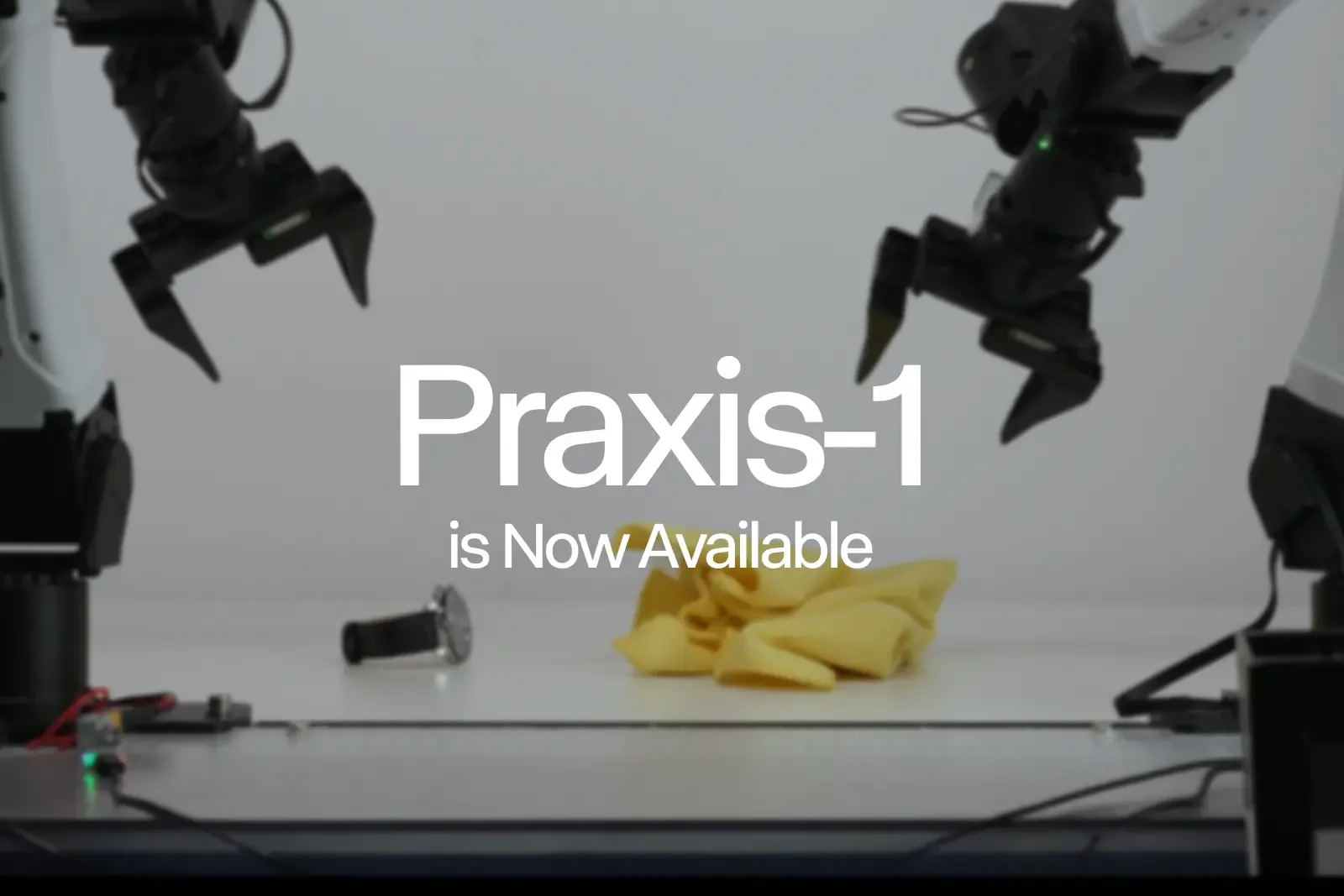
视频生成公司Runway于11月11日宣布,其机器人世界动作模型Praxis-1以Apache 2.0许可开放权重,允许商用。公司公布的数据显示,该模型在英伟达RoboLab-120基准1200次测试中成功率46.2%,高于Physical Intelligence的pi0.5(28.0%);在谷歌RT-1机器人上微调后,SimplerEnv成功率达80.0%。
美国视频AI公司Runway于11月11日发布公司公告,宣布向所有开发者开放机器人世界动作模型Praxis-1,权重、推理代码和微调代码均以Apache 2.0许可发布,可用于商业用途。该模型于9月30日首次亮相,合作伙伴Noble Machines、Standard Bots和Ultra已在足式人形机器人、六轴工业机械臂和双臂仓储机器人上测试。
同时预测视频与动作的270亿参数模型
Praxis-1是270亿参数的混合专家扩散Transformer,同时预测下一段视频和下一段机器人动作。GitHub仓库提供单臂、双臂和SO-101检查点及NVFP4量化版本,基础运行需要一块显存不低于80GB的GPU。按Runway公布的数据,其在RoboLab-120的1200次测试中成功率为46.2%,高于FLUX 3 Action(42.9%)、英伟达Cosmos3 Nano(36.8%)和pi0.5(28.0%)。在训练中未出现过的谷歌RT-1机器人上微调后,SimplerEnv成功率为80.0%,原RT-1策略为52.4%。
MEKAWIRE 分析
Runway押注机器人策略的稀缺要素是它手中的视频,而不是机器人厂商各自掌握的遥操作数据。
按MEKAWIRE计算,Praxis-1比pi0.5高18.2个百分点,约为其1.65倍。但Runway称其为排行榜上最好的世界动作模型,The Robot Report则指出其总排名第五。46.2%的仿真成功率也意味着过半测试仍然失败。对国内大量做具身大模型和灵巧操作的企业而言,Apache 2.0许可意味着可直接在开源大模型上微调,开源基座的竞争将更激烈。后续关注三家合作方的真机成功率和Hugging Face上的第三方微调。
- Praxis-1
- Runway
- 46.2%
- 0
- FLUX 3 Action
- Not stated in the post
- 42.9%
- -3.3 pts
- Cosmos3 Nano
- NVIDIA
- 36.8%
- -9.4 pts
- pi0.5
- Physical Intelligence
- 28.0%
- -18.2 pts
Scores from Runway's Nov 11, 2026 post, data as of November 2026; gaps are MEKAWIRE calculations. Simulation benchmark, not real-robot results.
- 2026年11月11日,Apache 2.0开源,允许商用
- 270亿参数混合专家扩散Transformer,同时预测视频与动作
- 1200次测试成功率46.2%(Runway数据)
- 28.0%,差距18.2个百分点(MEKAWIRE计算)
- SimplerEnv 80.0%,原策略52.4%
- 一块80GB以上显存GPU,提供NVFP4版本
- Noble Machines、Standard Bots、Ultra
为何重要
Apache 2.0 weights and inference and fine-tuning code let robot developers evaluate and adapt Praxis-1 for commercial use. Runway reports 46.2% success over 1,200 RoboLab-120 episodes, an 18.2 percentage point lead over the cited pi0.5 result. This gives hardware makers another model option, but production reliability and deployment economics are not supplied.
竞争对手分析
Physical Intelligence is the clearest benchmark comparator: its cited pi0.5 score is 28.0% against Praxis-1's Runway-reported 46.2%. Independent validation and details establishing comparable evaluation conditions are not supplied. NVIDIA spans both infrastructure and competing models through its physical-AI stack, while Skild AI is identified as a cross-embodiment rival without a supplied benchmark result.
估值背景
Physical Intelligence's $5.6B figure is a disclosed valuation, alongside $1B in total funding; neither is a public market cap. Standard Bots' $263M and Ultra's $50M are funding totals, with no valuations supplied. Runway's funding and valuation, Noble Machines' investment amount and NVIDIA's public market cap are not supplied, preventing a supported valuation comparison.
研究依据
The supplied pi0.5 paper is relevant to the benchmark comparator, while SACQ addresses low-bit vision-language-action models. Magic-W0 addresses structured world-action modeling. Only titles are supplied, so their methods, results and applicability to Praxis-1 cannot be assessed.
供应链影响
The quick start requires one GPU with at least 80 GB of memory, making compute capacity an evaluation constraint; NVFP4 versions are also available. Launch partners Noble Machines, Standard Bots and Ultra span humanoids, industrial arms and warehouse robots. Their integration scope, deployment volumes, component suppliers and commercial commitments are not supplied.
后续看点
Watch for independent RoboLab-120 replication and partner results on physical robots, including failure rates and task coverage. Seek inference latency, fine-tuning costs and measured memory requirements for NVFP4 versions. The reported 80.0% SimplerEnv result follows RT-1 fine-tuning; evidence of transfer to production settings remains missing.
分析师观点
Praxis-1 merits technical evaluation because commercial licensing and released code lower access barriers. Its reported benchmark lead supports testing, while a 46.2% success rate leaves substantial failures within that evaluation. Investment conviction should depend on repeatable partner deployments and operating costs, neither of which is supplied.
值得追问的问题
Do Praxis-1 and pi0.5 use comparable RoboLab-120 evaluation conditions, and can independent teams reproduce the gap? What latency, compute cost and intervention rate do partners observe on physical robots? What paid commitments and deployment volumes sit behind the launch partnerships?