ランウェイ、ロボット用270億パラメータモデル「Praxis-1」の重みを公開、成功率46.2%
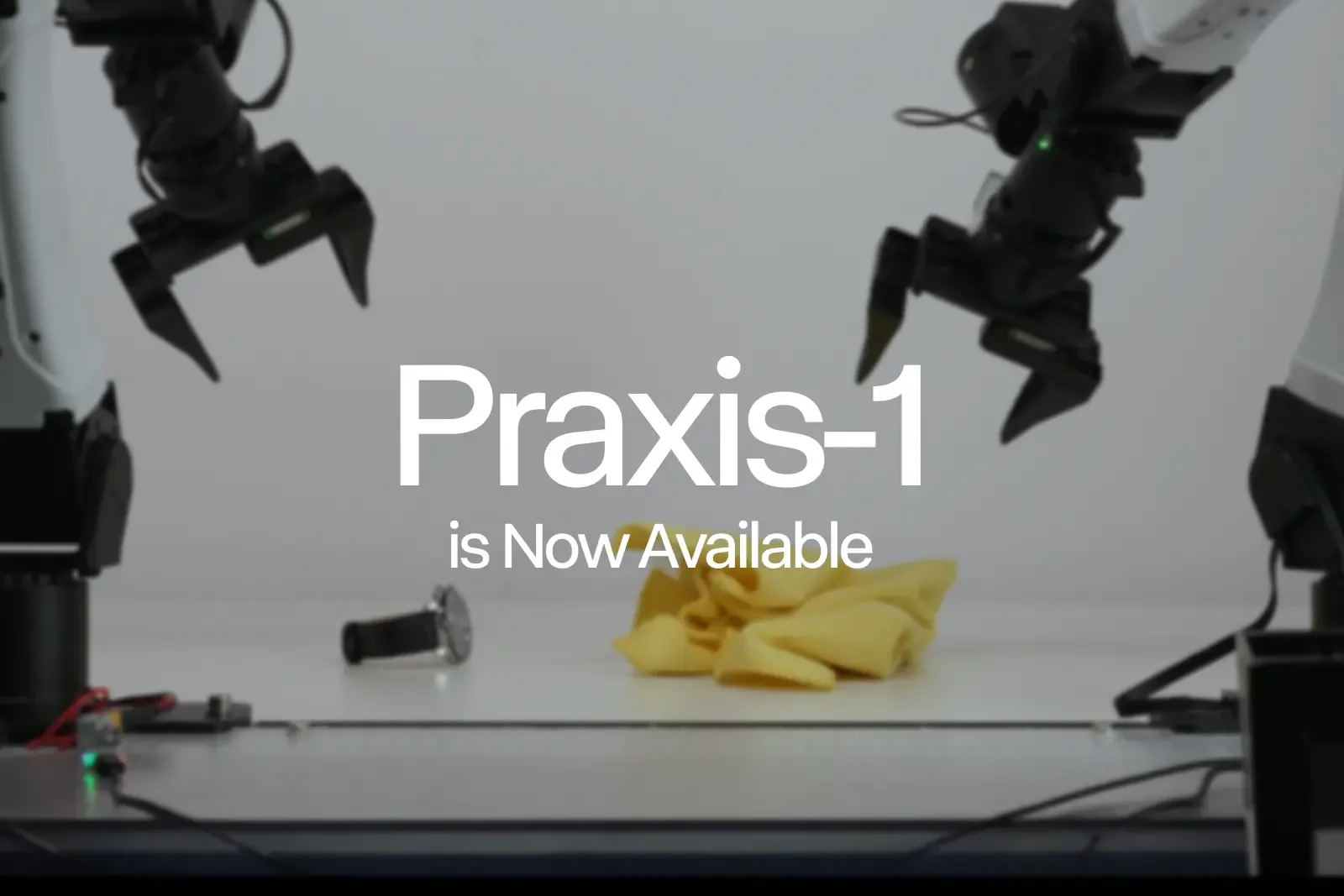
動画生成AIの米ランウェイは11日、ロボット向けワールドアクションモデル「Praxis-1」の重みをApache 2.0ライセンスで公開し、商用利用も認めると発表した。同社によると、エヌビディアのベンチマークRoboLab-120の1200回試行で成功率46.2%となり、フィジカルインテリジェンスのpi0.5(28.0%)を上回った。
グーグルのRT-1ロボットで微調整した後のSimplerEnvでは80.0%だった。
米ランウェイは11日、ロボット向けワールドアクションモデル「Praxis-1」をすべての開発者に公開したと発表した。重みと推論コード、微調整コードをApache 2.0で公開し、商用利用も認める。9月30日に初めて発表したモデルで、提携先のノーブルマシンズ、スタンダードボッツ、ウルトラが脚型ヒューマノイド、6軸産業用アーム、双腕の物流ロボットで試してきた。
映像と動作を同時に予測する270億パラメータ
Praxis-1は次の映像と次のロボット動作を同時に予測する270億パラメータの混合専門家型拡散トランスフォーマー。GitHubには単腕、双腕、SO-101向けのチェックポイントとNVFP4版があり、基本の実行には80GB以上のメモリを持つGPUが1枚必要だ。同社の数値ではRoboLab-120の1200回試行で成功率46.2%となり、FLUX 3 Action(42.9%)、エヌビディアのCosmos3 Nano(36.8%)、pi0.5(28.0%)を上回った。学習に含まれないグーグルのRT-1ロボットで微調整すると、SimplerEnvで80.0%と元のRT-1方策(52.4%)を上回った。
MEKAWIRE分析
ランウェイは、ロボット方策の学習で足りないのはメーカーが抱え込む遠隔操作データではなく、自社が持つ映像だと賭けている。
MEKAWIREの試算では、pi0.5との差は18.2ポイント、成功率で1.65倍。ただしランウェイはワールドアクションモデルの首位としているのに対し、ザロボットリポートは総合では5位と伝えた。シミュレーションで46.2%という数字は、半数以上がまだ失敗することも意味する。日本のロボットメーカーやSIerにとっては、契約交渉なしに大規模な映像事前学習モデルを自社の設備向けに微調整できる点が大きい。今後は提携3社の実機での成功率と、外部による微調整事例が焦点となる。
- Praxis-1
- Runway
- 46.2%
- 0
- FLUX 3 Action
- Not stated in the post
- 42.9%
- -3.3 pts
- Cosmos3 Nano
- NVIDIA
- 36.8%
- -9.4 pts
- pi0.5
- Physical Intelligence
- 28.0%
- -18.2 pts
Scores from Runway's Nov 11, 2026 post, data as of November 2026; gaps are MEKAWIRE calculations. Simulation benchmark, not real-robot results.
- 2026年11月11日、Apache 2.0、商用利用可
- 270億パラメータの混合専門家型拡散トランスフォーマー、映像と動作を同時予測
- 1200回で成功率46.2%(ランウェイ発表)
- 28.0%、差18.2ポイント(MEKAWIRE試算)
- SimplerEnv 80.0%、元の方策は52.4%
- 80GB以上のGPU 1枚、NVFP4版あり
- ノーブルマシンズ、スタンダードボッツ、ウルトラ
なぜ重要か
Apache 2.0 weights and inference and fine-tuning code let robot developers evaluate and adapt Praxis-1 for commercial use. Runway reports 46.2% success over 1,200 RoboLab-120 episodes, an 18.2 percentage point lead over the cited pi0.5 result. This gives hardware makers another model option, but production reliability and deployment economics are not supplied.
競合分析
Physical Intelligence is the clearest benchmark comparator: its cited pi0.5 score is 28.0% against Praxis-1's Runway-reported 46.2%. Independent validation and details establishing comparable evaluation conditions are not supplied. NVIDIA spans both infrastructure and competing models through its physical-AI stack, while Skild AI is identified as a cross-embodiment rival without a supplied benchmark result.
企業価値の背景
Physical Intelligence's $5.6B figure is a disclosed valuation, alongside $1B in total funding; neither is a public market cap. Standard Bots' $263M and Ultra's $50M are funding totals, with no valuations supplied. Runway's funding and valuation, Noble Machines' investment amount and NVIDIA's public market cap are not supplied, preventing a supported valuation comparison.
裏付けとなる研究
The supplied pi0.5 paper is relevant to the benchmark comparator, while SACQ addresses low-bit vision-language-action models. Magic-W0 addresses structured world-action modeling. Only titles are supplied, so their methods, results and applicability to Praxis-1 cannot be assessed.
サプライチェーンへの影響
The quick start requires one GPU with at least 80 GB of memory, making compute capacity an evaluation constraint; NVFP4 versions are also available. Launch partners Noble Machines, Standard Bots and Ultra span humanoids, industrial arms and warehouse robots. Their integration scope, deployment volumes, component suppliers and commercial commitments are not supplied.
今後の注目点
Watch for independent RoboLab-120 replication and partner results on physical robots, including failure rates and task coverage. Seek inference latency, fine-tuning costs and measured memory requirements for NVFP4 versions. The reported 80.0% SimplerEnv result follows RT-1 fine-tuning; evidence of transfer to production settings remains missing.
アナリストの見方
Praxis-1 merits technical evaluation because commercial licensing and released code lower access barriers. Its reported benchmark lead supports testing, while a 46.2% success rate leaves substantial failures within that evaluation. Investment conviction should depend on repeatable partner deployments and operating costs, neither of which is supplied.
問うべき論点
Do Praxis-1 and pi0.5 use comparable RoboLab-120 evaluation conditions, and can independent teams reproduce the gap? What latency, compute cost and intervention rate do partners observe on physical robots? What paid commitments and deployment volumes sit behind the launch partnerships?