エヌビディアGR00T 2、1回の実演で50作業平均71%、5回で95%
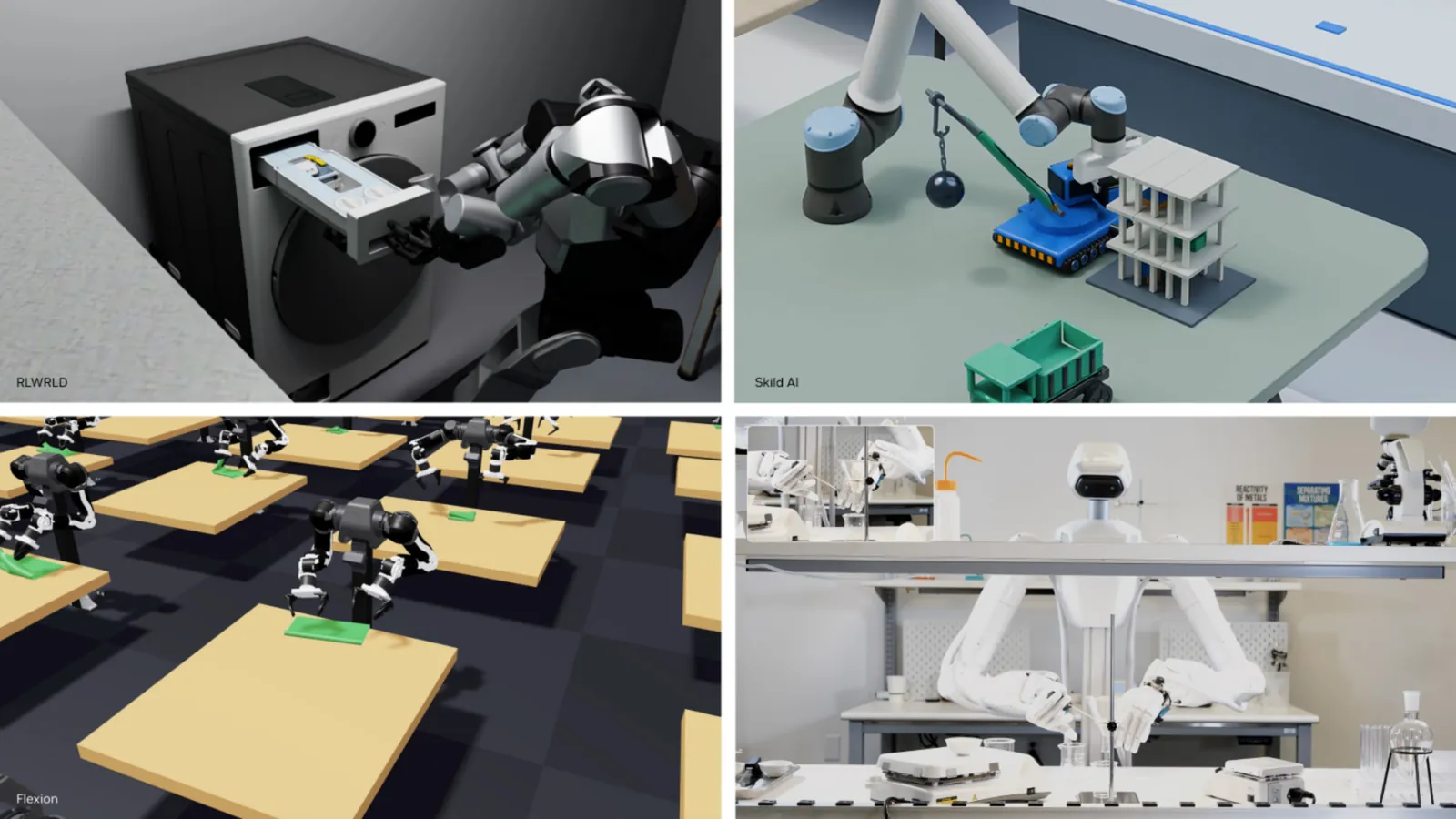
エヌビディアは9日、米オースティンで開かれたロボット学習の国際会議CoRLに合わせたブログで、Cosmos基盤の新しいワールドアクションモデルGR00T 2が作業ごとに1回の実演で50作業の平均成功率71%、5回で95%を達成し、作業別の実演なしでも50作業中40作業を少なくとも1回完了したと発表した。
同社の研究ページによると、事前学習には一人称視点の人の動画40万2730時間を使い、うち10万時間を公開した。同社が示すGR00T N1.7の2万854時間の約19倍にあたる。Newton物理エンジンで学習効率を最大2.5倍にしたIsaac Lab 3.0も公開した。
エヌビディアは9日、米オースティンで開かれたロボット学習の国際会議(CoRL)でGR00T 2を発表した。同社ブログによると、GR00T 2はCosmos基盤上に構築したオープンなワールドアクションモデルだ。作業ごとに1回の実演だけで、評価した50作業の平均成功率は71%、実演を5回に増やすと95%に達したと同社は説明した。作業別の実演がまったくない状態でも、50作業中40作業を少なくとも1回完了した。人の実演から学び、ロボットの実演なしで別の形のロボットに技能を移せるという。
焦点は学習データにある。ブログは、GR00T 2がロボットのデータに加え、エヌビディアがオープンソースで公開した一人称視点の人の動画10万時間で学習したと紹介した。この10万時間は公開分だ。GR00T 2の研究ページによると、事前学習データは働く人の一人称視点動画40万2730時間、ロボットの遠隔操作2万3500時間、手持ちグリッパーによる実演1万184時間で構成し、人の動画のうち10万時間をHugging Faceで公開した。同社のGR00T GitHubリポジトリは現在もGR00T N1.7を最新の公開版としており、N1.7の事前学習にEgoScaleの人の動画2万時間を使ったと記している。同社がHugging Faceに載せた記事では正確な数字は2万854時間だ。MEKAWIREの計算(40万2730÷2万854)では、GR00T 2の事前学習に使った人の動画はN1.7の約19倍になる。同社はGR00T 2がRoboCasa365、RoboLab、RoboDojo、MolmoSpacesの各ベンチマークのVLAとワールドアクションモデル部門ですべて上位3位以内に入るとした。ブログによると、Nexuniが洗濯物の処理で試験し、フォックスコンがサーバー製造の自動化に使い、シーメンスが産業用途で評価している。
Isaac Lab 3.0は学習の場をNewtonへ
オープンソースのロボット学習フレームワークIsaac Lab 3.0では、エージェントが学習環境を組み立て、PhysXとNewtonの物理ソルバーを切り替え、GR00Tなどの基盤モデルに強化学習による追加学習を施せる。Newtonとの統合でケーブルや布などの変形物体、関節の多いロボットハンドも再現できる。視覚ベースの器用な操作のベンチマークでは、Newtonを使うIsaac Lab 3.0の学習スループットがPhysXを使う2.3の最大2.5倍になったと同社は説明した。スキルドAIはNewton上の剛体物理ソルバーSTEELを発表し、Flexion、FieldAI、RLWRLDも協力企業として名前が挙がった。
GR00T 2の立ち位置
- エヌビディアGR00T N1.7
- 現在のGitHub公開版
- 2万854時間(EgoScale)
- あり、30億パラメーター、エヌビディアのオープンモデルライセンス
- READMEではN1.6と同等の性能、RTX PRO 6000で約40Hz
- エヌビディアGR00T 2
- 2026年11月9日
- 事前学習40万2730時間(10万時間公開)とロボットデータ
- 11月14日時点で公開リポジトリになし
- 4つの順位表で上位3位
- ランウェイPraxis-1
- 2026年9月30日(重み公開は11月11日)
- 非開示
- あり、270億、Apache 2.0
- RoboLab-120で46.2%
出所:エヌビディアのブログ(11月9日)、同社GR00T 2研究ページ、同社Isaac-GR00T GitHubのREADME(11月14日確認)、ランウェイの発表(9月30日と11月11日)。人の動画の倍率はMEKAWIRE算出。
2026年11月14日時点
各社のベンチマークは単純に比べられない。ランウェイは11日にPraxis-1のRoboLab-120単一スコアを示したが、エヌビディアは4つの順位表での順位帯しか示していない。
MEKAWIRE分析
オープンAIがロボットチームを汎用研究に吸収した同じ週に、エヌビディアは人の動画を中心に学習したロボット専用のワールドアクションモデルに賭けを強めた。どちらも最も安い道ということはありえない。
商業的に重要なのは71%から95%への曲線だ。5回の実演で実作業95%が出るなら工場の導入コストは大きく下がる。人手不足に悩む日本の製造現場やロボットメーカーにとって、実演回数の少なさは導入判断に直結する。反論は、50作業と条件がエヌビディア自身の設定であり、MEKAWIREが14日に確認した時点で公開リポジトリに重みがなかったことだ。重みとライセンスを載せたGR00T 2のモデルカード、第三者の順位表への登録、フォックスコンやシーメンスが実際の生産ラインを公表するかが注目点となる。
- 作業ごと1回の実演で50作業平均71%、5回で95%(エヌビディア)
- 50作業中40作業を少なくとも1回完了
- 事前学習40万2730時間(10万時間公開)、GR00T N1.7の2万854時間の約19倍(MEKAWIRE算出)
- RoboCasa365、RoboLab、RoboDojo、MolmoSpacesで上位3位(エヌビディア)
- 学習スループットが2.3の最大2.5倍
- Nexuni、フォックスコン、シーメンス、MicroAGI
- 2026年11月9日、CoRL、オースティン
なぜ重要か
NVIDIA reports 71% average success across 50 tasks with one demonstration per task and 95% with five, suggesting lower task-specific data requirements if results transfer to production. Completing 40 of 50 tasks at least once without task demonstrations indicates breadth but leaves repeatability unresolved. Named users are Nexuni, Foxconn, Siemens and MicroAGI, while deployment volumes and commercial terms are absent.
競合分析
The supplied material lists Physical Intelligence as a direct rival to Skild AI in robot foundation models, and Skild AI builds a general-purpose model meant to run on many robot types. Runway released Praxis-1 with open weights on Nov 11 and is extending its world models into robot control, per the supplied company description. RLWRLD, Flexion and FieldAI are also building robot foundation or autonomy stacks, but the input does not position them against GR00T 2, and it provides no matched benchmark comparison with NVIDIA.
企業価値の背景
NVIDIA is public, but the supplied material gives no market cap or valuation estimate, so no pricing assessment is possible here. For peer context only, Skild AI's $14B valuation is disclosed, with $1.7B total funding including a $1.4B Series C. Flexion's $50M and FieldAI's $405M are funding figures, and no valuation is supplied for either.
裏付けとなる研究
The supplied NVIDIA papers are ChunkTrust, Magic-W0 and AlphaNIST, whose titles cover execution horizons, world-action modeling and assembly skills. RLWRLD lists PointWAM and PaceVLA, and Skild AI lists a sim-to-real humanoid locomotion paper. No results or direct links to GR00T 2's reported gains are supplied.
サプライチェーンへの影響
NVIDIA supplies Isaac, GR00T, Cosmos and Jetson Thor, giving it several points of participation in robot development. GR00T 2 pretraining uses 402,730 hours of egocentric human video, of which 100,000 hours are openly released, about 19 times the 20,854 hours NVIDIA gives for GR00T N1.7 (MEKAWIRE calculation). Hardware requirements, component suppliers and deployment costs are not specified.
今後の注目点
Watch for independent replication of the 71% and 95% success rates, including repeated trials of tasks completed without demonstrations. Production volumes and paid deployments among named users would clarify commercial adoption. Check whether Isaac Lab 3.0's claimed throughput of up to 2.5x versus Isaac Lab 2.3 with PhysX translates into lower training costs on comparable workloads.
アナリストの見方
If fewer demonstrations and faster simulation reduce development effort, NVIDIA's physical-AI stack could see broader adoption. The supplied evidence, which is NVIDIA's own reporting, supports technical progress, while revenue impact is unquantified. Repeatable production performance and deployment economics should drive any commercial assessment.
問うべき論点
How many trials underpin each success rate, and what hardware, task selection and evaluation conditions were used? Which named users have paid production deployments, and what are their intervention rates, training costs and deployment volumes?