FANUC opens $18M US training academy, lifting capacity to 17,500 trainees a year
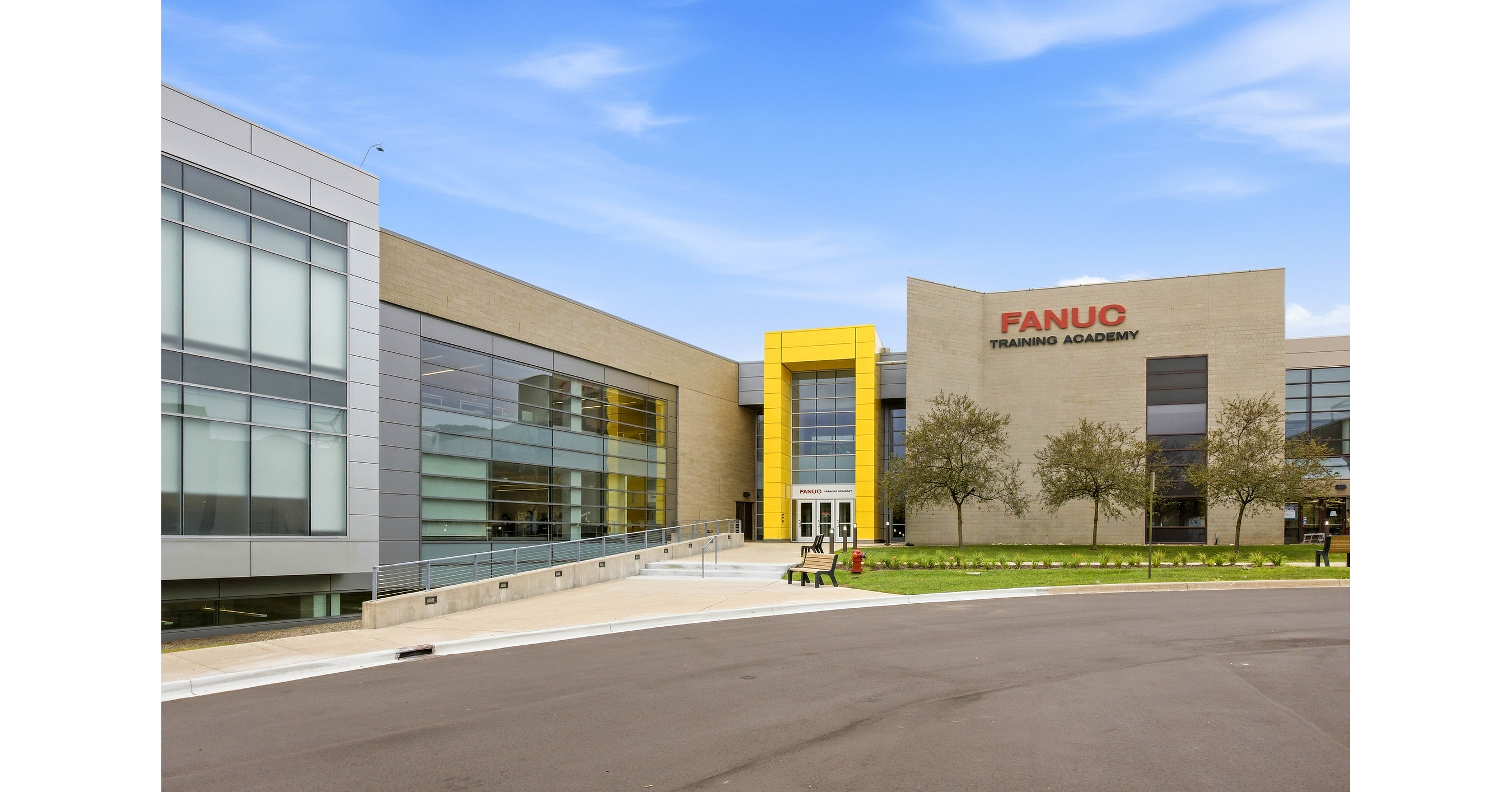
FANUC America opened a $18 million-plus training academy in Auburn Hills, Michigan, on Oct 19, raising classrooms from 13 to 28 and US training capacity to about 17,500 people a year across nine sites, alongside a $90 million Michigan plant announced in March.
FANUC America opened a new training academy in Auburn Hills, Michigan, on Oct 19, a three-storey building that cost more than $18 million and that the company calls the largest corporate robotics and industrial automation training centre in the United States, it said in a press release distributed by PR Newswire. The building replaces the training floor inside its Rochester Hills headquarters and more than doubles the number of classrooms, from 13 to 28. [Company profile](/companies/fanuc).
The numbers say where FANUC thinks the US automation market is stuck. The company is not adding a robot line with this money. It is adding seats for the technicians, integrators and teachers who have to install and run the robots it already sells.
What $18 million buys in Auburn Hills
The academy covers 132,000 square feet, of which 56,300 square feet is training space, or 42.7% of the building by our arithmetic. It sits on FANUC America's West Campus, which opened in 2024 at a cost of $110 million. FANUC said its US training network, the new academy plus eight regional sites, can now train about 17,500 people a year on more than 160 robots and over 40 CNC simulators. That works out to roughly 1,944 trainees per site per year on average, a MEKAWIRE calculation that ignores differences in site size. The building also holds space for a customer support call centre due in 2027.
Mike Cicco, FANUC America's president and chief executive, said in the release that the shortage of skilled workers remains one of the industry's biggest problems as manufacturers invest in robotics and AI. US Labor Secretary Keith Sonderling, quoted in the same release, put FANUC's Michigan expansion at $108 million, which matches the $18 million academy plus a $90 million manufacturing facility announced in March.
- West Campus, Auburn Hills
- Opened 2024
- $110M
- Footprint above 2 million sq ft
- Automation Endowed Scholarship Fund (with SME Education Foundation)
- 2024
- $1M
- Scholarships
- Michigan manufacturing facility
- Announced March 2026
- $90M
- Production-ready capacity for possible US robot manufacturing
- FANUC Training Academy, Auburn Hills
- Opened Oct 19, 2026
- More than $18M
- 28 classrooms, 56,300 sq ft of training space
Source: FANUC America press release, Oct 19, 2026. Total of the four named amounts: at least $219M (110 + 90 + 18 + 1), a MEKAWIRE sum of disclosed figures; FANUC has not given a combined total beyond the $108M Michigan figure quoted by the US Labor Secretary.
As of Oct 19, 2026
Training is FANUC's quietest sales channel
Beyond paying customers, FANUC's CERT certification programme reaches more than 1,700 schools in North America and about 60,000 students a year, around 35 students per school on average. Those students learn on FANUC controllers and teach pendants. The parent company, which [reported record sales of ¥857.8 billion](/news/fanuc-fy2025-record-sales-china-robot-orders-20260424) for the year to March 2026 with robots at 44.1% of revenue, is also moving its software toward AI: its [AI Welding Agent](/news/fanuc-ai-welding-agent-gemini-20260911), which writes welding programs from a photographed drawing, is due to ship at the end of December.
MEKAWIRE analysis
FANUC is buying familiarity, not floor space: every technician trained on its controllers lowers the cost of choosing FANUC for the next cell.
The academy is small next to the parent's revenue, and training centres are common across the industry, which is the strongest argument that this is routine. Against that, the release ties training directly to the $90 million plant that would give FANUC production-ready capacity to build robots in the United States, a hedge for a market where tariffs and reshoring decide where robots are made. Our [Japan physical AI explainer](/news/japan-physical-ai-strategy-explained-fanuc-yaskawa-hitachi-partnerships-vs-venture-funding-2026-20261016) found that Japan's incumbents grow through alliances rather than start-ups; in the US, FANUC is adding a third lever, the workforce.
Bull case: AI-assisted programming and a larger trained base shorten deployment times and lift US robot orders. Bear case: training capacity grows faster than factory demand if US manufacturing investment slows. Signals to watch are FANUC's results for the quarter to September, the year-end shipment of the AI Welding Agent, and whether the Michigan facility starts producing robots rather than only holding the option.
- More than $18 million
- 132,000 sq ft, 56,300 sq ft training space (42.7%)
- FANUC Training Academy, Auburn Hills, Michigan, Oct 19, 2026
- $90 million Michigan manufacturing facility announced March 2026
- CERT programme: 1,700+ schools, about 60,000 students a year
- 13 to 28
- Academy plus 8 regional sites, about 17,500 trainees a year, 160+ robots, 40+ CNC simulators