Genesis AI raises $500M Series A at $3.5B valuation to scale its Eno robot
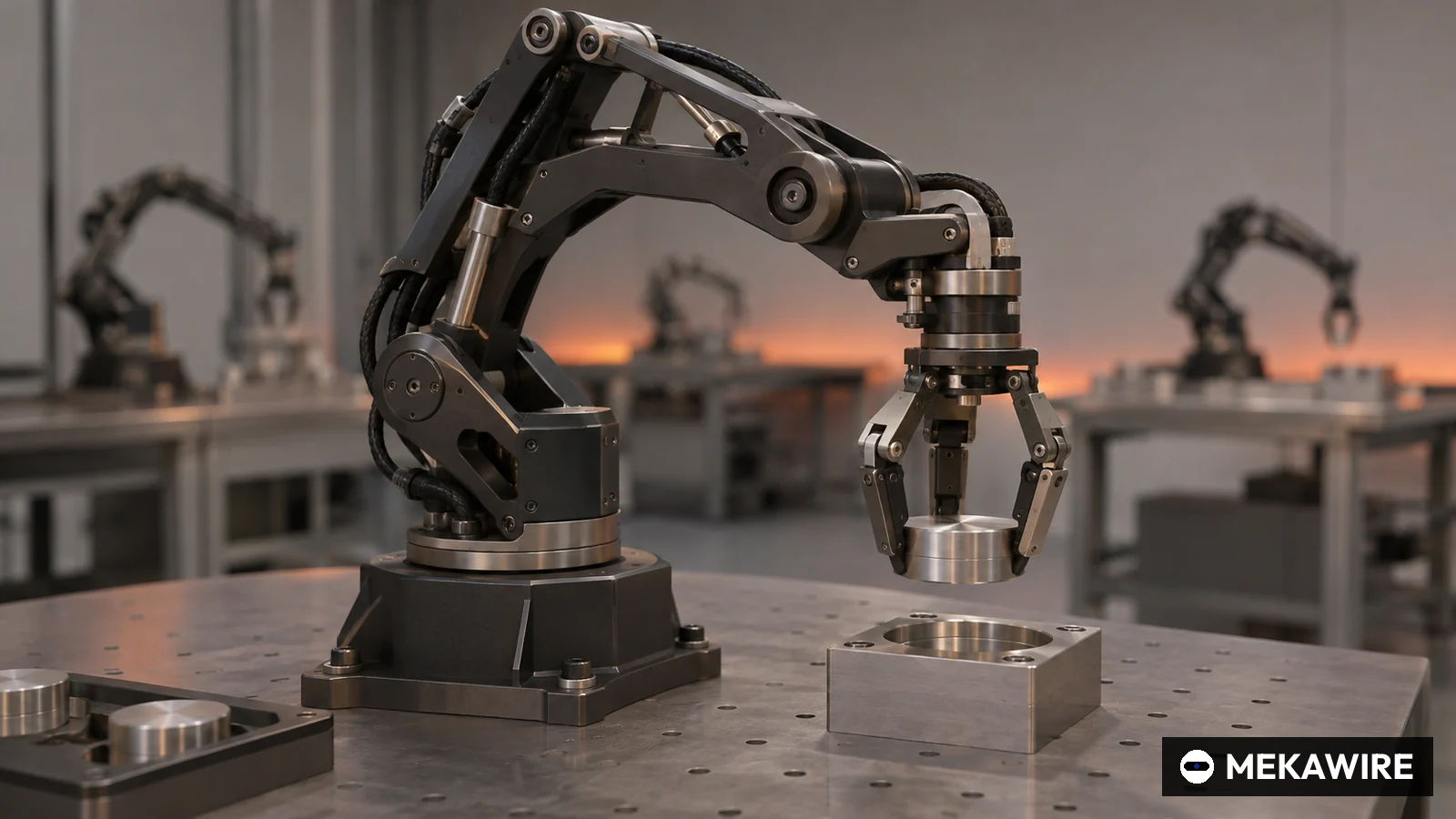
Genesis AI said on Nov 17, 2026 that it raised $500 million in Series A funding at a $3.5 billion post-money valuation, co-led by Premji Invest, Khosla Ventures and Eclipse, with NVIDIA, AMD Ventures, Samsung Next and Bpifrance among the participants.
The Paris and California robot maker will spend it on training data, dexterous manipulation and deploying its Eno robot. The round equals 14.3% of the valuation and is 4.8 times the $105 million it announced in 2025 (MEKAWIRE calc.).
Genesis AI said in a press release on Nov 17, 2026 that it raised $500 million in Series A funding at a $3.5 billion post-money valuation, co-led by Premji Invest, Khosla Ventures and Eclipse. The robot maker, which gives Paris and San Carlos, California as its bases, builds a general-purpose robot called Eno together with its own AI model. Its only earlier announced round was $105 million in 2025, so the new round is 4.8 times the first (MEKAWIRE calc.) and takes announced funding to $605 million.
Twelve named institutions and five individuals joined the round
Besides the three co-leads, Genesis AI listed Durable Capital Partners, accounts advised by T. Rowe Price Associates, Bpifrance, HSG, NVIDIA, AMD Ventures, Zoom, Samsung Next and Ericsson as participants. Individual investors named in the release are former Google chief executive Eric Schmidt, Zoom chief executive Eric Yuan, former Yahoo chief executive Jerry Yang, French entrepreneur Xavier Niel and former Tesla finance chief Zach Kirkhorn. Khosla Ventures, Eclipse, Bpifrance, HSG, Schmidt and Niel had already backed the 2025 round, according to MEKAWIRE's earlier coverage of that announcement.
The company said the money will go to four things: more data acquisition and large-scale training, human-level manipulation, deploying Eno with customers at scale, and hiring AI researchers and robotics engineers. It said it is ramping up production of Eno and will first place the robot in manufacturing, logistics and laboratories, then in hospitality and healthcare, and later in consumer and outdoor uses.
One glove design links people, data and the robot hand
Genesis builds the whole stack itself. The release describes four parts: GENE, its foundation model; a dexterous hand that matches both a human hand and the company's data collection glove, which it calls a 1:1:1 mapping; Genesis World, a simulation platform; and Eno. Workers wear the glove during their normal jobs, and the recorded data trains the model that drives a hand of the same proportions. Chief executive Zhou Xian said in the release that building everything in-house lets the company improve the whole robot in one closed loop.
What the release leaves out
The release names no customer, order volume, shipment count or revenue. TechCrunch, which visited the company's Silicon Valley facility, reported on Nov 17 that Genesis has built 30 to 40 Eno units, has chosen a contract manufacturer that will start work in the United States next year and is piloting the robot with a handful of undisclosed customers. It also reported that the dexterous hands currently last a few weeks of regular work before they have to be replaced. Those points are reported by one outlet and are not in the company's own release. The company's website says it plans to begin targeted customer deployments by the end of 2026.
MEKAWIRE analysis
Investors put $500 million into Genesis at a $3.5 billion post-money valuation before it has disclosed a single shipment, on the strength of a data method and a hand design. The price says the scarce asset in general-purpose robots is manipulation data, not the body.
- Skild AI
- Series C
- 2026-01-14
- 1.4
- over 14
- under 10.0%
- Agile Robots
- Series F
- 2026-11-12
- 0.5
- 8.5
- 5.9%
- Genesis AI
- Series A
- 2026-11-17
- 0.5
- 3.5
- 14.3%
- Path Robotics
- Series E
- 2026-11-10
- 0.3
- 2.45
- 12.2%
Amounts and valuations as each company announced them. Genesis AI states its figure is post-money; for the other three the disclosed valuation is used as given. Skild AI disclosed a valuation of over $14 billion, so its share is below 10.0%. Share = amount divided by valuation (MEKAWIRE calc.).
As of Nov 17, 2026
The $500 million equals 14.3% of the post-money valuation (MEKAWIRE calc.). That is a larger slice than in the other three recent rounds in the table, which fits an early company selling more of itself to fund hardware. Among rounds labelled Series A in MEKAWIRE's funding database, Genesis matches Mind Robotics' $500 million of March 2026 and sits above Rhoda AI's $450 million of the same month. Apptronik's $520 million Series A extension of February 2026 was larger, as was the roughly $900 million Series A that XPeng's robot unit Dogotix announced in August 2026, which MEKAWIRE covered at the time. The latest period totals are in MEKAWIRE's funding data report.
The strongest counter-argument is that Genesis already has a route to factories. On June 16, 2026 it announced a long-term partnership with LG CNS to evaluate and validate its robots for manufacturing and logistics at LG operations in the United States, starting with a use-case review and then a pilot. That is an integration channel, not an order.
Three things will test the valuation: whether targeted deployments begin by the end of 2026 as the website says, whether US contract manufacturing starts in 2027 as TechCrunch reported, and whether the LG CNS pilot is followed by a named site or a unit count.
- Premji Invest, Khosla Ventures, Eclipse
- $500M, announced Nov 17, 2026
- $105M in 2025; new round is 4.8x (MEKAWIRE calc.)
- 30 to 40, TechCrunch reported; not in the release
- $3.5B
- $605M in two rounds (MEKAWIRE calc.)
- 14.3% (MEKAWIRE calc.)
Why it matters
Genesis AI is putting $500 million into training data, dexterous manipulation and deployment of its Eno robot. The investment case hinges on whether its general robotics model, trained on in-house simulation data, can handle customer tasks reliably enough to support repeat deployments.
Rival analysis
Genesis AI's $500 million Series A matches Agile Robots' Series F and Mind Robotics' financing in dollar terms. It falls below Apptronik's Series A of more than $935 million and exceeds Path Robotics' $300 million Series E. The supplied figures compare capital raised. They offer no common measure of fleet size, revenue or manipulation performance.
Valuation context
Genesis AI disclosed a $3.5 billion post-money valuation for its Series A. The supplied material gives no public market capitalization or independent valuation estimate. MEKAWIRE calculates that the round equals 14.3% of the post-money valuation and is 4.8 times the $105 million announced in 2025, bringing announced funding to $605 million.
Related papers
The supplied material includes no research papers or published benchmarks for Eno. Task-level success rates on unfamiliar objects, along with the frequency of human intervention, would help assess how well its manipulation skills transfer from simulation to customer sites.
Supply-chain implications
Genesis AI announced a strategic partnership with LG CNS, which operates the PhysicalWorks robot training and operations platform. NVIDIA, AMD Ventures and Samsung Next participated in the round. The supplied material gives no Eno component suppliers, manufacturing capacity or procurement commitments.
Signals to watch
Genesis AI is taking waitlist signups and targeting customer deployments by the end of 2026. TechCrunch reported that 30 to 40 Eno units had been built. Watch for the number installed at customer sites and how many deployments carry paid contracts.
Analyst view
The size of the round gives Genesis AI room to develop the model and deploy hardware in parallel. The commercial milestone is a customer expanding Eno to additional workstations or sites, with installation and ongoing support costs low enough to make each rollout viable.
Questions you should be asking
What uptime and intervention rates will customers require before accepting Eno on a production line? Who owns the data generated at customer sites, and can Genesis AI use it to improve the shared model? How much of the round is earmarked for building and servicing robots?