Korea's wearable robot makers compared: WIRobotics, Angel Robotics, Hurotics and Dynamic Solution, and why the money is moving toward humanoids
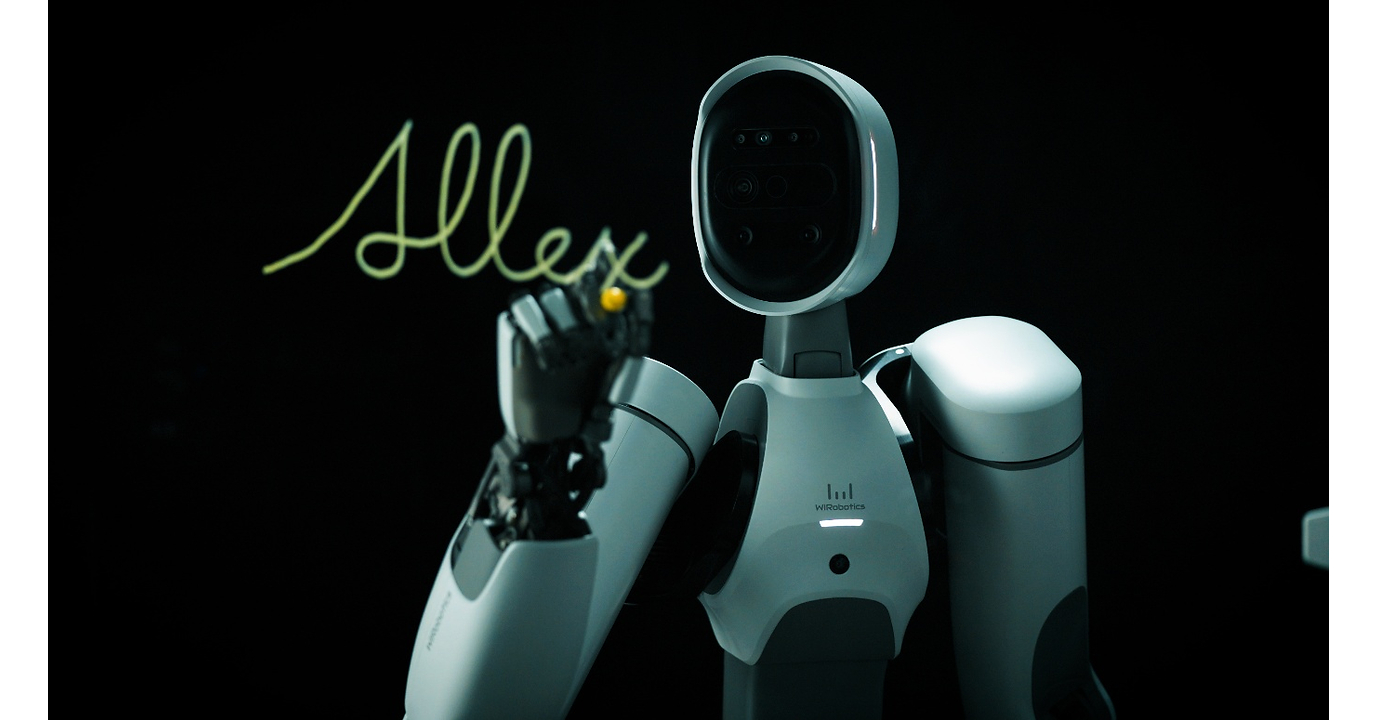
WIRobotics leads Korea's private wearable-robot makers on units and revenue growth, Angel Robotics leads on public-market capital and public procurement, and Hurotics is the newest venture-backed challenger in medical gait rehabilitation.
WIRobotics' KRW 95 billion Series B equals 34 times its 2025 revenue and is being spent mainly on humanoids, which in our view shows investors are buying wearable makers' movement data and actuator know-how as a route into humanoid robots.
WIRobotics leads Korea's private wearable-robot makers on units sold and revenue growth, Angel Robotics leads on capital raised in public markets and on public procurement, and Hurotics is the newest venture-backed challenger in medical gait rehabilitation. The best-funded of them, WIRobotics, is spending most of its new money on something other than wearables.
That is the tension this comparison is about. WIRobotics, maker of the WIM walking-assist suit, closed a KRW 95 billion Series B in May and said in its release that humanoid robots are its next major growth engine. Angel Robotics is listed and selling to hospitals and public buyers, Hurotics was reported this week to have raised KRW 25 billion for its soft exosuit, and Dynamic Solution has shown a robot hand driven by brain signals. The numbers below show where the sector's capital is going, and the analysis section explains why we think it is heading toward humanoids.
Four companies, four different routes to revenue
- WIRobotics
- 2021
- Private
- WIM walking-assist wearable; ALLEX humanoid in development
- 108bn (Series A 13bn, Mar 2024; Series B 95bn, May 2026)
- Series B, May 14, 2026
- Angel Robotics
- 2017
- KOSDAQ 455900 (listed Mar 26, 2024)
- Angel Legs M20 rehab wearable; angelGEAR, angel SUIT
- 37.7bn private (A 9.7bn, B 18.0bn, C 10.0bn) plus about 32.96bn at listing
- PPS Innovative Procurement Top Tier, Oct 8, 2026
- Hurotics
- 2022
- Private
- H-Medi soft gait-rehab exosuit (Korea Class II, FDA Class II listing)
- Series A 25bn reported, cumulative above 33.5bn reported (unconfirmed)
- Series A reported Oct 15, 2026
- Dynamic Solution
- n/a
- n/a
- Dynamic X-hand EEG-driven rehab robot hand (ETRI licence)
- Not disclosed
- WCNR demonstration, Oct 15, 2026
Company releases, KIND filings and PPS release; Hurotics funding and Dynamic Solution figures as reported by StartupN and Bloter, not confirmed by the companies. Disclosed figures only, not estimates.
As of Oct 16, 2026
WIRobotics sells WIM to consumers through its own experience centres and department-store partners in Korea, and said in May that the product had passed 3,000 cumulative units and reached Europe, China, Turkey and Japan, with a WIM Premium subscription layered on top. Angel Robotics, founded in 2017 by KAIST professor Kong Kyung-chul, sells under four brands with the Angel Legs M20 medical device at the core, and on Oct 8 the Public Procurement Service named it the first company in its Innovative Procurement Top Tier scheme. Hurotics, incorporated in February 2022, launched its H-Medi gait-rehabilitation suit in September 2025 after Korean Class II medical-device certification, having completed a US FDA Class II listing that May. Dynamic Solution's Dynamic X-hand reads EEG signals to move a paralysed hand; Bloter reported on Oct 15 that the company claims up to 84.6% accuracy in recognising the intent to move, a figure not yet in a peer-reviewed paper.
The routes differ: consumer retail and subscription (WIRobotics), hospital and public procurement on a listed balance sheet (Angel), a clinic-led medical device with a US filing already in hand (Hurotics), and research-grade neurorehabilitation built on an ETRI licence (Dynamic Solution). Which route investors prefer shows up in the funding data.
WIRobotics raised 34 times its last annual revenue
- Revenue 2023
- KRW 0.56bn
- Company release
- Revenue 2024
- KRW 1.3bn
- 2.3x 2023
- Revenue 2025
- KRW 2.79bn
- 2.1x 2024
- Series B / 2025 revenue
- 34x
- 95 / 2.79
- Series B / Series A
- 7.3x
- 95 / 13, 26 months apart
- Angel Robotics listing proceeds
- KRW 32.96bn
- 1,648,000 new shares x KRW 20,000
Derived by MEKAWIRE from disclosed figures; no valuation was disclosed for WIRobotics' Series B.
As of Oct 16, 2026
WIRobotics reported revenue of KRW 560 million in 2023, KRW 1.3 billion in 2024 and KRW 2.79 billion in 2025, and said first-quarter 2026 revenue alone exceeded the whole of 2024. Its Series B is 7.3 times the size of the KRW 13 billion Series A of March 2024, raised 26 months earlier, and equals 34 times its 2025 revenue. No valuation was disclosed, so a step-up cannot be computed. Angel Robotics raised KRW 37.7 billion in three private rounds between 2020 and 2023 and KRW 32.96 billion in new shares at its KOSDAQ listing (1,648,000 shares at KRW 20,000), about KRW 70.7 billion in all before costs. Hurotics' reported Series A would lift its cumulative funding above KRW 33.5 billion, according to StartupN; the company has not posted its own release, so we treat those figures as unconfirmed.
Method: ratios use company-disclosed figures only. Angel's listing proceeds are new shares issued multiplied by the offer price.
MEKAWIRE analysis: the wearable is becoming Korea's on-ramp to the humanoid
Investors are paying for wearable makers' movement data and actuator know-how as a route into humanoids, not for the rehabilitation market on its own.
The evidence starts with WIRobotics' own words. Its Series B release leads with humanoid commercialisation: a research platform, Mobile ALLEX, to be supplied to outside institutions from this year, mass-production readiness targeted for late 2027, and talks with a global carmaker on a factory proof of concept. Co-chief executive Yeonbaek Lee called the round recognition that movement data gathered through wearables can evolve into humanoid robotics. A KRW 95 billion round on KRW 2.79 billion of revenue is hard to justify on walking-assist suits alone; it makes more sense as a humanoid bet funded by a wearable track record.
The strongest counter-argument is Angel Robotics. It has stayed a wearable company, has a public-procurement channel the others lack and reports to a regulated market every quarter. If reimbursement and public purchasing grow, a pure medical path could deliver steadier revenue than a humanoid programme that has not yet shipped. Hurotics points to a third route: Hurotics' newsroom links a September report that it hired Han Seung-hoon, a former Samsung and Hyundai Motor executive, as chief technology officer, and its FDA listing gives it a US door the others are still building. Dynamic Solution is earlier still and depends on clinical evidence it has not yet published.
Bull case and bear case
In the bull case, years of gait and movement data give Korean makers an edge in human-like control, public buyers such as the PPS create a domestic base that funds exports, and WIRobotics turns WIM's 3,000-plus users into a data asset no humanoid start-up abroad has. In the bear case, humanoid spending pulls WIRobotics away from the product that earns its revenue, medical reimbursement stays slow, and the whole sector's revenue remains in the low billions of won while overseas humanoid rivals raise hundreds of millions of dollars per round.
What would change our view
Angel Robotics' third-quarter report, due by mid-November under Korean disclosure rules, will show whether procurement is turning into revenue. WIRobotics promised Mobile ALLEX deliveries to outside labs this year, and whether units actually ship by December is the clearest test of the humanoid pivot. Hurotics confirming its Series A and naming US distribution partners would strengthen the medical route. If Angel's procurement revenue jumps while WIRobotics' humanoid timeline slips, the pure wearable model would look like the better business.
- WIRobotics Series B = 34x 2025 revenue and 7.3x its Series A; Angel total about KRW 70.7bn including listing proceeds
- H-Medi launched Sept 2025 (Korea Class II); FDA Class II listing May 2025; KRW 25bn Series A reported Oct 15, unconfirmed by the company
- KOSDAQ-listed since March 26, 2024; private rounds KRW 9.7bn, 18.0bn, 10.0bn; 1,648,000 new shares at KRW 20,000 at listing
- Dynamic X-hand EEG-driven rehab hand shown Oct 15; 84.6% intent accuracy is a company claim reported by Bloter
- KRW 560 million (2023), KRW 1.3 billion (2024), KRW 2.79 billion (2025); WIM above 3,000 cumulative units
- KRW 95 billion (about USD 68 million), May 14, 2026, led by JB Investment; Series A KRW 13 billion in March 2024
- Mobile ALLEX research platform supplied from 2026; mass-production readiness targeted for late 2027
- First company in PPS Innovative Procurement Top Tier scheme, Oct 8, 2026
Why it matters
Among the Korean wearable and rehabilitation robot makers MEKAWIRE tracks, the two largest private rounds both came in 2026, and the larger one went to a company that is pivoting toward humanoids. That changes how investors and buyers should read the category: wearables are being valued partly as data and actuator platforms rather than as medical devices alone.
For hospitals and public buyers the practical consequence is that product roadmaps may shift. A supplier that raises on a humanoid story will allocate engineers and capital accordingly, and service and reimbursement work can lose priority.
Rival analysis
WIRobotics has the strongest unit and revenue trajectory among private makers and the largest round, but also the most execution risk because it is running two product lines. Angel Robotics has the most mature commercial channel (hospitals, procurement, four brands) and public-market discipline, but smaller recent capital.
Hurotics is the most focused medical play, with US FDA listing and Korean Class II certification, and its reported Series A would put it close to Angel's private-round total. Dynamic Solution is pre-commercial, and its brain-computer-interface approach serves a narrower, higher-acuity patient group.
Valuation context
No private valuation is disclosed for WIRobotics or Hurotics, so the only priced reference is Angel Robotics' KOSDAQ listing at KRW 20,000 per share in March 2024. WIRobotics' Series B at 34 times trailing revenue implies investors are pricing future humanoid revenue, not the wearable run-rate.
Against global humanoid rounds in MEKAWIRE's database, which run to hundreds of millions of dollars, Korean wearable rounds remain small; the gap is the opportunity investors cite and the risk if the humanoid pivot stalls.
Supply-chain implications
All four companies depend on compact actuators, motor drivers, batteries and sensing, much of it built in-house: Angel sells its own motor drivers and smart actuators under angel KIT, Hurotics uses tendon-driven soft actuation, and WIRobotics says its control technology carries over from WIM to ALLEX.
The overlap with humanoid supply chains is the strategic point: the same reducers, motors and force-control know-how serve both, so Korean component makers such as actuator and reducer suppliers stand to benefit from either path.
Signals to watch
Angel Robotics' third-quarter report, due by mid-November under Korean disclosure rules, for procurement-driven revenue. WIRobotics' first Mobile ALLEX deliveries to outside institutions, promised for 2026.
Hurotics' own confirmation of its Series A and any US distribution agreement. A peer-reviewed publication of Dynamic Solution's X-hand results, which would turn a company claim into clinical evidence.
Analyst view
Thesis: investors are paying for wearable makers' movement data and actuator know-how as a route into humanoids. Confidence: medium. The WIRobotics release states the humanoid priority plainly, but one round is a small sample and Hurotics' reported raise points the other way.
We would raise confidence if another Korean wearable maker announces a humanoid or manipulation programme within six months, and lower it if Angel's procurement revenue grows faster than WIRobotics' total revenue.
Questions you should be asking
For WIRobotics: what share of Series B proceeds goes to ALLEX versus WIM, and does WIM revenue alone cover its own costs? For Angel Robotics: how much revenue has the PPS Top Tier selection produced, and what is the reimbursement status of Angel Legs M20?
For Hurotics: when will the company confirm the Series A terms, and who will distribute H-Medi in the US? For Dynamic Solution: when will the X-hand clinical data from Charite and Seoul National University Bundang Hospital be published?