MetaX and UBTech chip venture Xilect raises RMB 500M angel round to rival NVIDIA Thor
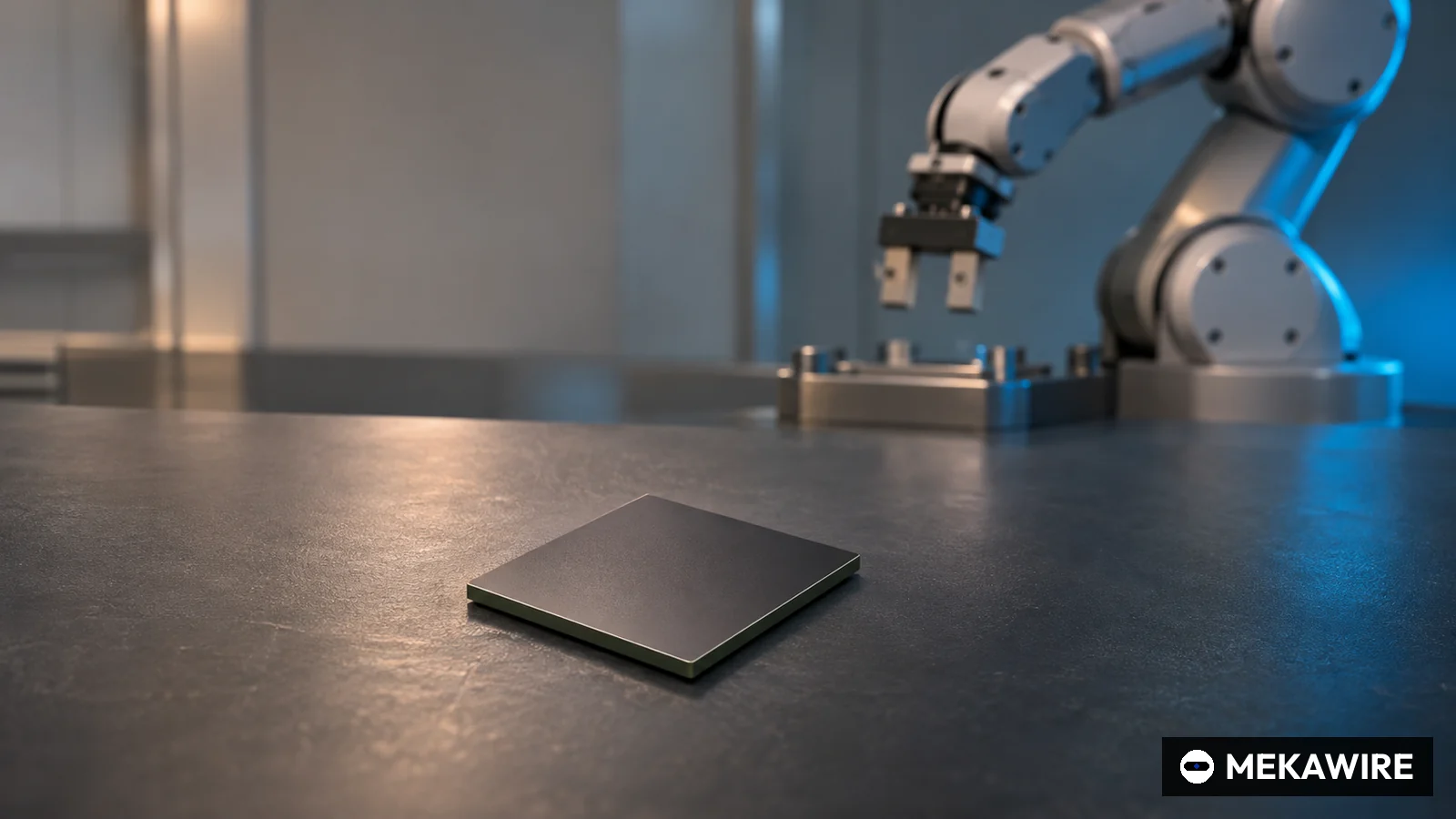
Xilect, a Wuxi robot chip start-up initiated in May 2026 by GPU maker MetaX and humanoid maker UBTech, said on Nov 12 that it raised RMB 500 million in an angel round co-led by Jiyuan Capital and MPCi.
UBTech put the post-money valuation at RMB 4 billion. It is designing a robot SoC for perception, decision-making and motion coordination with NVIDIA's Thor as its stated benchmark, and plans a development platform for partners in 2027 and its first chip in 2028.
Xilect said in an announcement on its website on Nov 12, 2026 that it had closed an RMB 500 million angel round. Jiyuan Capital (纪源资本) and MPCi (经纬创投) co-led the round, and Xilect named eight other investors that followed, among them SAIC Motor's Hengxu Capital. Xilect's announcement gave no valuation, but UBTech said in a post on its official Weibo account the same day that the post-money valuation reached RMB 4 billion, which puts the new money at 12.5% of the company (MEKAWIRE calc.). TechNode reported the round on Nov 13.
A chip company with a robot maker inside
Xilect was set up in Wuxi in May 2026 on the initiative of MetaX, a Chinese maker of general-purpose GPUs, and UBTech, the Hong Kong-listed humanoid maker. Zhejiang Fenglong Electric, which UBTech controls, said in an exchange filing that it subscribed RMB 4.7 million, a 4.7% stake, at formation. Xilect describes its first in-house chip as a robot SoC that unites what Chinese robot makers call the big brain and the small brain, designed for multimodal perception, cognitive decision-making and motion coordination. Its stated development goal is to fully surpass NVIDIA's Thor, the module many humanoid makers use today.
The design is built on a GPGPU core with a CUDA-like software stack drawn from MetaX's ecosystem, so robot and model makers can move existing models onto the chip with less rework. UBTech's role, the announcement says, is to bring real robot tasks into the chip definition early and to validate the product on them. The money will pay for chip and platform development, the software toolchain, a larger engineering team and joint validation with robot makers. The timetable is long: a development and validation platform for partners in 2027, and the first SoC with a complete embodied AI solution in 2028. Chief executive Yang Xianbo was previously a senior vice president at New H3C.
MEKAWIRE analysis
Xilect is a bet that China's humanoid makers will want a domestic Thor, but its own co-founder UBTech is already named as an adopter of a rival robot chip, D-Robotics' Sunrise S600.
- Xilect
- RMB 500M angel (Nov 12, 2026)
- Development platform 2027, first SoC 2028
- Co-founded by UBTech
- D-Robotics
- USD 400M Series C (Sept 17, 2026)
- Sunrise S600 launched Nov 2025, more than 20 embodied AI customers
- UBTech among S600 adopters
From the companies' own announcements. Amounts are as announced and are not converted.
As of Nov 18, 2026
MEKAWIRE's funding database holds one larger Chinese robot compute round this year. D-Robotics closed a USD 400 million Series C on Sept 17 and said its Sunrise S600, launched in November 2025, had been adopted by more than 20 embodied AI customers within six months, UBTech among them. Xilect therefore enters a market where its strategic shareholder already uses another supplier's chip and where its own first SoC is planned for 2028.
The case for the bet is control. A GPU maker that owns the software layer and a humanoid maker that defines the workload can design a chip around one customer's real tasks, and Chinese export rules on NVIDIA parts make a domestic option more valuable to every robot maker in the country. The case against is timing. Xilect plans its first SoC for 2028, while D-Robotics says the S600 is already with more than 20 customers. The signals to watch are partner names for the 2027 development platform, whether UBTech commits a product line to Xilect's chip, and the next round's price.
- 2028, NVIDIA Thor as the stated benchmark
- RMB 500M, announced Nov 12, 2026
- MetaX and UBTech, May 2026, Wuxi; Fenglong Electric 4.7% at formation
- Jiyuan Capital and MPCi
- 8 named by Xilect, including SAIC Hengxu Capital
- 2027
- RMB 4bn, per UBTech; round is 12.5% (MEKAWIRE calc.)
Why it matters
GPU maker MetaX and humanoid maker UBTech joined forces to develop a single chip for robot perception, decision-making and motion coordination. The RMB 500 million angel round funds a venture targeting a partner development platform in 2027 and a first chip in 2028. The platform gives robot makers a chance to assess how much work it would take to integrate Xilect's hardware and software before the chip arrives.
Rival analysis
Xilect names NVIDIA's Jetson Thor as its benchmark. NVIDIA already offers the Isaac, GR00T and Cosmos software stack alongside Thor, while China's D-Robotics supplies Sunrise chips, RDK development kits and software. The supplied material gives no Xilect benchmark results, so the first useful comparison is what partners can run on the 2027 platform and how much integration work it takes.
Valuation context
UBTech disclosed a post-money valuation of RMB 4 billion for Xilect. The RMB 500 million raise equals 12.5% of that figure by MEKAWIRE's calculation. The supplied material gives no ownership terms for the round. D-Robotics disclosed a USD 400 million Series C, with no valuation supplied, and the material provides no market caps for listed UBTech or NVIDIA.
Related papers
UBTech's Thinker-WM examines shared multimodal representations for embodied intelligence. D-Robotics' RawVLA covers neural image signal processing for robotic manipulation, while NVIDIA's ChunkTrust addresses how long robot policies execute before replanning. The supplied material gives no link between these papers and Xilect's chip design.
Supply-chain implications
MetaX brings GPU development experience, and UBTech makes industrial humanoids in its Walker S line. Zhejiang Fenglong Electric held 4.7% at formation, and SAIC Hengxu Capital was among the angel investors Xilect named. The supplied material gives no production commitments from those investors and identifies no foundry, packaging partner or module manufacturer.
Signals to watch
In 2027, watch for named platform users, supported robot workloads and results from early integrations. In 2028, look for first-chip availability and comparisons with Thor on the same workloads, with latency and power measured under disclosed conditions.
Analyst view
The 2027 platform is the first milestone that can show whether Xilect's tools travel beyond UBTech's own robot programs. Evidence that another robot maker can bring up a full perception-to-motion workload would make the case for broader adoption ahead of the planned 2028 chip.
Questions you should be asking
Which robot makers will get the 2027 platform, and what hardware and software will it include? Has UBTech committed to using the first chip in a production robot? What workloads and power limits will Xilect use to compare its chip with Thor?