Huixi raises over RMB 2.5bn in 2026 for robot AI chips used in AgiBot's G2
Huixi Technology, the Chinese designer of high-compute chips for embodied AI robots, has closed Pre-B+ and Series B rounds that lift its 2026 equity financing above RMB 2.5 billion, according to a portfolio update from existing shareholder Xinglian Capital published on Oct 21.
The Beijing Artificial Intelligence Industry Investment Fund led, with the National Artificial Intelligence Industry Investment Fund and the Beijing Robot Industry Development Investment Fund among the new backers.
Huixi says its Guangzhi R1 chip went into mass production in AgiBot's Elf G2 robot in 2025.
China's robot makers are building their own brains. Huixi Technology, a Chinese designer of high-compute chips for embodied AI, has completed a Pre-B+ round and a Series B that together take its equity financing this year above RMB 2.5 billion, according to a portfolio update that existing shareholder Xinglian Capital published on Oct 21. The company did not split the total between the two rounds.
The cap table reads like a map of Chinese industrial policy. The Beijing Artificial Intelligence Industry Investment Fund led, joined by the National Artificial Intelligence Industry Investment Fund, the Beijing Robot Industry Development Investment Fund, InnoVision Capital, Loyal Valley Capital, CIC Investment and Huatai Baoli, among others. Existing holders including Shunwei Capital, Cathay Capital, SenseTime Guoxiang Capital and 37 Interactive Entertainment put in more.
A chip that is already inside a production robot
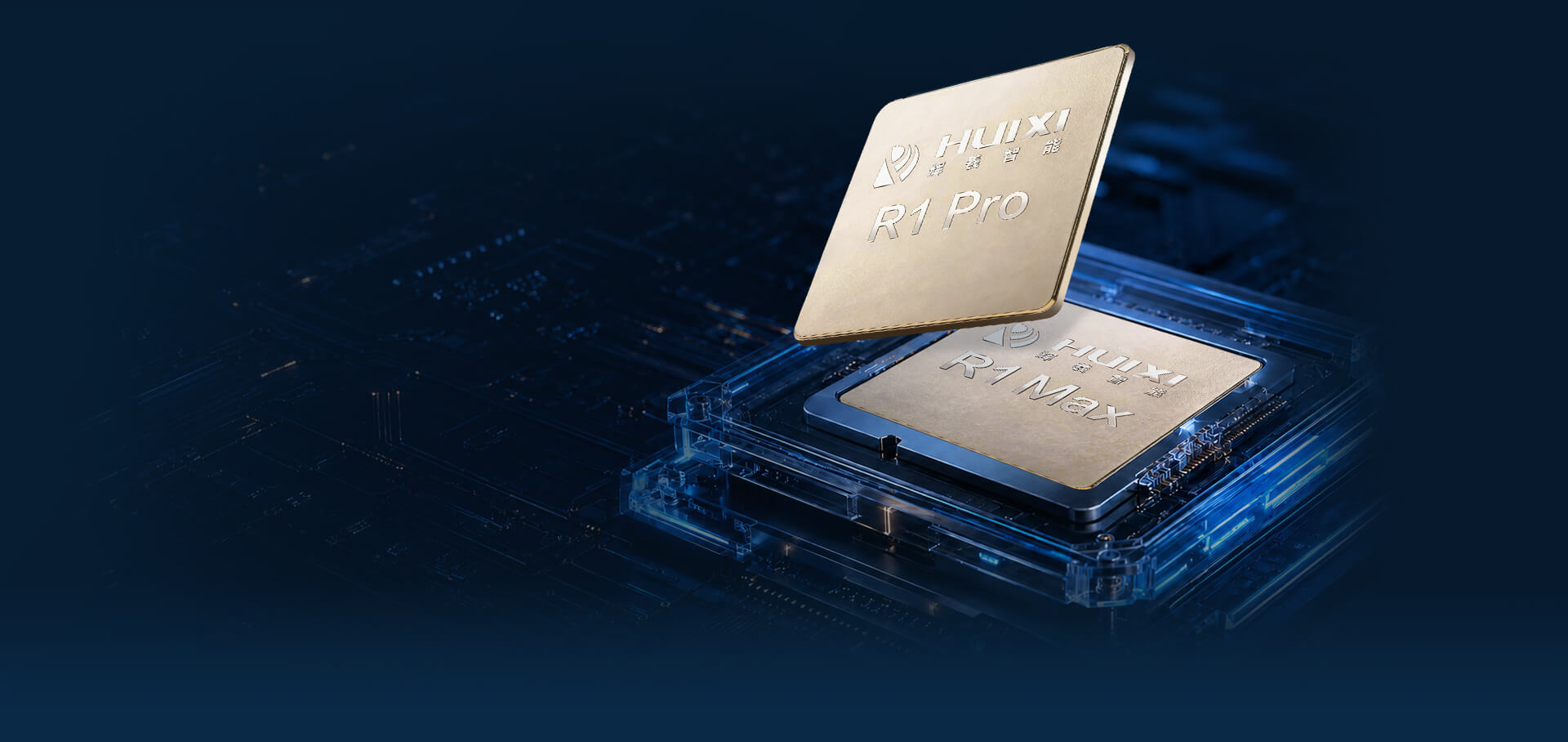
Huixi says the money goes into its next generation of high-compute embodied AI chips, into scaling deliveries and into an ecosystem of partners. Its first product, the Guangzhi R1, is an AI system-on-chip with a general-purpose programmable architecture. According to the company, a compute platform built on it went into mass production in AgiBot's Elf G2 robot in 2025, and in June 2026 several G2 units running the chip completed 17,625 operations during a six-day continuous production-line livestream with a 99.99% task success rate. At the World Robot Conference in August it added the Huixi Embodied series; its website lists the R1 Pro, R1 Max and the RCM400 and RCM500 modules, plus a software stack running from compilers and operator libraries to real-time control and its RhinoVLA model work.
MEKAWIRE analysis
Chinese state capital is now paying for the robot compute layer, not only for robot bodies, and the bet is that Chinese humanoids will not depend on NVIDIA's Jetson boards by the end of the decade.
Huixi is the second Chinese robot chip company in five weeks to raise at this scale. D-Robotics disclosed a $400 million Series C on Sep 17. In MEKAWIRE's 2026 data for China, only those two compute specialists sit alongside humanoid makers such as LimX Dynamics and EngineAI at the top of the funding table, as the table above shows. The counter-argument is software: NVIDIA's Isaac and GR00T toolchain is where most robot developers already work, and a chip that runs one customer's robot well still has to win the others. Huixi's own disclosure names only AgiBot as a production customer. For context on the wider market, see the MEKAWIRE China robotics market explainer.
What to watch: a second named humanoid customer for the R1 family, any performance figures for the R1 Max against Jetson Thor, and whether the state funds' entry precedes a listing filing.
- D-Robotics
- Robot compute chips and platforms
- Series C
- $400M
- Sep 17, 2026
- Huixi Technology
- Embodied AI chips
- Pre-B+ and Series B
- Over RMB 2.5bn (2026 total)
- Oct 21, 2026
- Spirit AI
- Embodied AI models and robots
- Other
- $280M
- Feb 25, 2026
- LimX Dynamics
- Humanoid and legged robots
- Pre-IPO
- $200M
- Jul 14, 2026
- EngineAI
- Humanoid robots
- Series B
- $200M
- Apr 10, 2026
Disclosed amounts only, in the currency the company used; no conversion. Huixi's figure is its cumulative 2026 equity financing across two rounds.
As of Oct 24, 2026
- Pre-B+ and Series B; 2026 equity financing above RMB 2.5 billion (company figure, per-round split not disclosed)
- Guangzhi R1 AI SoC; Huixi Embodied series (R1 Pro, R1 Max, RCM400, RCM500)
- Beijing Artificial Intelligence Industry Investment Fund
- 17,625 operations over a 6-day production-line livestream, 99.99% task success (June 2026)
- AgiBot Elf G2, in mass production since 2025
- National AI Industry Investment Fund, Beijing Robot Industry Development Investment Fund
Why it matters
Robot compute is the one layer where Chinese humanoid makers still rely heavily on a US supplier. A well-funded domestic chip with a production design win at AgiBot gives Chinese OEMs a second source.
Rival analysis
D-Robotics ($400M Series C, Sep 2026) is the closest Chinese rival. NVIDIA's Jetson Thor and Isaac stack remain the default for most humanoid developers outside China. Korea's Mobilint is pitching on-device NPUs for humanoids under a government programme.
Valuation context
No valuation was disclosed. The RMB 2.5 billion figure is cumulative for 2026 and covers two rounds.
Supply-chain implications
A domestic SoC cuts exposure to US export controls on high-end accelerators, but fabrication node and foundry were not disclosed.
Signals to watch
A second production customer; benchmark data for R1 Pro and R1 Max; a listing application in Hong Kong or Shanghai.
Analyst view
Confidence medium: state-fund leadership signals policy priority, but commercial breadth beyond AgiBot is unproven in the disclosure.
Questions you should be asking
Which humanoid makers besides AgiBot have committed to the R1 family? What share of the 2.5 billion yuan came from state funds? Which process node does the R1 Max use?