韩国大东机器人在GS建设工地完成24天搬运机器人实测,拟推机器人即服务
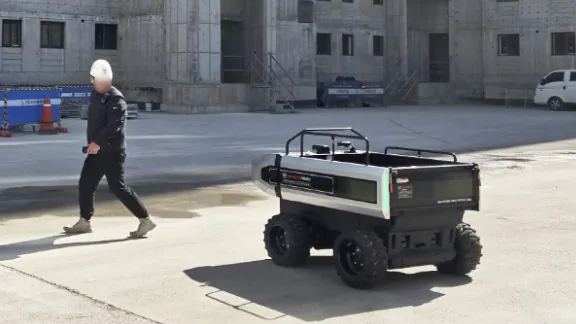
韩国农机企业大东集团旗下大东机器人11月12日发布新闻稿称,与韩国大型建筑商GS建设完成自主搬运机器人RT100的工地技术验证。量产型RT100 TS于10月7日至30日在首尔都市圈西部一处大型公寓工地搬运砌筑、抹灰、设备和装修材料。双方下一步将对比引入前后的作业时间和人员,大东机器人还计划推出1吨以上大型机器人和机器人即服务模式。
大东机器人11月12日在大东官网发布新闻稿,宣布与GS建设完成自主搬运机器人RT100在建筑工地的技术验证。经GS建设试验场预先测试后,量产型RT100 TS于10月7日至30日投入首尔都市圈西部一处大型公寓新建工地。大东机器人官网将RT100 TS列为手动驾驶型号,自动驾驶型号为RT100 TA。这是双方6月签署的建筑自动化与智能建造合作备忘录下的第一步。
果园搬运机器人进入工地
RT100原本为果园和露地重物搬运开发,采用四轮驱动。实测中它在坡道和不平路面上搬运砌筑、抹灰、设备和装修材料。公司称其在不规则路面上行驶稳定,跟随作业人员的跟随功能和无线遥控操作无需复杂培训即可使用。新闻稿未披露载重、往返次数或节省工时等数据。
后续计划包括对比引入前后的作业时间和投入人员、开发地下层等卫星定位失效环境下的室内外自主行驶和自动装卸、应用1吨以上大型自主机器人、升级多工地车队管理系统,并推出涵盖租赁、部署、运营、监控和维护的机器人即服务模式。
MEKAWIRE 分析
大东在用为农业开发的机器人试探建筑这一第二市场,开发成本低,但首款产品并非为工地设计。
按MEKAWIRE统计,实测为期24天,目前只有定性结论。MEKAWIRE今年秋季报道的大东集团机器人业务多集中在农业和零部件,包括10月下旬大东齿轮与中国企业Eyou在上海签署的执行器谅解备忘录,双方计划在2027年1月前于中国设立合资公司。对中国工程机械和建筑机器人企业而言,韩国大型建筑商开始实测搬运机器人,意味着韩国工地自动化需求正在形成。下一步关注引入前后的效率数据和付费服务合同。
- Sep 9
- On-device AI chip for unmanned farm robots (lead)
- KRW 43.1bn project
- Oct 15
- K-GX AI electric tractor programme
- 55 kW, by 2030
- Oct 21
- Daegu AI factory projects (Daedong and partners)
- KRW 18.7bn
- Late Oct
- Daedong Gear and Eyou actuator MOU, China JV targeted by Jan 2027
- 30,000-set annual line planned; Korea production from 2029
- Nov 12
- RT100 construction-site PoC with GS E&C
- 24 days, no figures yet
From MEKAWIRE stories based on company and government releases, as of Nov 14, 2026.
- 2026年10月7日至30日(24天)
- RT100 TS,四轮驱动搬运机器人量产型(厂商列为手动驾驶型号)
- 首尔都市圈西部大型公寓新建工地
- GS建设,2026年6月签署备忘录
- 砌筑、抹灰、设备、装修
- 效率对比、室内外自主行驶、1吨以上机器人、机器人即服务
为何重要
The 24-day GS E&C trial tested whether Daedong Robotics' orchard transport platform can serve construction logistics across masonry, plastering, plumbing and finishing work. The planned comparison of working time and crew size will determine whether that application has a measurable economic case. Completion of the trial alone does not establish productivity gains or commercial demand.
竞争对手分析
No competing suppliers, prices or comparative performance results are supplied, so a competitive ranking is premature. Daedong's production-platform reuse and GS E&C relationship provide a route to construction-site evaluation. The tested RT100 TS is listed by the maker as manually driven; the separately listed RT100 TA is autonomous, so this trial should not be treated as proof of autonomous capability.
估值背景
Daedong and Daedong Gear are public companies, but the supplied material provides neither market capitalizations nor disclosed valuations. No separate valuation or funding figure is supplied for Daedong Robotics. Without RaaS pricing, deployment commitments or measured savings, any estimate of the partnership's financial contribution would be speculative.
研究依据
No research papers are supplied; the evidence consists of company announcements, product listings and a media report. These sources describe the trial and roadmap but provide no quantified productivity comparison or autonomy benchmark.
供应链影响
Daedong Gear and Eyou signed an MOU to pursue a China actuator joint venture by January 2027. That is a separate development: the supplied facts do not identify either company as a supplier to the RT100 TS. Component sourcing, manufacturing capacity and costs for the planned one-tonne-plus hauler are not disclosed.
后续看点
Watch for the planned before-and-after measurements of working time and crew size, followed by RaaS pricing and deployment commitments. Indoor and outdoor autonomy and the one-tonne-plus hauler remain roadmap items, with no delivery dates supplied. Future announcements should identify the operating mode actually tested.
分析师观点
This is evidence of application testing beyond agriculture, with the commercial case still unproven. The decisive next step is measured labor and time savings sufficient to support a RaaS offer. Investors should distinguish the completed manual-drive platform trial from the planned autonomy and higher-payload developments.
值得追问的问题
How much did working time and crew size change for each material-handling task? What RaaS price, service costs and utilization would make deployments economic for both parties? When will indoor and outdoor autonomy and the one-tonne-plus hauler be tested, and against which acceptance criteria?