Gemini Robotics 2.5 erreicht 96 Prozent beim Kommissionieren bei Mercedes-Benz
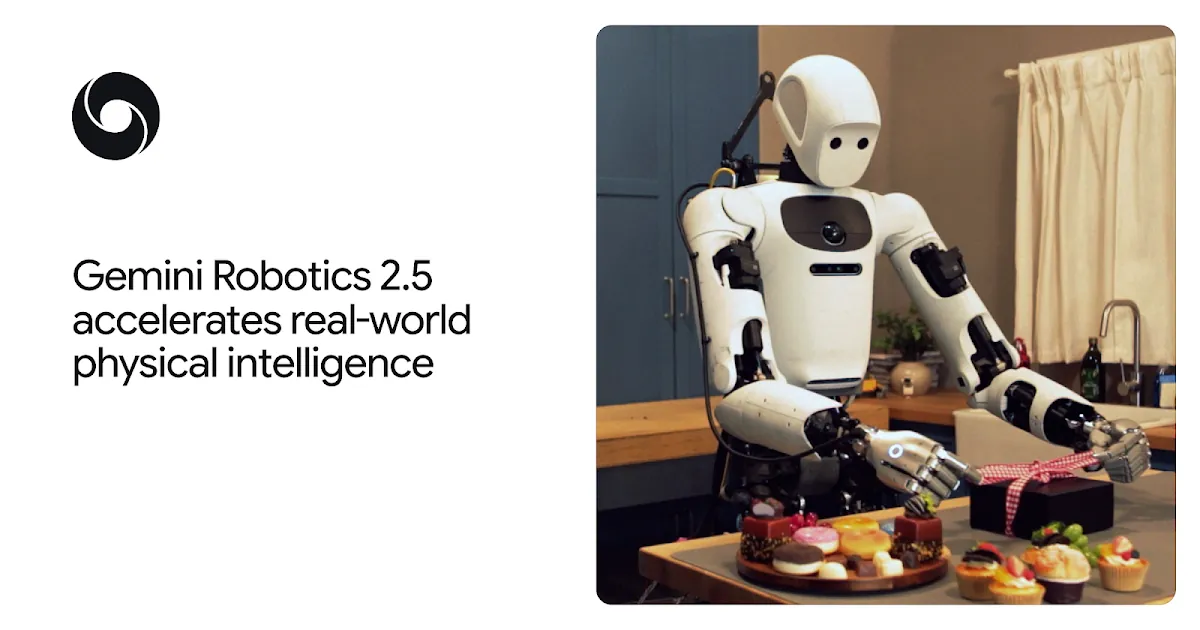
Google DeepMind hat am 10. November das Vision-Language-Action-Modell Gemini Robotics 2.5 vorgestellt. Über mehr als 200 Aufgaben steigt die Erfolgsquote laut Unternehmen um 30 bis 100 Prozent. In den Mercedes-Benz-Werken Kecskemét und Sindelfingen sortierte der Apptronik-Humanoid Apollo 2 mit dem Modell Metallhalter in Sequenzschalen, Erfolgsquote 96 Prozent.
Google DeepMind bezeichnete Gemini Robotics 2.5 am 10. November in einem Blogbeitrag als sein bislang leistungsfähigstes Vision-Language-Action-Modell. In Tests mit über 200 Aufgaben lagen die Erfolgsquoten je nach Aufgabentyp 30 bis 100 Prozent höher, die Ausführung war 20 bis 30 Prozent schneller. Das Modell geht zunächst nur an Robotikpartner.
Die Zahl aus Sindelfingen
Auf laufenden Linien von Mercedes-Benz in Kecskemét und Sindelfingen übernahm Apptroniks Humanoid Apollo 2 das Kitting: Metallhalter aus Schüttgutbehältern in sequenzierte Schalen legen. Die Erfolgsquote lag bei 96 Prozent. Eingesetzt war eine Fünffingerhand SharpaWave mit 22 Freiheitsgraden. Dauer und Zahl der Versuche nennt DeepMind nicht. Für die Linie heißt das: Etwa vier von hundert Kits muss ein Mensch nacharbeiten.
- Gebäck mit Zange verpacken
- 5%
- 100%
- Werkzeugkastendeckel schließen
- 0%
- 93%
- Tasse abhängen
- 29%
- 75%
- Schleifen lösen
- 0%
- 70%
- Strickjacke aufhängen
- 0%
- 62%
- Müll zusammenkehren
- 0%
- 52%
- Reiskocher verpacken
- 0%
- 40%
- Hose falten
- 0%
- 40%
- Einfacher Schnitt
- 4,3%
- 66,5%
Werte aus der DeepMind-Grafik; Schnitt berechnet von MEKAWIRE.
Stand: 14. Nov. 2026
Im Schnitt der acht gezeigten Aufgaben stieg die Quote von 4,3 auf 66,5 Prozent (MEKAWIRE-Berechnung).
MEKAWIRE-Analyse
DeepMind misst sich nun an Produktionsquoten, nicht an Demos.
Für deutsche Autobauer und ihre Zulieferer ist das der relevante Maßstab. Offen bleiben Taktzeit und Eingriffsquote, ohne die sich kein Vergleich mit klassischer Automatisierung ziehen lässt. Auch Agile Robots aus München, von DeepMind im Beitrag erwähnt, arbeitet mit den Gemini-Modellen.
- 10. November 2026
- 96 Prozent beim Kitting, Apollo 2
- Kecskemét und Sindelfingen
- 30 bis 100 Prozent höhere Erfolgsquote
- Mehr als 200
- 4,3 auf 66,5 Prozent (MEKAWIRE-Berechnung)
- Gemini 4 Argon 99,5 Prozent Jailbreak-Resistenz, ER 2 82 Prozent
- Nur Robotikpartner
Warum das wichtig ist
The reported 96% kitting success puts Gemini Robotics 2.5 and Apollo 2 into a specific automotive production workflow at two Mercedes-Benz plants. DeepMind also reports 30% to 100% higher task success and 20% to 30% faster execution than its predecessor across more than 200 tasks. Sample size, intervention rates and production economics are missing, so the pilot does not establish readiness for broader deployment.
Wettbewerbsanalyse
Agile Robots offers factory automation hardware and AI software, with Audi among its listed customers; its subsidiary Franka supplies torque-sensing arms. Sharpa focuses on tactile hands, haptic gloves and manipulation robots, making dexterity components another relevant competitive axis. No comparable kitting benchmarks or deployment economics are supplied, so these companies cannot be ranked against Apollo 2 on performance or cost.
Bewertungskontext
Agile Robots has a disclosed $8.5B valuation and $720M in reported funding, including a $500M Series F announced Nov 12. Apptronik's reported $1.25B total funding is capital raised, not a valuation; no valuation is supplied. DeepMind is an Alphabet subsidiary with no standalone valuation supplied, and the input provides no market capitalization figures.
Zugrunde liegende Forschung
DeepMind's listed papers include Grounded-Dreamer: Robot Learning from World Model Synthetic Data with Physical Grounding. Franka's list includes FoveaVLA: Foveation Actions Replace the Wrist Camera in VLAs. Only titles are supplied, so neither paper establishes the cause of the reported gains or validates the Mercedes-Benz result.
Folgen für die Lieferkette
The pilot combines DeepMind's model, Apptronik's Apollo 2 hardware and Mercedes-Benz production sites. Partner-only model access makes access terms and integration support relevant deployment dependencies. Component suppliers, manufacturing capacity, hardware prices and service arrangements are not supplied, leaving scaling costs and bottlenecks unresolved.
Worauf jetzt zu achten ist
Watch for paid deployments beyond the two pilot plants, repeatable success across shifts and disclosed human intervention rates. Cycle times, uptime and cost per completed kit would make the performance claims commercially assessable. The reported 99.5% jailbreak resistance for Gemini 4 Argon does not establish physical safety; the input supplies no physical safety validation.
Analystensicht
The pilot is a concrete signal of industrial applicability, but the investment case depends on sustained throughput and support costs. Partner-only access makes commercial terms and partner expansion important indicators of adoption. The supplied evidence supports monitoring deployment conversion, while revenue, margins and customer commitments remain undisclosed.
Offene Fragen
How many kitting attempts underpin the 96% success rate, and what human assistance or recovery was required? What are cycle time, uptime and total cost per completed kit against Mercedes-Benz's existing process? What commitments, access terms and physical safety requirements govern expansion beyond the pilot?