米サーブロボティクス、配送ロボ2000台をAPIで開放、アプリやAIエージェントが直接手配
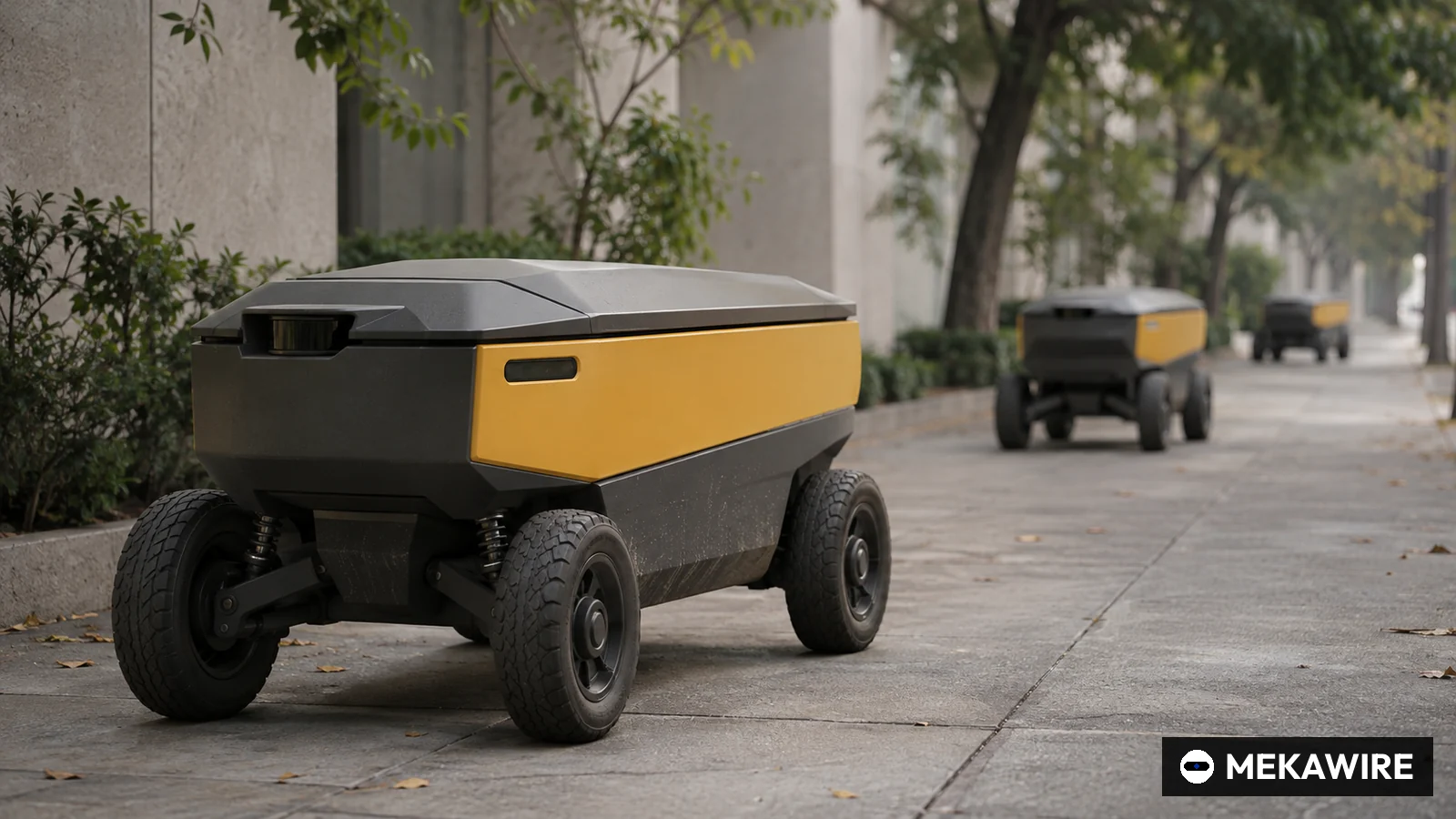
歩道配送ロボットの米サーブロボティクス(ナスダック上場、SERV)は11日、開発者ポータルを開設し、公開APIとサンドボックスを提供し始めた。開発者や企業、AIエージェントが見積もり、手配、追跡を直接できる。これまでは外部の配達プラットフォーム経由でしか使えなかった。
実機の利用には同社の承認が必要で、地域や時間、荷室の大きさに制限がある。ザロボットリポートによると、同社は米国と豪州で2000台超を展開している。
米サーブロボティクスは11日、開発者ポータルを開設し、歩道配送ロボットを外部のソフトウエアに開放した。ポータルによると、サーブ配送APIは見積もり、手配、追跡を3回の呼び出しで処理でき、サンドボックスで開発した後に先行利用を申し込む仕組みだ。ザロボットリポートは同社の発表を引用し、開発者、企業、個人、AIアシスタントが対象で、実機の利用には承認が必要だと伝えた。配送はサービス地域と営業時間、荷室に収まる品物に限られ、配車や経路、走行、遠隔監視はサーブが担う。
プラットフォームの下請けから直販へ
同社によると、これまでロボットは外部の配達プラットフォーム経由でのみ利用できた。米国と豪州で2000台超を展開し、約300万人、4000店超の飲食店をカバーしているという。5日には、他社のロボット開発向けに技術を提供するサーブのフィジカルAIサービスも発表していた。
MEKAWIRE分析
サーブは配達プラットフォームに貸し出してきたロボット群を、自前のプラットフォームに変えようとしている。
MEKAWIREの試算では、ロボット1台あたりの飲食店は約2店で、食事時以外の空き時間がAPIで売れる能力になる。ただし1回あたりの料金は公表されておらず、承認制のため当初の規模は小さいとみられる。主要顧客である配達プラットフォームとの競合という反論もある。日本の配送ロボット各社にとっても、AIエージェントから直接呼べる設計は比較材料になる。
- Jan 20
- Acquires Diligent Robotics (Moxi hospital robots)
- Company
- Oct 29
- First market outside the US: Gold Coast, Australia, with DoorDash
- Partner platform
- Nov 5
- Serve Physical AI Services for other robot builders
- Technology licensing
- Nov 11
- Public delivery API and sandbox for apps and AI agents
- Direct
Nov 5 and Nov 11 entries from Serve's announcements as reported by The Robot Report and the developer portal; earlier entries from MEKAWIRE stories. As of Nov 14, 2026.
- 2026年11月11日、自律配送の開発者ポータル
- 見積もり、手配、追跡の3段階とサンドボックス
- 同社の承認制、地域、時間、荷室の制限あり
- 米国と豪州で2000台超(同社発表、報道による)
- 約300万人、飲食店4000店超(同社発表、報道による)
- 約2店(MEKAWIRE試算)
なぜ重要か
Serve's API lets approved businesses and developers quote, dispatch and track deliveries directly, expanding access beyond third-party delivery platforms. That could create additional demand for its reported fleet of more than 2,000 robots, but the input provides no API adoption, delivery volume or utilization data. Live access remains constrained by approval, geography, operating hours and cargo size.
競合分析
The input identifies no competitors or comparable API offerings, so relative pricing, coverage and technical performance cannot be assessed. Serve's concrete change is a direct integration route alongside its existing third-party platform access. Competitive differentiation will depend on service reliability and delivery economics, neither of which is supplied.
企業価値の背景
Serve is Nasdaq-listed under SERV, but no share price or market cap is supplied, and its latest valuation is unavailable. The reported $371M total funding is financing raised, not a disclosed valuation. Listed financing events include $100M and $80M registered direct offerings and $86M from December 2024 at-the-market sales and warrant exercises; current cash, cash burn and share dilution are not supplied.
裏付けとなる研究
No research papers are included in the supplied material. The developer portal and company announcement support analysis of product access, but provide no research evidence on autonomy performance or delivery economics.
サプライチェーンへの影響
Serve says it builds and operates sidewalk delivery robots, but the input names no component suppliers, manufacturing partners or production capacity. Opening fleet access through an API does not establish additional hardware orders. Fleet availability, maintenance costs and capacity to absorb new demand remain undisclosed.
今後の注目点
Watch for approved live integrations and paid delivery volumes, since sandbox access alone does not establish commercial adoption. Track utilization, revenue per robot and service reliability as evidence of whether the API improves fleet economics. MEKAWIRE's roughly two restaurants per robot is a reach ratio, not a measure of delivery workload.
アナリストの見方
The API creates a plausible route to broader fleet demand, but the supplied facts establish availability rather than commercial traction. Investors should look for incremental paid deliveries and better utilization before assigning value to the developer channel. Reported reach of about 3 million people and more than 4,000 restaurants does not establish active demand.
問うべき論点
How many developers have received live approval, and how many incremental paid deliveries are their integrations generating? What are API pricing, delivery margins and available fleet capacity within approved service areas and hours?