긱플러스, 미스미 서일본 물류센터에 PopPick 설치, 두 거점 로봇 149대
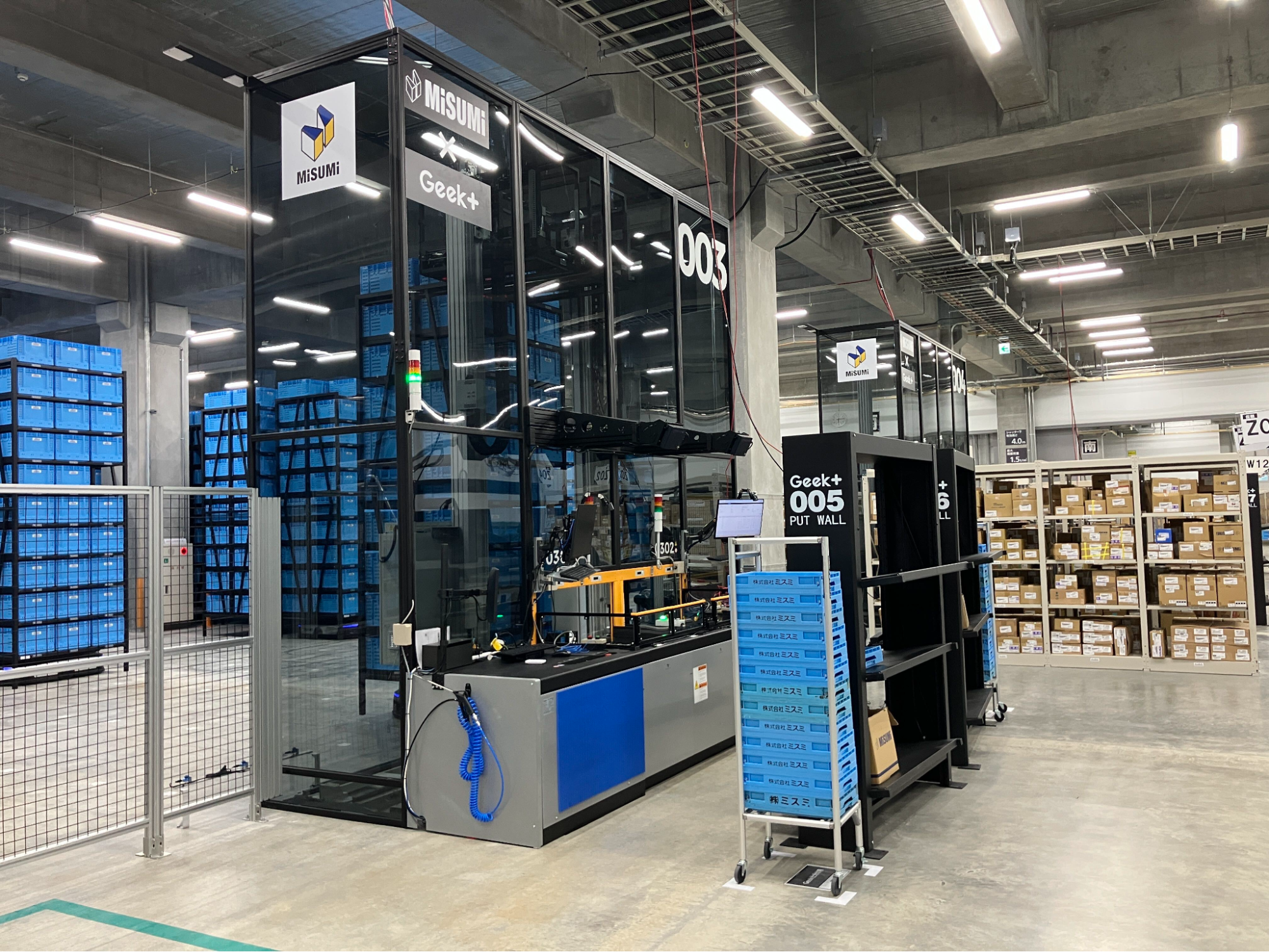
홍콩 상장 물류로봇 업체 긱플러스(Geek+)의 일본 법인은 20일 보도자료를 통해 공구와 기계부품 유통사 미스미의 효고현 가와니시 서일본 유통센터에 GTP 시스템 PopPick 설치를 마쳐 동서 두 거점 규모가 로봇 149대, 스테이션 15대, 선반 801대가 됐다고 밝혔다.
먼저 도입한 동일본 센터에서는 생산성과 보관 효율이 각각 약 2배로 높아졌다고 회사는 설명했다.
긱플러스 일본 법인은 20일 보도자료를 통해 미스미가 효고현 가와니시시에 새로 지은 서일본 유통센터에 GTP(Goods-to-Person) 솔루션 PopPick의 로봇 설치를 완료했다고 밝혔다. 미스미는 기계부품과 공구, 소모품을 유통하는 일본 기업으로 동일본 유통센터에서 이미 PopPick을 쓰고 있다. 두 거점을 합친 규모는 로봇 149대, 작업 스테이션 15대, 선반 801대다.
두 번째 거점 도입의 근거는 첫 거점의 숫자다. 회사 측에 따르면 동일본 센터에서 PopPick 도입 후 생산성은 종전 대비 약 2배, 보관 효율은 2배가 됐다. 계약 금액과 거점별 로봇 대수는 공개되지 않았다.
로봇을 전제로 넓힌 물류센터
보도자료에 따르면 미스미는 서일본 센터를 효고현 산다시에서 가와니시시로 옮기며 면적을 7.5배로 늘렸다. 품목 구성과 출하량 변화에도 '확실한 단납기'를 지키기 위해서다. 하타노 고스케 미스미 집행임원은 동일본에서 표준화한 운영 방식을 서일본에 옮기고 중일본 센터를 포함한 국내 3개 거점 전체를 최적화하겠다고 말했다.
PopPick은 로봇이 선반을 고정 작업대로 옮기고 스테이션이 필요한 컨테이너를 꺼내 작업자 앞에 놓는 방식이라 작업자가 통로를 걸어다닐 필요가 없다. 선반은 방화셔터 바로 아래인 최대 3.8m까지 쌓을 수 있어 일반 중량 선반보다 보관 효율이 약 2배라고 긱플러스는 설명했다. 미스미는 작업 절차 표준화로 현장 교육 시간도 줄였으며, 앞으로 입고와 재고조사 공정까지 자동화를 넓힐 계획이다.
MEKAWIRE 분석
미스미 사례는 일본에서 물류로봇이 이기는 방식을 보여준다. 시범 도입이 아니라 첫 거점에서 생산성 2배를 입증한 뒤 다음 거점에 그대로 복제하는 방식이다.
기존 고객의 반복 주문은 신규 고객 확보보다 영업 비용이 적게 든다. 인력난이 심한 일본에서 미스미 같은 유통사는 납기 속도로 경쟁하기 때문에 자동화는 비용 절감보다 서비스 약속을 지키는 수단으로 팔린다. 국내 물류센터 자동화를 검토하는 유통사와 3PL에게도 거점 간 표준화 후 복제라는 순서는 참고할 만하다. 다만 계약 금액과 거점별 대수, 투자 회수 기간이 없어 긱플러스 매출에 미치는 규모는 판단하기 어렵다.
중일본 센터까지 PopPick을 들이면 이 복제 전략이 확인된다. 미스미의 중간 실적 발표와 긱플러스의 일본 수주 공개가 다음 확인 지점이다.
- Automation of receiving and stocktaking; three domestic centres optimised together
- MISUMI West Japan Distribution Center, Kawanishi, Hyogo
- PopPick goods-to-person, shelving up to 3.8 m
- Geek+ Japan press release, Oct 20, 2026
- Moved from Sanda to Kawanishi, floor area 7.5x larger
- Contract value, robots per site
- About 2x productivity and 2x storage efficiency versus before
- 149 robots, 15 workstations, 801 shelves
왜 중요한가
A repeat order from a large Japanese distributor is evidence that goods-to-person robots deliver measurable output gains in high-mix parts logistics, one of the harder warehouse profiles. It also shows the buying pattern in Japan: prove at one site, standardise, then roll out.
For Geek+, Japan is a market where references travel; a MISUMI case study is a sales tool for other industrial distributors.
경쟁사 비교
In Japanese goods-to-person automation Geek+ competes with AutoStore cube systems sold through integrators and Hai Robotics' case-handling robots. PopPick's pitch is reuse of standard containers and tall shelving without a fixed grid. MEKAWIRE has no disclosed Japanese order values for these rivals to compare.
밸류에이션 맥락
Geek+ is listed in Hong Kong (2590.HK). The release has no financial terms, so it does not move revenue estimates on its own. Earlier this month MEKAWIRE reported Geek+'s RMB 50 million investment for 20% of Beijing Shenyi, a robot-brain start-up.
공급망 파급
Robots and stations come from Geek+ (China); deployment and support are run by its Japanese unit. Shelving height of 3.8 m is set to Japanese fire-shutter limits, a local design constraint.
지켜볼 신호
Any PopPick decision at MISUMI's Central Japan centre. Geek+ interim or annual disclosure of Japanese revenue. MISUMI comments on logistics productivity in its results.
애널리스트 시각
Thesis: Geek+'s Japan growth is driven by multi-site rollouts at existing customers. Confidence medium: one clear repeat order, no disclosed value.
따져봐야 할 질문
How many robots went to the west centre? What payback did MISUMI measure in the east? Will the Central Japan centre follow, and when?