Geek+ installs PopPick at MISUMI's new west Japan hub, 149 robots across two sites
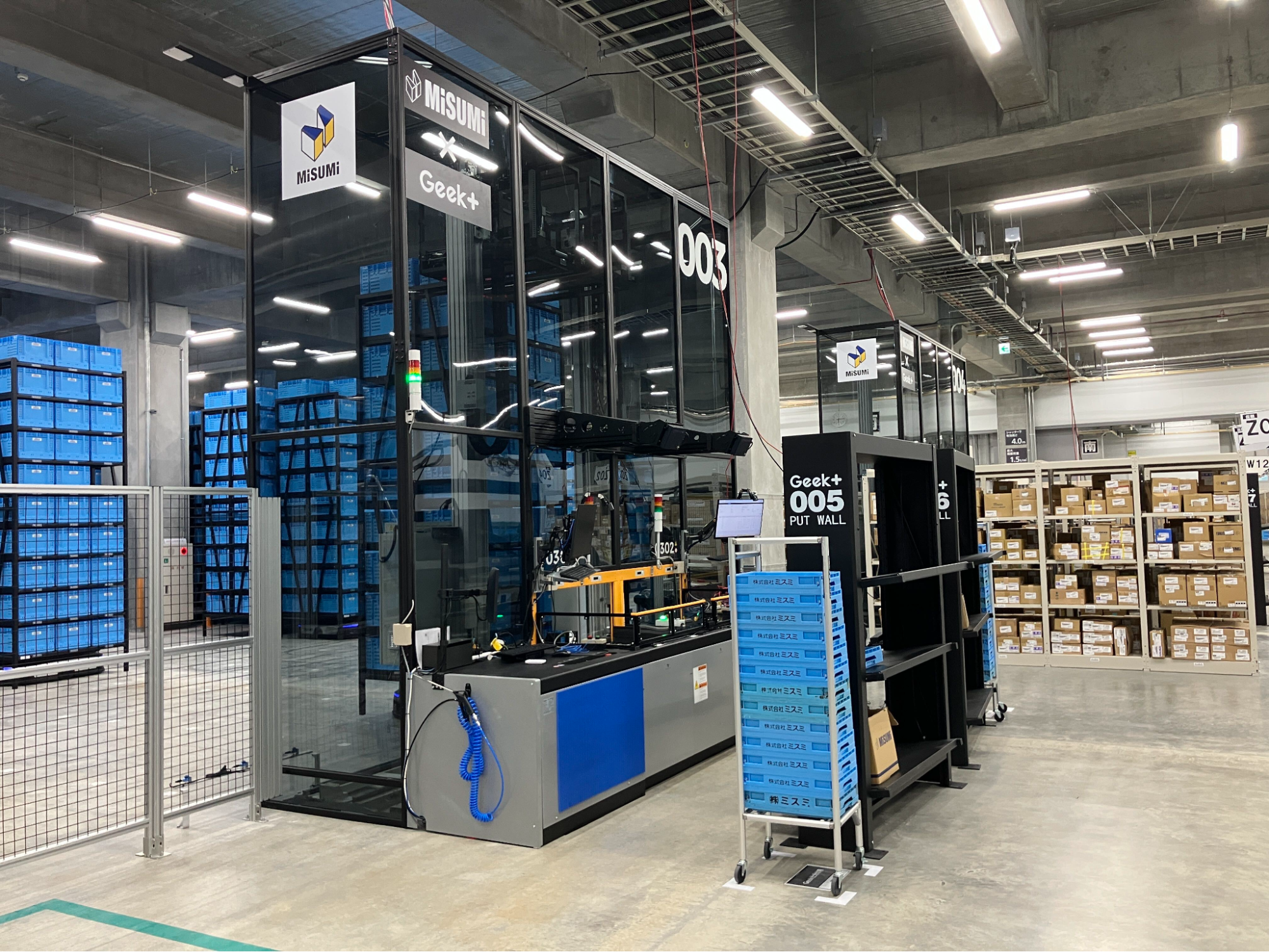
Geek+ has finished installing its PopPick goods-to-person system at MISUMI's new West Japan Distribution Center in Kawanishi, Hyogo, bringing the parts distributor's two automated sites to 149 robots, 15 stations and 801 shelves, Geek+'s Japanese unit said in a press release on Oct 20.
At MISUMI's East Japan centre the same system roughly doubled productivity and storage efficiency, the company said.
Geek+, the Hong Kong-listed warehouse-robot maker, said through its Japanese subsidiary in a press release on Oct 20 that it has completed the robot installation of its PopPick goods-to-person system at MISUMI's West Japan Distribution Center in Kawanishi, Hyogo prefecture. MISUMI, the Tokyo distributor of machine parts, tools and consumables, already runs PopPick at its East Japan Distribution Center. Across the two sites the installation now totals 149 robots, 15 workstations and 801 shelves, Geek+ said.
The reason a second site followed is in the first one's numbers. At the East Japan centre, Geek+ said, PopPick roughly doubled productivity and doubled storage efficiency compared with the previous operation. Neither company disclosed the contract value or how the 149 robots split between the two sites.
A bigger warehouse, built around robots
MISUMI moved its West Japan centre from Sanda to Kawanishi and expanded the floor area 7.5 times, according to the release, to protect its promise of reliable short delivery times as its product mix and shipment volumes change. A MISUMI executive, Kosuke Hatano, said the operating procedures standardised in the east would be rolled out to the west and used to optimise all three domestic centres, including the Central Japan Distribution Center.
PopPick is a goods-to-person system: robots carry shelves to a fixed workstation, where a station mechanism pulls the required container to the picker, so staff no longer walk the aisles. Geek+ says the shelving reaches 3.8 metres, up to the underside of fire shutters, and stores about twice as much as standard medium and light-duty racking. At the East Japan site MISUMI also cut on-the-job training time by standardising work steps, and the companies say they will extend automation to receiving and stocktaking next.
MEKAWIRE analysis
The MISUMI rollout shows where warehouse robots now win in Japan: not as a pilot, but as a template copied from one site to the next once the first site proves a doubling of output.
The second-site pattern matters for Geek+ because repeat orders from an existing customer cost less to win than new logos. Japan is a labour-constrained market where distributors such as MISUMI sell on delivery speed, so automation is bought to keep a service promise rather than only to cut cost. MEKAWIRE's warehouse-robot explainer counts 117,500 logistics robots sold and notes that venture money has moved toward humanoids; installations like this one are the steady revenue that remains in the AMR business. The counter-argument: the release gives no contract value, robot count per site or payback, so the scale for Geek+'s revenue cannot be judged.
MEKAWIRE explainer: the warehouse and AMR market in 2026. What would change our view is a third site: if MISUMI's Central Japan centre also adopts PopPick, the template thesis is confirmed. The next dates are MISUMI's interim results and any Geek+ disclosure of Japanese order volume.
- Automation of receiving and stocktaking; three domestic centres optimised together
- MISUMI West Japan Distribution Center, Kawanishi, Hyogo
- PopPick goods-to-person, shelving up to 3.8 m
- Geek+ Japan press release, Oct 20, 2026
- Moved from Sanda to Kawanishi, floor area 7.5x larger
- Contract value, robots per site
- About 2x productivity and 2x storage efficiency versus before
- 149 robots, 15 workstations, 801 shelves
Why it matters
A repeat order from a large Japanese distributor is evidence that goods-to-person robots deliver measurable output gains in high-mix parts logistics, one of the harder warehouse profiles. It also shows the buying pattern in Japan: prove at one site, standardise, then roll out.
For Geek+, Japan is a market where references travel; a MISUMI case study is a sales tool for other industrial distributors.
Rival analysis
In Japanese goods-to-person automation Geek+ competes with AutoStore cube systems sold through integrators and Hai Robotics' case-handling robots. PopPick's pitch is reuse of standard containers and tall shelving without a fixed grid. MEKAWIRE has no disclosed Japanese order values for these rivals to compare.
Valuation context
Geek+ is listed in Hong Kong (2590.HK). The release has no financial terms, so it does not move revenue estimates on its own. Earlier this month MEKAWIRE reported Geek+'s RMB 50 million investment for 20% of Beijing Shenyi, a robot-brain start-up.
Supply-chain implications
Robots and stations come from Geek+ (China); deployment and support are run by its Japanese unit. Shelving height of 3.8 m is set to Japanese fire-shutter limits, a local design constraint.
Signals to watch
Any PopPick decision at MISUMI's Central Japan centre. Geek+ interim or annual disclosure of Japanese revenue. MISUMI comments on logistics productivity in its results.
Analyst view
Thesis: Geek+'s Japan growth is driven by multi-site rollouts at existing customers. Confidence medium: one clear repeat order, no disclosed value.
Questions you should be asking
How many robots went to the west centre? What payback did MISUMI measure in the east? Will the Central Japan centre follow, and when?