Amada and Hitachi finish AI-agent trial, plan physical AI to run machines and robots
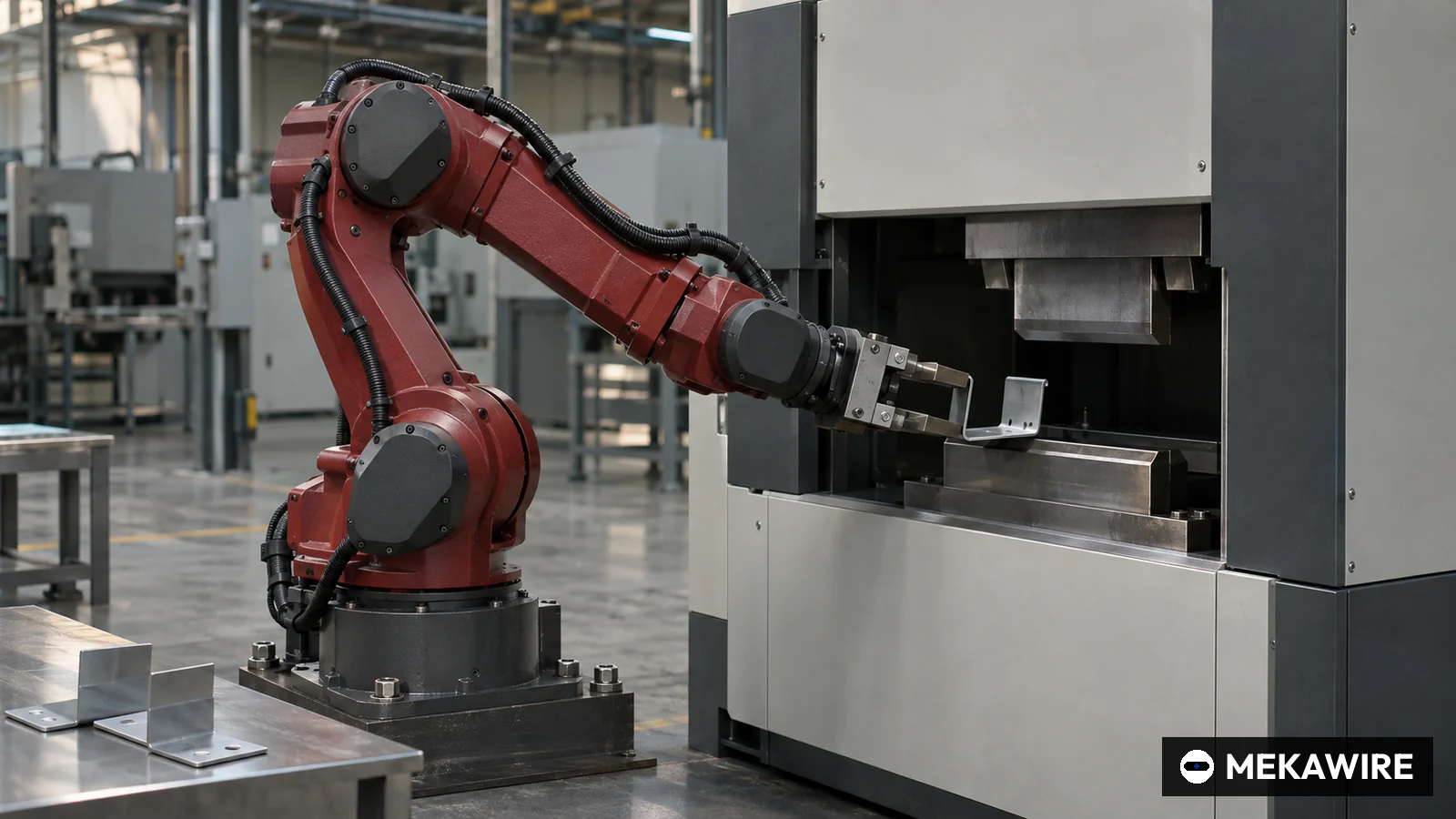
Japanese machine maker Amada and Hitachi said on Nov 26, 2026 that a first proof of concept with AI agents for factory operations and Amada's maintenance service is complete and showed results. They plan to apply the agents at model customers' sites and, alongside that, to develop physical AI in which agents analyse production plans and equipment status while physical AI controls production equipment and robots.
Amada's V-factory service connects more than 10,000 machines worldwide. No dates, customers or financial terms were given. It is Hitachi's third physical AI tie-up in MEKAWIRE's coverage since late September, after Agile Robots and FANUC.
Amada and Hitachi said in a joint news release on Nov 26, 2026 that they are accelerating a joint effort to make Amada's customers' factories autonomous and to upgrade Amada's maintenance service, using AI agents and physical AI. The release was published on Hitachi's press site and distributed through PR TIMES.
The finished phase was software; robot control is still a plan
The companies said a first proof of concept with AI agents is complete and that its effects were confirmed. On the factory side the agents suggested how to use machines and software more efficiently, helped adjust production plans when delivery dates change suddenly, and presented likely causes, check procedures and fixes when a machine fails. On the service side they tested whether AI could infer causes and propose recovery steps for complex cases with no precedent, drawing on accumulated knowledge.
The partners plan to apply the tested agents at model customers' manufacturing sites, aiming for early practical use and a service offering. Alongside that work they aim to develop physical AI that judges conditions on site, works autonomously and assists workers, and a system in which AI agents analyse production plans, equipment status and work conditions while physical AI controls production equipment and robots based on the agents' output. The end goal, they said, is a cycle that optimises the whole factory. The release gives no dates, names no customers and states no financial terms.
What each side brings
Amada, founded in 1946 and listed on the TSE Prime Market, said more than 10,000 machines worldwide are connected to its IoT service V-factory, and that in November 2026 it opened a MIRAI factory area in its Amada Global Innovation Center showroom. Hitachi will use the know-how from the project to commercialise parts of its HMAX Industry suite, including a knowledge database it calls an integrated ontology and image analysis for field work, and will send Forward Deployed Engineers to help customers find problems and put AI into operation. The two companies have worked together on IoT-based manufacturing since June 2018.
Hitachi's third physical AI partner in two months
- Sep 29, 2026
- Agile Robots (Germany)
- Plan to combine AI models into shared robot intelligence; resulting solutions to be offered through HMAX Industry
- Not disclosed
- Sep 30, 2026
- FANUC (Japan)
- AI-enabled industrial robots in joint validation with HMAX Industry AI; Hitachi edge AI chip to be tested on the robots
- Deployment to customers from fiscal 2027
- Nov 26, 2026
- Amada (Japan)
- 10,000+ V-factory connected machines and maintenance know-how
- Not disclosed
From the companies' releases of Sep 29, Sep 30 and Nov 26, 2026. No financial terms were disclosed in any of the three.
As of Nov 26, 2026
MEKAWIRE analysis
Hitachi is assembling HMAX Industry from partners that each own a different layer: FANUC brings robots, Agile Robots an AI model, and Amada brings an installed base of connected machines and the service knowledge behind them.
The Amada trial drew on Amada's maintenance know-how, and Amada reports more than 10,000 machines connected to V-factory worldwide, although the tested agents are to be applied first at selected model customer sites. The strongest counter-argument is in the release itself: the completed phase was AI agents giving advice, and the physical AI that would control equipment and robots is a plan without a date. Of the three announcements in the table, only FANUC's gives a target period, with deployment to customers from fiscal 2027.
For robot makers the signal is that Japan's machine-tool and sheet-metal base may reach physical AI through the machine maker's service channel rather than through a robot purchase.
What to watch
Whether the partners name the first model customer site and a service launch date; whether Hitachi lists the integrated ontology and image-analysis items as HMAX Industry products; and whether a later release shows physical AI controlling an Amada machine or a robot cell rather than giving advice.
- AI-agent PoC complete, effects confirmed
- Agents at model customer sites, early practical use
- Not disclosed
- Agents plan, physical AI runs equipment and robots
- June 2018 (IoT manufacturing)
- 10,000+ worldwide