Figure unveils Helix, its own vision-language-action model that drives a humanoid's entire upper body from two onboard GPUs
Figure AI on 20 February 2025 introduced Helix, a vision-language-action model that pairs a 7-billion-parameter vision-language model running at 7 to 9 Hz with an 80-million-parameter control policy running at 200 Hz across 35 degrees of freedom. Figure says the model was trained on about 500 hours of teleoperation data and runs entirely on two low-power embedded GPUs inside the robot.
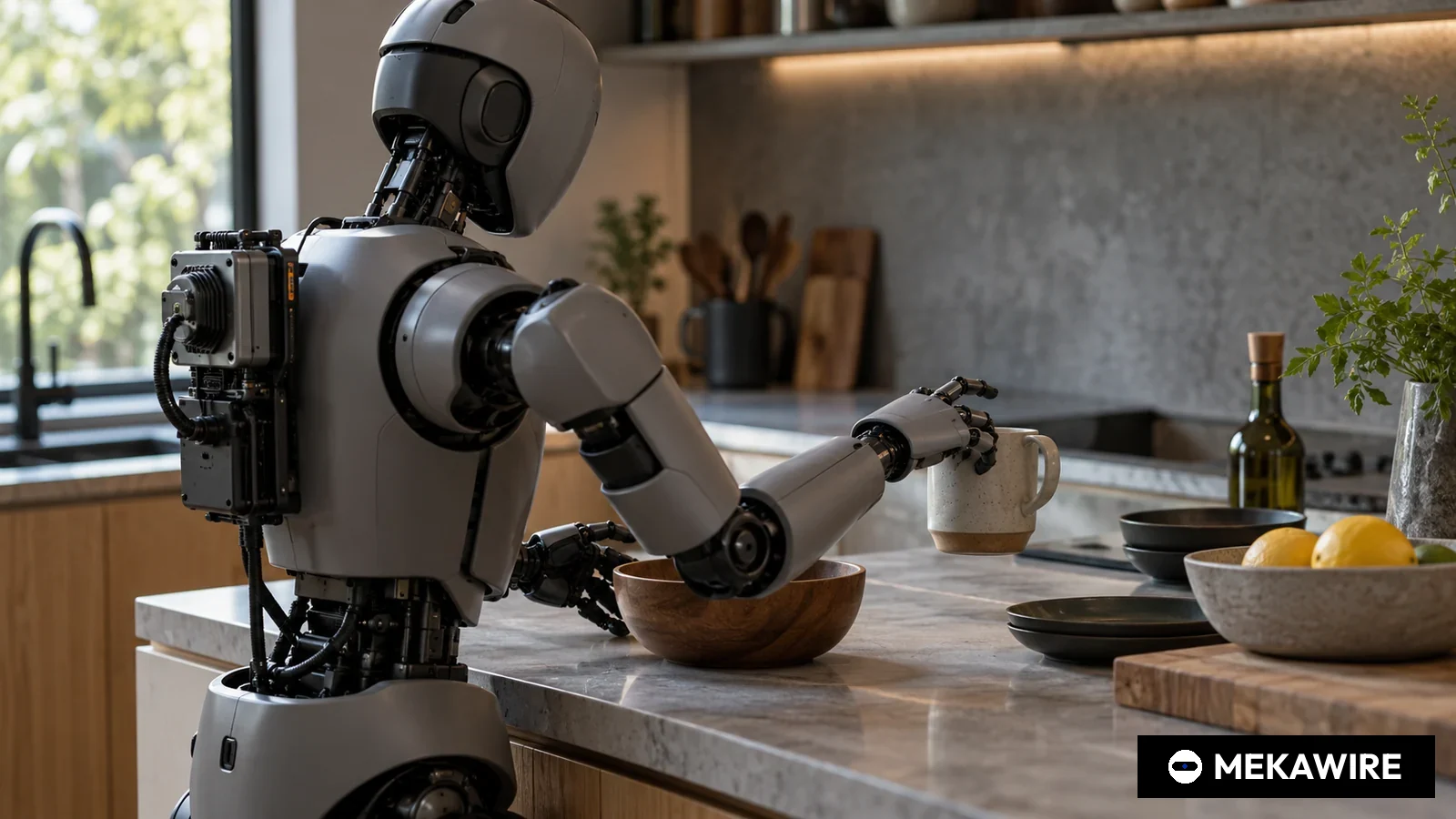
Figure AI, the US humanoid developer, on 20 February 2025 published Helix, a vision-language-action (VLA) model that it says controls the full upper body of its humanoid robot from camera images and plain-language commands. In a technical post on its website, the company described Helix as a single network that lets its robots pick up household objects they have never seen and lets two robots share one task.
The numbers Figure disclosed are specific. Helix splits into two parts. System 2, the slower layer, is a 7-billion-parameter open-source, open-weight vision-language model pretrained on internet-scale data and running at 7 to 9 Hz. System 1, the fast layer, is an 80-million-parameter cross-attention encoder-decoder transformer that runs at 200 Hz. Together they output commands for a 35-degree-of-freedom action space covering wrist poses, finger flexion and abduction, and torso and head orientation targets.
Figure said Helix was trained on roughly 500 hours of teleoperated robot behaviour, which it put at less than 5% of the size of previously collected VLA datasets. To pair those recordings with language, the company ran an auto-labelling vision-language model over video clips and asked it, in effect, what instruction would have produced the action on screen. Training ran end to end, from raw pixels and text to continuous actions, with a standard regression loss, a single training stage and a single set of weights, according to the post.
The demonstrations centred on a kitchen. In Figure's videos two robots unpack a bag of groceries they have not handled before and put the items away, passing objects to each other on spoken prompts such as handing a bag of cookies to the robot on the right. Figure called Helix the first VLA to run simultaneously on two robots and the first to output high-rate continuous control of an entire humanoid upper body. It also said its robots could now pick up thousands of novel items in clutter, from glassware and toys to tools and clothing, and that all objects used in training were excluded from the evaluations. These are the company's own claims and have not been independently tested.
The hardware choice may matter as much as the model. Figure said Helix runs entirely onboard on dual low-power embedded GPUs, with System 2 and System 1 each on its own processor, and described it as the first VLA to do so and therefore ready for commercial deployment. Six days later, on 26 February 2025, Figure published a logistics follow-up stating that a Helix policy trained on 8 hours of demonstrations reached an effective throughput above 1.1, or 10% faster than the human-led demonstrations it learned from, after adding stereo vision, multiscale visual features, learned self-calibration and a test-time speed-up it calls Sport Mode.
Figure enters this field with a large balance sheet and a notable history. On 29 February 2024 it announced a $675 million Series B at a $2.6 billion valuation, with investors including Microsoft, the OpenAI Startup Fund, NVIDIA and Bezos Expeditions, and said it had signed a collaboration agreement with OpenAI to develop next-generation AI models for humanoid robots. The Helix post does not mention OpenAI and presents the model as Figure's own work. In September 2025 Figure went on to raise a $1 billion Series C at a $39 billion post-money valuation, according to the company.
Helix lands in a crowded race to build robot foundation models. Physical Intelligence, a San Francisco start-up, unveiled π0 on 31 October 2024, a model built on a 3-billion-parameter vision-language model that uses flow matching to issue motor commands at up to 50 times a second, trained across eight robot configurations. The company has since published π0 code and weights under an Apache-2.0 licence in its openpi repository, which states that its base checkpoints were pre-trained on more than 10,000 hours of robot data. Google DeepMind followed on 12 March 2025 with Gemini Robotics and Gemini Robotics-ER, built on Gemini 2.0, which it said more than doubled performance on a comprehensive generalisation benchmark against other state-of-the-art VLAs, with Apptronik as its humanoid partner.
- Helix
- Figure AI
- 2025-02-20
- 7
- 80
- 200
- 500
- π0
- Physical Intelligence
- 2024-10-31
- 3
- No data
- 50
- 10,000
- Gemini Robotics
- Google DeepMind
- 2025-03-12
- No data
- No data
- No data
- No data
Figures as disclosed by each developer on its own pages: figure.ai/news/helix, pi.website/blog/pi0, the openpi GitHub repository (base checkpoints pre-trained on more than 10,000 hours, a lower bound) and Google DeepMind's 12 March 2025 post. Null means not disclosed. Nothing estimated.
As of Oct 1, 2026
The architecture follows an idea long used in robotics and borrowed from psychology. A slow, deliberative layer interprets the scene and the instruction, then hands a compact summary to a fast reflexive layer that steers fingers and wrists. In Helix that summary is a single continuous latent vector, which System 1 combines with its own visual features from a fully convolutional vision backbone that Figure says was pretrained entirely in simulation. The split lets the large language-aware model think at a speed it can sustain on embedded hardware, while the small policy keeps the arms and hands smooth at 200 Hz.
For the global market the significance is that a hardware company with a production plan now claims to own its whole software stack, rather than renting intelligence from a model lab. Open questions remain. Figure has not named the open-weight model inside System 2, has not published success rates for the grocery demonstration, and has not given the GPU model or power draw. Helix as described controls the upper body only, leaving locomotion to other systems, and 500 hours of data is small next to the more than 10,000 hours Physical Intelligence cites.
MEKAWIRE analysis
Helix shows that the decisive asset for a humanoid maker is a model it controls and can run on the robot, and Figure's bet is that tight coupling of body, data and network beats scale of data alone.
The evidence is in Figure's own figures. A 35-degree-of-freedom upper body controlled at 200 Hz from about 500 hours of data, on two embedded GPUs, is an efficiency claim, and the 26 February logistics post adds that 8 hours of curated demonstrations were enough to beat the human demonstrator's pace by 10% on one task. Data quality and a known robot body are doing work that raw volume does for rivals.
The strongest counter-argument is that Figure has published videos and selective metrics, not a benchmark. Physical Intelligence released weights others can test, and Google DeepMind reported a comparative generalisation result. Until Figure shows failure rates on unscripted tasks, Helix's lead cannot be measured.
Bull case. If Helix keeps improving with modest data, Figure can roll out new skills by software update across every robot it builds, and the $39 billion valuation it reached in September 2025 rests on an owned model that customers cannot get elsewhere. Onboard inference also removes network latency and cloud cost from each deployment.
Bear case. A closed model trained on one robot design may hit a ceiling that broader cross-embodiment models avoid, and open alternatives such as openpi lower the price of good-enough intelligence for every rival. If Gemini Robotics or π0 successors generalise better, Figure carries the full cost of a frontier model alone.
Signals to watch, with the dates that tested the thesis:
- 26 February 2025, Figure's Helix logistics update, the first real-work throughput numbers.
- 12 March 2025, Google DeepMind's Gemini Robotics launch with Apptronik, the first large-lab rival aimed at humanoids.
- 16 September 2025, Figure's $1 billion Series C at a $39 billion valuation, the market's verdict on an owned-model strategy.
- two robots storing unseen groceries together
- 80M-parameter cross-attention transformer, 200 Hz
- 7B-parameter open-weight VLM, 7 to 9 Hz
- 20 February 2025
- 35 degrees of freedom, full upper body
- about 500 hours of teleoperation (under 5% of prior VLA datasets, per Figure)
- dual low-power embedded GPUs
- 26 Feb 2025: 8 hours of data, throughput above 1.1x the demonstrator
Why it matters
Helix is the point at which Figure stopped presenting itself as a robot body looking for a brain. The company published a complete control stack, from language understanding down to finger abduction targets, and tied it to hardware it already ships. For buyers in automotive and logistics, the practical promise is that new tasks arrive as model updates rather than integration projects, and that inference happens inside the robot without dependence on a network link.
The announcement also reset the reference point for humanoid AI disclosures. Before Helix, most humanoid demonstrations were either teleoperated or narrow scripted policies. Figure's post put concrete parameters, rates and data volumes on the table, which made it possible for the first time to compare a humanoid maker's model directly with those from Physical Intelligence and Google DeepMind.
Rival analysis
Physical Intelligence is the closest architectural comparison. Its π0, announced on 31 October 2024, uses a 3-billion-parameter vision-language backbone with a flow-matching action component and runs at up to 50 Hz across eight robot configurations, and its openpi release under Apache-2.0 lets any lab fine-tune it. Its strategy is breadth across bodies; Figure's is depth on one body.
Google DeepMind's Gemini Robotics, announced on 12 March 2025, brings the largest general-purpose model family to the problem and a hardware partner in Apptronik, plus trusted testers including Agile Robots, Agility Robotics, Boston Dynamics and Enchanted Tools. DeepMind did not disclose parameters or control rates in its launch post, so a like-for-like comparison with Helix's 200 Hz figure is not possible from primary sources.
Valuation context
Figure's disclosed rounds frame what investors were paying for. The company raised $70 million in its May 2023 Series A, $675 million at a $2.6 billion valuation in February 2024, and $1 billion at a $39 billion post-money valuation in September 2025. The fifteen-fold rise between the last two marks, derived as 39 divided by 2.6, came after Helix and its logistics follow-ups, which suggests investors priced Figure as an AI company with an owned model rather than a hardware maker.
That premium carries risk. A valuation built on model leadership depends on Figure staying ahead of open alternatives and of Google's spending power.
Supply-chain implications
Running both systems on two embedded GPUs pushes the compute bill of materials into the robot itself. Figure did not name the chip, but the design implies a dependency on a high-end embedded module supplier. Power draw and thermal limits of that module bound how large System 2 can grow on the robot.
The data side is also a supply chain. Figure's approach relies on teleoperation rigs, human operators and auto-labelling models. The claim that 500 hours sufficed suggests the scarce input is careful collection on the target body rather than mass data purchases, which favours vertically integrated makers that own their fleets.
Signals to watch
Three dated markers defined how Helix was judged. On 26 February 2025 Figure published logistics metrics, with an 8-hour training set and throughput above 1.1 times the demonstrator. On 12 March 2025 Google DeepMind launched Gemini Robotics with Apptronik, making the comparison explicit. On 16 September 2025 Figure closed a $1 billion Series C at a $39 billion valuation.
Beyond those, the questions Figure left open in February 2025 are the ones to track in any later disclosure: the identity of the System 2 backbone, measured success rates on unseen objects, extension of control to the legs, and the specific GPU and power budget.
Analyst view
Thesis. Helix established Figure as a vertically integrated humanoid AI company whose differentiation lies in efficient, onboard, whole-upper-body control rather than in data scale. Confidence is medium. The technical disclosures are specific and internally consistent, and the logistics follow-up gave quantitative support within a week. Against that, nearly all evidence comes from Figure's own posts and videos, with no third-party benchmark or released weights.
We would raise confidence if Figure published task success rates on held-out objects or allowed external evaluation, and lower it if open cross-embodiment models such as those in openpi matched Helix on humanoid hardware.
Questions you should be asking
Which open-weight 7-billion-parameter model sits inside System 2, and what licence governs it? What success rate did Helix achieve across the thousands of novel objects Figure cites? Which GPU runs each system, and at what power?
How does Helix handle locomotion and whole-body balance, which the February 2025 post did not cover? And how quickly can a new task be added with the 8-hour data regime Figure reported for logistics?