Japan PM restates 10 million AI robots by 2040 goal as companies ask for multi-year aid
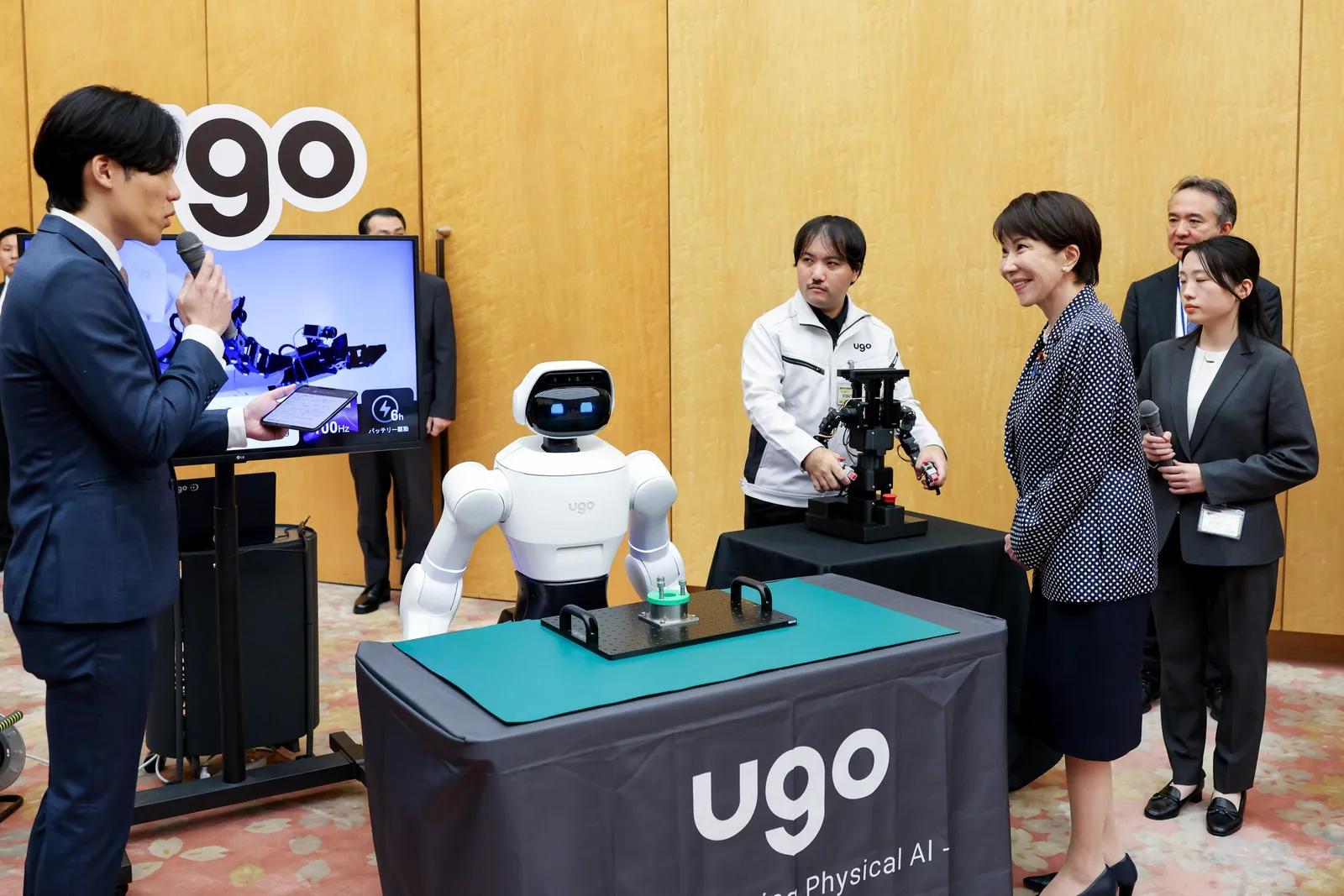
Japanese Prime Minister Sanae Takaichi met physical AI companies at her office on Nov 12, 2026 and restated the government's 2040 goals: about 10 million AI robots deployed and a JPY 20 trillion market captured, more than 30% of the world.
Requests she highlighted included support from research through mass production, faster development of domestic AI foundations, a government mechanism to encourage data pooling and multi-year deployment support; she asked Minister Kiuchi to reflect them in the Japan Growth Strategy execution plan and to set out the support and budget in a predictable form.
Japanese Prime Minister Sanae Takaichi held an exchange of views with physical AI companies at the Prime Minister's Office on Nov 12, 2026, according to the office's record of the day. In her closing remarks she said her cabinet has positioned physical AI in the Japan Growth Strategy's 17 strategic fields; in the strategy document it is a priority within the AI and semiconductors field. The 2040 targets she cited are about 10 million AI robots deployed and a JPY 20 trillion market captured, which she described as more than 30% of the world market.
Four requests from the companies
The office's record lists what the participants asked for. First, consistent support from research, development and trials through to mass-production sites for domestic robots and key components, so that Japan can sit at the core of the global robot supply chain. Second, faster development of domestic AI foundation models. Third, a government mechanism to pool data, along the lines of the GENIAC programme. Fourth, multi-year deployment support to carry early demand. Takaichi told Minister Kiuchi to reflect the requests in the Japan Growth Strategy execution plan and to set out the content of state support and the budget needed in a predictable form.
One participant described its pitch. ugo, a Tokyo robot maker, said in a press release on Nov 17 that chief executive Ken Matsui attended and demonstrated ugo Nova, a domestically made semi-humanoid that works around factory lines while collecting data to train physical AI. The company said it has raised JPY 5 billion in total from Japanese social infrastructure operators and asked the government for sites where companies can try robots before buying and for help training staff. MEKAWIRE covered ugo's JPY 1 billion debt financing for ugo Nova production in October.
MEKAWIRE analysis
Japan's targets only add up if robots are bought like vehicles. The open question is whether the money now promised in budget form arrives as multi-year purchase support, which is what the companies asked for.
- AI robots deployed by 2040
- About 10 million units
- Prime Minister's remarks, Nov 12
- Market to capture by 2040
- JPY 20 trillion
- Prime Minister's remarks, Nov 12
- Target global share
- More than 30%
- Prime Minister's remarks, Nov 12
- Projected global multipurpose robot market, 2040
- About JPY 60 trillion
- Government AI robotics strategy material; JPY 20 trillion is one third of it (MEKAWIRE calc.)
- Average deployment needed, 2027 to 2040
- About 714,000 units a year
- 10 million over 14 years (MEKAWIRE calc.)
The 10 million units, JPY 20 trillion and more-than-30% share are as stated by Prime Minister Sanae Takaichi on Nov 12, 2026. The JPY 60 trillion projection comes from government strategy material. The one-third share of that projection and the yearly average are MEKAWIRE calculations.
As of Nov 12, 2026
The arithmetic is demanding. Ten million robots by 2040 means an average of about 714,000 units a year from 2027 (MEKAWIRE calc.), and government strategy material projects a global multipurpose robot market of about JPY 60 trillion in 2040, so JPY 20 trillion would be about one third of it (MEKAWIRE calc.). The companies' fourth request matters most for a start-up such as ugo: without multi-year deployment aid, early buyers carry the risk. MEKAWIRE's explainer on Japan's physical AI strategy found that large Japanese makers have so far moved through partnerships while venture rounds stayed small. The signals to watch are the execution plan text, the size of the budget line Takaichi asked for, and whether a GENIAC-style data programme for robots is announced.
- Nov 12, 2026, Prime Minister's Office, Tokyo
- JPY 20 trillion, more than 30% world share
- Priority within AI and semiconductors, one of the Japan Growth Strategy's 17 strategic fields
- About 10 million units by 2040
- 4 highlighted by the PM: supply-chain support, domestic AI, data pooling, multi-year deployment aid
- JPY 5 billion in total (company)
- About 714,000 units, 2027 to 2040 (MEKAWIRE calc.)
Why it matters
Japan is targeting about 10 million AI robots deployed and JPY 20 trillion in market capture by 2040, representing more than 30% of the world market. MEKAWIRE calculates that spreading 10 million units evenly across 2027 through 2040 would imply about 714,000 deployments a year. The government's annual targets, deployment baseline and support budget are unspecified.
Rival analysis
Tokyo-based ugo sells robots for security, guidance and facility inspection. The supplied material names no rival vendors, gives no comparative shipment, pricing or performance data, and does not say which products or companies would be eligible for any support, so ugo's competitive position is unclear.
Valuation context
The material reports ugo's total funding to date as JPY 5 billion (company-stated), while the deal database lists total funding of $5.75M. The deal record shows a JPY 850 million ($5.75 million) allotment in January 2024 and an allotment of undisclosed size in May 2025, so the two totals are not explained by the listed deals. The material provides no market cap, disclosed valuation or valuation estimate for ugo. The JPY 20 trillion figure is Japan's policy target for market capture, not a company valuation.
Related papers
The supplied material cites no research papers. The Cabinet Office working group's AI robotics strategy material and the June 24, 2026 Japan Growth Strategy material provide policy context for the deployment and market targets.
Supply-chain implications
Companies asked for support from research through mass production, a point that bears directly on manufacturing. Separate requests covered faster development of domestic AI foundations, a government mechanism for data pooling and multi-year deployment aid. The material identifies no component suppliers, factory commitments or production capacity, leaving manufacturers' ability to support the deployment target unclear.
Signals to watch
Watch for whether the Japan Growth Strategy execution plan specifies multi-year budgets, eligibility rules and deployment milestones. For ugo, track disclosed fleet orders and rollout schedules as evidence of operational demand following its ugo Nova demonstration.
Analyst view
Multi-year aid could give robot makers more confidence to invest in production if the execution plan specifies funding and eligibility. For ugo, the evidence to track is whether deployment support leads to repeat fleet orders for its business robots.
Questions you should be asking
What deployment baseline and counting rules underpin the 10 million unit target? How much funding will cover production and deployment, and on what timetable? What data will companies be able to pool, and who will have access?