ugo opens orders for ugo mini G2 inspection robot after 100 units shipped
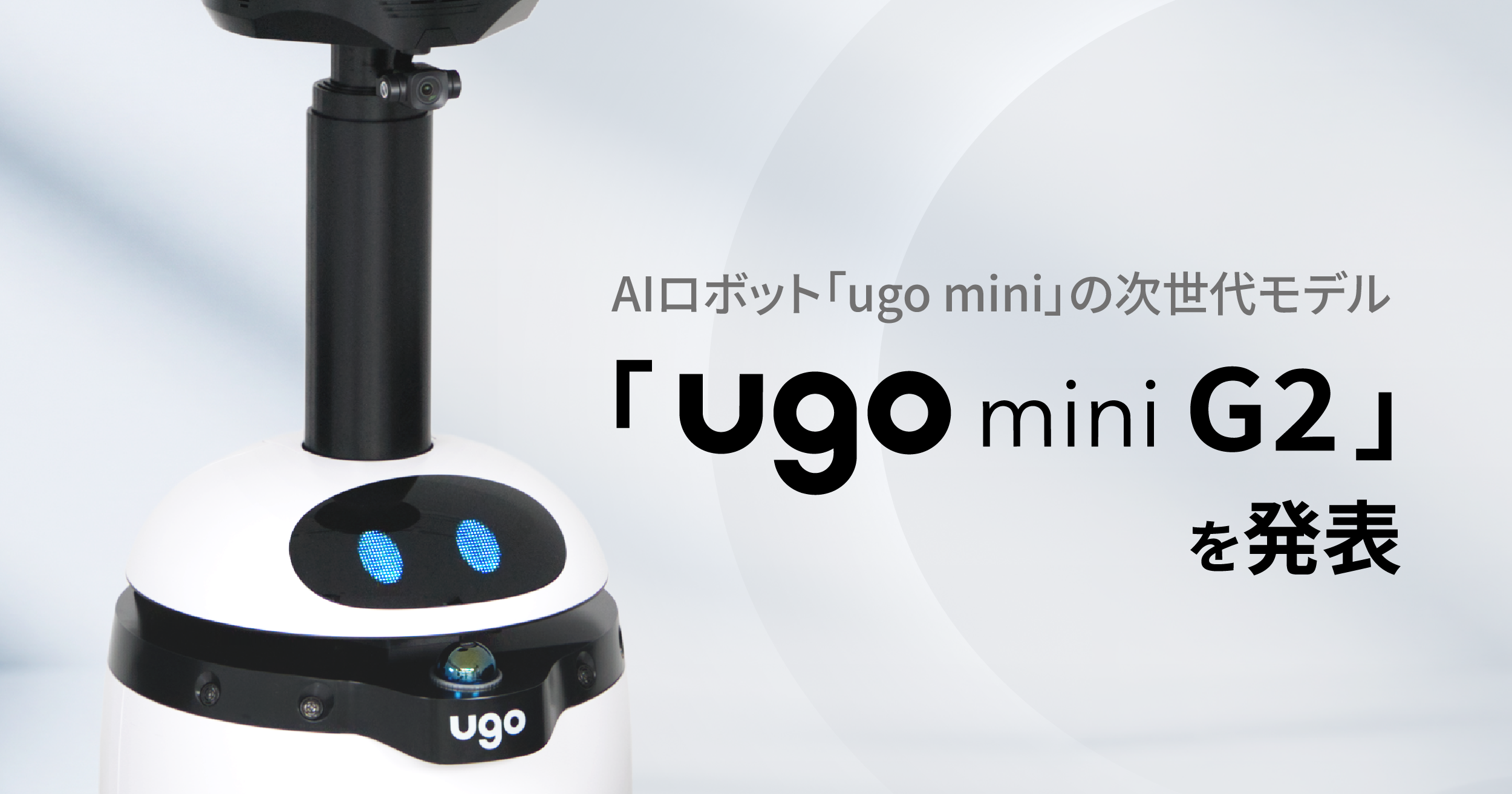
Tokyo robot maker ugo opened advance orders for the ugo mini G2 facility-inspection robot on Oct 20, with deliveries from Nov 24. The update adds an optional optical zoom camera, an ultrasonic sensor for glass walls and a power port for edge AI units, and moves production to a domestic contract manufacturer after the first model passed 100 units shipped in about a year.
ugo, a Tokyo developer of service robots, said in a press release on Oct 20 that it has started taking advance orders for the ugo mini G2, the second generation of its facility-inspection robot, with deliveries beginning on Nov 24. The company is pitching the update as a step from automating inspection rounds to supporting predictive maintenance.
The launch rests on a sales figure. ugo said the first ugo mini, on sale since January 2025, passed 100 units shipped in roughly a year, in semiconductor and automotive plants, power and water-treatment facilities and data centres. For a Japanese start-up selling a wheeled robot that reads gauges, that is enough volume to justify outsourcing production.
What changes in the G2
The G2 keeps the existing 4K camera and adds support for an optical zoom camera, sold as a paid option, so the robot can read small meters and instruments mounted high or far away that the first model could not capture. An ultrasonic sensor joins the 3D LiDAR to detect glass surfaces that LiDAR misses; ugo said the driving-safety function that uses it will arrive in an operating-system update in 2027 or later. A USB Power Delivery port on the top case lets customers mount edge AI units and other sensors for on-the-spot analysis.
The most consequential change is industrial. ugo said it has set up mass production and supply through a domestic electronics manufacturing services (EMS) contractor, to handle orders for several robots across several sites.
The software is where the maintenance pitch lives
Alongside the robot, ugo will update its fleet software, ugo Platform, in stages. The company listed three additions: an AI agent that interprets site conditions and proposes or carries out actions, including suggestions when errors occur or robots need configuring; a dashboard that combines the robot's inspection data with data from other equipment in the facility; and live tracking of multiple robots on the facility map.
Company background
ugo was founded in 2018 and is led by chief executive Ken Matsui. Its line-up includes the ugo Pro for security patrols and reception and the ugo mini for inspection. MEKAWIRE's database records a JPY 850 million third-party share allotment in January 2024 and a further allotment of undisclosed size in May 2025. In June 2026 the company said the ugo mini had been confirmed suitable for ISO Class 4 cleanrooms, and in April it began a trial at NEC's Innovation Park in Tamagawa for automated rounds and AI meter reading of electrical equipment.
MEKAWIRE analysis
ugo mini G2 is less a new robot than a manufacturing decision: moving to contract production says ugo now expects multi-unit orders, and the zoom camera and edge-AI port target the inspection points that still need a human.
The numbers frame the bet. Deliveries start 35 days after orders open, and the first model needed about a year to reach 100 units. Multi-robot management in software and EMS production in hardware only pay off if customers move from single trial units to fleets in one facility.
The counter-argument is that the hard parts of predictive maintenance are data integration and failure models, not the robot. A dashboard that merges plant data puts ugo in competition with the maintenance software that plant owners already run.
In the MEKAWIRE explainer on Japan's robot market ([Japan robotics market 2026](/news/japan-robotics-market-2026-explained-36219-robot-installations-decade-low-exports-82-percent-of-shipments-20261017)), labour shortages are the main domestic demand driver; ugo is one of the few Japanese service-robot start-ups to disclose unit shipments for a single model.
Bull case: semiconductor fabs and data centres order G2 fleets, and the EMS line lowers unit cost. Bear case: the zoom option and 2027 safety update slip, and customers keep one robot per site.
Signals to watch: first G2 deliveries from Nov 24; the 2027 operating-system update with ultrasonic safety; and any disclosure of cumulative units beyond 100.
- On sale
- Jan 2025
- Advance orders Oct 20, 2026; deliveries Nov 24
- Cameras
- 4K camera
- 4K camera plus optional optical zoom camera
- Obstacle sensing
- 3D LiDAR
- 3D LiDAR plus ultrasonic sensor (safety function via 2027+ OS update)
- Expansion
- Not stated
- USB PD port on top case for edge AI units and sensors
- Production
- Not stated
- Domestic EMS contractor, mass production
- Units shipped
- More than 100 in about a year
- Not yet shipping
From ugo's Oct 20, 2026 release. Days from order opening to first delivery: Oct 20 to Nov 24 = 35.
As of Oct 20, 2026
- Founded 2018, Chiyoda, Tokyo; CEO Ken Matsui
- ugo Platform: AI agent, facility-wide dashboard, multi-robot tracking
- ugo press release, Oct 20, 2026
- Mass production through a domestic EMS contractor
- ugo mini on sale since Jan 2025; more than 100 units shipped in about a year
- Optional optical zoom camera, ultrasonic sensor with 3D LiDAR, USB PD port for edge AI units
- Ultrasonic driving-safety function in an OS update in 2027 or later
- Advance orders from Oct 20; deliveries from Nov 24, 2026
Why it matters
ugo is one of the few Japanese service-robot start-ups to disclose unit shipments for a single model. ugo's move to EMS production and multi-robot software signals that it expects fleet orders, which would make inspection a scaled business rather than a series of trials.
The target customers named in the release, semiconductor and automotive plants, power and water facilities and data centres, are all under pressure from a shrinking pool of maintenance staff.
Rival analysis
ugo competes with legged inspection robots such as Boston Dynamics' Spot and ANYbotics' ANYmal on industrial sites, and with Japanese patrol and inspection robot makers in buildings. Its wheeled, low-cost design suits indoor plants and data halls with flat floors; legged robots cover stairs and outdoor plant at higher cost. The release gives no price, so a cost comparison is not possible from primary data.
Valuation context
MEKAWIRE's database holds two third-party share allotments for ugo: JPY 850 million in January 2024 and one of undisclosed size in May 2025. No valuation has been disclosed.
Supply-chain implications
Production moves to an unnamed domestic EMS contractor. The G2 uses a 4K camera, an optional optical zoom camera, 3D LiDAR and an ultrasonic sensor; suppliers are not named.
Signals to watch
Nov 24, 2026: first G2 deliveries. 2027: OS update enabling ultrasonic driving safety. Any update to cumulative unit shipments or a named multi-robot customer.
Analyst view
Thesis: G2 is a production and fleet bet more than a product leap. Confidence medium: shipments above 100 units are disclosed, but price, margin and order intake are not.
Questions you should be asking
What is the G2 price and the price of the zoom option? How many customers run more than one ugo mini today? Which EMS contractor builds the G2 and what is its capacity? Will the facility dashboard connect to existing plant maintenance systems?