JR West adds a 120 kg single-arm robot and a mass-production humanoid to its track maintenance fleet
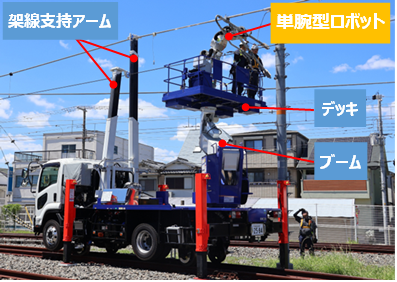
West Japan Railway Company (JR West) said in a press release on Oct 16 that it will put two new multi-function railway heavy machines into service on its lines this autumn: a heavy-work single-arm robot mounted on an aerial work platform that can grip up to 120 kg, from October, and a smaller, lighter mass-production version of its humanoid robot with a longer boom for clearing trees along the track, from November.
JR West aims to cut the people needed for these tasks by about 30%.
A Japanese railway operator is moving its humanoid maintenance machine from a single prototype to a fleet. West Japan Railway Company said in a press release distributed on PR Times on Oct 16 that it is introducing two new types of multi-function railway heavy machine and will start using them on operating lines from this autumn.
Two machines, two jobs
The first is a heavy-work single-arm robot mounted on the deck of an aerial work vehicle. It assists workers with heavy objects and can grip up to 120 kg, and goes into use in October 2026. The second is a mass-production version of the humanoid robot JR West already uses: it is smaller and lighter, has a longer boom and will be used to cut trees that obstruct the line, starting in November 2026.
Both build on ZIZAI, the multi-function railway heavy machine JR West put into service in July 2024 for equipment maintenance. The company did not disclose how many units it is buying, their cost or the manufacturer in this release.
Why a railway wants robots at height
JR West gives three reasons. Mechanising work at height should prevent falls and electric shocks; the improved robots should make the work faster; and working alongside robots reduces the physical burden so that people can do the job regardless of gender or age. The company targets a cut of about 30% in the people needed for the work. It plans to widen the range of tasks and develop special tools, and to offer the know-how to other infrastructure maintenance.
MEKAWIRE analysis: the first humanoid fleets will be teleoperated and on booms
The humanoid form is reaching paid infrastructure work in Japan not as a walking robot but as a remotely operated upper body on a truck, which is a much easier safety case.
Most humanoid deployments in MEKAWIRE's records are pilots of walking robots in factories, such as Agility's Digit and Figure's robots. JR West's move to a mass-production model of a boom-mounted humanoid is a different path: the robot never has to balance, the operator stays in the loop and the payoff, a 30% labour cut in hazardous work at height, is easy to count. On Oct 16 Shimizu said it would trial Noble Machines' MOBY humanoids on construction sites from spring 2027; Japan's infrastructure owners are buying robots for labour shortages rather than for autonomy. The counter-argument is that a boom robot is a specialised machine with a humanoid look, and its success says little about general-purpose humanoids.
What to watch
The October start of the single-arm robot, the November start of tree clearing, any disclosure of units and supplier, and whether other JR companies order the same machines.
- ZIZAI multi-function railway heavy machine, in use since July 2024
- About 30% fewer people needed for the work
- Heavy-work single-arm robot on an aerial work vehicle deck; grips up to 120 kg; in use from October 2026
- Mass-production humanoid robot: smaller, lighter, longer boom; tree clearing along lines; from November 2026
- JR West press release via PR Times, Oct 16, 2026
- Units, cost, manufacturer