Edge Medical lists in Hong Kong after retail demand of 1,092 times, betting its surgical robots on export markets
Shenzhen Edge Medical raised HK$1,198.7 million in a Hong Kong IPO priced at HK$43.24 a share and began trading on 8 January 2026, with the retail tranche 1,091.94 times subscribed. Its first annual results showed revenue up 184.8% to RMB455.7 million and 50 of 72 robots delivered in 2025 going overseas.
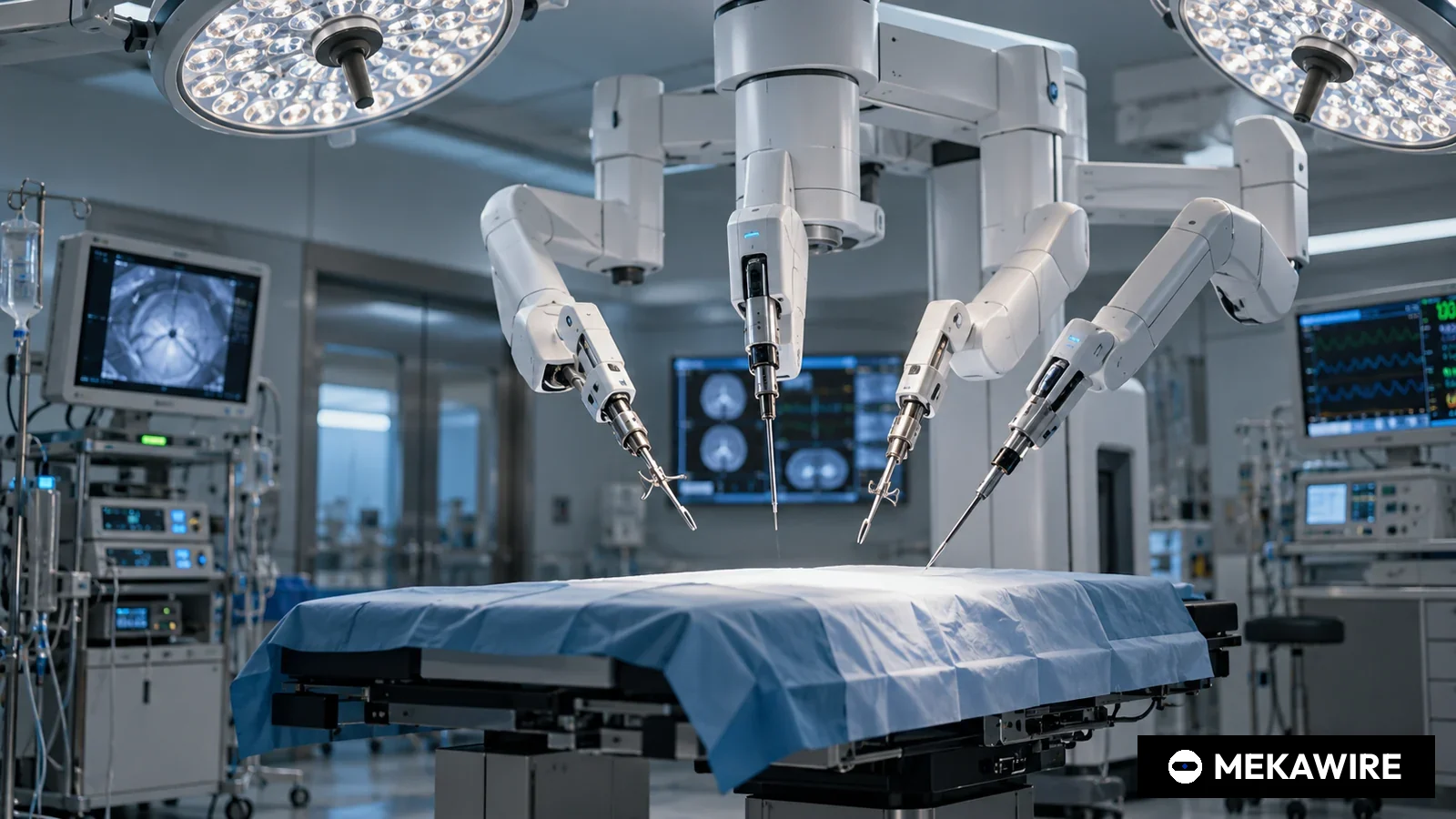
Shenzhen Edge Medical began trading on the Main Board of the Hong Kong stock exchange on 8 January 2026 under the code 2675, after retail investors asked for 1,091.94 times the shares set aside for them. The surgical robot maker sold 27,722,200 H shares at HK$43.24 each, raising gross proceeds of HK$1,198.7 million, according to its allotment results announcement filed on 7 January.
The deal was split 10% to the Hong Kong public tranche (2,772,300 shares) and 90% to the international tranche (24,949,900 shares). The company received 196,179 valid retail applications, of which 19,967 were successful, and the international book was 25.18 times covered. Listing expenses were estimated at HK$82.1 million, leaving net proceeds of HK$1,116.6 million. The stock trades under the short name EDGE MEDICAL-B, the suffix Hong Kong uses for companies listed under its rules for pre-profit biotech issuers.
Five cornerstone investors anchored the book. The Abu Dhabi Investment Authority took 2,699,000 shares, or 9.74% of the offer shares, worth about HK$116.7 million at the offer price. UBS Asset Management (Singapore) and OrbiMed Genesis Master Fund each took 1,799,300 shares, and Huang River Investment and LYFE Capital Fund IV (Dragon) each took 899,600 shares, the filing shows. Morgan Stanley acted as stabilising manager alongside CLSA, GF Securities and CICC on the deal. On 9 February the underwriters fully exercised the over-allotment option for a further 4,158,300 shares at the same price, which the company said added about HK$172.6 million of net proceeds and lifted the total to about HK$1,289.2 million.
The company had 360,000,000 shares in issue at the end of 2025. On the 387,722,200 shares outstanding once the base offering closed, the offer price valued Edge Medical at about HK$16.77 billion, a MEKAWIRE calculation from the filed share count.
Edge Medical makes three families of robots. Its multi-port laparoscopic system, the MP1000, received approval from China's National Medical Products Administration (NMPA) in December 2022. The single-port SP1000 was approved for gynaecology in November 2023 and for urology and general surgery in October 2024. A bronchoscope robot, the CP1000, was cleared in January 2025. In Europe the MP1000 won a CE mark in March 2025 and the SP1000 in October 2025. Citing Frost & Sullivan, the company says it was the first in China and the second worldwide to win registrations for multi-port, single-port and natural orifice surgical robots, and the only Chinese maker with both single-port and multi-port systems approved in China and the EU.
The first annual results after the listing, published on 27 March, showed how fast the business is scaling from a small base. Revenue rose 184.8% to RMB455.7 million in 2025 from RMB160.0 million, gross margin widened to 66.0% from 61.3%, and the net loss narrowed to RMB88.6 million from RMB218.5 million. On an adjusted basis the loss shrank to RMB20.5 million. Overseas end users generated RMB272.1 million, or 59.7% of revenue. The company signed sales agreements for 92 of its core robots during the year, 91 of them MP1000 units, taking the cumulative total to 119, and it installed or delivered 72 robots in 2025, 50 of them outside China, for a cumulative base of 100.
The robots had performed more than 12,000 multi-port procedures, more than 2,000 single-port procedures and more than 500 remote operations by the end of 2025, the company said. Its remote surgery system, which lets a surgeon control the arms over a network link from another city or country, received NMPA approval for telesurgery procedures in 2025, and Edge Medical holds a Guinness World Record for a 12,035 km procedure between Kuwait and Brazil. Chairman Dr. Wang Jianchen leads a staff of 602, and annual capacity at the Shenzhen plant exceeded 100 units in 2025.
Edge Medical lists into a market that is getting crowded at the top. Intuitive, the incumbent, reported 2025 revenue of US$10.06 billion and an installed base of 11,106 da Vinci systems. Medtronic received US clearance for its Hugo system for urologic procedures in December 2025 and performed the first US commercial case at Cleveland Clinic on 17 February 2026. Johnson & Johnson filed its Ottava robot for De Novo review on 7 January 2026, the day before Edge Medical's debut. In China the closest listed peer, MicroPort MedBot, reported 2025 revenue of RMB551.1 million, 73% of it from overseas, and a net loss of RMB254.1 million.
The risks are visible in the same filings. Cash and cash equivalents stood at only RMB86.0 million at the end of 2025, although the company also held RMB727.8 million of financial assets at fair value and has since received the IPO money. Administrative costs jumped 72.0% to RMB90.5 million on listing fees, selling expenses rose 33.2%, and research and development spending fell 18.1% to RMB185.2 million. Chinese hospital tenders for large equipment are price sensitive, and the annual results make no mention of a US registration plan, which leaves the largest market to Intuitive, Medtronic and Johnson & Johnson for now.
- Edge Medical
- HKEX 2675
- RMB
- 455.7
- 184.8
- -88.6
- 59.7
- 100
- MicroPort MedBot
- HKEX 2252
- RMB
- 551.1
- 114.2
- -254.1
- 72.6
- No data
- Tinavi
- SSE STAR 688277
- RMB
- 278.8
- 55.9
- -182.7
- No data
- No data
- Intuitive
- Nasdaq ISRG
- USD
- 10,060
- 20.5
- 2860
- No data
- 11,106
Figures as disclosed in each company's 2025 annual results or earnings release, in reporting currency. Net result: Edge Medical and MicroPort MedBot net loss for the year; Tinavi net loss attributable to shareholders; Intuitive GAAP net income attributable to Intuitive. Overseas share = overseas revenue / total revenue (MicroPort MedBot 400.2 / 551.1). Intuitive growth = 10.06bn / 8.35bn minus 1. Installed: Edge Medical robots installed or delivered; Intuitive da Vinci installed base; MicroPort MedBot reports more than 140 Toumai installations. Figures disclosed, not estimated.
As of Oct 1, 2026
MEKAWIRE analysis
Edge Medical's listing shows that Chinese surgical robots are now financed and valued as export businesses, and the company's growth will be decided abroad rather than in Chinese tenders.
The evidence sits in the order book. Fifty of the 72 robots Edge Medical installed or delivered in 2025 went to overseas end users, and overseas sales made up 59.7% of revenue. MicroPort MedBot's overseas share was even higher at 73%. A sovereign fund from Abu Dhabi and a US healthcare specialist, OrbiMed, sat in the cornerstone tranche, which suggests foreign buyers are pricing the company on its reach into the Middle East, Latin America and Europe.
The strongest counter argument is scale. Edge Medical's entire 2025 revenue is a small fraction of Intuitive's, and its cumulative base of 100 robots compares with more than 11,000 da Vinci systems. Exports to price sensitive health systems can produce strong unit growth while leaving recurring instrument revenue thin, and the company does not disclose instrument sales separately.
Bull case. The CE marks for both platforms and a cost base built in Shenzhen let Edge Medical win hospitals that cannot justify Intuitive's pricing, and telesurgery gives it a distinct selling point in countries short of specialist surgeons. If installations keep compounding at the 2025 pace, the adjusted loss of RMB20.5 million points to break even within reach.
Bear case. Medtronic and Johnson & Johnson bring global sales forces and existing hospital contracts to the same mid-market buyers Edge Medical is courting, and MicroPort MedBot already has a larger overseas footprint. A slowdown in Chinese procurement or a price war between domestic makers could push margins back toward the 61% recorded in 2024.
Signals to watch:
- Second quarter of 2026: approval of the SP1000 single-port robot for ear, nose and throat surgery, which the company has targeted for that quarter.
- Third quarter of 2026: launch of an upgraded bronchoscope robot, also flagged in the annual results.
- By 31 March 2027: the 2026 annual results, which will show whether overseas deliveries stay above half of installations once Medtronic Hugo and J&J Ottava are both on sale in the US.
- HKEX Main Board, stock code 2675, 8 January 2026
- HK$43.24 per H share
- RMB455.7 million, up 184.8%; overseas 59.7%
- Hong Kong tranche 1,091.94 times; international 25.18 times
- RMB88.6 million (2024: RMB218.5 million); adjusted RMB20.5 million
- 27,722,200 H shares; gross HK$1,198.7 million, net HK$1,116.6 million
- 4,158,300 shares, fully exercised 9 February 2026; total net proceeds about HK$1,289.2 million
- Abu Dhabi Investment Authority, 2,699,000 shares (9.74%)
- About HK$16.77 billion on 387,722,200 shares (MEKAWIRE calculation)
- 100 cumulative at end-2025 (46 China, 54 overseas)
Why it matters
Edge Medical's debut came in the same week that Johnson & Johnson filed Ottava with the FDA and a month after Medtronic's Hugo was cleared in the US. The timing matters because it shows capital flowing to a Chinese challenger at the moment the global duopoly question, Intuitive against everyone else, is being reopened by large Western medtech groups.
The retail book of 1,091.94 times and an international book of 25.18 times are demand signals, not valuation validation, but they gave the company a cash cushion that its balance sheet needed. Cash and cash equivalents of RMB86.0 million at the end of 2025 would have been thin for a company spending RMB185.2 million a year on research; the roughly HK$1,289.2 million of net proceeds changes that calculus.
Rival analysis
MicroPort MedBot is the direct comparison. It reported 2025 revenue of RMB551.1 million against Edge Medical's RMB455.7 million, but a net loss nearly three times larger at RMB254.1 million and a gross margin of 48.4% against Edge Medical's 66.0%. MicroPort MedBot reports more than 220 cumulative Toumai orders and more than 140 installations, ahead of Edge Medical's 119 contracted and 100 installed units, so it leads on footprint while Edge Medical leads on unit economics.
Tinavi, the STAR Market listed orthopaedic robot maker, grew revenue 55.9% to RMB278.8 million while its attributable loss widened to RMB182.7 million, a reminder that Chinese surgical robotics is not uniformly converging on profit. Abroad, Intuitive's US$2.86 billion of GAAP net income funds an installed base of 11,106 da Vinci systems, and Medtronic's Hugo is already sold in more than 35 countries. Edge Medical's distinctive claims are its single-port system with both NMPA and CE approval and a telesurgery record of 12,035 km.
Valuation context
At the HK$43.24 offer price, the 387,722,200 shares in issue after the base offering imply a market value of about HK$16.77 billion. Against 2025 revenue of RMB455.7 million, that is a high revenue multiple by any medtech standard, and it prices in sustained triple digit growth. The calculation uses filed share counts and does not convert currencies, so readers should apply their own exchange rate when comparing with MicroPort MedBot or Intuitive.
Investors are paying for the gross margin. A 66.0% gross margin on systems sold largely to overseas distributors is unusual for a Chinese equipment maker and sits closer to Intuitive's model than to domestic peers. If that margin holds as volume rises, operating leverage on a cost base of RMB185.2 million in research, RMB134.8 million in selling and RMB90.5 million in administration could carry the company to profit with revenue not far above 2025 levels. If the margin slips as tenders become more competitive, the valuation has little support.
Supply-chain implications
Edge Medical assembles and tests its robots in Shenzhen, where annual capacity exceeded 100 units in 2025, using in-house precision machining and a modular design. That capacity is roughly in line with the 72 units it installed or delivered last year, so a further step up in demand would require additional investment in the Shenzhen plant.
The bill of materials for a laparoscopic robot is dominated by precision joints, servo motors, encoders, 3D endoscopic optics and the consoles' computing hardware, and Shenzhen gives the company access to a dense supplier base for motion control and electronics. The filings do not name key suppliers, so dependence on imported components such as high end image sensors or reducers cannot be assessed from primary data.
Signals to watch
The company's own targets provide the first checkpoints. It aims to win approval for the SP1000 in ear, nose and throat surgery in the second quarter of 2026 and to introduce an upgraded bronchoscope robot in the third quarter, and it is developing paediatric and cardiac versions of the multi-port system for China and Europe.
Beyond product approvals, watch the overseas share of installations in the 2026 interim and annual results, any registration filing in the United States or Japan, and the effect of Medtronic's Hugo and Johnson & Johnson's Ottava, which received FDA De Novo authorisation on 22 July 2026, on pricing in the mid-market hospitals Edge Medical targets outside China.
Analyst view
Thesis: Edge Medical has the best unit economics among China's listed soft tissue robot makers and a credible export engine, but its valuation assumes growth that must now come against far better funded Western entrants. Confidence: medium.
Confidence is medium rather than high because the primary data cover only one full year as a listed company, instrument and service revenue are not broken out, and the overseas mix depends on distributors whose end demand is not disclosed. It is not low because the 2025 numbers are audited, the gross margin improvement is large and consistent, and the over-allotment exercise shows aftermarket demand held through the stabilisation period.
Questions you should be asking
How much of the RMB272.1 million overseas revenue comes from one-off distributor stocking rather than installations at end user hospitals, and how many of the 54 overseas units are actively performing procedures?
What share of revenue comes from instruments and accessories per procedure, and will the company disclose it? Does it intend to seek US registration, and on what timeline? How will the HK$1,289.2 million of net proceeds be split between capacity, research and overseas sales, and what is the pace of drawdown?