Medtronic wins FDA clearance for its Hugo surgical robot in urology, opening a US challenge to Intuitive's 10,763 da Vinci systems
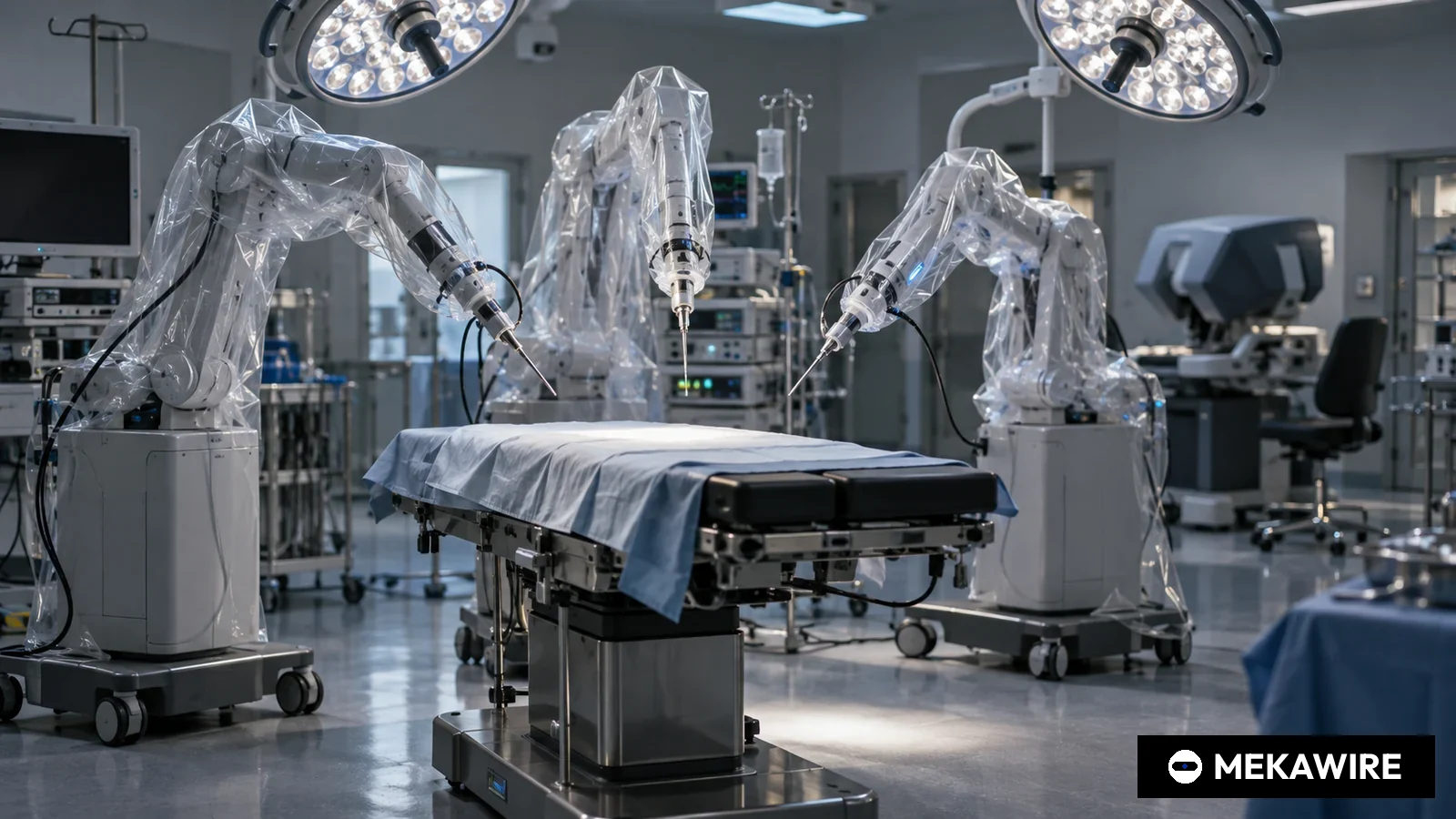
The FDA cleared Medtronic's Hugo robotic-assisted surgery system for prostatectomy, nephrectomy and cystectomy on December 3, 2025, after a 268-day 510(k) review. The clearance rests on the 137-patient Expand URO study, which reported a 98.5% surgical success rate, and gives Medtronic its first US entry against Intuitive's da Vinci after years of selling Hugo in more than 30 other countries.
Medtronic said on December 3, 2025 that the US Food and Drug Administration had cleared its Hugo robotic-assisted surgery (RAS) system for urologic procedures, giving the medical technology group its first commercial footing in the United States for a soft-tissue surgical robot. The decision covers prostatectomy, nephrectomy and cystectomy, three operations that Medtronic estimates add up to about 230,000 procedures a year in the US.
The FDA's premarket database lists the clearance as 510(k) number K250725, filed by Covidien LLC of North Haven, Connecticut. The agency received the submission on March 10, 2025 and found the device substantially equivalent on December 3, a review of 268 days under the traditional pathway with no third-party reviewer. The system sits under product code SCV, which the FDA describes as a modular electromechanical surgical system, and the record cites clinical trial NCT05696444.
That trial is Expand URO, the investigational device exemption study Medtronic calls the largest ever completed for multi-port robotic urologic surgery in the US. According to results Medtronic released at the American Urological Association meeting in Las Vegas on April 26, 2025, the study enrolled 137 patients at six US hospitals, operated on by 11 surgeons. The cases split into 55 prostatectomies, 53 nephrectomies and 29 cystectomies, and the average patient was 63 years old.
The company reported a surgical success rate of 98.5%, against a performance goal of 85%. Rates of grade 3 or higher complications were 3.7% for prostatectomy and 1.9% for nephrectomy, each measured against a goal of 20%, and 17.9% for cystectomy against a goal of 45%. Two cases were converted to another technique, one for a device reason and one because of patient anatomy, and about 98% of patients completed 30-day follow-up, Medtronic said.
- Prostatectomy
- 55
- 3.7
- 20
- Nephrectomy
- 53
- 1.9
- 20
- Cystectomy
- 29
- 17.9
- 45
- All procedures
- 137
- No data
- No data
Figures as disclosed by Medtronic on April 26, 2025. Overall surgical success rate 98.5% vs goal of 85%; two conversions. Figures disclosed, not estimated.
As of Dec 3, 2025
Medtronic's pitch rests on the hardware layout. Hugo uses an open surgeon console, which the company says improves situational awareness, reduces physical strain and makes training easier for the operating team. Its robotic arms are modular, so a hospital can move them between rooms and share them across sites. The system also connects to Medtronic's Touch Surgery software, which offers pre-operative training, remote tele-proctoring and AI-generated case reviews after surgery. “This is an incredibly exciting day for healthcare in the United States,” said Rajit Kamal, vice president and general manager of Robotic Surgical Technologies in Medtronic's Surgical business. Dr. James Porter, the unit's chief medical officer for robotic and digital technologies, called Hugo “a new and exciting approach to robotic-assisted surgery.”
The US market is the last major one Hugo has entered. Medtronic said the system had already been used in tens of thousands of urologic, gynecologic and general surgery procedures in more than 30 countries on five continents. The company, headquartered in Galway, Ireland, employs more than 95,000 people. In its fiscal second quarter, reported on November 18, 2025, it posted revenue of $8.961 billion and organic growth of 5.5%, but its Surgical and Endoscopy division, where Hugo sits, grew only 1.1% organically to $1.679 billion.
The incumbent is far larger in robotics. Intuitive reported third-quarter 2025 revenue of $2.51 billion, up 23%, on October 21, 2025. Its da Vinci procedures rose about 19% year on year, it placed 427 da Vinci systems in the quarter, 240 of them the new da Vinci 5, and its installed base reached 10,763 da Vinci systems at September 30, 2025. Britain's CMR Surgical reached the US earlier, winning FDA marketing authorisation for its Versius system through the De Novo route on October 14, 2024, but only for gallbladder removal; CMR said at the time that Versius had completed more than 26,000 procedures worldwide.
- Medtronic
- Hugo RAS
- 510(k), urology
- 2025-12-03
- No data
- No data
- Intuitive
- da Vinci
- No data
- No data
- 10,763
- No data
- CMR Surgical
- Versius
- De Novo, cholecystectomy
- 2024-10-14
- No data
- 26,000
Intuitive installed base at September 30, 2025 (Q3 2025 release). CMR procedure count as stated on October 14, 2024 (more than 26,000). Medtronic disclosed only tens of thousands of procedures in more than 30 countries. — = not disclosed. Figures disclosed, not estimated.
As of Dec 3, 2025
The regulatory route matters for what comes next. A 510(k) clearance means the FDA judged the device substantially equivalent to one already on the market, while a De Novo grant, the path CMR took, creates a new classification for a device with no suitable predicate. Hugo is a multi-port system, meaning each instrument enters the body through its own small incision on its own arm, the same broad approach used by the multi-port da Vinci models. Medtronic now needs separate clearances to use it in other specialties, and it has said general surgery and gynecology indications are expected to follow. Its November results said the Enable Hernia Repair study had met its safety and effectiveness endpoints and that the Embrace Gynecology US pivotal study had started.
For US hospitals the clearance creates a second large supplier for urologic robotics, a field in which robot choice also locks in instruments, service and training for years. Medtronic did not disclose pricing, launch sites, placement targets or how many systems it expects to ship in its current fiscal year. Those numbers, together with whether surgeons trained on da Vinci are willing to switch consoles, will decide how much share Hugo can take.
The main risks are scope and speed. Urology is a narrow first indication compared with general surgery, which CMR's own figures suggest remains lightly penetrated by robots in the US, and Intuitive is upgrading its base to da Vinci 5 at the same time. Medtronic also has to show that Hugo can lift growth in a surgical division that is expanding at about 1% organically. Investors should watch Medtronic's fiscal third-quarter report covering the quarter that ends in January 2026, Intuitive's full-year 2025 results in January 2026 and the FDA's decision on a general surgery indication.
MEKAWIRE analysis
Hugo's clearance turns US soft-tissue robotics from a one-vendor market into a two-vendor procurement decision, but Medtronic's near-term impact will be capped by a urology-only label.
The evidence for a real contest is the clinical package. Expand URO beat each of its performance goals by wide margins, the FDA cleared the system without a third-party reviewer in 268 days, and Medtronic arrives with experience from more than 30 countries rather than a first-generation product. Hospitals that wanted price leverage over robot leases and instruments now have a qualified alternative from a supplier already in their operating rooms.
The strongest counter-argument is scale. Intuitive placed 427 da Vinci systems in a single quarter and has an installed base of 10,763, so surgeons, residency programmes and hospital workflows are built around its console. Switching costs in surgical robotics are about retraining teams, not only buying hardware.
Bull case: Medtronic converts its broad surgical customer relationships into early Hugo placements in urology, wins general surgery and gynecology labels within about a year, and uses modular arms and Touch Surgery software to compete on utilisation and cost per case. In that scenario Hugo becomes a visible growth driver for the Surgical and Endoscopy division.
Bear case: urology demand is concentrated in centres that already own da Vinci systems, broader indications slip, and Intuitive's da Vinci 5 upgrade cycle absorbs capital budgets. Hugo would then remain a niche US product while its main value lies in the more than 30 markets where it already sells.
- Medtronic's fiscal third-quarter results for the quarter ending January 2026, the first to cover a full period of US sales
- Intuitive's full-year 2025 results in January 2026, for any change in US procedure or placement growth
- FDA decisions on Hugo for general surgery and gynecology following the Enable Hernia and Embrace Gynecology studies, the next milestones Medtronic has flagged, to watch through 2026
- December 3, 2025
- 510(k) K250725, applicant Covidien LLC, product code SCV
- 268 days (received March 10, 2025)
- Expand URO: 137 patients, 6 US hospitals, 11 surgeons
- General surgery and gynecology expected to follow
- Prostatectomy, nephrectomy, cystectomy (about 230,000 US procedures a year)
- 98.5% vs 85% goal
- Tens of thousands of procedures in more than 30 countries
- 10,763 da Vinci systems at September 30, 2025
Why it matters
The clearance ends a long gap in which the US market for multi-port soft-tissue surgical robots had only one scaled supplier. Medtronic disclosed Hugo use in more than 30 countries before this decision, so the US approval is less a technology debut than the opening of the market where robot procedure volumes and pricing are set.
It also matters for hospital procurement. A credible second source gives health systems leverage in negotiations over system pricing, instrument costs and service terms, even if they keep most of their fleet on da Vinci. That pressure can show up in Intuitive's pricing long before Hugo takes meaningful share.
Rival analysis
Intuitive is the benchmark. Its third-quarter 2025 figures show 427 systems placed in one quarter, 240 of them da Vinci 5, an installed base of 10,763 da Vinci systems and da Vinci procedure growth of about 19%. Medtronic is entering while Intuitive is mid-way through a product upgrade, which gives hospitals a natural decision point but also gives Intuitive a fresh platform to defend with.
CMR Surgical holds a De Novo authorisation for Versius in cholecystectomy since October 2024 and reported more than 26,000 procedures at that time. Against those rivals Hugo's advantage is a broad clinical record outside the US and a urology indication backed by a 137-patient IDE study; its disadvantage is that urology is a field where da Vinci adoption is already deep.
Valuation context
Medtronic does not break out Hugo revenue. The relevant reference is its Surgical and Endoscopy division, which reported $1.679 billion in fiscal second-quarter revenue with organic growth of 1.1%, against 5.5% organic growth for the whole company. Even modest Hugo placements would be visible against that growth rate.
Intuitive's quarterly revenue of $2.51 billion, up 23%, shows the scale of the profit pool Medtronic is targeting. Any sign that Hugo forces price concessions would matter more for Intuitive's margins than for Medtronic's group revenue in the near term.
Supply-chain implications
Surgical robots combine precision arms, motors, reducers, encoders, imaging and sterile single-use or limited-use instruments. The recurring revenue sits in instruments, accessories and service, so a placement creates a multi-year consumables stream for the supplier.
Medtronic's modular arm design changes the hardware count per operating room compared with a single patient-side cart and may change how hospitals budget for capacity. Component suppliers to multi-port systems benefit from a second large US buyer, though Medtronic has not disclosed its manufacturing footprint or suppliers for Hugo.
Signals to watch
The first hard signal is Medtronic's fiscal third-quarter report for the quarter ending January 2026, where management can say whether early US placements have begun and how many accounts are in evaluation. Intuitive's full-year 2025 results in January 2026 will show whether US procedure growth or placement pricing has changed.
Regulatory milestones come next. Medtronic has said general surgery and gynecology indications are expected to follow urology, with the Enable Hernia Repair study already meeting its endpoints and the Embrace Gynecology pivotal study under way. Published US real-world outcomes at the 2026 urology meetings would also test whether Expand URO results hold outside a trial.
Analyst view
Our thesis is that Hugo will make US soft-tissue robotics a genuine two-vendor market over several years, but that 2026 revenue impact will be small because the label is limited to urology. Confidence: medium. The clinical data are strong and Medtronic has a large surgical sales force, but there is no disclosed launch plan, pricing or placement target, and Intuitive's installed base of 10,763 systems creates heavy switching costs.
We would raise confidence if Medtronic discloses US placements in its next two quarterly reports or wins a general surgery clearance in 2026. We would lower it if early adopters are limited to academic centres testing the system alongside existing da Vinci fleets.
Questions you should be asking
How will Medtronic price Hugo against da Vinci leases and per-procedure models, and will it bundle the robot with its wider surgical portfolio?
How quickly can surgeons trained on the da Vinci console become proficient on Hugo's open console, and will Touch Surgery tele-proctoring shorten that curve?
When will the FDA rule on general surgery and gynecology indications, and will Medtronic disclose US installed base figures once it has them?