Estun lists in Hong Kong at the bottom of its range, raising HK$1.49 billion as China's top-selling robot brand returns to profit
Nanjing industrial robot maker Estun Automation began trading in Hong Kong on 9 March 2026 after pricing 96.78 million H shares at HK$15.36, raising HK$1.49 billion gross, with half of the net proceeds reserved for overseas plants, alliances and acquisitions. Its first annual results as a dual-listed company showed 2025 revenue up 21.93% and a small profit after a RMB810.93 million loss, while stabilisation buying down to HK$11.69 showed weak aftermarket demand.
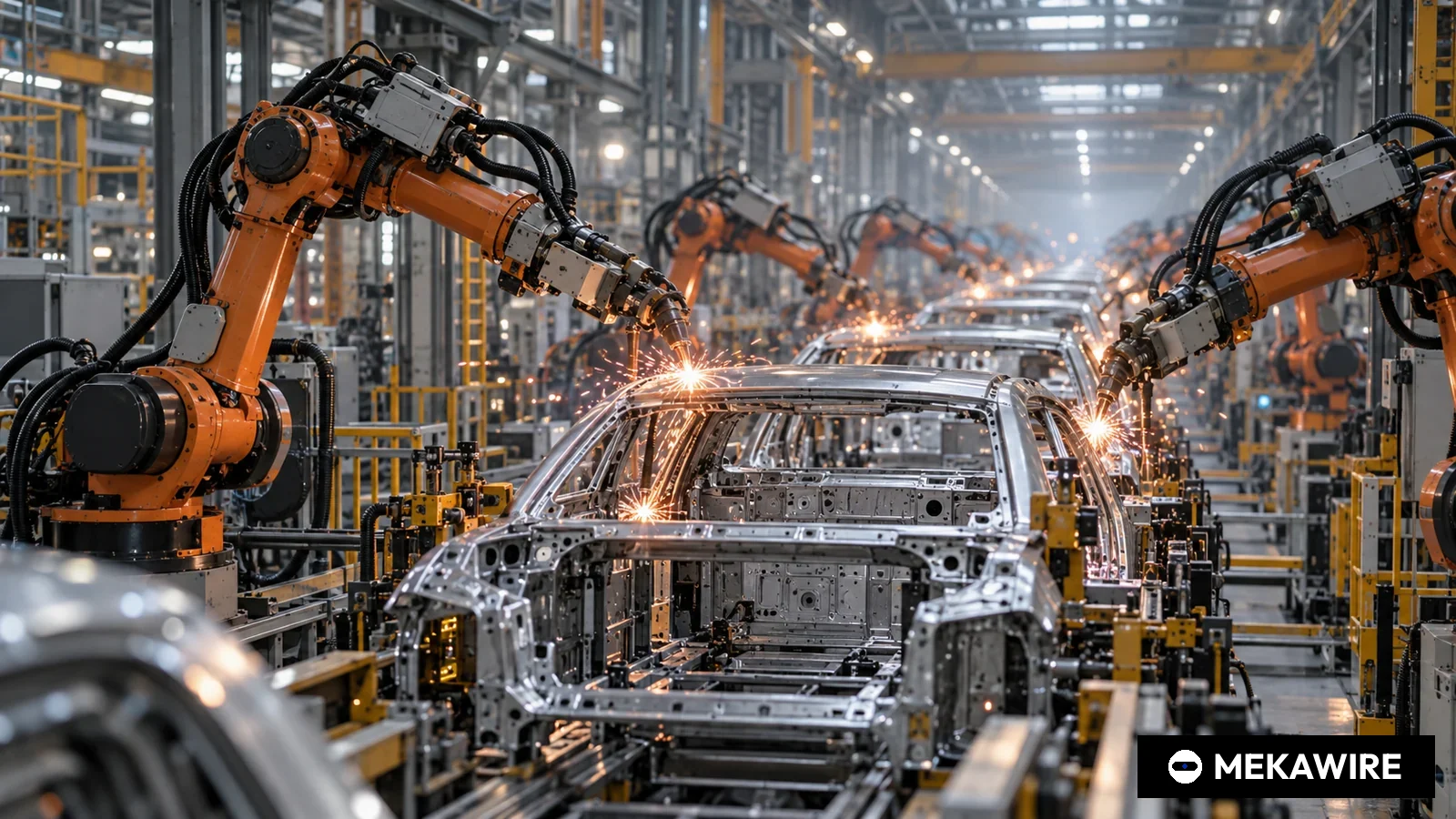
Estun Automation, the Nanjing maker of industrial robots and servo systems, began trading on the Main Board of the Hong Kong stock exchange on 9 March 2026 under stock code 2715, after pricing 96,780,000 new H shares at HK$15.36 each, the bottom of its HK$15.36 to HK$17.00 marketing range, according to the company's filings with the exchange. The offering raised gross proceeds of HK$1,486.54 million and, after estimated listing expenses of HK$75.01 million, net proceeds of HK$1,411.53 million.
Demand was uneven. The Hong Kong retail tranche of 9,678,000 shares was 19.67 times subscribed through 27,190 valid applications, while the international tranche of 87,102,000 shares was covered 3.34 times by 87 placees, the allotment announcement of 6 March showed. Seven cornerstone investors took 34,048,600 shares, about 35% of the base offer and roughly HK$523 million at the offer price, led by Harvest Oriental with 10,177,200 shares and Hengtong Optic-electric with 7,633,000 shares. Huatai Financial Holdings (Hong Kong) was sole sponsor.
The new H shares account for about 10% of an enlarged share capital of 967,798,453 shares. At the offer price that capital is worth about HK$14.87 billion, on a MEKAWIRE calculation that applies the H share price to all shares, including the Shenzhen-listed A shares that trade under code 002747.
The aftermarket was weak. In a filing on 7 April, Estun said the stabilising manager had bought back all 14,517,000 over-allocated shares at prices between HK$11.69 and HK$15.36, with the last purchase on 30 March at HK$12.19, and that the over-allotment option lapsed unexercised on 3 April. The bottom of that buying range is 23.9% below the offer price.
According to the prospectus dated 27 February, a quarter of the net proceeds is earmarked for expanding production outside China and another quarter for strategic alliances and acquisitions. A further 20% goes to research and development, 10% to global service capacity and digitalisation, 10% to repaying loans and 10% to working capital.
Three weeks after the listing, on 30 March, Estun reported its 2025 results. Revenue rose 21.93% to RMB4,888.01 million and profit attributable to shareholders was RMB41.34 million, against a loss of RMB810.93 million in 2024. The industrial robots and intelligent manufacturing systems segment grew 31.91% to RMB3,995.63 million, about 82% of the total, while automation core components and motion control fell 8.99% to RMB888.51 million. Gross margin edged up to 28.95% from 28.29%. Overseas revenue was RMB1,462.67 million, about 30% of sales, and the board proposed no dividend.
Estun was founded in 1993 and started out in servo drives and motion control before moving into complete robots. It bought the German welding robot specialist Carl Cloos in 2020, and the prospectus lists seven manufacturing bases and 75 service sites worldwide as of 30 September 2025. Citing Frost & Sullivan, the prospectus ranks Estun sixth in the world by industrial robotic solutions revenue in 2024 with a 1.7% share, and first globally in sheet metal bending robots.
The company says its standing at home has changed faster. In the annual results it said that in 2025 its robot shipments in China overtook those of foreign brands for the first time, citing MIR data, which made it the first domestic brand to top China's industrial robot market, after leading domestic makers for eight straight years. That claim puts Estun head to head with FANUC, ABB, Yaskawa and KUKA, which built the Chinese market, and with domestic rivals such as Inovance and Efort. Estun said its own branded robot shipments rose nearly 50% in 2025.
- Estun Automation
- CN
- 1993
- SZSE 002747 + HKEX 2715 (H shares from 2026-03-09)
- FANUC
- JP
- 1972
- Listed
- Yaskawa Electric
- JP
- 1915
- Listed
- KUKA
- DE
- 1898
- Subsidiary
- UBTECH Robotics
- CN
- 2012
- HKEX (2023-12-28)
- Unitree Robotics
- CN
- 2016
- STAR Market (2026-08-18)
Founding years from company filings and MEKAWIRE company records. Status as disclosed.
As of Oct 1, 2026
In plain terms, Estun sells the whole motion chain of a factory robot: the arm, the servo motors and drives that turn each joint, and the motion controllers that coordinate them. Making those parts in house is what allowed Chinese producers to undercut imported robots on price. The company said it will now push to combine robots with AI and to deploy what it calls embodied intelligence in industrial settings, but its results announcement did not disclose a humanoid product or any revenue from one.
For the global market, the deal is a test of whether China's industrial robot leaders can turn domestic volume into export profit. Overseas revenue fell to 29.4% of sales in the first nine months of 2025 from 34.2% in 2024, the prospectus shows, which is why half of the proceeds is aimed at plants, alliances and acquisitions abroad.
The risks are visible in the numbers. A 2025 net margin of about 0.8% leaves little room for a price war; research spending fell to RMB418.66 million from RMB442.23 million; headcount fell to about 3,261 from about 3,572; and goodwill tied to Carl Cloos stood at RMB839.85 million at the end of 2025. The share price slide after listing shows that investors priced those risks before the results arrived.
- 2022
- 3880.8
- 166.8
- 4.3
- 33.8
- 2023
- 4651.9
- 135.7
- 2.9
- 34.3
- 2024
- 4008.8
- -810.9
- -20.2
- 34.2
- 2025
- 4888
- 41.3
- 0.8
- 29.9
2022 to 2024 from the HKEX prospectus; 2025 from the annual results announcement (attributable profit). Net margin = net profit / revenue, MEKAWIRE calculation. 2025 overseas share = RMB1,462.67m / RMB4,888.01m. Figures disclosed, not estimated.
As of Oct 1, 2026
MEKAWIRE analysis
Estun has bought itself a war chest to go abroad, but investors paid the low end of the range because its domestic market share has not yet turned into profit.
The evidence is in the filings. Robot revenue grew 31.91% and shipments of its own brand rose nearly 50%, yet profit attributable was RMB41.34 million on almost RMB4.9 billion of sales. Retail investors oversubscribed the deal almost 20 times, but institutions covered their book only 3.34 times and the stabilising manager had to absorb the entire over-allotment.
The strongest counter-argument is that 2025 was the turn. The swing from an RMB810.93 million loss to a profit, a slightly higher gross margin and top position in the world's largest robot market are the kind of inflection that low entry valuations tend to reward later.
Bull case: the Hong Kong proceeds fund plants and deals abroad, Cloos gives Estun a European welding foothold, and overseas sales climb back above a third of revenue at better margins than in China. Volume leadership at home then turns into operating leverage as fixed costs spread over more units.
Bear case: Chinese price competition keeps margins near zero while foreign rivals defend their remaining share, research spending keeps shrinking and Estun falls behind on AI software. Goodwill on Cloos becomes a write-down risk if European demand stays soft.
Signals to watch:
- 8 September 2026: six-month lock-ups on the cornerstone investors and the first controlling shareholder lock-up expire, a test of supply in a thin H share float.
- Interim results for the six months to 30 June 2026: whether net margin rises above 1% and overseas revenue recovers toward 34%.
- 8 March 2027: the twelve-month controlling shareholder lock-up ends, and the first full year of spending from the Hong Kong proceeds can be judged.
- HKEX Main Board, stock code 2715, 9 March 2026
- HK$15.36 (range HK$15.36 to HK$17.00)
- RMB4,888.01 million (+21.93%)
- 7 investors, 34,048,600 shares
- HK$1,411.53 million
- Retail 19.67x, international 3.34x
- HK$1,486.54 million
- Lapsed 3 April 2026; 14,517,000 shares bought at HK$11.69 to HK$15.36
- 96,780,000
- RMB41.34 million (2024: loss RMB810.93 million)
Why it matters
Estun is the first Chinese industrial robot maker that says it has outsold foreign brands in its home market, and the Hong Kong listing gives it a second, offshore currency to buy assets and build plants abroad. Half of the net proceeds is earmarked for overseas production and for alliances and acquisitions, which makes the deal a financing round for internationalisation rather than a liquidity event for founders.
It also sets a benchmark. Hong Kong has become the venue of choice for Chinese robotics companies seeking foreign capital, and Estun priced at the bottom of its range and needed full stabilisation. Later issuers in the sector were reading that result when they set their own ranges.
Rival analysis
At home Estun competes with FANUC, ABB, Yaskawa and KUKA, which still dominate high-end applications such as automotive body shops, and with domestic producers such as Inovance and Efort that compete on price. Estun's claim of first place in 2025 rests on shipment volume reported by MIR, not on revenue or profit, so the foreign groups can still hold the more valuable segments.
Abroad the picture reverses. Estun ranked sixth globally by revenue in 2024 with a 1.7% share, according to Frost & Sullivan data in the prospectus, and its overseas revenue share fell in the first nine months of 2025. Cloos gives it a credible brand in welding, but in general purpose arms it is a challenger in Europe and Japan.
Valuation context
At HK$15.36 the enlarged capital of 967,798,453 shares is worth about HK$14.87 billion, a MEKAWIRE calculation that assumes A and H shares are worth the same. Against 2025 attributable profit of RMB41.34 million the earnings multiple is not meaningful; the market is valuing Estun on revenue of RMB4.89 billion and on recovery potential.
The aftermarket sets the clearing price. The stabilising manager bought shares as low as HK$11.69, 23.9% below the offer, and its last purchase on 30 March was at HK$12.19. On that last price the implied value of the whole company would be about HK$11.8 billion on the same method.
Supply-chain implications
Estun's model is vertical integration: it makes servo drives, motors and motion controllers as well as arms, and sells those components to third parties through a segment that brought in RMB888.51 million in 2025. That segment shrank 8.99%, which suggests either more parts going into its own robots or price pressure from other component makers.
The company did not disclose its suppliers of precision reducers in the documents reviewed. Reducers and high-end chips remain the parts where Chinese robot makers rely most on Japanese and European vendors, and any expansion abroad will depend on stable access to them.
Signals to watch
The lock-up calendar is the first signal: cornerstone shares and the controlling shareholders' first-stage lock-up become free on 8 September 2026, and the controlling shareholders' twelve-month undertaking ends on 8 March 2027. With only about 10% of capital in H shares, selling pressure in a thin float could move the price.
Operationally, watch whether overseas revenue recovers from 29.4% of sales, whether research spending stops falling, and whether Estun names an acquisition target with the quarter of proceeds reserved for deals.
Analyst view
Thesis: Estun's listing is a sound financing for an exporter in the making, but the bottom-of-range price was justified by a business that earns less than one yuan of profit on every hundred of sales. Confidence: medium. The filings show the volume gains and the profit recovery clearly; what they do not show is whether margins can rise while domestic rivals cut prices.
We would treat 2026 as a proving year. A net margin above 1% and a rising overseas share would support the bull case; another year of shrinking research spending would point to a company harvesting share rather than building technology.
Questions you should be asking
Which acquisitions or alliances will the 25% of proceeds reserved for deals fund, and in which countries? How much of Estun's 2025 volume growth came from price cuts?
Will Estun disclose humanoid or other embodied intelligence products with revenue, or is the AI strategy limited to smarter industrial arms? How will the Cloos goodwill of RMB839.85 million be tested if European demand stays weak?