Korea clears 20 Robros humanoids to work beside people, and the fence rule it lifts is the bottleneck Figure, Atlas and UBTech face too
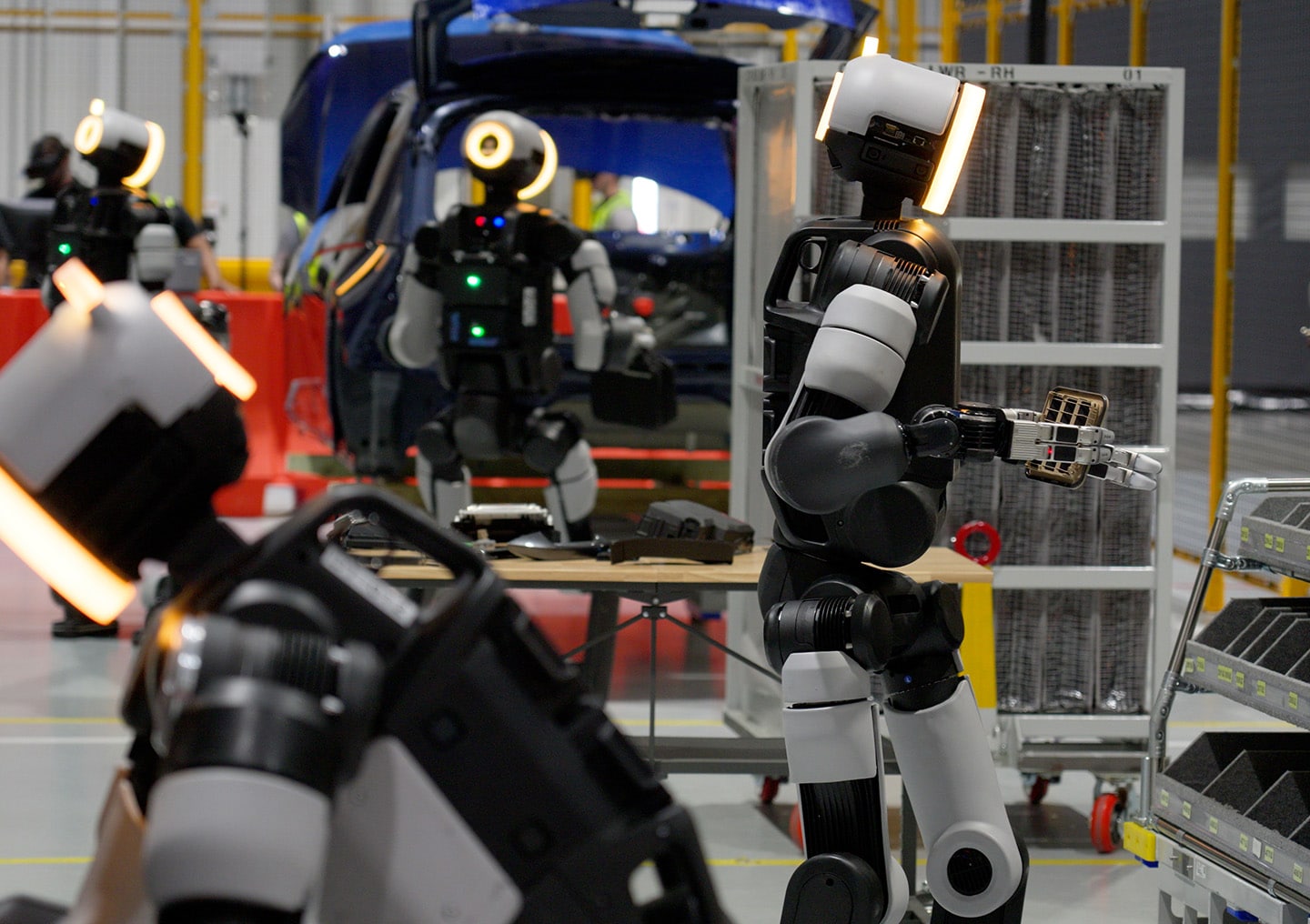
Korea's regulatory sandbox approval on October 13 lets Robros put 20 walking humanoids beside workers at Nepes, Sungwoo Hitech, HD Hyundai Samho and Delivery Lab, lifting a fence rule written for fixed industrial robots.
Set against MEKAWIRE's records, the number is small: Hyundai plans 25,000 Atlas units, UBTech sold 921 full-size humanoids in six months and Figure says it builds one robot an hour. But Korea is the only market in our data where the state has formally changed who may let a humanoid work next to people, and that permission, not robot count, is what most factory deployments are still waiting for.
Twenty humanoids is 0.08% of the 25,000 Atlas robots Hyundai Motor Group plans to put in its plants, and 2.2% of the 921 full-size humanoids UBTech sold in the first half of 2026. Yet the 20 Robros robots that Korea's trade ministry cleared on October 13 answer a question none of the larger programmes has settled in public: who decides that a walking robot may work next to people on a production floor.
Korea's Occupational Safety and Health Standards Rules assume an industrial robot is fixed in place and fenced off, the Ministry of Trade, Industry and Energy said in its release, which has kept mobile humanoids out of real lines. The sandbox committee lifted that barrier for one company at four sites, on condition of a labour-ministry risk assessment, and said the trial is meant to produce data for revising safety standards. This piece sets the Korean decision against what Figure AI, Boston Dynamics, Agility Robotics, Hexagon, UBTech and Unitree are actually doing on factory floors, using MEKAWIRE's records, and asks which bottleneck matters most.
What Korea approved, site by site
Robros will deploy 20 humanoids across four companies, according to the MOTIE release. At Nepes, a chip-packaging firm, they clean circular CRS parts used in back-end packaging. At Sungwoo Hitech they seat car-body parts, at the HD Hyundai Samho shipyard they stack the fixing pieces that hold scaffolding to hulls, and at Delivery Lab they load chilled logistics packaging. That works out to five robots a site. The release gives no start date or duration. The same meeting allowed Maum AI to run a four-legged patrol robot on riverside walkways in Cheonan, the first such approval for pedestrian paths. The question is how that compares with deployments elsewhere.
- Robros
- Not named in release
- Nepes, Sungwoo Hitech, HD Hyundai Samho, Delivery Lab (Korea)
- Cleaning chip-packaging CRS parts, seating car-body parts, stacking scaffold fixing pieces, loading chilled packaging
- 20 across four sites
- Sandbox trial approved Oct 13, 2026; start date and duration not given
- Government exemption from the fence rule, conditional on a labour-ministry risk assessment
- Figure AI
- Figure 03
- BMW Plant Spartanburg, Hall 52 (US)
- Parts sequencing
- Not disclosed
- Working since Jun 30, 2026; Figure 02 pilot in 2025 logged about 1,250 hours and 90,000+ parts
- Commercial terms not disclosed
- Boston Dynamics
- Atlas
- Hyundai Motor Group Metaplant America, RMAC (US)
- Parts sequencing training; assembly by 2030
- Not disclosed; group plan 25,000
- Training centre opened; line deployment from 2028
- Owner is the customer
- Agility Robotics
- Digit
- Toyota Motor Manufacturing Canada, Cambridge and Woodstock
- Manufacturing and logistics tasks
- Not disclosed
- Robots-as-a-service signed Feb 19, 2026 after a pilot
- Recurring service fee
- Hexagon
- AEON
- BMW Plant Leipzig (Germany)
- High-voltage battery assembly, component production
- Not disclosed
- Production tasks since June 2026; production use by end-2026 (Hexagon)
- Pilot inside BMW's vendor evaluation
- Humanoid
- HMND 01 Alpha
- Martur Fompak plant, with SAP (plant not named)
- Tote picking on orders from an SAP AI agent
- Not disclosed
- Proof of concept Jan to Feb 2026
- Proof of concept
- UBTech
- Walker S series
- Deliveries to OPmobility, Jabil, Foxconn, Honda and others
- Project deliveries
- 921 full-size units sold in H1 2026 (all buyers)
- Interim report, Sept 24, 2026
- Unit sales
- Unitree
- H1, G1, H2
- Industrial buyers among others
- Not specified
- 5,500+ humanoids shipped in 2025; industry 9.01% of humanoid revenue (Jan to Sept 2025)
- Prospectus, March 2026
- Unit sales, mostly research and education
Source: MEKAWIRE articles built on company releases, filings and government releases. 'Not disclosed' means neither side published a unit count. Unit figures from UBTech and Unitree cover all buyers, not factory deployments alone, and use different definitions (full-size units sold against all humanoids shipped). Figures disclosed, not estimated.
As of Oct 15, 2026
Abroad, the robots are on the floor but the numbers are not
Figure AI said on June 30 that Figure 03 is working in Hall 52 of BMW's Spartanburg plant, sequencing parts. Its previous model logged about 1,250 hours and moved more than 90,000 parts there in 2025, about 72 parts an hour by MEKAWIRE arithmetic, but Figure has not said how many Figure 03 units are at BMW. Boston Dynamics trains Atlas at a centre inside Hyundai's Georgia plant and Hyundai targets line deployment from 2028. Agility Robotics signed Toyota's Canadian plants to a robots-as-a-service contract in February without a fleet size, and Hexagon said its AEON began production tasks at BMW Leipzig in June.
Only the Chinese listed makers publish volumes. UBTech sold 921 full-size humanoids in the first half and named OPmobility, Jabil, Foxconn and Honda among its delivery customers. Unitree shipped more than 5,500 humanoids in 2025, but industrial buyers accounted for 9.01% of its humanoid revenue in the first nine months of 2025 and research and education for 73.6%. Across the eight programmes in our table, Robros is the only one where both a unit count and a regulatory basis are on the public record. That is the gap Korea's targets are meant to close.
Korea's targets run four orders of magnitude ahead of its trial
Korea's plan, adopted on September 30, aims for 200,000 AI robots in service by 2030, including more than 1,700 government purchases in 2027, and for 20% of global humanoid output by 2030 from 1% today. The 2027 budget proposal raises spending on humanoid sensors, actuators and batteries to KRW 62 billion from KRW 11.6 billion. Hyundai, Korea's largest robot investor, has dated its first Atlas line deployment to Georgia in 2028, not to a Korean plant; the releases do not say whether rules, plant schedules or US investment commitments drove that order.
- Robros humanoids cleared by Korea's sandbox
- 20 units
- 2026-10-13
- Korea public AI-robot purchases planned for 2027 (all types)
- more than 1,700 units
- 2026-09-30
- Korea AI robots in service by 2030 (all types)
- 200,000 (15,000 public, 185,000 private)
- 2026-09-30
- Korea goal for share of global humanoid output
- 20% by 2030, from 1% now
- 2026-09-30
- Korea 2027 budget proposal for humanoid sensors, actuators and batteries
- KRW 62bn (KRW 11.6bn in 2026)
- 2026-09-10
- Hyundai planned Atlas fleet at Hyundai and Kia plants
- 25,000 units
- 2026-09-21
- Hyundai planned US robot plant capacity (all robot types)
- 30,000 a year
- 2026-09-21
- UBTech full-size humanoids sold
- 921 in H1 2026
- 2026-08-28
- Figure 03 delivered
- more than 350, at one robot an hour
- 2026-04-29
- Global humanoid shipments (IDC)
- nearly 25,000 in H1 2026; China more than 19,000
- 2026-09-29
- Full-size humanoids sold worldwide in 2025 (IFR)
- about 7,000
- 2026-09-30
Korean figures from MOTIE and the National Advanced Strategic Industry Committee; Hyundai figures from Boston Dynamics; UBTech from its HKEX interim results; Figure from its company update; IDC and IFR from their releases. Korea's 200,000 and 1,700 cover all AI robots, not humanoids alone. IDC and IFR count on different bases and should not be compared directly. Disclosed, not estimated.
As of Oct 15, 2026
On MEKAWIRE arithmetic, Korea's 1,700 public units in 2027 equal 8.9% of the more than 19,000 humanoids IDC counted as shipped in China in the first half of 2026 alone, and the Korean number covers all AI robots, not just humanoids. Scale, in other words, is not where Korea can compete first. The rule is.
Everyone is waiting on the fence
Every programme in the table runs into the same constraint in a different form. Agility built Digit 5 around cooperative safety, contributes to the ANSI/A3 R15.108 report and ISO 25785-1, and will not reach general availability until the end of 2027. Boston Dynamics lists human detection and fenceless guarding as standard on Atlas. In Europe, the Machinery Regulation becomes mandatory on January 20, 2027 and adds provisions for safety functions driven by AI. Korea's ministry is also funding a KRW 9.68 billion humanoid safety certification centre in Daegu through 2030.
- South Korea
- Occupational Safety and Health Standards Rules assume fixed industrial robots behind fences
- Sandbox exemption for 20 Robros units, conditional on a labour-ministry risk assessment; trial data to feed revised humanoid safety standards; KRW 9.68bn humanoid certification centre in Daegu, 2026 to 2030
- United States and Canada
- ANSI/A3 R15.108 for dynamically stable industrial mobile robots in development
- Vendor by vendor: Agility's Digit 5 sold as cooperatively safe, general availability end-2027; Atlas uses human detection and fenceless guarding
- International
- ISO 25785-1 safety requirements for dynamically stable industrial mobile robots, project approved May 22, 2025
- Committee draft comment period closed Jul 8, 2026
- European Union
- Machinery Regulation (EU) 2023/1230 applies from Jan 20, 2027, with provisions for AI-powered safety functions
- BMW runs Figure and Hexagon under one evaluation process in Munich
- China
- Humanoid Robot and Embodied Intelligence Standard System (2026 Edition), Feb 28, 2026
- Volume first: each provincial region to open at least 20 real-world training scenes in 2026
Compiled from MOTIE releases (Oct 13 and Mar 23, 2026), Agility Robotics and Boston Dynamics releases, ISO, the European Commission and MIIT documents as covered by MEKAWIRE. As of 2026-10-15.
As of Oct 15, 2026
The difference is who carries the risk while standards are written. In the US and Germany a carmaker and a vendor carry it inside a private contract, which is why fleet sizes stay confidential. In Korea the state carries part of it through a conditional exemption, and in return it gets the trial data. That trade is what makes 20 robots worth analysing.
MEKAWIRE analysis
Korea cannot match China on humanoid volume or the US on capital, so it is competing on permission: the Robros sandbox turns the fence rule from a barrier into a dataset, and if that data rewrites the safety rule before Hyundai's Atlas reaches its Georgia line in 2028, Korean plants could become the first where any maker's humanoid can work beside people under a published standard.
The evidence is the sequence of instruments. The fence rule is named as the obstacle, the exemption is conditional on a risk assessment, the ministry says the data are for revising standards, a certification centre is funded and the 2027 budget adds component money. No other government in our records has lined up those steps for humanoids. The strongest counter-argument is that permission without demand is empty. Twenty robots from one start-up, with no start date, prove little about cost or uptime, and the largest Korean buyer is deploying first in the US. Chinese makers will keep shipping by the thousand while Korea writes rules.
Bull case: the Robros trials start within months, the labour ministry amends the rule in 2027, and Korean shipyards and auto suppliers order fleets from domestic and foreign makers under one standard. Bear case: the trial stalls, the exemption stays company-specific, and Korean plants keep buying foreign robots that were certified elsewhere.
What would change our view is a second sandbox approval for a different humanoid maker, or no published start date for the Robros trial by the end of 2026. Signals to watch: the trial start and duration; the final 2027 budget in December; and the EU Machinery Regulation on January 20, 2027, the first hard test of whether any humanoid maker has a certification path that travels. The open question is whether a 20-robot exemption can change a rule faster than a 25,000-robot plan can change a plant.
- 2026-10-15; disclosed figures only
- Figure 03 at BMW Spartanburg, Atlas at Hyundai Georgia (line from 2028), Digit at Toyota Canada, AEON at BMW Leipzig; fleet sizes undisclosed
- 20 Robros humanoids at Nepes, Sungwoo Hitech, HD Hyundai Samho, Delivery Lab
- MOTIE regulatory sandbox committee, Oct 13, 2026
- Fence requirement for industrial robots under Korea's safety standards rules, conditional on a labour-ministry risk assessment
- 0.08% of Hyundai's 25,000 Atlas plan; 2.2% of UBTech's 921 H1 2026 units
- IDC: more than 19,000 humanoids shipped in China in H1 2026
- 200,000 AI robots by 2030; more than 1,700 public units in 2027; 20% of global humanoid output by 2030
- ISO 25785-1 in drafting; EU Machinery Regulation applies Jan 20, 2027
Why it matters
For plant managers, the Korean decision is the first public template for putting a mobile humanoid next to workers without a fence: a risk assessment under labour-ministry rules plus risk-reduction measures. Any company planning a humanoid pilot in Korea now has a precedent to cite, and any vendor has a reference for what Korean regulators will ask.
For investors, it changes where the Korean opportunity sits. With 1% of global humanoid output, Korean makers will not win on volume soon, but a market where the rules are written first, with data from shipyards and chip packaging, could attract foreign makers to test there, and certification and safety-tooling suppliers to set up there.
Rival analysis
Robros competes at home with Holiday Robotics (SK Energy refinery humanoid, 2028 target, $105 million Series A in July), A-Robot (HD Hyundai Heavy Industries fire-watch humanoid, 2027 target) and Robotis (BGF logistics, 2028), all inside the M.AX alliance, and with Rainbow Robotics, in which Samsung Electronics holds 35.0%. Hyundai's Boston Dynamics is the domestic giant but has put its first line deployment in Georgia.
Abroad, the comparison is with programmes that have more robots but less disclosure: Figure at BMW, Agility at Toyota Canada, Hexagon at BMW Leipzig. UBTech and Unitree disclose volumes but sell mostly to research, education and a few large buyers; UBTech's largest customer took 24% of first-half revenue.
Valuation context
Robros has no funding round in MEKAWIRE records, so the sandbox gives it a regulatory asset before a disclosed valuation. For context, Holiday Robotics raised a $105 million Series A in July and Wonik Robotics agreed a KRW 350 billion convertible preferred issue to state and private funds in August, which MEKAWIRE calculated at an implied post-money of about KRW 1.675 trillion.
Abroad, Figure's last disclosed valuation is $39 billion and Agility's SPAC sets a $2.5 billion equity value against $1.78 million of 2025 net sales. Those prices assume deployment at scale; Korea's approach targets the regulatory step that scale depends on.
Supply-chain implications
The Korean plan treats actuators, hands and sensors as weak links and raises the 2027 budget for them to KRW 62 billion. Hyundai Mobis supplies Atlas actuators and says actuators are more than 60% of a humanoid's material cost, so the Korean auto-parts base has an obvious conversion path.
The risk is that Korean humanoid makers source key parts from China to stay on cost, while procurement rules favour domestic components. A sandbox fleet of 20 is too small to move supplier volumes, but a published standard would let component makers design for certification from the start.
Signals to watch
Start date and duration of the Robros trials, which the October 13 release did not give. The final 2027 budget in December, including the KRW 62 billion component line and the KRW 30 billion programme for ten industry-specific humanoids.
January 20, 2027, when the EU Machinery Regulation becomes mandatory; and 2028, when Hyundai targets Atlas on the Georgia line and when Holiday Robotics and Robotis target their M.AX deployments. A second humanoid sandbox approval for another maker would be the clearest sign the exemption is becoming a rule.
Analyst view
Thesis: Korea is competing on permission rather than volume, and the Robros sandbox is the first step that turns the fence rule into data for a general standard. Confidence: medium. The chain of instruments is clear and dated, but the trial has no start date and the volume is small.
We would raise confidence on a published trial start and a labour-ministry rule change in 2027, or on a second sandbox approval. We would lower it if the trial does not start by mid-2027 or if Korean buyers keep placing their first humanoid deployments abroad.
Questions you should be asking
For MOTIE and the labour ministry: when do the Robros trials start, how long do they run, and what result would trigger a rule change? For Robros: which robot model is used, where are its actuators made, and how many operators supervise the 20 units?
For HD Hyundai Samho and Sungwoo Hitech: what payback threshold would turn a trial into an order? For Hyundai: would a revised Korean rule change where Atlas deploys after Georgia?