Korea lines up more than 260,000 NVIDIA GPUs as Hyundai, Samsung and SK aim the compute at robots and factories
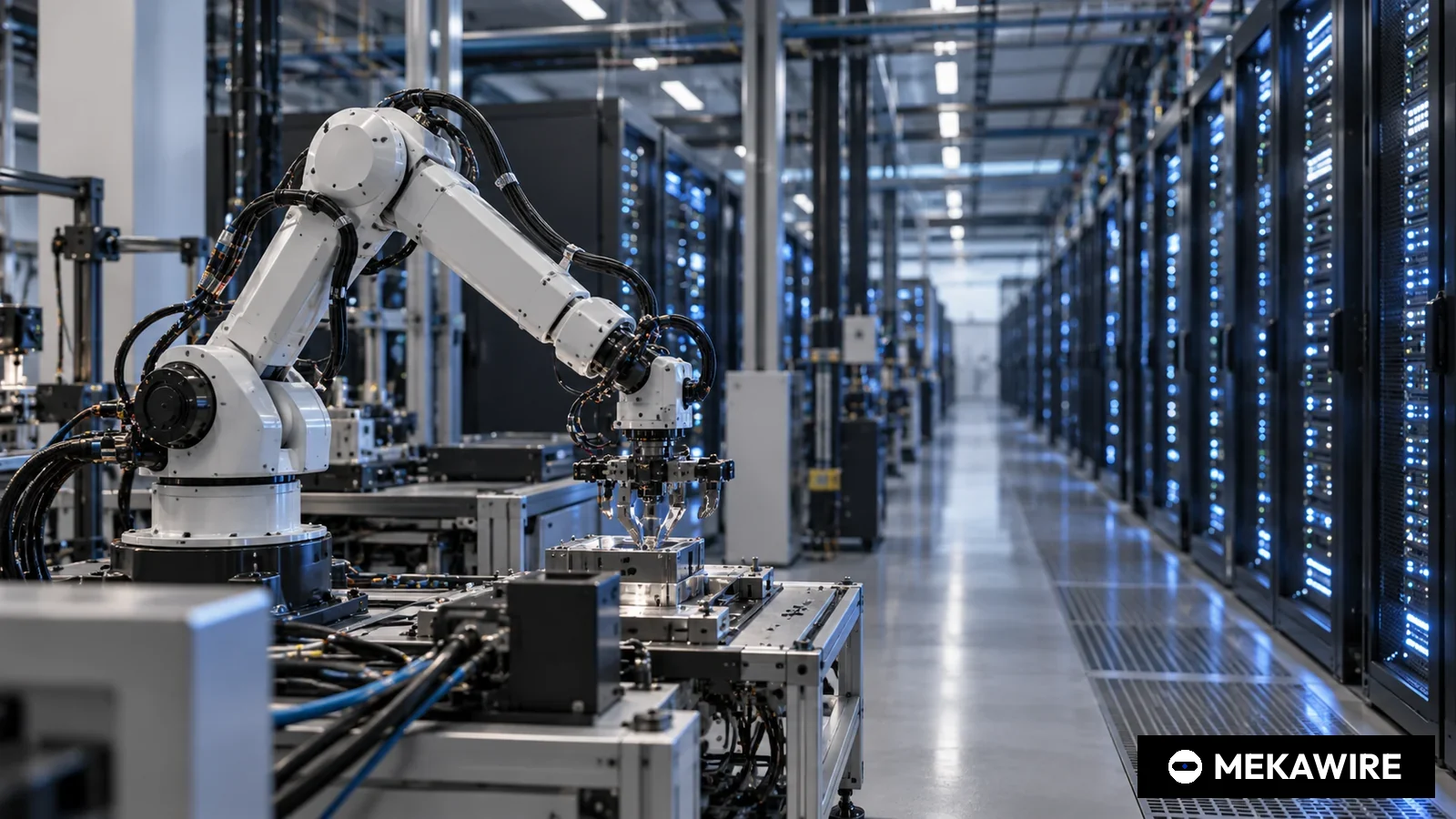
NVIDIA and South Korea said on 31 October 2025 that more than 260,000 NVIDIA GPUs will go into the government's sovereign cloud and the country's biggest industrial groups. Hyundai Motor Group and NVIDIA put about $3 billion behind a physical AI push that includes virtual testing of humanoid robots, while Samsung and SK plan AI factories with robotics and digital twin workloads.
NVIDIA and the South Korean government said on 31 October 2025 that more than 260,000 NVIDIA graphics processors will be deployed across the country's public cloud and its largest industrial groups, and three of those groups, Hyundai Motor Group, Samsung Electronics and SK Group, tied a large part of the new compute to robots, factory digital twins and what the companies call physical AI. The announcements were made in Gyeongju, where NVIDIA founder and chief executive Jensen Huang spoke at the APEC CEO Summit and met President Lee Jae-myung, according to NVIDIA and the Korean government's policy briefing service.
According to NVIDIA's release, the Ministry of Science and ICT plans more than 50,000 GPUs for sovereign AI infrastructure, beginning with 13,000 Blackwell and other GPUs deployed through NAVER Cloud, NHN Cloud and Kakao and later expanded through a National AI Computing Center. NAVER Cloud plans more than 60,000 GPUs of its own. Samsung and SK Group each plan more than 50,000, and Hyundai Motor Group plans 50,000 Blackwell GPUs. The five commitments add up to the 260,000 figure, which NVIDIA presented as minimums rather than a ceiling.
- NAVER Cloud
- 60,000
- 23.1
- Enterprise and physical AI workloads, shipbuilding and security models
- Ministry of Science and ICT
- 50,000
- 19.2
- Sovereign cloud and National AI Computing Center
- Samsung Electronics
- 50,000
- 19.2
- AI Megafactory for chips, devices and robots
- SK Group
- 50,000
- 19.2
- Fab digital twins and industrial AI cloud
- Hyundai Motor Group
- 50,000
- 19.2
- Physical AI for vehicles, factories and robots
GPU figures as disclosed by NVIDIA on 31 October 2025; most are stated as more than the number shown. Share = party GPUs / 260,000, rounded to one decimal. Hyundai figure is 50,000 Blackwell GPUs. Figures disclosed, not estimated.
As of Oct 2, 2026
What Hyundai committed
Hyundai's package is the most specific on robots. Hyundai Motor Group said it and NVIDIA would jointly invest about $3 billion to build Korea's physical AI base, covering an NVIDIA AI Technology Center, a Hyundai Physical AI Application Center and physical AI data centres in the region. The group said the Ministry of Science and ICT signed a memorandum of understanding alongside the two companies. The stack described in the release uses NVIDIA DGX systems for model training, Omniverse and Cosmos on RTX PRO servers for factory digital twins and simulation, Isaac Sim to validate humanoid and other robots virtually before they reach production lines, and DRIVE AGX Thor as the onboard computer for vehicles and robots. The companies did not say how the $3 billion is split between them.
Samsung and SK
Samsung said it will build an AI Megafactory on more than 50,000 NVIDIA GPUs that links chip design, process, equipment, operations and quality control in one network, and that the same approach will extend to mobile devices and robotics. For robots, Samsung named the RTX PRO 6000 Blackwell Server Edition and the Jetson Thor platform for real-time reasoning, with a focus on humanoids and factory automation; NVIDIA's government release adds that Samsung is using Cosmos, Isaac Sim and Isaac Lab for home robot development. Samsung also reported a 20-fold speed-up in optical proximity correction using NVIDIA's cuLitho libraries and said the AI factory design will be carried to its site in Taylor, Texas.
SK Group said its AI factory will use more than 50,000 NVIDIA GPUs, with a first phase due to be completed in late 2027. SK Telecom will run an industrial cloud on more than 2,000 RTX PRO 6000 Blackwell GPUs for digital twins and robotics built on Omniverse, which NVIDIA described as Asia's first industrial AI cloud, and SK hynix plans digital twins of its fabs and AI agents for more than 40,000 employees.
The rest of the package is less about machines. NAVER Cloud said its GPUs will serve enterprise and physical AI workloads and industry models for shipbuilding and security. LG AI Research joins NAVER Cloud, NC AI, SK Telecom and Upstage in the state sovereign foundation model project using NVIDIA NeMo, and LG said it will open its EXAONE models to physical AI startups and universities.
How the compute reaches a robot
The common thread is a loop that runs mostly in data centres. Engineers build a physically accurate digital copy of a factory in Omniverse, generate synthetic video and sensor data with Cosmos, and train and test robot behaviour in Isaac Sim and Isaac Lab before any hardware moves. The trained policy then runs on an edge computer such as Jetson Thor or DRIVE AGX Thor inside the robot or car. Each turn of that loop consumes large amounts of GPU time, which is why the groups are buying clusters rather than single servers.
Competitive context
The Korean groups are buying into a model that NVIDIA is selling to every large manufacturer, so the edge will come from data and deployment rather than from the chips. Chinese makers such as Unitree and UBTech have scaled humanoid output with heavy state support. Korea's case rests on owning the factories where robots can be tested, from Hyundai's car plants to Samsung's and SK hynix's chip lines.
The risks are plain in the documents. Most figures are stated as more than a number, none of the releases says how many of the GPUs will serve robotics rather than chip design or language models, SK's first phase is not due until late 2027, and the Hyundai agreement is a memorandum. Power and grid capacity for data centres on this scale were not addressed in the releases.
MEKAWIRE analysis
Korea has bought the training ground for physical AI in one day; whether it produces robots depends on how much of the 260,000 GPUs actually reaches robot teams.
The evidence for the thesis is in the specifics. Hyundai names Isaac Sim validation of humanoids on production lines, Samsung names Jetson Thor and humanoids inside its AI Megafactory, and SK Telecom sets aside more than 2,000 RTX PRO 6000 GPUs for an industrial cloud open to robotics developers. Those are operational plans attached to factories that already exist.
The strongest counter-argument is that the robotics share is small and unquantified. Samsung's and SK's stated priorities are chip yield and fab automation, NAVER's are cloud services and language models, and none of the parties broke out robot workloads, so the headline number overstates the robot story.
Bull case. If Hyundai's application centre and Samsung's megafactory turn simulation into deployed humanoids inside their own plants, Korea gains a closed loop of data, compute and customers that few countries can match. Startups would gain cheap access through SK Telecom's cloud and the government GPU pool.
Bear case. GPU deliveries slip, power constraints delay data centres, and the clusters are absorbed by chip design and language models. Robot programmes then stay at pilot scale while Chinese makers keep building volume.
Signals to watch.
- January 2026, CES in Las Vegas, where Hyundai and Samsung typically show robotics plans and could name sites for the new centres.
- March 2026, NVIDIA GTC in San Jose, for Korean customer disclosures on Isaac and GR00T deployments.
- Late 2027, completion of the first phase of SK Group's AI factory, the first hard date in the package.
- More than 50,000 GPUs; first phase due late 2027; SK Telecom cloud on 2,000+ RTX PRO 6000 GPUs
- 31 October 2025, Gyeongju (APEC CEO Summit)
- Ministry of Science and ICT plans 50,000+ GPUs, starting with 13,000
- More than 260,000 NVIDIA GPUs
- More than 60,000 GPUs
- Isaac Sim, Isaac Lab, Cosmos, Omniverse, Jetson Thor, DRIVE AGX Thor
- 50,000 Blackwell GPUs; about $3 billion joint investment with NVIDIA in physical AI
- More than 50,000 GPUs for an AI Megafactory covering chips, devices and robots
Why it matters
The October 2025 package is the first time Korea's government and its four largest industrial groups committed compute at national scale with robots written into the plans. Hyundai, Samsung and SK each own large factory networks, which means simulation work can be tested against real lines rather than demo cells.
For the robot industry the important shift is that the bottleneck moves from hardware to training capacity and data. Korean robot makers and integrators that can plug into these clusters, through SK Telecom's industrial cloud or the government GPU pool, gain access to resources that were previously available mainly to US platform companies.
Rival analysis
NVIDIA sells the same Omniverse, Cosmos and Isaac stack to manufacturers worldwide, so Korea's advantage cannot come from the software itself. It has to come from the speed at which Hyundai, Samsung and SK convert simulation into deployed robots inside their own plants.
Chinese humanoid makers have the volume lead and strong state backing, while US developers hold most of the frontier robot models. Korea's groups combine captive demand, component supply and now compute, a combination that is closest to what Tesla is attempting in the United States with Optimus.
Valuation context
Only one money figure was disclosed, the roughly $3 billion that Hyundai Motor Group and NVIDIA said they would invest jointly. The releases did not price the GPU orders, and no party disclosed capital expenditure by year.
Investors should therefore treat the GPU counts as capacity signals, not booked revenue. The figures are mostly stated as more than a number, and SK's own timetable puts its first phase in late 2027.
Supply-chain implications
Samsung supplies HBM memory to NVIDIA and said its HBM4 runs at 11 Gbps against an 8 Gbps JEDEC standard, so part of the GPU flow returns as demand for Korean memory. SK hynix is also an NVIDIA memory supplier and is building digital twins of its own fabs on the new cluster.
On the robot side, the named edge computers are NVIDIA's Jetson Thor and DRIVE AGX Thor. That ties Korean humanoid programmes to NVIDIA silicon at both training and deployment stages, which raises the dependency risk if export rules or supply allocation change.
Signals to watch
The first hard milestone is the completion of SK Group's first-phase AI factory, due in late 2027. Before that, look for Hyundai to name the location and staffing of its Physical AI Application Center and for Samsung to show humanoid or factory robot pilots built on Jetson Thor.
The government side to watch is the rollout of the National AI Computing Center and how GPU time is allocated to robotics startups versus language model developers.
Analyst view
Thesis. The package gives Korea the compute base for physical AI, but the robot share of it is undisclosed and likely a minority of the total in the near term. Confidence is medium, because the commitments are specific by company and named technology, but they are mostly memoranda with minimum figures and no robot-specific allocation.
We expect Hyundai to be the first to show measurable robot output from the programme, given that its release is the only one that ties the money to humanoid validation on production lines.
Questions you should be asking
How many of Hyundai's 50,000 Blackwell GPUs are earmarked for robotics rather than autonomous driving and how is the $3 billion split between Hyundai and NVIDIA?
Will SK Telecom's industrial cloud price access for robot startups at a level they can afford, and what is the delivery schedule for the government's GPUs after the first 13,000?