Milrem Robotics and Chugach to explore U.S. production of THeMIS ground robots
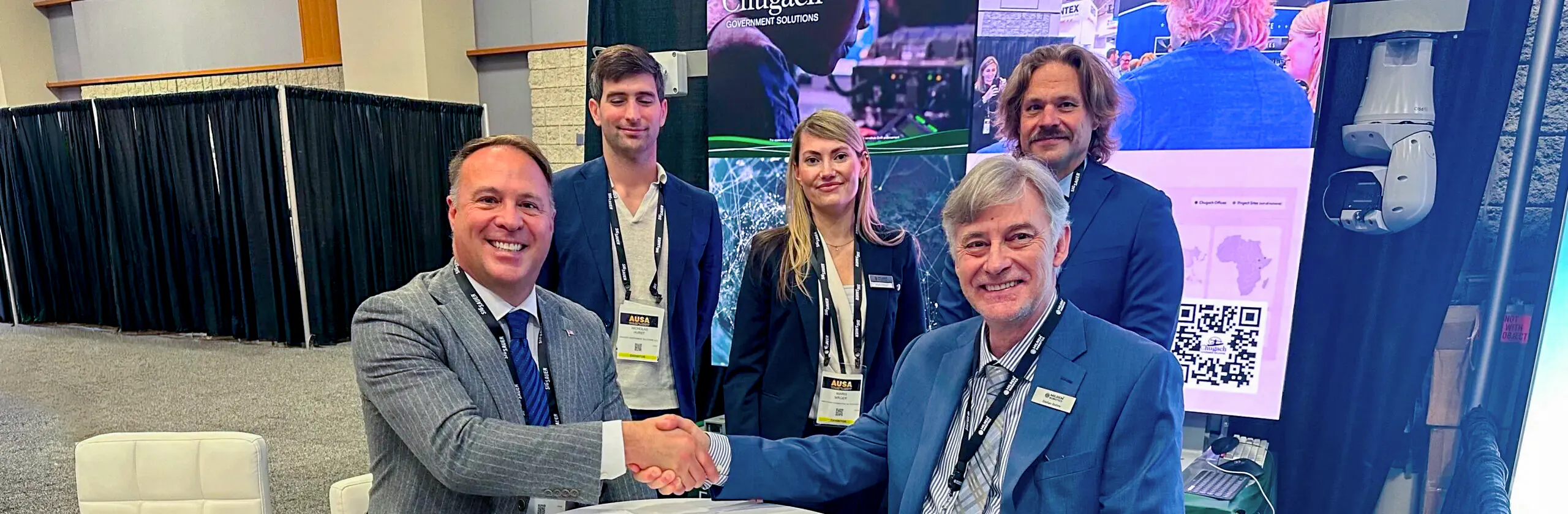
Milrem Robotics signed a cooperation memorandum with Chugach Alaska Corporation on Oct 14, 2026 to explore U.S. production and support of its THeMIS ground robots, including sales to allies through Foreign Military Sales; no amount, site or volume was disclosed.
Estonian ground-robot maker [Milrem Robotics](/companies/milrem-robotics) said in a release on Oct 14, 2026 that it signed a Memorandum of Cooperation with Chugach Alaska Corporation at the AUSA 2026 annual meeting to explore building, assembling and sustaining its unmanned ground vehicles in the United States. Nothing in the release commits either side to a factory, a volume or a contract. What it does set out is a route by which a European UGV could be sold as an American-made product, including to allies through Foreign Military Sales.
The question the deal raises is simple: why would a company whose THeMIS vehicle is already bought by 21 countries need a U.S. partner at all? The answer sits in how the Pentagon buys and how allies prefer to pay.
What the memorandum actually covers
Under the agreement, Chugach could become Milrem's preferred U.S. industrial partner for production, assembly, integration, sustainment and lifecycle support, the companies said. The scope is Milrem's current and future UGV and autonomous-systems portfolio, aimed at potential requirements from the U.S. Department of Defense and other federal agencies, plus the commercial dual-use market. The partners also expect to configure Milrem platforms to U.S. requirements and to train operators and maintainers.
"Our objective is not simply to sell systems into the United States, but to establish the capability to produce, integrate and sustain them there," Milrem chief sales officer Stefan Behre said in the release. Chugach CEO Jonathan Dalrymple said Milrem systems are in use or part of robotics programmes in 21 countries.
No investment amount, site, headcount, unit target or start date was disclosed, and the release frames the arrangement as exploratory. That leaves the obvious follow-up: who is Chugach, and what does it bring that a defence prime would not?
Chugach is a services contractor, not a vehicle builder
Chugach describes itself as an Alaska Native corporation with about 5,000 employees at 110 locations across 28 U.S. states and 10 countries, and more than 3,000 shareholders. Its stated defence work spans shipbuilding, aviation, facilities, logistics, information warfare and technical services. It does not list ground-vehicle production among them.
That is the point of the pairing. Milrem keeps the design and the autonomy stack, while Chugach supplies the U.S. footprint and the sustainment workforce that federal buyers expect. The release says the two will jointly pursue international customers who could buy U.S.-built Milrem systems through FMS, the government-to-government channel run by the U.S. Department of Defense.
THeMIS and the template already running in Asia
Milrem's site says THeMIS is a modular tracked platform with hybrid propulsion that can be configured for transport, casualty evacuation, ordnance disposal, strike or intelligence missions, and that it has been deployed in Mali and Ukraine. The company lists nine NATO members among its users: Estonia, France, Germany, the Netherlands, Norway, Spain, Sweden, the United Kingdom and the United States, which is 43% of the 21 user countries it cites. Its autonomy kit, MIFIK, adds autonomous navigation to manned and unmanned vehicles.
The U.S. plan copies a model Milrem set up with Korea's Hanwha on Oct 7, 2026. In that release, Hanwha bought two THeMIS units for R&D in South Korea and Australia and gained a framework to market, build locally and sustain THeMIS in Australia and New Zealand, with Milrem supplying technology transfer. Hanwha's own Arion-SMET won Korea's multi-purpose UGV programme in July 2026, according to the same release, so the partner is also a rival.
Where the money in military autonomy actually goes
MEKAWIRE's [defence robots explainer](/news/defense-robots-2026-explained-saronic-shield-ai-billion-dollar-rounds-humanoids-still-on-army-prize-money-korea-defence-ax-hub-20261018) shows how lopsided funding is. Of the three U.S. defence-autonomy rounds since January in our database, totalling $3.35bn, ground autonomy (Overland AI's $100m) accounts for 3.0%. Sea and air drew the rest.
- Saronic
- Autonomous surface vessels
- Series D
- $1.75bn
- $9.25bn
- Mar 31, 2026
- Shield AI
- Aircraft autonomy
- Series G
- $1.5bn
- $12.7bn
- Mar 26, 2026
- Overland AI
- Ground vehicle autonomy
- Equity and venture debt
- $100m
- Not disclosed
- Feb 3, 2026
- Milrem Robotics
- Unmanned ground vehicles
- No round in MEKAWIRE
- n/a
- n/a
- MoC with Chugach, Oct 14, 2026
Disclosed figures from verified MEKAWIRE rows, not estimates. Ground share = Overland's $100m divided by the $3.35bn total of the three rounds = 3.0%.
As of Oct 20, 2026
MEKAWIRE analysis
Milrem is buying a passport, not a factory: U.S. assembly turns THeMIS into a product American and FMS buyers can procure without a foreign-sourcing fight, and that matters more than any unit count.
The evidence is the wording. Both quotes stress producing and sustaining in the U.S. and reaching allies through FMS, not a specific Army programme. That suggests Milrem sees localisation as the price of entry to the largest buyer, as it did with Hanwha in Australia. The strongest counter-argument is that a memorandum signed at a trade show often produces nothing; until Chugach names a site or a programme, this is an option, not a business.
Bull case: a named U.S. programme or FMS case follows within a year, and Chugach's sustainment base lets Milrem bid on long service contracts. Bear case: U.S. buyers favour domestic UGV designs, and the memorandum stays on paper while Hanwha's local production in Australia moves first.
What would change our view: a disclosed investment figure, a production address, or an Army award naming Milrem. Related: Israeli radar maker Arbe's [UGV imaging radar](/news/arbe-gryphon-4d-imaging-radar-unmanned-ground-vehicles-48x48-channels-ditches-dust-20261019) shows the sensor supply chain these vehicles depend on.
The open question is whether Chugach names a U.S. production site before Hanwha starts building THeMIS in Australia.
- Production, assembly, integration, sustainment, lifecycle support, training
- Chugach Alaska Corporation (about 5,000 staff, 110 locations, 28 states, 10 countries)
- U.S. DoD, federal agencies, dual-use market, Foreign Military Sales
- Memorandum of Cooperation, signed at AUSA 2026, release Oct 14, 2026
- Hanwha: 2 THeMIS bought, local production framework for Australia and New Zealand (Oct 7, 2026)
- Investment, site, volumes, timetable
- 21 (nine NATO members per Milrem)
Why it matters
The memorandum is the second localisation deal Milrem has announced in a week. Together with the Hanwha framework for Australia and New Zealand, it shows a mid-sized European UGV maker trading technology transfer for market access in the two largest allied procurement systems outside Europe.
For buyers, U.S.-built THeMIS would be purchasable through Foreign Military Sales with U.S. sustainment, which lowers the barrier for allies that already finance kit through that channel.
Rival analysis
Overland AI, the only ground-autonomy company with a 2026 round in MEKAWIRE ($100m), sells autonomy software for vehicles rather than a vehicle. Milrem offers both a platform (THeMIS) and an autonomy kit (MIFIK). Hanwha Aerospace is both partner and rival: its Arion-SMET won Korea's multi-purpose UGV programme in July 2026 while it gains rights to build THeMIS in Australia.
Sea and air autonomy companies (Saronic, Shield AI) raised far larger rounds, which suggests investors see ground robots as a slower, more programme-dependent market.
Valuation context
MEKAWIRE has no verified funding round or valuation for Milrem Robotics, so no valuation comparison is made. Among U.S. defence-autonomy rounds in our database since January 2026 ($3.35bn across three companies), ground autonomy is 3.0%.
Supply-chain implications
U.S. production would shift final assembly, integration and sustainment to Chugach, while design, autonomy software and likely key subsystems stay with Milrem. Payload partners named on Milrem's site (Kongsberg, Thales, Escribano, CNIM, Pearson Engineering) would need U.S. integration paths. Sensor suppliers such as imaging-radar makers serve the same vehicle class.
Signals to watch
1) A named U.S. production site or investment figure from Chugach or Milrem. 2) A U.S. Army or DSCA notice that names Milrem or THeMIS. 3) Hanwha's first local-production step for THeMIS in Australia, which would show how fast Milrem's localisation template turns into output.
Analyst view
Thesis: Milrem is buying U.S. market access, not capacity. Confidence: low to medium, because the memorandum is exploratory and discloses no money, site or programme. The Hanwha precedent raises confidence that Milrem pursues localisation seriously.
Questions you should be asking
Which U.S. programme or FMS customer is the first target? Will Milrem take equity or licence fees from Chugach production? How will autonomy software export controls apply to U.S.-built vehicles sold abroad? Does the Hanwha framework limit Chugach's rights in Australia and New Zealand?