Defence robots in 2026 explained: uncrewed boats and AI pilots take the billion-dollar rounds, humanoids are still on Army prize money
Defence is where the biggest robotics cheques of 2026 went. Saronic's $1.75 billion Series D for uncrewed warships and Shield AI's $1.5 billion Series G for its AI pilot are two of the three robotics rounds of $1 billion or more in MEKAWIRE's funding table this year, 69.9% of those dollars.
Military humanoids are a different story. The US Army's xTechHumanoid competition offered $490,000 in prizes and up to $1.25 million in follow-on work, and Korea's first defence AI hub for physical AI only opened on Oct 12.
Defence is now where the largest robotics cheques go, but not to the robots most people picture. Of the three robotics rounds of $1 billion or more in MEKAWIRE's funding table for 2026, two went to defence companies, Saronic's $1.75 billion Series D for uncrewed warships and Shield AI's $1.5 billion Series G for its AI pilot. Together they account for $3.25 billion of the $4.65 billion raised in those three rounds, or 69.9%. The third was Skild AI's robot-brain round.
The military humanoid, by contrast, is still at the prize stage. The US Army's xTechHumanoid competition, whose winners were announced on Sept 30, offered $490,000 in cash prizes and up to $1.25 million in follow-on contracts. That prize pool equals 0.03% of Shield AI's Series G equity. This explainer sets out where military robotics money is going in 2026, which programmes exist in the US and Korea, and what would have to happen for ground robots and humanoids to cross from trials into procurement.
The billion-dollar rounds go to boats and aircraft autonomy
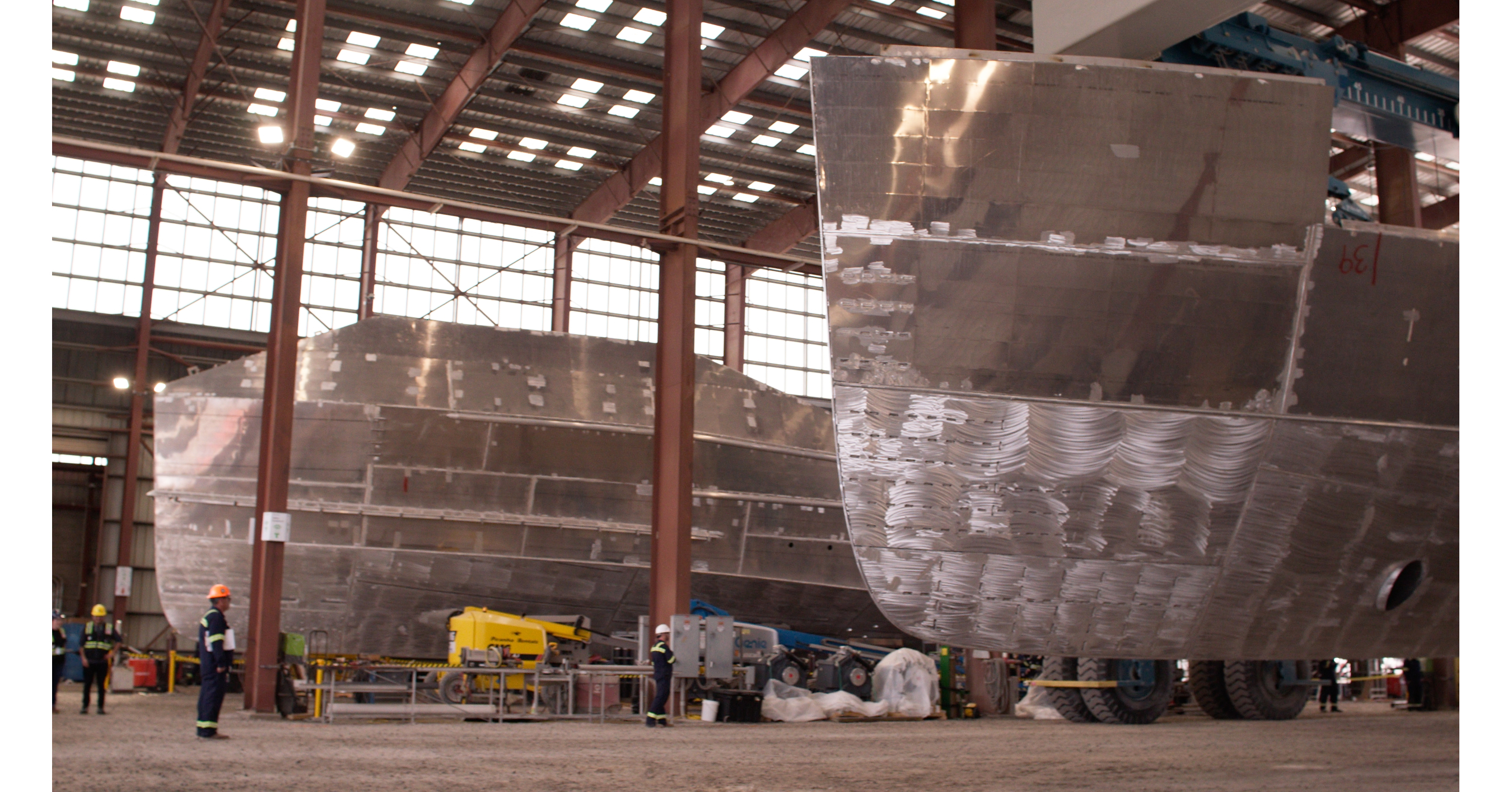
Saronic said on March 31 that it had closed a $1.75 billion Series D led by Kleiner Perkins at a $9.25 billion valuation, 2.3 times the $4 billion set in its Series C of February 2025. The Austin company builds autonomous surface vessels from the 24-foot Corsair to the 180-foot Marauder and has committed $300 million to expand its Louisiana shipyard, alongside a next-generation yard it calls Port Alpha. Its verified funding in MEKAWIRE totals $2.58 billion across four rounds.
Shield AI said on March 26 that it was raising $1.5 billion in Series G equity at a $12.7 billion post-money valuation, led by Advent International, plus $500 million of fixed-return preferred equity from Blackstone funds, and that it would buy Aechelon Technology, the simulation provider behind the Pentagon's Joint Simulation Environment. Its Hivemind autonomy software has been flight-tested aboard Anduril's YFQ-44A Fury in the Collaborative Combat Aircraft programme. Outside our profiled companies, Anduril said on May 13 that it had raised a $5 billion Series H, and HavocAI added $85 million in October 2025 with Lockheed Martin and Hanwha among its backers.
- Saronic
- Autonomous surface vessels and shipyards
- Series D, Mar 31, 2026
- 1,750
- $9.25bn
- 2,580
- Shield AI
- Hivemind AI pilot, V-BAT and X-BAT aircraft
- Series G, Mar 26, 2026
- 1,500 (plus 500 preferred)
- $12.7bn
- 2,240
- Skydio
- Autonomous drones
- Series E, Feb 27, 2023 (extension Nov 2024, undisclosed)
- 230
- Not disclosed
- 500
- Persona AI
- Shipyard humanoids
- Form D, Sept 14, 2026 (partial)
- 65.4 sold of 142.0 offered
- Not disclosed
- 92.4
MEKAWIRE database, verified rows only, as of Oct 17, 2026. Amounts as disclosed by the company or the filing, not estimated. Anduril ($5bn Series H, May 13, 2026) and HavocAI ($85m, Oct 2025) are not profiled and are excluded.
As of Oct 17, 2026
The valuations moved because a buyer already exists
Both leaders more than doubled their valuations in a little over a year. Saronic went from $4.0 billion to $9.25 billion in 406 days, and from $1.0 billion in July 2024 in 620 days. Shield AI went from $5.3 billion to $12.7 billion in 385 days. The common thread is a customer that is already writing contracts. The US Navy gave Saronic a $392 million production contract in 2025, and Shield AI was selected as a mission-autonomy provider for the Air Force's collaborative combat aircraft. Investors are paying for products with a procurement line, not for research.
- Saronic
- $1.0bn (Jul 19, 2024)
- $9.25bn (Mar 31, 2026)
- 9.25x
- 620
- Saronic
- $4.0bn (Feb 18, 2025)
- $9.25bn (Mar 31, 2026)
- 2.31x
- 406
- Shield AI
- $2.7bn (Oct 31, 2023)
- $12.7bn (Mar 26, 2026)
- 4.70x
- 877
- Shield AI
- $5.3bn (Mar 6, 2025)
- $12.7bn (Mar 26, 2026)
- 2.40x
- 385
Step-up = later disclosed valuation / earlier disclosed valuation. Days counted between announcement dates. Disclosed valuations only.
As of Oct 17, 2026
Ground robots and humanoids are still at the trial stage
On the ground the money is public and small. xTechHumanoid drew 103 white papers, 10 finalists and nine demonstrations at Marine Corps Base Quantico on Sept 9 and 10. Only one winner, IHMC's Alex, is a complete humanoid. The other four supply power (ACEs Group and Hydroplane), fingertip touch sensors (RAS Labs) and command software (Velocity Explorations), which suggests the Army sees energy and touch, rather than the walking body, as the bottleneck. In manufacturing, the ARM Institute said on Sept 3 that the Department of War's manufacturing technology office awarded it nearly $90 million for ten projects that must put robots and AI into 12 military manufacturing sites within two years, roughly $9 million a project.
Korea is building the same pipeline from the ministry side. Ajou University said its Army hub in Pangyo opened on Oct 12 as the first of five defence AI-transformation centres that the defence ministry and IITP are setting up with six universities. Its first-year projects include a battlefield test environment for physical AI, an explosive-ordnance-disposal mission system and voice-commanded robot control. AeiROBOT, an Ansan humanoid start-up, said it had been picked for the fifth cohort of DAPA's Defence Innovation Company programme, and Maum AI showed a quadruped fitted with a military mine-detector sensor and ground radar for trials in Thailand, according to Robot Newspaper. Neither the DAPA amount nor Maum AI's figures have been confirmed in a primary release. Persona AI, the Houston shipyard-humanoid maker with an HD Hyundai deployment agreement, reported $65.4 million sold toward a $142 million offering in a Form D filed on Sept 14.
- US Army xTechHumanoid
- US
- $490,000 prizes; up to $1.25m follow-on
- 103 white papers, 10 finalists, 5 winners (IHMC Alex plus four subsystems)
- Winners announced Sept 30, 2026; no follow-on award announced
- ARM Institute OIB Modernization Challenge
- US
- Nearly $90m
- 10 projects at 12 military manufacturing sites
- Awarded Sept 3, 2026; two years to deliver
- Defence AX hubs (defence ministry, IITP)
- KR
- Not stated in the Ajou release
- 5 hubs, 6 universities; Pangyo hub run by Ajou with the Army
- Pangyo opened Oct 12, 2026
- DAPA Defence Innovation Company, cohort 5
- KR
- Up to KRW 5bn per company (press report, unconfirmed)
- AeiROBOT selected
- Reported Oct 6, 2026
Primary releases opened by MEKAWIRE; figures as published. The DAPA amount comes from a press report the company reposted and is not confirmed by DAPA.
As of Oct 17, 2026
MEKAWIRE analysis
Defence robotics money in 2026 follows procurement, not form factor. Uncrewed boats and aircraft autonomy raise billions because a buyer is already signing contracts, while ground robots and humanoids live on prizes and pilots until a programme of record exists.
The gap in scale is the evidence. Two companies with production or programme contracts raised $3.25 billion within six days in March, while the Army's humanoid competition put less than $1.75 million on the table including follow-on work. The strongest counter-argument is speed. Drones went from hobby kits to frontline consumables within a few years, and the Army chose subsystem winners on purpose so that it can buy parts before whole robots. Policy points the same way. The June 2025 US executive orders told agencies to prioritise US-made drones and widen the Blue UAS list, a template that could be extended to ground robots.
In the bull case, the power and touch technology of the subsystem winners flows into commercial humanoids, Korea's hubs turn trial data into purchase orders, and a ground-robot programme of record appears by 2028, letting firms such as Persona AI and AeiROBOT sell to the same buyers as Saronic. In the bear case, ground robots stay in demonstrations, valuation gains concentrate in a handful of US autonomy firms, and dual-use humanoid makers find that military work adds compliance cost without volume.
What would change our view is a contract, not a demo. Three signals matter. The first is whether the Army awards any of the $1.25 million xTechHumanoid follow-on pool, for which no date has been set. The second is whether the ARM Institute's ten projects deliver working systems at the 12 sites by the two-year mark in September 2028. The third is whether Persona AI's next Form D amendment, due by Sept 14, 2027 if the offering stays open, shows the rest of its $142 million sold.
- Saronic closed a $1.75 billion Series D led by Kleiner Perkins at a $9.25 billion valuation on March 31, 2026, 2.31 times its $4 billion Series C valuation of February 2025.
- Shield AI announced a $1.5 billion Series G at a $12.7 billion post-money valuation on March 26, 2026, led by Advent International, plus $500 million of fixed-return preferred equity from Blackstone funds, and agreed to buy simulation firm Aechelon.
- Of three robotics rounds of $1 billion or more recorded in MEKAWIRE's funding table for 2026, two went to defence companies: $3.25 billion of $4.65 billion, or 69.9%.
- The US Army's xTechHumanoid drew 103 white papers and named five winners on Sept 30, 2026; only IHMC's Alex is a complete humanoid, the other four supply power, touch sensing and command software.
- xTechHumanoid offers $490,000 in cash prizes and up to $1.25 million in follow-on contracts; the prize pool equals 0.03% of Shield AI's Series G equity.
- The ARM Institute said on Sept 3, 2026 that the Department of War awarded it nearly $90 million for ten projects to put robots and AI into 12 military manufacturing sites within two years.
- Ajou University's Army hub in Pangyo opened on Oct 12, 2026 as the first of five defence AI-transformation centres run with six universities, with explosive-ordnance-disposal and robot-control projects under way.
- Persona AI, a Houston shipyard-humanoid maker with an HD Hyundai deployment agreement, reported $65.4 million sold toward a $142 million offering in a Form D filed on Sept 14, 2026.
Why it matters
Defence has become the deepest pool of late-stage capital in robotics. Two defence autonomy companies raised more in one week of March 2026 than most robot categories raise in a year, which resets valuation expectations for any start-up that can claim a military customer.
The split between vehicles with procurement lines and ground robots without them also tells civilian investors where demand is proven. Humanoid makers courting defence buyers are entering a market that pays in prizes and pilots today.
Rival analysis
In the air, Shield AI sells autonomy software that flies on other companies' airframes, including Anduril's YFQ-44A, while Anduril builds both. At sea, Saronic competes with HavocAI, which raised $85 million in October 2025 with Lockheed Martin and Hanwha as backers. Skydio is the verified drone name in our table, with $500 million raised.
On the ground, IHMC's Alex is a government-funded research platform rather than a product, and the commercial humanoid makers (Persona AI, AeiROBOT) enter through shipyards and defence innovation programmes rather than combat roles.
Valuation context
Saronic's 2.31x and Shield AI's 2.40x step-ups in about a year compare with a typical humanoid round that prices on capability demos. Both are private valuations set by a small group of growth investors, and Shield AI's raise includes $500 million of fixed-return preferred equity, which supports the headline price without adding common-equity risk capital.
We do not estimate valuations for Skydio, Persona AI or AeiROBOT because none has disclosed one.
Supply-chain implications
Saronic's model is vertical: it owns shipyards in Louisiana and Texas and is building Port Alpha, so hull steel, propulsion and electronics flow into its own yards. Shield AI's bottleneck is simulation and compute, which explains the Aechelon purchase.
For ground robots, the Army's subsystem winners point to energy storage, mobile power generation and tactile sensors as the scarce inputs. Korean suppliers enter via Hanwha's stake in HavocAI and HD Hyundai's shipyard partnership with Persona AI.
Signals to watch
1) Any follow-on award from the $1.25 million xTechHumanoid pool (no date set). 2) The ARM Institute's ten projects reaching working systems at 12 sites by September 2028. 3) Persona AI's next Form D amendment, due by Sept 14, 2027 if the offering remains open. 4) Openings of Korea's remaining four defence AX hubs and the first projects that move from trial to procurement.
Analyst view
Thesis: defence robotics capital follows procurement, not form factor. Confidence: medium. The funding data is clear and verified, but the period is short and dominated by two companies, and a single programme of record for ground robots could change the picture quickly.
We would raise confidence if no ground-robot procurement appears by the end of 2027 while vehicle autonomy keeps raising, and lower it if the Army or Korea's DAPA buys humanoid or quadruped systems at volume.
Questions you should be asking
For Saronic: how much of the $9.25 billion valuation rests on Navy production versus commercial shipbuilding? For Shield AI: what share of revenue comes from software licences on third-party aircraft? For the Army: will xTechHumanoid follow-on money go to the complete humanoid or to subsystems? For Korean makers: which trials at the Pangyo hub have a purchase path?