Ex-Tesla team's Mytra raises $120 million Series C led by Avenir Growth after signing a warehouse deal 60 times its largest so far
Mytra, the material-handling robotics company led by former Tesla Bot chief Chris Walti, raised a $120 million Series C led by Avenir Growth, with cold-storage operator Lineage and Ryder's venture arm among strategic backers. The company says it has signed a deployment 60 times the size of its biggest earlier installation and now serves a Fortune 100 food company and a Fortune 500 industrial distributor.
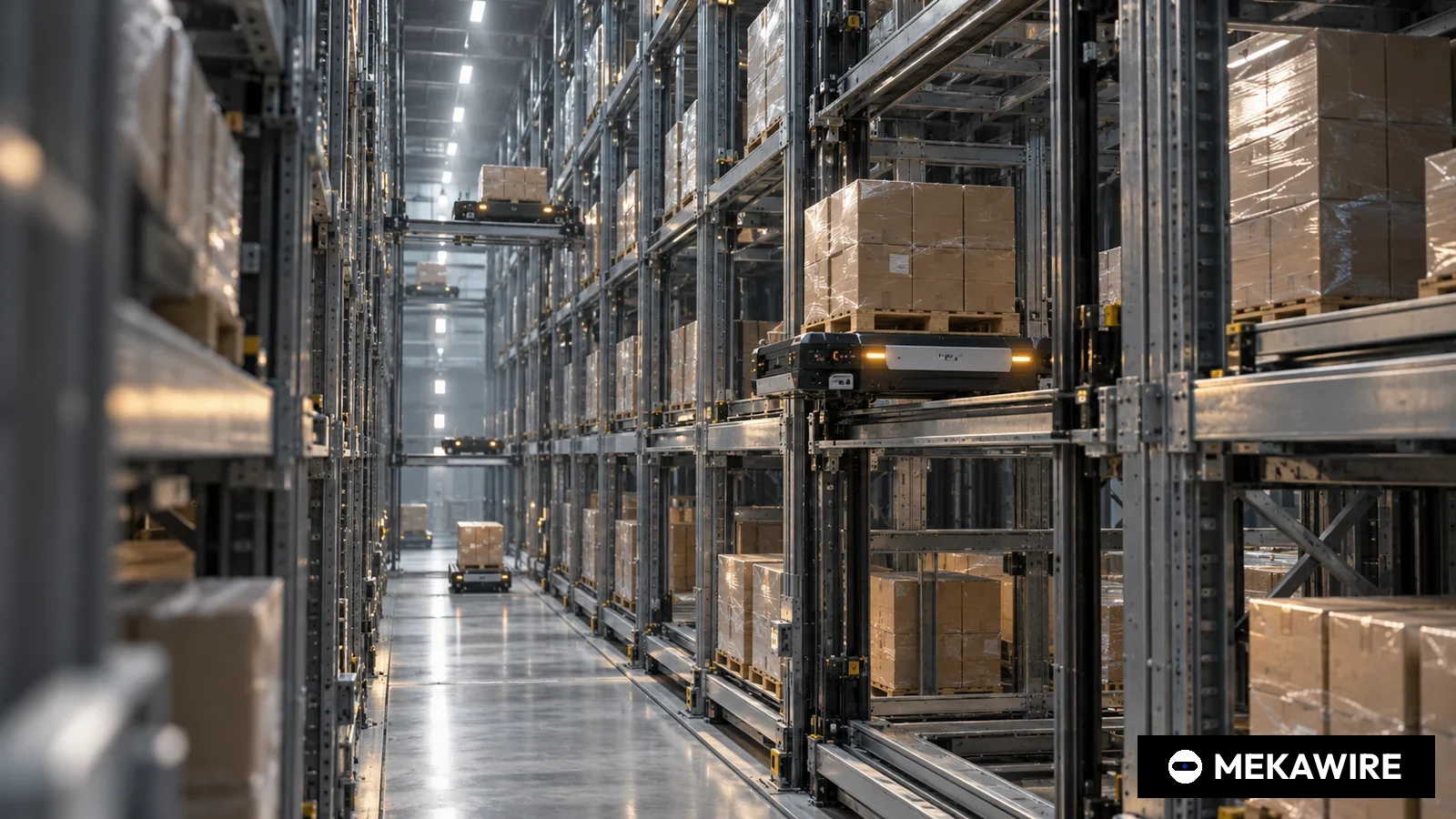
Mytra, a California start-up that rebuilds warehouse storage as a grid of cells worked by robots, said on 15 January 2026 that it had raised $120 million in a Series C round led by Avenir Growth. The company, run by Chris Walti, who previously led Tesla's humanoid robot team, said the money would go into scaling deployments and hiring after it signed a project 60 times the size of its largest prior installation.
The round
New investors Kivu Ventures, Liquid 2, D. E. Shaw Ventures and Offline Ventures joined existing backers Eclipse, Greenoaks, Abstract Ventures and Promus Ventures, according to Mytra. Two strategic investors sit on the cap table as well: Lineage, the temperature-controlled warehousing group, and RyderVentures, the corporate venture arm of Ryder System. Mytra did not disclose a valuation. When it came out of stealth in July 2024 the company said it had raised $78 million through its Series B, which puts disclosed equity funding at $198 million after the new round.
What Mytra disclosed
Mytra said it now counts a Fortune 100 food company and a Fortune 500 industrial-supply distributor as customers, without naming either. It said early deployments had reduced material-handling labour by 32% and raised storage density by 34%. Those are company figures and Mytra did not publish the baseline or the sites behind them. The company also said it grew its team by 78%, hired Gabi Gantus as chief financial officer, Ingrid Cotoros, a former Meta and GoPro engineering leader, as chief development officer and Nigel Marcussen as vice president of scaling, and added former Tesla finance chief Zach Kirkhorn to its board, a move first announced in August 2025.
How the system works
At its July 2024 launch Mytra described three components, a fleet of autonomous robots, a repeating steel matrix and edge software that schedules them. The structure divides a building into identical cells stacked in three dimensions. Robots carry loads of up to 3,000 pounds from any cell to any neighbouring cell, sideways or vertically, so pallets and cases can be stored, retrieved and re-sequenced without forklifts or fixed conveyors. Walti frames the product as an operating system for material flow and said in the January release that it should work “like cloud computing,” programmable and continuously optimising. The first named production user, at launch in 2024, was the grocer Albertsons Companies.
Who is behind it
Walti led Tesla's robotics and warehouse logistics work before running the Tesla Bot programme, according to Mytra. His co-founder Ahmad Baitalmal led factory software at Tesla and at Rivian. In June 2025 the company announced a 100,000-square-foot campus in Brisbane, California, for development, testing and staff growth. The Tesla lineage matters to investors because Mytra sells a capital-intensive physical system, and its board now includes the executive who ran Tesla's finances through its production ramp.
Where it sits among rivals
Warehouse automation is crowded with well-funded players. Norway's AutoStore sells cube storage built around standard bins, Symbotic in the United States automates case handling for large retailers, France's Exotec builds its Skypod system, and Locus Robotics and Nimble Robotics in the US work on picking and fulfilment. Mytra's pitch is that its grid handles pallet-scale loads and treats every cell as addressable, which puts it closer to the pallet racking and forklift fleets most distribution centres still run. The table compares the latest rounds each company has disclosed.
- Mytra
- US
- 2022
- Series C
- 120
- 2026-01-15
- No data
- Exotec
- FR
- 2015
- Series D
- 335
- 2022-01-17
- 2
- Locus Robotics
- US
- 2015
- Series F
- 117
- 2022-11-29
- No data
- Nimble Robotics
- US
- No data
- Series C
- 106
- 2024-10-23
- No data
- Gather AI
- US
- 2017
- Series B
- 40
- 2026-02-09
- No data
Latest rounds as disclosed by each company or its lead investor; null means not disclosed. Mytra cumulative disclosed equity = US$78m (through Series B) + US$120m (Series C) = US$198m. No figures estimated.
As of Oct 1, 2026
Why it matters
The round shows where late-stage robotics money goes when it is not chasing humanoids. Investors are paying for systems that replace forklifts and conveyors in existing logistics buildings, a market where buyers judge returns in labour hours and pallet positions. Lineage and Ryder are also potential channels, because both run large networks of warehouses for other companies. A strategic stake does not guarantee orders, and neither company has announced a Mytra rollout.
Risks and open questions
The two largest customers are unnamed, the 60x project has no published site or start date, and the performance numbers come only from Mytra. Steel grid systems need heavy upfront spending and long installation, so cash consumption rises with each large project. Mytra also competes against incumbents with installed bases and service teams, and against cheaper retrofits that keep existing racking.
What to watch
The signals are a named customer and start date for the large deployment, any announcement from Lineage or Ryder about Mytra sites, a disclosed valuation at the next round, and evidence that the 32% labour figure holds at full scale.
MEKAWIRE analysis
Mytra is betting that pallet-scale storage, not bins or humanoids, is where warehouse robotics earns its next decade of returns, and its $120 million round buys the first proof at scale.
The evidence is the contract mix. A project 60 times larger than anything installed before, a Fortune 100 food customer and two logistics operators on the cap table point to buyers who move whole pallets, a load class that bin-based cube systems were not designed to carry. Investors added $120 million without a disclosed valuation, which suggests they priced the deal on deployment progress rather than on a headline number.
The strongest counter-argument is that every claim is self-reported. Mytra has published no site-level data, no revenue and no customer names beyond Albertsons in 2024, and grid systems are notorious for long, costly commissioning. A single delayed mega-site could absorb much of the new capital.
Bull case. If the large deployment goes live on schedule and the customer is named, Mytra gains a reference site that Lineage and Ryder can show across their networks. That would make it the pallet-scale counterpart to AutoStore in bins and support a much larger next round.
Bear case. If the 60x project slips, the company is left carrying fixed steel and installation costs with few sites to spread them across. Incumbents with service networks could match the design while Mytra burns cash.
Signals to watch:
- By 31 December 2026, a named customer or go-live date for the 60x deployment.
- November 2026, Symbotic's fiscal fourth-quarter results as a read on demand for case-level automation.
- March 2027, ProMat in Chicago, where Mytra and its rivals typically show new systems to US buyers.
- Series C, US$120 million
- Up to 3,000 lb per move between adjacent cells
- 15 January 2026
- Not disclosed
- Deployment 60x its largest prior installation
- Avenir Growth
- Kivu Ventures, Liquid 2, D. E. Shaw Ventures, Offline Ventures
- Lineage; RyderVentures (Ryder System)
- US$198 million (US$78m through Series B plus US$120m)
- 32% less material-handling labour, 34% higher storage density in early deployments
Why it matters
Mytra's round is one of the larger 2026 cheques for warehouse automation that does not involve a humanoid. It confirms that growth investors still fund capital-heavy fixed systems when there is a visible pipeline, here a project 60 times the size of the company's previous largest site.
The pallet layer of the warehouse remains largely manual, run by forklift drivers and fixed racking. Bin-based cube storage has spread widely, but full pallets and heavy cases are a different engineering problem. A company that can address that layer at scale would open a large replacement market inside existing buildings.
Rival analysis
AutoStore dominates cube storage for bins and sells through integrators, Symbotic sells end-to-end case-handling systems with a concentrated retail customer base, and Exotec's Skypod robots climb racks to fetch totes. None of them is designed primarily around 3,000-pound pallet moves in a fully addressable 3D grid, which is Mytra's claimed niche.
The closer competition comes from automated pallet systems sold by established intralogistics groups and from autonomous forklift makers that keep existing racking. Those rivals have installed bases and service networks. Mytra has the cleaner software story but a much smaller reference list.
Valuation context
Mytra did not disclose a valuation, so no step-up can be computed. Disclosed equity totals $198 million, calculated as $78 million through Series B plus the $120 million Series C.
For comparison, Exotec disclosed a $2 billion valuation with its $335 million Series D in January 2022, the only peer in the table with a published post-money figure. Locus Robotics disclosed a $1 billion valuation at its Series E in February 2021. Any valuation for Mytra in the press should be treated as unconfirmed.
Supply-chain implications
Mytra's system rests on structural steel, drive and lift mechanisms, batteries and on-board compute, and on-site installation labour. Steel and construction capacity, not chips, are the likelier bottlenecks for a project 60 times larger than prior sites.
The strategic investors sit downstream. Lineage operates cold-storage warehouses and Ryder runs contract logistics, so both are potential buyers or deployment partners rather than suppliers. Cold-chain use would also test robot and battery performance at low temperatures, which Mytra has not discussed publicly.
Signals to watch
The most important near-term signal is a named customer and go-live date for the 60x deployment. A disclosure of site-level throughput or labour data would also show whether the 32% labour saving survives scale.
Secondary signals are any Lineage or Ryder announcement involving Mytra, the size and valuation of a next round, and hiring in field installation and service roles, which would show the company moving from pilots to repeatable rollouts.
Analyst view
Thesis: Mytra has a credible claim on pallet-scale warehouse automation and the January round funds its first true scale test. Confidence: medium.
Reasons for medium rather than high: the investor list is strong, the strategic backers fit the market and the founding team has run large hardware programmes. Against that, all performance data is self-reported, the main customers are unnamed and no valuation or revenue has been disclosed. A named go-live at the large site would raise confidence to high.
Questions you should be asking
Who is the customer behind the 60x deployment, and when does it go live? What baseline did Mytra use for its 32% labour and 34% density figures?
Do Lineage and RyderVentures have commercial agreements alongside their equity stakes? How does the system perform in frozen and chilled environments? What is the installed cost per pallet position compared with conventional racking and forklifts?