OpenAI disbands stand-alone robotics team, folds it into research and Applied, Fortune reports
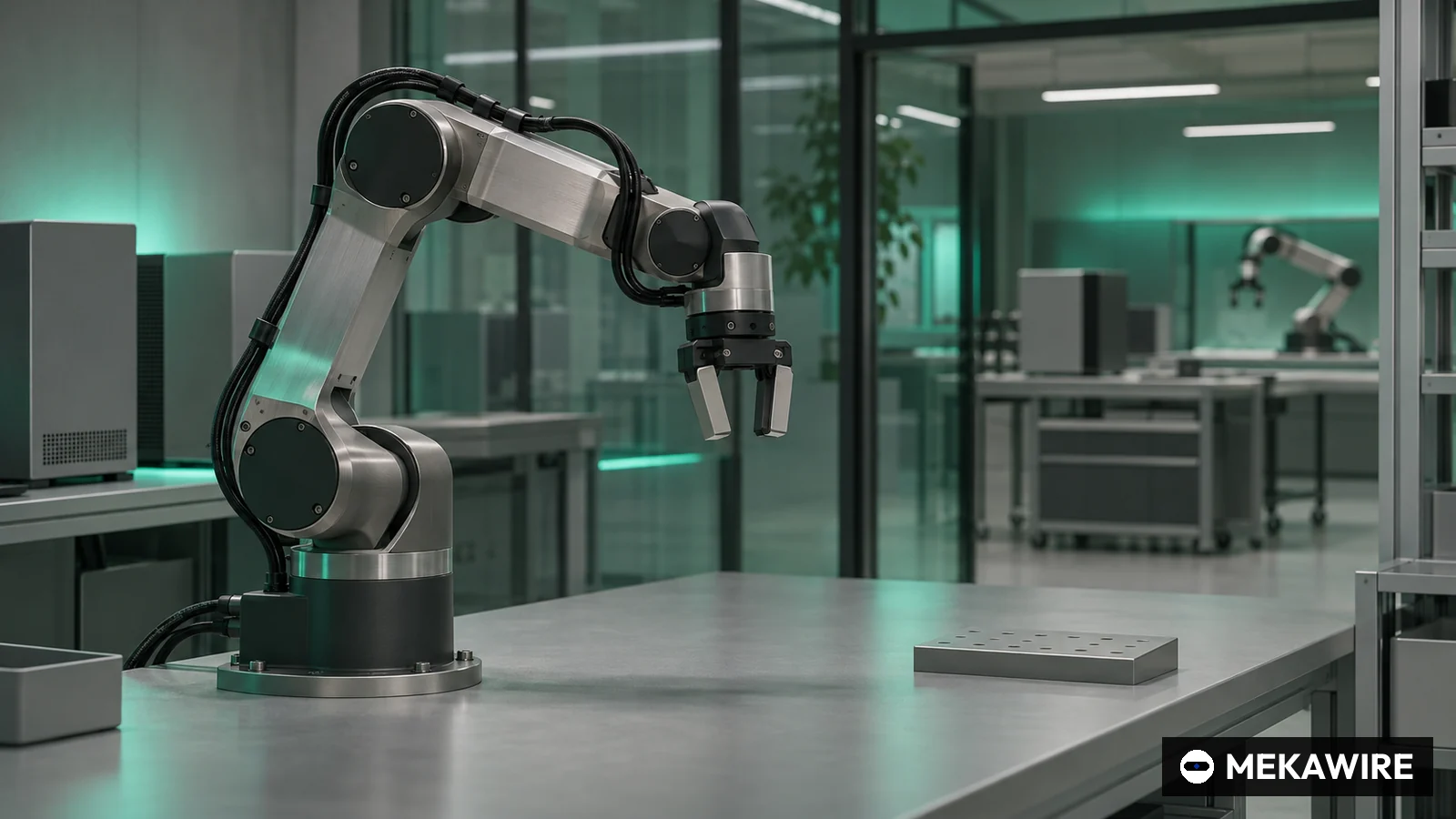
OpenAI has disbanded its stand-alone robotics team and moved its researchers into the company's main research organisation under Chief Research Officer Mark Chen, while applied robotics and hardware staff move to the Applied organisation under President Greg Brockman, Fortune reported on Nov 13 after OpenAI confirmed the change.
A spokesperson told Fortune robotics remains core to OpenAI's long-term vision and that general models such as GPT-6 Astra can now be applied directly to some robot tasks. OpenAI has said it is building its own humanoid, with a first public demonstration targeted for 2027.
OpenAI has broken up the robotics group it rebuilt in 2024, Fortune reported on Nov 13 in an exclusive that OpenAI confirmed to the magazine. Robotics researchers now sit in the main research team reporting to Chief Research Officer Mark Chen, and the applied robotics and hardware teams have moved into the larger Applied organisation run by President Greg Brockman. MEKAWIRE found no OpenAI blog post or filing on the change; the account rests on Fortune's reporting and the company statement it quotes, which Chinese outlet IT Home relayed on Nov 14.
The company framed the move as a push, not a retreat. A spokesperson told Fortune that robotics remains a core part of OpenAI's long-term vision. The stated reason is technical: at the start of the year OpenAI researchers expected progress to come from building on world-modelling work such as the video model Sora, but the company's general frontier models, including GPT-6 Astra, have since proved usable for some robot tasks directly. IT Home's summary of the report cites an NVIDIA study in which an Astra-driven agent reached a 74.8% success rate on a simulated manipulation benchmark, against 51.0% for the leading specialised model; MEKAWIRE has not seen that study. Fortune also found OpenAI's registered booth at the CoRL conference in Austin this week empty.
A third shape for OpenAI robotics
OpenAI wound down its first robotics team in 2020, rebuilt one in 2024 alongside a partnership with Figure that Figure ended in February 2025, and has said it is developing its own humanoid, with CEO Sam Altman targeting a first public demonstration in 2027. The new structure keeps that goal but removes the separate unit that would have built a robot-specific model.
What it means for the robot-model startups
- Skild AI
- Jan 14, 2026
- Series C
- $1.4bn
- $14bn
- Physical Intelligence
- Nov 20, 2025
- Series B
- $600m
- $5.6bn
- Figure AI
- Sep 16, 2025
- Series C
- $1.0bn
- $39bn
MEKAWIRE funding database, disclosed figures from company announcements, not estimates. Total of the three rounds is a MEKAWIRE calculation.
As of Nov 14, 2026
The companies in the table raised money on the opposite thesis: that robots need dedicated foundation models trained on robot data. By MEKAWIRE's tally of disclosed rounds, the three latest rounds total $3.0 billion at disclosed valuations of $5.6 billion to $39 billion. If general models keep closing the gap, the value of a robot-only model shifts toward data, hardware and deployment; if they stall on latency and on-device limits, OpenAI will need specialist work again.
MEKAWIRE analysis
OpenAI is betting that robot intelligence is a downstream use of its frontier model, which puts it in direct competition with every startup selling a robot brain.
The strongest counter-argument came from researchers Fortune interviewed: large models are slow, depend on cloud links, and lack the field data robot companies collect. Signals to watch: any OpenAI robotics release or hiring post that names the new reporting lines, the 2027 humanoid demonstration timeline, and whether Figure, Physical Intelligence or Skild AI answer with benchmark results against general models.
- Stand-alone robotics team disbanded (reported Nov 13, confirmed by OpenAI to Fortune)
- First public demonstration targeted for 2027
- $3.0bn in the latest rounds of Figure, Physical Intelligence, Skild AI (MEKAWIRE calc.)
- General models such as GPT-6 Astra now usable for some robot tasks
- Moved to main research team under CRO Mark Chen
- Moved to Applied organisation under President Greg Brockman
Why it matters
OpenAI is integrating robotics research into Mark Chen's organisation and applied robotics and hardware into Greg Brockman's Applied organisation. Its stated rationale is that general models such as GPT-6 Astra can now serve some robot tasks, making this a test of whether general AI can reduce the need for specialised robotics development. The targeted 2027 humanoid demonstration remains a milestone, but the supplied facts establish neither deployment readiness nor commercial economics.
Rival analysis
Figure combines humanoid hardware and models, while Physical Intelligence and Skild AI pursue general-purpose models across robot platforms. OpenAI's stated humanoid effort would put it alongside hardware developers, and its general-model approach may overlap with robot model vendors; this is our inference, not a supplied fact. Figure lists OpenAI as a strategic partner, creating potential competitive overlap, but no change to that relationship is supplied. NVIDIA is listed as a potential platform-versus-model rival to Physical Intelligence; its position relative to OpenAI is not supplied.
Valuation context
Disclosed valuations are $39B for Figure, $5.6B for Physical Intelligence and $14B for Skild AI; these are private-company valuations, not public market capitalisations. Their latest rounds total $3.0B by MEKAWIRE's calculation ($1B, $600M and $1.4B respectively; Physical Intelligence's round is reported rather than official), which is not cumulative funding. No OpenAI valuation or NVIDIA market cap is supplied, and these figures alone cannot establish relative investment value.
Related papers
Figure's listed work includes A Dual-System Vision-Language-Action Architecture for Whole-Upper-Body Humanoid Control. Physical Intelligence lists π0.5 on open-world generalization, while Skild lists Massively Parallel Sim-to-Real for Humanoid Locomotion. No methods, results or comparable benchmarks are supplied, so these titles cannot establish a performance ranking.
Supply-chain implications
OpenAI's hardware staff move to Applied, but no component suppliers, manufacturing partners or production capacity are identified. Figure lists BMW Manufacturing as a pilot partner, while Physical Intelligence lists unnamed hardware OEMs as customers. NVIDIA lists Agility Robotics as a customer, but the supplied facts do not establish procurement volumes or supplier dependence.
Signals to watch
Watch whether OpenAI reaches its targeted 2027 public humanoid demonstration and discloses task scope, reliability and operating conditions. Evidence comparing general models with specialised robot policies would help test the stated rationale for integration. Named manufacturing partners, deployment commitments and hardware cost disclosures would make the commercial opportunity more assessable; none are supplied.
Analyst view
The reorganisation supports an integration thesis, but does not establish either a robotics withdrawal or a technical breakthrough. Combining general-model research with applied hardware could improve coordination, although the split between two organisations leaves execution ownership worth monitoring. Investors should anchor expectations to demonstrated capability and commercial evidence rather than infer progress from the organisational change.
Questions you should be asking
Who owns delivery of the 2027 humanoid demonstration across research and Applied, and what measurable success criteria will OpenAI disclose? Which robot tasks can GPT-6 Astra perform, under what supervision and hardware conditions, and at what cost? How will OpenAI's own humanoid programme affect its listed strategic relationship with Figure?