Munich's RobCo raises $100 million Series C led by Lightspeed and Exor's Lingotto to take factory robots it rents out to the US
RobCo, which builds AI-driven industrial robots and leases them to manufacturers, raised $100 million in a Series C round co-led by Lightspeed Venture Partners and Lingotto Innovation on January 29, 2026. The Munich-founded company will use the money for its Physical AI roadmap, larger enterprise deployments and a bigger US presence, but disclosed no valuation or deployment figures.
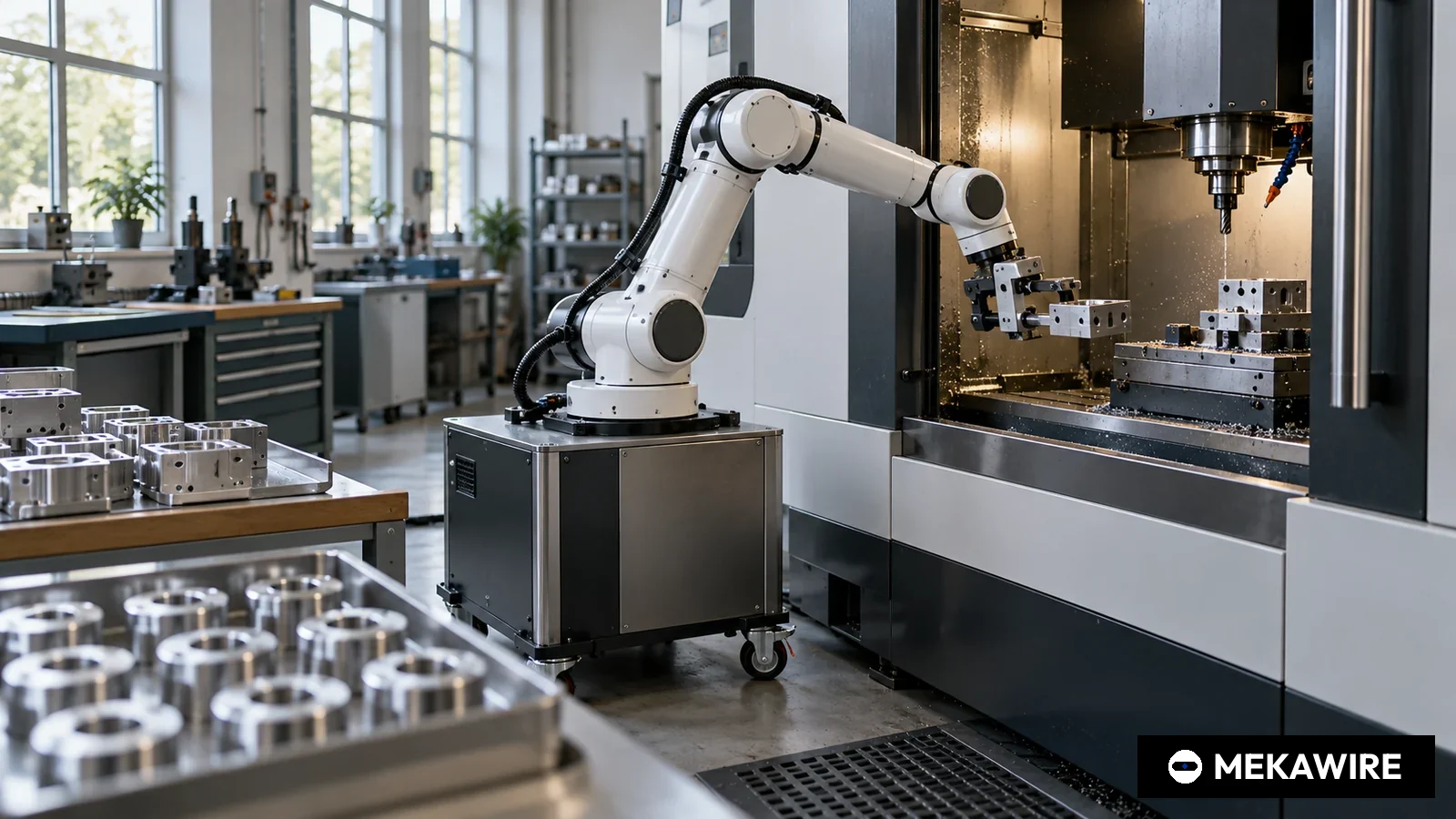
RobCo, a Munich-founded maker of AI-driven industrial robots, said on January 29, 2026 that it had raised $100 million in a Series C round. The company said it would spend the money on its Physical AI roadmap, on scaling deployments with large enterprise customers and on strengthening its position in the United States. Lightspeed Venture Partners and Lingotto Innovation, the investment firm owned by Exor, co-led the round, according to RobCo's announcement.
Sequoia Capital, Greenfield Partners, Kindred Capital, Leitmotif and The Friedkin Group also took part, RobCo said. The company did not disclose a valuation, revenue or a cumulative funding figure. Its previous round, a $42.5 million Series B led by Lightspeed in February 2024, lifted total funding to more than $60 million at the time, according to that earlier release. On those disclosed numbers RobCo has now raised more than $160 million, and the new round is about 2.35 times the size of the last one.
“With $100 million of additional funding, we will become the dominant AI robotics company for manufacturing in the U.S. and Europe,” chief executive and founder Roman Hölzl said in the release. Alexander Schmitt of Lightspeed said RobCo had built systems that “already deliver in industrial environments today”, and Morgan Samet, managing partner of Lingotto Innovation, said autonomy would become a decisive advantage as manufacturing enters a new phase.
RobCo describes its product as a vertically integrated platform in which hardware and software are designed together. Its robots combine perception, motion planning and self-learning, and according to the company they acquire task-specific skills through demonstration and self-learning instead of manual programming. The target jobs are machine tending, palletizing, dispensing and welding. RobCo sells the systems on a robotics-as-a-service basis, so customers pay a recurring fee instead of buying a robot cell outright.
The company named BMW, DynaEnergetics, Fabricated Extrusion Company, T-Systems and Rosenberger as customers. RobCo has been active in the United States since 2025, with offices in San Francisco and Austin alongside its Munich headquarters, and the Series C release carried a joint San Francisco and Munich dateline.
Three researchers from the Technical University of Munich's chair for robotics and AI founded RobCo in 2020, according to the company's 2024 funding announcement. At that time RobCo pitched modular hardware kits and its RobCo Studio software to small and medium-sized manufacturers, with low-code configuration, digital twins and remote programming, and named DE-VAU-GE Gesundkostwerk Deutschland as a palletizing customer. The 2026 release reframes the business around Physical AI, autonomy and enterprise accounts in the United States.
The round lands in a crowded field. In the United States, Standard Bots raised a $200 million Series C in June 2026, Mind Robotics announced a $500 million Series A in March 2026 and a $400 million Series A-1 in May, and Dyna Robotics raised a $120 million Series A in September 2025, according to those companies. In Europe, Munich neighbour Agile Robots raised $220 million in a Series C in 2021 and French warehouse robot maker Exotec raised $335 million in a Series D at a $2 billion valuation in 2022. NEURA Robotics and established arm makers such as Universal Robots and FANUC compete for the same factory budgets.
- RobCo
- DE
- 2020
- Series C
- 100,000,000
- 2026-01-29
- Agile Robots
- DE
- 2018
- Series C
- 220,000,000
- 2021-09-10
- Exotec
- FR
- 2015
- Series D
- 335,000,000
- 2022-01-17
- Standard Bots
- US
- No data
- Series C
- 200,000,000
- 2026-06-09
- Mind Robotics
- US
- No data
- Series A-1
- 400,000,000
- 2026-05-13
- Dyna Robotics
- US
- 2024
- Series A
- 120,000,000
- 2025-09-15
Most recent round each company disclosed as of 2026-10-01, amounts as announced by the companies, not estimated. RobCo round-size ratio = Series C $100M / Series B $42.5M (February 2024) = 2.35x. RobCo disclosed no valuation, so valuations are not compared.
As of Oct 1, 2026
The technical idea is simple to state. A conventional industrial robot cell is programmed by an integrator, point by point, for one part and one fixture, and every product change costs engineering hours. RobCo argues that a robot which sees its workspace, plans its own motion and learns from demonstration can be re-tasked by the factory's own staff. Selling that as a service shifts the capital cost from the manufacturer's balance sheet to RobCo's, which helps smaller plants but makes RobCo's growth more capital hungry.
For the global market the deal is a marker of a European robotics company raising nine figures to compete on American soil. RobCo's investor list mixes venture funds such as Lightspeed and Sequoia with Exor's Lingotto and The Friedkin Group, and its stated uses of funds point to a strategy built around US demand rather than a home market defence. Hölzl's stated goal covers both the United States and Europe.
There are open questions. RobCo gave no count of robots in service, no revenue and no valuation, so its claim to become the dominant AI robotics company for manufacturing cannot yet be tested against numbers. Robotics-as-a-service requires the company to finance fleets and keep utilisation high. The learning claims rest on company statements, with no published benchmark or paper attached to the round.
The next markers will be whether RobCo publishes deployment or revenue figures, whether named customers such as BMW move from single cells to multi-site rollouts, and whether its US headcount and offices grow beyond San Francisco and Austin during 2026.
MEKAWIRE analysis
RobCo's round shows that European industrial robotics capital is now being raised to win American factories, and the business model will matter more than the AI label.
The evidence is in the release itself. The company split its dateline between San Francisco and Munich, named US expansion as a core use of funds, and took money from The Friedkin Group and Exor's Lingotto alongside Lightspeed and Sequoia. Its target tasks, machine tending, palletizing, dispensing and welding, are repetitive jobs that RobCo says it wants to automate so people can focus on more demanding work, and a rental model removes the upfront purchase that keeps smaller plants from automating.
The strongest counter-argument is that RobCo has not shown scale. Without disclosed fleet size, revenue or valuation, the $100 million could reflect investor appetite for anything labelled Physical AI in early 2026 rather than proven unit economics, and US rivals such as Standard Bots raised twice as much later in the year.
In the bull case, demonstration-based setup cuts integration time enough that RobCo can deploy cells in weeks, the service model builds recurring revenue, and Exor's industrial network opens doors in automotive and machinery. RobCo would then become one of the few European robot makers with real US share.
In the bear case, financing robots on its own balance sheet strains cash as deployments rise, larger US rivals win the same mid-market customers on price, and incumbent arm makers add similar AI features to their installed base. RobCo would then need another large round before it reaches profitable scale.
Signals to watch:
- Any RobCo disclosure of robots in service or annual recurring revenue during the fourth quarter of 2026.
- New US customer announcements or a third US site before Hannover Messe in April 2027.
- A follow-on round or debt facility to fund the robotics-as-a-service fleet in the first half of 2027.
- Series C
- $100 million
- 2020, Munich
- Lightspeed Venture Partners, Lingotto Innovation (owned by Exor)
- January 29, 2026
- Not disclosed
- San Francisco and Austin, since 2025
- Machine tending, palletizing, dispensing, welding
- $42.5 million Series B, February 2024
- Sequoia Capital, Greenfield Partners, Kindred Capital, Leitmotif, The Friedkin Group
Why it matters
RobCo is one of a small number of European industrial robot start-ups to raise a nine-figure round, and it chose to frame that round around the United States. The release names US expansion, enterprise deployments and the Physical AI roadmap as the three uses of funds, which tells customers and rivals that the next phase of competition for mid-market factory automation will be fought in American plants.
The round also tests whether a rental model for AI-enabled robot cells can scale. If RobCo can show recurring revenue growing faster than the capital it ties up in leased fleets, it gives European investors a template for backing hardware companies that do not depend on large one-off equipment sales.
Rival analysis
In the US mid-market, Standard Bots ($200 million Series C, June 2026) sells its own arms and software and is RobCo's most direct analogue. Mind Robotics, the Rivian spinout that raised $500 million in March 2026 and $400 million more in May, targets industrial deployment with heavier funding. Dyna Robotics ($120 million Series A, September 2025) focuses on foundation models running on low-cost hardware.
In Europe, Agile Robots in Munich and NEURA Robotics compete for the same German industrial accounts, while Universal Robots and FANUC hold the installed base of collaborative and industrial arms. RobCo's differentiation rests on its integrated platform and service pricing rather than on a proprietary model with published results.
Valuation context
RobCo did not disclose a valuation for the Series C or the Series B, so no step-up can be calculated from primary sources. The only verifiable ratio is round size, with the $100 million Series C about 2.35 times the $42.5 million Series B of February 2024.
Peers that did disclose valuations sit far apart. Exotec reported a $2 billion valuation with its $335 million Series D in 2022. Any RobCo valuation figure circulating in secondary coverage should be treated as unconfirmed until the company or an investor publishes it.
Supply-chain implications
RobCo designs hardware and software together, but its releases do not identify suppliers for actuators, gearboxes, cameras or compute. For a robotics-as-a-service model, the cost of these components flows straight into the capital the company must deploy per customer, so supplier pricing will shape margins.
US expansion raises questions about where RobCo builds and services its systems. The company names offices in San Francisco and Austin but has not disclosed US assembly. Tariff exposure on robot components imported into the United States is a factor investors will watch.
Signals to watch
The first signal is disclosure. A robot count, a revenue figure or an annual recurring revenue number from RobCo during the fourth quarter of 2026 would let the market check the growth story behind the round.
The second is customer depth. Announcements of multi-site rollouts at named customers such as BMW or T-Systems, or new US enterprise accounts before Hannover Messe in April 2027, would show whether the Series C is converting into scale. A follow-on equity round or an asset-backed debt line in the first half of 2027 would show how capital hungry the rental fleet has become.
Analyst view
Thesis: RobCo has the funding and investor network to become a credible European contender in US mid-market factory automation, but its claims of dominance are not yet supported by disclosed metrics. Confidence: medium.
The confidence is medium because the funding, investors, customers, applications and US sites are confirmed in company releases, while the company has published no fleet size, revenue, valuation or technical benchmark. The rental model is a strength in sales and a risk in cash consumption, and better funded US rivals are pursuing the same customers.
Questions you should be asking
How many RobCo robots are in service, and what share are on robotics-as-a-service contracts versus outright sales?
What is the setup time for a new task using demonstration learning compared with conventional integrator programming, and has RobCo published any measured results?
Will RobCo assemble systems in the United States, and how exposed is its bill of materials to tariffs on imported components?