Apptronik raises US$350 million Series A led by B Capital and Capital Factory, with Google joining, to scale its Apollo humanoid
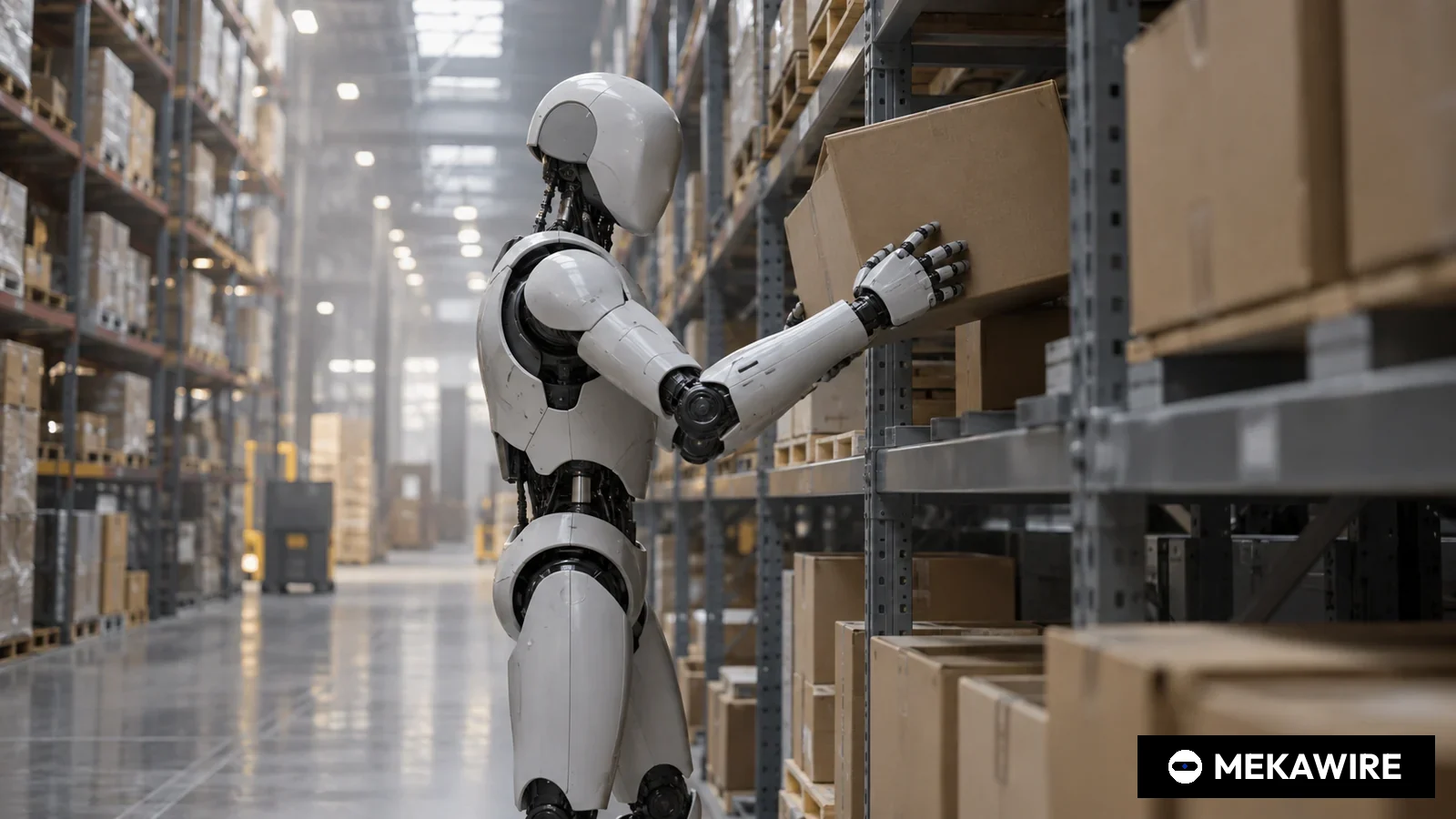
Austin humanoid maker Apptronik said on 13 February 2025 it had raised a US$350 million Series A co-led by B Capital and Capital Factory, with Google participating. The round is more than 12 times the US$28 million the company had raised before and will fund Apollo production, new robot iterations and wider deployments in 2025.
Apptronik, the Austin, Texas maker of the Apollo humanoid robot, said on 13 February 2025 that it had raised US$350 million in a Series A round co-led by B Capital and Capital Factory, with Google taking part. The company said the money will go toward building out Apollo's capabilities, scaling manufacturing to meet customer demand and hiring engineers.
The size of the round stands out against Apptronik's own history. According to the company's release, it had raised US$28 million before this financing, so the Series A alone is 12.5 times everything it had taken in since its founding in 2016. Apptronik did not disclose a valuation, and neither co-lead published terms beyond the headline amount.
Apptronik listed four uses for the capital: accelerating development of next-generation humanoids and new Apollo iterations; extending Apollo into logistics, manufacturing, and later eldercare and healthcare; scaling production; and growing a team that the company put at more than 150 employees. It said it expects to expand Apollo deployments in 2025. Chief executive and co-founder Jeff Cardenas framed the goal as building humanoids capable enough to work as partners to people. Gordon Daugherty, chairman of Capital Factory, pointed to Apollo's approachable design, and Howard Morgan, chair of B Capital, tied the bet to labour and societal problems ranging from disaster relief to space exploration.
Apptronik spun out of the Human Centered Robotics Lab at the University of Texas at Austin in 2016. The company says it has built 15 robotic systems, including work on NASA's Valkyrie humanoid, and has partnered with NASA since 2022. Apollo stands 5 feet 8 inches (about 1.73 metres), weighs 160 pounds (about 73 kg) and can lift 55 pounds (about 25 kg), according to the company's March 2024 Mercedes-Benz announcement. Apptronik has emphasised swappable batteries and a proprietary actuation design that it says makes the robot cheaper to build at volume.
The customer list is still made of pilots. Mercedes-Benz signed a commercial agreement on 15 March 2024 to test Apollo delivering assembly kits to production lines and moving totes of kitted parts. GXO Logistics said on 20 June 2024 it was running an early proof of concept with Apollo in a lab setting before a possible deployment at a US distribution centre, its second humanoid partnership. Apptronik also works with NVIDIA on dexterous manipulation and Omniverse digital twins, and has a strategic partnership with Google DeepMind's robotics team to bring DeepMind's AI models to Apollo. Google's cheque in the Series A turns that research tie into an equity link.
The raise lands in a crowded field. Figure AI raised US$675 million in a Series B in February 2024. Skild AI, which builds robot software rather than bodies, raised US$300 million at a US$1.5 billion valuation in July 2024. Agility Robotics last disclosed a US$150 million Series B in April 2022, and 1X Technologies a US$100 million Series B in January 2024. In Europe, NEURA Robotics announced a EUR120 million Series B led by Lingotto on 15 January 2025, four weeks before Apptronik. Tesla is developing its Optimus humanoid in house.
- Apptronik
- 2016
- Series A
- 350,000,000
- No data
- 2025-02-13
- Figure AI
- No data
- Series B
- 675,000,000
- No data
- 2024-02-29
- Skild AI
- 2023
- Series A
- 300,000,000
- 1,500,000,000
- 2024-07-09
- Agility Robotics
- 2015
- Series B
- 150,000,000
- No data
- 2022-04-22
- 1X Technologies
- 2014
- Series B
- 100,000,000
- No data
- 2024-01-13
- Sanctuary AI
- 2018
- Series A
- 58,500,000
- No data
- 2022-03-02
Latest disclosed round for each company as of 13 February 2025, from company or investor releases. Valuations shown only where disclosed; — means not disclosed. Apptronik's round is 12.5 times its prior US$28 million total (350 / 28).
As of Feb 13, 2025
MEKAWIRE analysis
Apptronik's round buys it a seat among the best funded humanoid makers, but the money is a bet on manufacturing cost, and the company has yet to show paid production volumes.
The evidence for the thesis is in what Apptronik chose to stress. Its release puts manufacturing scale and affordability, not a new model or a new demo, at the centre of the use of funds, and the company has long argued its actuators were designed for mass production. Its two named industrial customers, Mercedes-Benz and GXO, are both in testing phases on the company's own description. A US$350 million first institutional round, against US$28 million raised before, signals investors are paying for a factory plan rather than a lab.
The strongest counter-argument is that Apptronik may not need to win on hardware at all. With Google as both investor and, through DeepMind, the source of the robot's AI models, Apptronik could become the preferred body for a frontier model maker, a role Figure AI pursued when it signed a collaboration agreement with OpenAI alongside its February 2024 Series B. In that reading the round is about distribution of AI into factories, and unit cost matters less than being the platform Google's software runs on.
Bull case: Mercedes-Benz and GXO pilots convert into paid fleets during 2025, the DeepMind partnership gives Apollo general-purpose skills that rivals cannot match, and the new capital lets Apptronik reach build costs that make humanoids competitive with a shift of human labour. Bear case: pilots stall at the proof-of-concept stage, Figure and Tesla outspend Apptronik on production, and Google's models end up available to every humanoid maker, leaving Apptronik with a hardware business and thin margins.
Signals to watch:
- 2025: whether Apptronik names a contract manufacturer or production site to deliver the scale it promised in the release.
- By end 2025: whether Mercedes-Benz or GXO move Apollo from pilot to paid deployment, as Apptronik says expanded deployments will begin in 2025.
- 2025: whether Google DeepMind shows Apollo running its robotics models in public, which would test how deep the equity tie runs.
- Apollo, 1.73 m, 73 kg, 25 kg payload
- Series A
- US$350 million
- 2016, Austin, Texas (UT Austin spin-out)
- B Capital, Capital Factory
- 13 February 2025
- More than 150
- US$28 million
Why it matters
Apptronik's Series A is one of the largest humanoid financings disclosed in early 2025, and it is a little over half the size of Figure AI's 2024 Series B. That closes much of the capital gap between the two Texas and California rivals, and it means at least three US humanoid makers (Figure, Apptronik, Agility) now have nine-figure rounds behind them.
The round also formalises Google's position. Google DeepMind already had a research partnership with Apptronik. An equity stake gives Google a body for its robotics models without building hardware itself, which shapes how other humanoid makers will think about working with Google.
Rival analysis
Figure AI is the closest comparison: a general-purpose humanoid maker pitching to industrial customers, with a larger US$675 million Series B in February 2024. Agility Robotics, founded in 2015, builds the Digit humanoid for logistics, but its last disclosed round was a US$150 million Series B in 2022. 1X Technologies raised US$100 million in January 2024.
Tesla's Optimus programme has the deepest internal funding and a captive factory customer. NEURA Robotics in Germany, which closed a EUR120 million Series B in January 2025, competes for European industrial customers, including car makers that Apptronik reaches through Mercedes-Benz.
Valuation context
Apptronik did not disclose a post-money valuation. The only verified valuation among the comparison set is Skild AI at US$1.5 billion after its US$300 million Series A in July 2024, which shows investors were paying unicorn prices for robot software before hardware revenue. Without a disclosed price, Apptronik's dilution and the investors' implied expectations cannot be computed.
What can be measured is the jump in capital: 12.5 times prior funding in one round. Rounds of that ratio usually fund capital spending, which fits the company's emphasis on manufacturing.
Supply-chain implications
Apptronik says its actuation technology was designed for affordability and mass production, and it has not named an outside manufacturer in this announcement. Scaling a humanoid means sourcing electric motors, gearboxes, encoders, batteries and compute at volume, and the release is the first time the company has had the balance sheet to sign multi-year component commitments.
NVIDIA is a named technology partner for simulation and manipulation work. Google DeepMind supplies AI research. Watch whether Apptronik turns to an electronics contract manufacturer rather than building its own plant.
Signals to watch
The first signal is production: a named manufacturing partner or site in 2025 would show the capital is going to scale rather than R&D. The second is customer conversion at Mercedes-Benz and GXO, both of which were in testing on the companies' own descriptions.
The third is software. A public demonstration of Apollo running Google DeepMind models would confirm the partnership's depth, while a DeepMind deal with a rival humanoid maker would weaken Apptronik's edge.
Analyst view
Thesis: Apptronik has bought time and credibility, and its next 12 months depend on turning two pilots into paid fleets and on proving its cost claims. Confidence: medium. The funding and partnerships are verified on company pages, but the company has disclosed no revenue, unit volumes or valuation, so the commercial picture rests on management statements.
The round places Apptronik in the top tier of humanoid funding, and the Google link is a real differentiator. The risk is that humanoid capital is concentrating in a handful of companies with larger cheques, and that a hardware maker without exclusive software may struggle to hold margins.
Questions you should be asking
What valuation did B Capital and Capital Factory pay, and how large is Google's share of the round? Is the DeepMind partnership exclusive in any field?
When will Apollo leave pilot status at Mercedes-Benz and GXO, and at what price per robot or per hour? Where will Apptronik build robots at scale, and with which manufacturer?