Mujin raises $233 million in Series D first close as NTT and Qatar's sovereign fund bet on its robot operating system
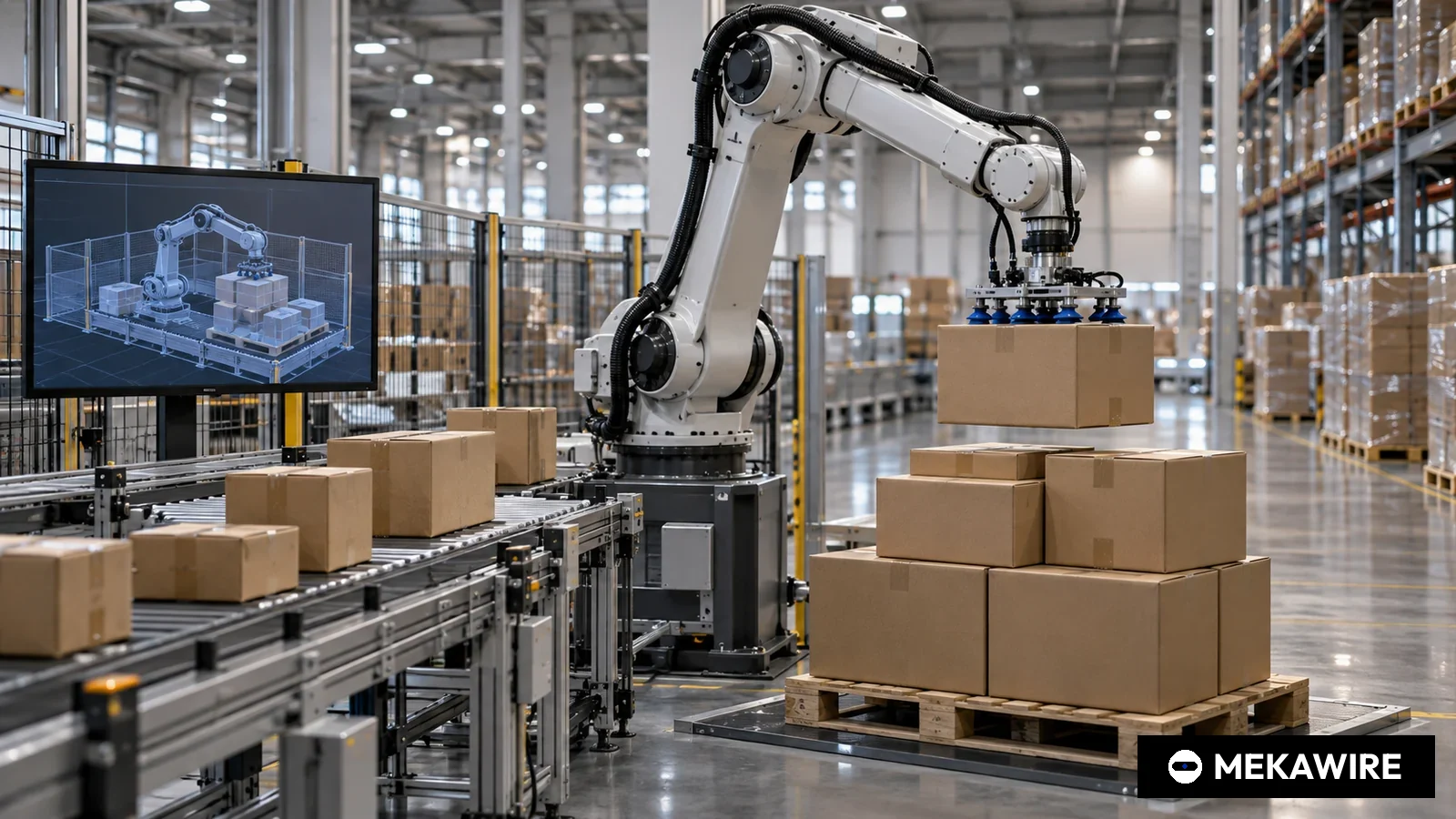
Tokyo-based Mujin said on 2 December 2025 it had raised ¥36.4 billion ($233 million) in the first close of a Series D round, combining $133 million of equity co-led by NTT Group and the Qatar Investment Authority with $100 million of loans from Japanese banks.
The company plans to use the money to turn MujinOS into a product business and to push harder into Europe and North America, with a second close planned for 2026.
Mujin, the Tokyo robot-control software company founded in 2011, said on 2 December 2025 that it had closed the first tranche of a Series D round worth ¥36.4 billion, or $233 million. NTT Group and the Qatar Investment Authority (QIA) co-led the equity portion, and the company said in a statement that existing backers had already signalled interest in a second close planned for 2026.
The round splits into two parts. According to Mujin's Japanese release, equity accounts for ¥20.9 billion and debt for ¥15.5 billion; the English release puts the same pieces at $133 million and $100 million. Mujin said the close brings its cumulative funding to ¥59.6 billion, or $411 million. It did not disclose a valuation, and neither NTT nor Mujin gave the size of NTT's individual stake.
Alongside NTT and QIA, Mitsubishi HC Capital Realty and Salesforce Ventures joined the equity tranche. The loans came through a syndicate of Japanese lenders that Mujin listed as including Aozora Bank, Mizuho Bank, Sumitomo Mitsui Trust Bank, the Bank of Yokohama and Shoko Chukin Bank, together with regional banks. Mujin said Pegasus Tech Ventures and Accenture, both existing investors, had indicated they intend to invest again in the second close.
NTT framed its participation as more than a financial bet. In a separate announcement dated 1 December 2025, NTT Corporation and NTT Docomo Business said they had signed a capital and business alliance with Mujin through a third-party share allotment. The two NTT companies said they would combine their communications, cloud and AI technology with Mujin's robot control, build joint solutions for logistics and manufacturing, offer joint consulting on operations and digital infrastructure such as networks, security and cloud, develop digital business process outsourcing services, and explore new businesses using generative AI and human-robot interaction research. NTT president Akira Shimada said the group would work with Mujin on AI and robotics using assets such as its IOWN optical network and computing platforms.
The product at the centre of the deal is MujinOS. Mujin describes it as a single intelligent control platform that ties together robotic mobility, picking, storage and warehouse execution software across robots from multiple manufacturers. The company says the system uses real-time digital twins, perception and motion planning so that customers can deploy robots without manual teaching or conventional robot programming. Its listed applications include order fulfilment, palletising, depalletising, bin picking, machine tending, truck unloading, a warehouse execution system and fleet management.
Mujin said it would spend the money on four things, namely widening the MujinOS product line, accelerating the rollout of its digital twin technology, deepening its push into Europe and North America, and hiring engineering talent worldwide. The English release adds plans for regional engineering, service and support teams and for networks of certified system integrators. Co-founder Issei Takino, the chief executive, said the company would use 14 years of industrial automation work to expand abroad through productisation and partnerships, while co-founder Rosen Diankov said the funding speeds Mujin's shift to a scalable, product-driven business with cloud services and real-time digital twins.
Mujin is headquartered in Chiyoda, Tokyo, runs its US headquarters in Suwanee, Georgia, and has offices in Europe and China. It says it serves retail, e-commerce, food and beverage, consumer packaged goods and third-party logistics customers. The company remains unlisted. Its earlier Series C round in September 2023 and an extension that December were announced without amounts that MEKAWIRE could verify.
The size of the round can be set against recent financings disclosed by warehouse automation peers in Europe and the United States. Exotec of France raised $335 million in a Series D in January 2022 at a $2 billion post-money valuation, according to its own release. Dexterity raised $140 million in equity and debt in October 2021, Locus Robotics $117 million in a Series F in November 2022, Nimble Robotics $106 million in a Series C in October 2024 and Dexory $100 million in a Series C in October 2025. Mujin's equity portion alone is smaller than Exotec's round, and the comparison favours Mujin only once the bank loans are counted.
- Mujin
- JP
- Series D first close (equity and debt)
- 233
- No data
- 2025-12-02
- Exotec
- FR
- Series D
- 335
- 2000
- 2022-01-17
- Dexterity
- US
- Series B (equity and debt)
- 140
- No data
- 2021-10-13
- Locus Robotics
- US
- Series F
- 117
- No data
- 2022-11-29
- Nimble Robotics
- US
- Series C
- 106
- No data
- 2024-10-23
- Dexory
- GB
- Series C
- 100
- No data
- 2025-10-14
Amounts as disclosed by each company; Mujin and Dexterity include debt. Post-money shown only where disclosed. Figures disclosed, not estimated.
As of Oct 1, 2026
The technical bet is that warehouses will buy one control layer rather than a collection of single-purpose cells. Conventional deployments rely on engineers teaching robots their positions, which turns each new pick, pallet pattern or truck load into a small integration project; Mujin says MujinOS removes that step. Mujin's pitch is that a digital twin of the site, updated from cameras and sensors, lets the software plan motion on the fly and coordinate different machines from one interface. If that holds at scale, the value shifts from the arm maker to whoever owns the orchestration software, which is why a telecom operator with network and cloud assets wants a seat at the table.
- Equity
- 20.9
- 133
- 57.1
- Debt
- 15.5
- 100
- 42.9
- Series D first close total
- 36.4
- 233
- 100
- Cumulative funding incl. this close
- 59.6
- 411
- No data
JPY figures from Mujin's Japanese release, USD from its English release. Share = tranche USD / 233. Cumulative includes this close. Figures disclosed, not estimated, except the calculated shares.
As of Oct 1, 2026
MEKAWIRE analysis
Mujin's Series D is a bet that the money in warehouse robotics will move from hardware to the control software that coordinates it, and NTT is buying a route into that layer for Japanese industry.
The evidence sits in the structure of the deal. The use of proceeds is weighted to product, cloud and integrator networks rather than factories, Mujin itself describes the goal as a transition to a product-driven business, and NTT's own announcement lists consulting, network, security, cloud and BPO services that would sell alongside MujinOS rather than robots. Bringing in a sovereign investor from Qatar and Salesforce's venture arm adds capital and distribution reach that a Japanese bank syndicate alone could not supply.
The strongest counter-argument is that 43% of the first close is debt. Loans must be serviced regardless of how quickly MujinOS revenue grows, and the absence of a disclosed valuation leaves outsiders unable to judge whether the equity was raised at a premium or a discount to the 2023 Series C. Mujin has also not disclosed revenue, installed base or customer counts in either release, so the shift to software margins remains a stated plan rather than a reported result.
Bull case. NTT's channels open doors at Japanese manufacturers and logistics operators that struggle to recruit warehouse staff, the second close in 2026 lands at a higher price with Accenture and Pegasus participating, and MujinOS becomes the default control layer that integrators in Europe and North America standardise on.
Bear case. Integration work in new markets proves as labour intensive as before, the loans constrain spending when growth lags, and well-funded rivals such as Exotec, Locus and the large Chinese warehouse robot makers sell complete systems that make a vendor-neutral control layer less necessary.
Signals to watch.
- Announcement of the Series D second close and its investor list, which Mujin said was planned for 2026.
- The first joint NTT and Mujin logistics or manufacturing offering under the 1 December 2025 alliance, during 2026.
- Hiring and integrator certifications in Europe and North America through the second half of 2026, the clearest test of the overseas push.
- ¥15.5 billion ($100 million) from Japanese banks
- Series D first close
- ¥36.4 billion ($233 million)
- ¥20.9 billion ($133 million)
- NTT Group (NTT Corporation, NTT Docomo Business) and Qatar Investment Authority
- 2 December 2025, 16:45 JST
- Second close planned for 2026
- Not disclosed
- ¥59.6 billion ($411 million)
- Mitsubishi HC Capital Realty, Salesforce Ventures
Why it matters
The deal is the clearest sign yet that Japan's largest corporate groups see robot orchestration software, rather than robot hardware, as the strategic asset in factory and warehouse automation. NTT, a telecom operator, is not buying arms or AMRs. It is buying a position in the control layer that decides how mixed fleets of machines move, which fits its pitch for IOWN optical networks and edge computing as the infrastructure of physical AI.
For Mujin the round changes the business model it can credibly pursue. The company's own wording about a transition to a product-driven business implies that engineered projects have so far shaped how it sells. Equity of $133 million gives it room to package MujinOS as a repeatable product and to build the integrator channels that make software scale without proportional headcount.
For the wider market, the round sets a reference point for non-Chinese warehouse automation funding at the end of 2025. It is larger than the most recent rounds disclosed by Locus, Nimble and Dexory, though smaller than Exotec's 2022 Series D on an equity basis.
Rival analysis
Mujin competes on two fronts. Against full-system vendors such as Exotec, AutoStore, Symbotic and the Chinese makers Geek+ and Hai Robotics, it argues that customers should not be locked into one hardware stack. Against AI-first picking companies such as Dexterity, Nimble, Covariant and Plus One Robotics, it argues that a site-wide digital twin beats point solutions for single tasks.
Its edge, by its own description, is control across robots from multiple manufacturers and 14 years of industrial automation work. Its weakness is that full-system vendors capture the whole budget and can bundle software for free, while AI-first rivals have raised money on the promise of learning-based manipulation that may reduce the value of classical motion planning over time.
The NTT alliance gives Mujin something few rivals have, a domestic telecom and IT services partner that can sell consulting, networks and BPO into the same customer. Whether that converts into deployments outside Japan is the open question.
Valuation context
Neither company disclosed a valuation or NTT's stake, so any valuation figure circulating for this round is unverified. What is known is the mix. Equity is 57.1% of the first close and debt 42.9% (calculated from the $133 million and $100 million figures in Mujin's English release). The yen and dollar figures in the two releases imply an exchange rate of roughly ¥156 per dollar.
Exotec's January 2022 Series D of $335 million came with a disclosed $2 billion post-money valuation, the only valuation among the peers in the comparison table. It should not be used to infer Mujin's valuation, since market conditions, revenue scale and Mujin's debt component differ.
The second close in 2026 is the event that will most likely reveal pricing, either through a disclosed valuation or through filings by listed participants such as Accenture.
Supply-chain implications
Mujin does not build robot arms. MujinOS sits above arms, mobile robots, storage systems and warehouse execution software from multiple manufacturers, which makes it a buyer of integration access rather than components. Its supply chain risk is therefore concentrated in partnerships with robot makers and in the perception hardware, cameras and computing, that its digital twin depends on.
NTT's involvement adds a network and cloud dimension. NTT says it will bring communications, cloud and AI technology, including IOWN and computing platforms, into the alliance. If robot control shifts partly to low-latency networks and remote compute, the bill of materials at each robot cell could shrink while recurring network and cloud spend rises.
The $100 million debt tranche from Aozora Bank, Mizuho Bank, Sumitomo Mitsui Trust Bank, the Bank of Yokohama, Shoko Chukin Bank and regional lenders also ties Japanese domestic finance more closely to the robotics software sector.
Signals to watch
The second close is the near-term signal. Mujin said it is planned for 2026 and that Pegasus Tech Ventures and Accenture have already indicated interest. As of 1 October 2026, Mujin's English newsroom listed no further financing announcement after the 2 December 2025 release.
The second signal is commercial output from the NTT alliance. The announcement lists joint logistics and manufacturing solutions, consulting, digital BPO and generative AI and HRI exploration. A named customer deployment combining NTT networks with MujinOS would show the alliance is more than a capital tie.
The third is overseas execution. Mujin's US headquarters is in Suwanee, Georgia, and it says it will build regional engineering, service and support teams and certified integrator networks in Europe and North America. Announced integrator partners or new regional offices during 2026 would be the evidence.
Analyst view
Thesis. Mujin has bought time and partners to convert a strong engineering franchise into a software product, and NTT's backing gives it a domestic distribution advantage that rivals lack. Confidence is medium.
The confidence is not high because the key commercial numbers are missing. Mujin disclosed no revenue, no installed base and no customer count, and nearly 43% of the first close is debt. The plan is credible on paper, but the evidence that MujinOS can be sold as a product without heavy custom engineering has not yet been published.
The confidence is not low because the investor mix is unusually strategic. A national telecom operator, a sovereign wealth fund, a leasing group, a software investor and five named banks rarely line up behind a company without diligence on its technology and pipeline, and the planned participation of Accenture points to a services channel abroad.
Questions you should be asking
What valuation did the Series D equity carry, and how does it compare with the September 2023 Series C?
What share of Mujin's revenue comes from MujinOS licences or subscriptions versus engineered projects, and how fast is that mix expected to shift?
What are the covenants and tenor on the $100 million of bank debt, and how do they constrain spending if overseas growth is slower than planned?
Which NTT businesses will resell or integrate MujinOS first, and will any of them run outside Japan?
Will the second close in 2026 include new strategic investors from Europe or North America, which would support the overseas expansion plan?