NEURA Robotics raises EUR 120 million Series B led by Lingotto as it reports a EUR 1 billion order book
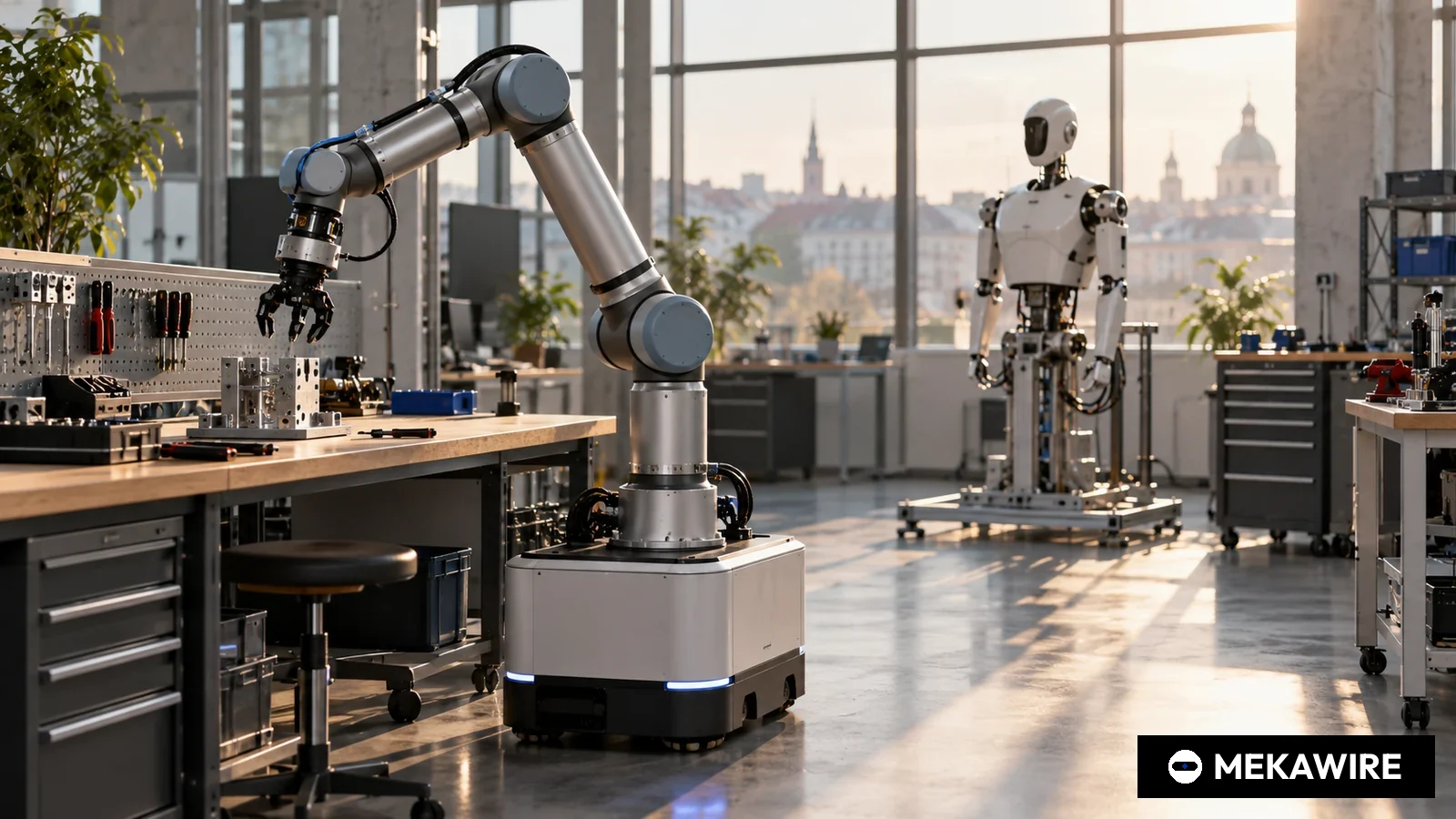
NEURA Robotics of Metzingen, Germany, said on 15 January 2025 it had raised EUR 120 million in a Series B round led by Lingotto Investment Management. The company said the money would fund research and development, new product launches and its Neuraverse software platform, and reported more than 300 staff, tenfold revenue growth in a year and a EUR 1 billion order book.
NEURA Robotics, the Metzingen-based developer of cognitive cobots and the 4NE1 humanoid, announced on 15 January 2025 that it had closed a EUR 120 million Series B financing round. The company said Lingotto Investment Management led the round, which preceded by 17 months a far larger Series C.
According to NEURA's release, the other participants were BlueCrest Capital Management, Volvo Cars Tech Fund, InterAlpen Partners, Vsquared Ventures, HV Capital, Delta Electronics, C4 Ventures, the Baden-Wuerttemberg state development bank L-Bank and founder David Reger, alongside unnamed others. NEURA did not disclose a valuation, the split between equity and other instruments, or the size of individual tickets. The amount was stated in euros only; MEKAWIRE has not converted it.
NEURA gave three operating figures to justify the raise. It said its headcount had doubled during the previous year to more than 300 people, that revenue had grown tenfold over the same period, and that its order book stood at EUR 1 billion. The company did not publish revenue in absolute terms, and it did not say how much of the order book was binding purchase orders as opposed to framework agreements or letters of intent.
On the use of proceeds, the release was brief. NEURA said the capital would pay for further research and development, support the launch of new products and build out Neuraverse, which it describes as an operating system for cognitive robotics combined with a marketplace for robot skills. The release did not allocate money to individual products. NEURA's product pages list the MAiRA cognitive cobot, the LARA and MiPA platforms, the MAV autonomous transport vehicle and the 4NE1 humanoid as the lines the company sells.
NEURA's current product pages give the clearest picture of what the money is building. MAiRA comes in three seven-axis versions, with payloads of 15 to 18 kg (S), 12 to 14 kg (M) and 9 to 11 kg (L) and reaches of 1,100 mm to 1,600 mm; NEURA says it is built in-house in Germany and certified to PL e and SIL 3 for touchless detection of people within three metres. The MAV range covers 500 kg and 1,500 kg payload versions running at 1.5 m/s, with ROS 2 navigation and VDA 5050 compatibility as options. The 4NE1 humanoid is listed at 180 cm and 80 kg with a walking speed of 5 km/h, and a smaller 4NE1 Mini was targeted for spring 2026.
The Series B followed two financings that NEURA disclosed in 2023. On 19 July 2023 the company announced what its German release called its second financing round, EUR 50 million (stated as USD 55 million in the English version), led by Lingotto, then described as owned by Exor N.V., together with Vsquared Ventures, Primepulse and HV Capital, with L-Bank and Kreissparkasse Reutlingen providing a bridge loan. On 10 October 2023 it added EUR 15 million from InterAlpen Partners, which NEURA said was its first US private equity investor. Lingotto therefore led or co-led both of NEURA's largest rounds before 2026.
- 2023-07-19
- 2nd round
- 50
- EUR
- Lingotto, Vsquared Ventures, Primepulse, HV Capital
- 400
- EUR
- 2023-10-10
- Follow-on
- 15
- EUR
- InterAlpen Partners
- No data
- No data
- 2025-01-15
- Series B
- 120
- EUR
- Lingotto Investment Management (lead)
- 1000
- EUR
- 2026-06-10
- Series C (up to)
- 1400
- USD
- Tether, Qualcomm, Amazon, NVIDIA, Bosch, Schaeffler, EIB and others (no lead named)
- 1000
- USD
From NEURA newsroom releases. July 2023 round stated as EUR 50 million in the German release and USD 55 million in the English one; order book EUR 400 million (German) and more than USD 450 million (English). June 2026 order book figure is 'more than' and includes deployment pipeline. Step-ups: round 120/50 = 2.4x; order book 1000/400 = 2.5x. Figures disclosed, not estimated.
As of Oct 3, 2026
The order book is the number that moved fastest. In July 2023 NEURA's German release cited an order volume of EUR 400 million; by January 2025 the company put it at EUR 1 billion, 2.5 times the earlier figure on its own reporting. The July 2023 release also noted that Kawasaki Heavy Industries had shown a product range marketed as powered by NEURA, which helps explain how a five-year-old company could claim orders of that size.
In a global comparison the round was mid-sized. Figure AI disclosed a USD 675 million Series B in February 2024, and Apptronik announced a USD 350 million Series A four weeks after NEURA's round, both in US dollars. In Europe, Agile Robots of Munich had raised a USD 220 million Series C in 2021, and London's Humanoid would later raise USD 152 million in July 2026. NEURA's EUR 120 million placed it ahead of most European peers but well behind the American humanoid leaders.
- NEURA Robotics
- DE
- 2019
- Series B
- 120
- EUR
- 2025-01-15
- Figure AI
- US
- No data
- Series B
- 675
- USD
- 2024-02-29
- 1X Technologies
- US
- 2014
- Series B
- 100
- USD
- 2024-01-13
- Apptronik
- US
- 2016
- Series A
- 350
- USD
- 2025-02-13
- Agile Robots
- DE
- 2018
- Series C
- 220
- USD
- 2021-09-10
- Humanoid
- GB
- No data
- Series A
- 152
- USD
- 2026-07-21
Amounts as disclosed in original currency, in millions; no FX conversion. Peer figures from company releases; founding year shown as — where not verified. Figures disclosed, not estimated.
As of Oct 3, 2026
For European industry the significance was the investor mix. A state development bank, a Swedish carmaker's venture fund, a Taiwanese electronics supplier and an Exor-linked asset manager all backed a Swabian hardware company that makes its own arms, sensors and software. NEURA's pitch, repeated in the release, is that it is the only German company building humanoids and the first to ship a commercially available cognitive cobot. Both claims are NEURA's own and have not been independently tested.
The open questions in January 2025 were capital intensity and conversion. A EUR 1 billion order book against a company of 300 people implies a delivery ramp that requires factories, suppliers and service staff that EUR 120 million alone cannot fund. NEURA addressed that gap on 10 June 2026, when it announced a Series C of up to USD 1.4 billion with Tether, Qualcomm Technologies, Amazon, NVIDIA, Bosch, Schaeffler, the European Investment Bank, Lingotto Horizon and InterAlpen Partners among the investors; that release named no lead and cited an order book and deployment pipeline of more than USD 1 billion.
MEKAWIRE analysis
The Series B mattered less for its size than for proving that a European, vertically integrated robot maker could hold a single lead investor across rounds and then trade up to strategic capital.
The evidence is in NEURA's own announcements. Lingotto led the 2023 round, led the 2025 Series B and appears again, as Lingotto Horizon, in the 2026 Series C list. HV Capital, Vsquared and InterAlpen Partners also stayed on. Between the second round and the Series B, the round size rose 2.4 times (EUR 120 million divided by EUR 50 million) and the stated order book 2.5 times, so capital raised and claimed demand grew at almost the same pace.
The strongest counter-argument is that every demand figure comes from the company and none has been audited in public. NEURA has never broken down its order book by customer, product or binding status, and the Series C release folded orders and pipeline into a single number in a different currency. Investors were, in effect, funding a narrative of demand.
Bull case. If MAiRA and MAV revenue funds the humanoid programme, NEURA has a rare industrial cash base under its 4NE1 ambitions, and the Series B bought the time needed to reach the strategic investors that joined in 2026. A European champion with Bosch and Schaeffler on its register has supply-chain access that US rivals must build.
Bear case. Building cobots, mobile robots, humanoids and a software marketplace at once spreads engineering across too many fronts. If the order book converts slowly, NEURA will have raised on promises it cannot deliver at the cadence of Figure or Apptronik, and later rounds will price in that gap.
Signals to watch:
- NEURA's first public statement of delivered units or revenue in absolute terms, which it has not yet given.
- Shipment of the 4NE1 Mini, which NEURA targeted for spring 2026, and any customer named for the full-size 4NE1.
- Closing of the remaining tranches of the up to USD 1.4 billion Series C announced on 10 June 2026.
- Series B
- EUR 120 million
- 15 January 2025
- More than 300, doubled in one year (company)
- Not disclosed
- EUR 1 billion (company)
- R&D, new product launches, Neuraverse platform
- Lingotto Investment Management
- 10x in one year (company, absolute figure not disclosed)
- BlueCrest Capital Management, Volvo Cars Tech Fund, InterAlpen Partners, Vsquared Ventures, HV Capital, Delta Electronics, C4 Ventures, L-Bank, David Reger
Why it matters
NEURA's Series B was a nine-figure euro round for a German humanoid developer, and it came from a mix of financial, industrial and public money. That combination matters because humanoid programmes need patient capital and access to suppliers at the same time. NEURA's register included Volvo Cars Tech Fund, Delta Electronics and L-Bank, each of which can also open doors to customers, components or regional support.
The round also fixed the company's story for the next 18 months. By publishing headcount, revenue growth and order book together, NEURA set the yardsticks it would be judged by in the Series C, and it kept using the order book as its headline metric in June 2026.
Rival analysis
Against US humanoid peers NEURA was undercapitalised. Figure AI's USD 675 million Series B in February 2024 and Apptronik's USD 350 million Series A in February 2025 each exceeded NEURA's round several times over in nominal terms, although the currencies differ and MEKAWIRE has not converted them. 1X Technologies raised USD 100 million in its January 2024 Series B, closer to NEURA's scale.
NEURA's differentiation is breadth. Figure, Apptronik and 1X concentrate on humanoids; NEURA sells a seven-axis cobot, an autonomous mobile robot range and a humanoid on a shared software layer. In Europe the closest comparable is Agile Robots, which also builds arms and sensing in-house and raised a USD 220 million Series C in 2021.
Valuation context
NEURA disclosed no valuation for the Series B, and MEKAWIRE has not found one on any primary page, so no multiple can be calculated. The only verifiable ratios are internal: the round was 2.4 times the EUR 50 million second round of July 2023, and the stated order book was 2.5 times the EUR 400 million cited then.
Those ratios suggest investors priced the round on demand growth rather than on revenue, which NEURA has never stated in absolute terms. Any valuation figures circulating for this round come from press reports and should be treated as unverified.
Supply-chain implications
NEURA says MAiRA is manufactured in-house in Germany, and its July 2023 release tied that round to building production infrastructure in Baden-Wuerttemberg. Taiwan's Delta Electronics, a power electronics and automation supplier, joined the Series B; its participation gives NEURA a strategic link to a large component supplier, although no supply agreement was announced.
The Kawasaki Heavy Industries relationship, cited in 2023 as a product line powered by NEURA, points to a licensing or technology supply channel that lets NEURA reach volume without building every robot itself. The 2026 Series C added Schaeffler and Bosch, two of the most important European suppliers of bearings, actuators and drive technology.
Signals to watch
First, whether NEURA publishes absolute revenue or unit deliveries; the company has given growth rates and order book only. Second, customer names for 4NE1, which would show whether the humanoid is moving from reservations to paid deployments. Third, the pace at which the up to USD 1.4 billion Series C is drawn, since the release left the instrument mix and timing open.
Also watch Neuraverse adoption. If third-party developers publish skills on the marketplace, NEURA's software layer begins to work as a platform rather than as a feature of its own robots.
Analyst view
Thesis: the Series B was a bridge round that bought NEURA credibility and time, and its value lay in retaining Lingotto as anchor while widening the register toward strategic investors. Confidence: medium.
Reasons for medium rather than high: the round's facts are well documented on NEURA's release, but every operating number is self-reported and the order book has never been decomposed. The June 2026 Series C supports the thesis that strategic capital followed, but its size is stated as an upper bound and its lead is not named.
Questions you should be asking
How much of the EUR 1 billion order book was binding, and from how many customers? What share of the Series B went to 4NE1 versus MAiRA and MAV? Did any investor receive commercial rights alongside equity, in particular Volvo Cars Tech Fund and Delta Electronics?
What was NEURA's absolute revenue in 2024, to which the tenfold growth claim applies? And how does the Kawasaki product line powered by NEURA contribute to revenue?