Who runs Boston Dynamics? Rohit Prasad, the former Amazon Alexa and Nova chief, and why Hyundai picked an AI executive
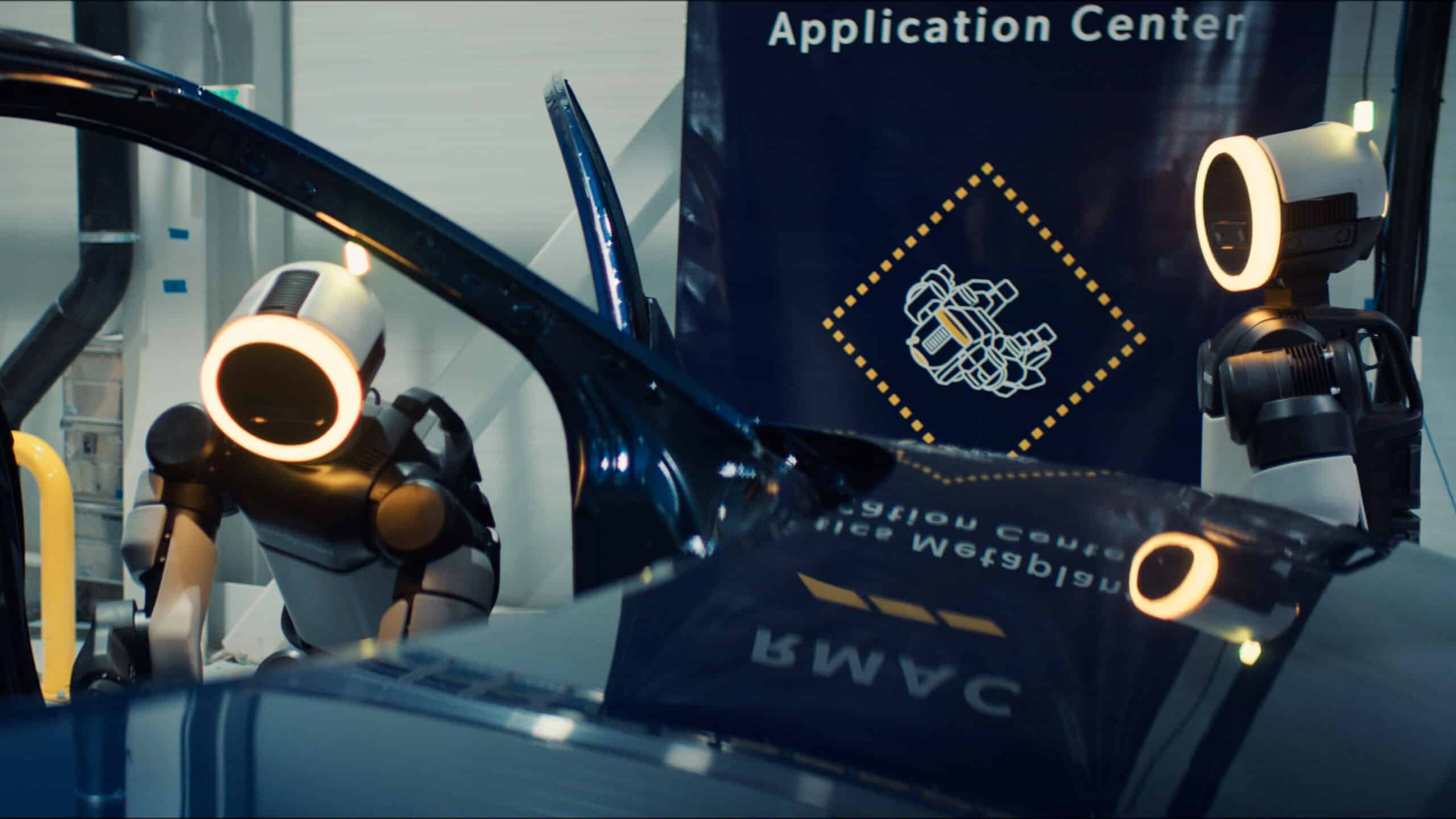
Boston Dynamics' chief executive is Rohit Prasad, who took the job on Oct 7, 2026 after 12 years at Amazon, where he led Alexa and the Nova foundation models. He reports to a board chaired by Hyundai Motor Group vice chair Jaehoon Chang, and inherits three robots, Spot, Stretch and the Atlas humanoid, plus Hyundai's plan for 25,000 Atlas units.
MEKAWIRE explains who he is, what he controls and what Hyundai is betting on.
Boston Dynamics is now run by Rohit Prasad, a machine-learning executive who has never led a robotics company. The Waltham, Massachusetts firm named him chief executive on Oct 6, effective Oct 7, 2026, ending a stretch in which Amanda McMaster held the job on an interim basis; she signed the company's June 24 expansion announcement as interim CEO.
The appointment answers the question readers keep asking us, who is in charge at Boston Dynamics, but it also raises a bigger one. Hyundai Motor Group, which took control of the company in 2021, chose a leader known for building Alexa and Amazon's Nova models rather than a manufacturing or robotics operator. This explainer sets out his record, what he inherits and what the choice says about where Hyundai thinks the value in humanoids will sit.
Prasad spent nearly 26 years in machine learning, half of them building Alexa
According to Boston Dynamics, Prasad was Senior Vice President and Head Scientist for Alexa and Artificial General Intelligence at Amazon, where he worked for 12 years. He helped build Alexa from its early days into a consumer AI service the company says is used in hundreds of millions of households, and more recently led development of the Amazon Nova foundation model family sold to enterprises. Before Amazon he spent nearly 14 years at Raytheon BBN Technologies running machine-learning research for US government and commercial clients. He has lived in the Boston area for more than 25 years, and the company said he is expected to join its board, subject to approval.
Hyundai's framing is explicit. Jaehoon Chang, vice chair of Hyundai Motor Group and chair of the Boston Dynamics board, said the combination of Boston Dynamics' robotics, Prasad's record of turning AI into products at global scale and Hyundai's manufacturing and logistics base gives the company its foundation for physical AI. The release uses the phrase "physical AI" nine times; the word humanoid appears once, in the boilerplate describing Atlas as a platform still in development. That choice of vocabulary is the first clue to the strategy.
He inherits three robots and a captive customer
Boston Dynamics sells two commercial products. Spot, the quadruped, does industrial inspection; Stretch moves boxes in warehouses and retail logistics. The electric Atlas humanoid is the third, described in the October release as a platform still in development. Hyundai has given Atlas a ready customer. At CES in January the company showed the production Atlas, said all 2026 units were committed to Hyundai and Google DeepMind, and Hyundai set a goal of a production system able to build 30,000 robots a year by 2028. In September Boston Dynamics opened the Robotics Metaplant Application Center at Hyundai's Georgia plant, where Atlas is training on parts sequencing, and said Hyundai plans to deploy 25,000 Atlas units.
- 2026-01-05
- Production Atlas shown at CES; 2026 output committed to Hyundai and Google DeepMind
- Hyundai target 30,000 robots a year by 2028
- Boston Dynamics, Hyundai
- 2026-06-24
- Waltham robotics and AI centre announced (interim CEO Amanda McMaster)
- $100m, 1,250 jobs by 2033, $25m state award
- Boston Dynamics
- 2026-09
- Robotics Metaplant Application Center opens in Georgia
- 25,000 Atlas units planned by Hyundai
- Boston Dynamics
- 2026-10-06
- Rohit Prasad named CEO, effective Oct 7
- Board seat subject to approval
- Boston Dynamics
Primary-source figures only. Derived: $80,000 planned investment per promised job ($100m / 1,250); state award = 25% of project cost ($25m / $100m).
As of Oct 16, 2026
The money behind the plan is also visible. In June Boston Dynamics said it would invest $100 million to turn a 323,000 square foot building in Waltham into a robotics and AI centre, creating 1,250 jobs by 2033, with a $25 million incentive from the Massachusetts government and a phased move from mid-2027. By MEKAWIRE's arithmetic that is $80,000 of planned investment per promised job, and the state award covers 25% of the project (method: $100m divided by 1,250; $25m divided by $100m).
MEKAWIRE analysis: Hyundai is hiring for the model layer, not the machine
Hyundai has concluded that Boston Dynamics' scarce asset is no longer mechanical skill but the ability to turn foundation models into a product customers pay for, and it hired the person whose career was exactly that.
The evidence lines up. Atlas's cognition is already coming from outside: Google DeepMind's Gemini Robotics models were named as the brain of the production Atlas in January, and Boston Dynamics' Spot inspection software now runs on Gemini Robotics too. Hardware supply is being sourced from the group, with Hyundai Mobis named as actuator supplier. What is missing in the middle is an owner of the AI product, someone who can decide which models to license, which to build and how to package them for factories. Prasad ran both sides of that question at Amazon, building Alexa on in-house models and then selling Nova to enterprises.
The strongest counter-argument is that Boston Dynamics' bottleneck in the next three years is manufacturing and field reliability, not AI strategy. Hyundai's own timeline has Atlas sequencing parts from 2028 and moving into assembly only by 2030, and a 30,000-unit annual capacity target is an industrial ramp that rivals are attempting with operations-heavy leadership. Figure, for comparison, put its F.03 on BMW's line after building its own BotQ factory. A consumer-AI chief may not be the natural owner of that problem.
- Boston Dynamics
- Owned by Hyundai Motor Group since 2021; no disclosed outside round
- n/a
- n/a
- n/a
- Figure AI
- Series C at $39bn post-money
- 2025-09-16
- more than 1bn
- 1.745bn
- Apptronik
- Series A extension
- 2026-02-11
- 520m
- 923m
- Mind Robotics
- Series A-1
- 2026-05-13
- 400m
- 900m
- Agility Robotics
- SPAC merger agreement (pending)
- 2026-06-24
- n/a
- 366.9m
- 1X Technologies
- Series B
- 2024-01-13
- 100m
- 123.5m
MEKAWIRE database, disclosed figures only, not estimates.
As of Oct 16, 2026
The peer table shows the other asymmetry. Boston Dynamics has no disclosed outside financing since Hyundai took control, while US rivals have raised from the market at a fast pace: Figure at a $39 billion post-money valuation, Apptronik with a $520 million extension, Mind Robotics with $900 million verified across two rounds this year. Boston Dynamics competes for the same AI researchers without a public price on its equity, which makes a leader with deep recruiting reach in Boston more valuable than usual. The company itself made that argument in the release.
Bull case, bear case and what would change our view
Bull case: Prasad turns Boston Dynamics into the AI integrator for Hyundai's factories, Atlas meets the 2028 sequencing date in Georgia and the group's captive demand gives it a volume base no venture-funded rival can match. Bear case: the company becomes a software organisation sitting on top of models it does not control, Atlas slips past 2028 and the ramp to 30,000 units a year stays a target.
We would change our view if Boston Dynamics announced its own robot foundation model rather than deeper reliance on partners, or if Hyundai named a separate operations chief to run manufacturing, which would show the CEO role is narrower than the release suggests.
Three dated signals to watch: Prasad's board seat, which the company said is subject to approval; the phased move into the Waltham centre from mid-2027; and Atlas parts sequencing at Hyundai Motor Group Metaplant America from 2028. The open question is which of Spot, Stretch and Atlas gets the first product decision of the new chief executive.
- Rohit Prasad, appointed Oct 6, 2026, effective Oct 7, 2026
- Chaired by Hyundai Motor Group vice chair Jaehoon Chang; Prasad expected to join subject to approval
- Spot (inspection), Stretch (box moving), Atlas (electric humanoid in development)
- 25,000 Atlas units planned; 30,000 robots a year production capacity targeted by 2028
- SVP and Head Scientist, Alexa and AGI at Amazon (12 years); led Amazon Nova foundation models
- Nearly 14 years of machine-learning research at Raytheon BBN Technologies
- $100 million, 323,000 sq ft, 1,250 jobs by 2033, $25 million state incentive
- Amanda McMaster (named interim CEO in the June 24, 2026 release)
Why it matters
Boston Dynamics is the best-known robotics brand in the world and the humanoid supplier to the third-largest carmaker group. Who runs it decides whether Hyundai's 25,000-unit Atlas plan is led as a manufacturing programme or as an AI product.
The choice also sets a template. If an AI-platform executive can run a hardware robotics company, rivals from Figure to Korean groups will look for the same profile.
Rival analysis
Figure combines its own Helix models with its own BotQ factory and an outside customer in BMW; Boston Dynamics relies on Google DeepMind for models and on Hyundai for demand and actuators. Apptronik and Agility sit between, with partner models and contract manufacturing.
Tesla is the vertically integrated extreme. Prasad's background points Boston Dynamics toward the integrator model, which is cheaper in capital but leaves margin with model providers.
Valuation context
There is no market price for Boston Dynamics equity and no disclosed outside round since 2021, so comparisons rest on peers: Figure at $39 billion post-money, Apptronik with $923 million verified, Mind Robotics with $900 million.
We make no estimate of Boston Dynamics' value. The practical point is that it competes for talent against companies whose employees hold liquid or rapidly repriced equity.
Supply-chain implications
Actuators come from Hyundai Mobis, cognition from Google DeepMind's Gemini Robotics, the training ground from Hyundai Motor Group Metaplant America in Georgia, and research, training and future manufacturing from the Waltham site from mid-2027.
The exposure is concentration: the key customer, the key component supplier and the owner are the same group, while the key model supplier is an outside AI company.
Signals to watch
Prasad's board appointment (pending approval); the phased Waltham move from mid-2027; Atlas parts sequencing in Georgia from 2028 and assembly by 2030; the 30,000-unit annual capacity target for 2028.
Also watch for any Boston Dynamics-branded foundation model or new model partnership, which would show how Prasad splits build versus license.
Analyst view
Thesis: Hyundai hired for the model layer because it sees that layer as Boston Dynamics' bottleneck. Confidence: medium. The appointment release and the reliance on Gemini support it; the long manufacturing ramp and the absence of a named operations chief cut against it.
We would raise confidence if the first major announcements under Prasad concern models, data and deployment software rather than hardware.
Questions you should be asking
Will Boston Dynamics build its own robot foundation model or stay with Google DeepMind's Gemini Robotics?
Who owns the Atlas manufacturing ramp toward 30,000 units a year, and will a separate operations leader be named?
Does the 25,000-unit Hyundai plan carry firm purchase commitments and a timetable beyond the 2028 sequencing start?