NIOSH opens humanoid-robot workplace safety inquiry; comments due Feb 22, 2027
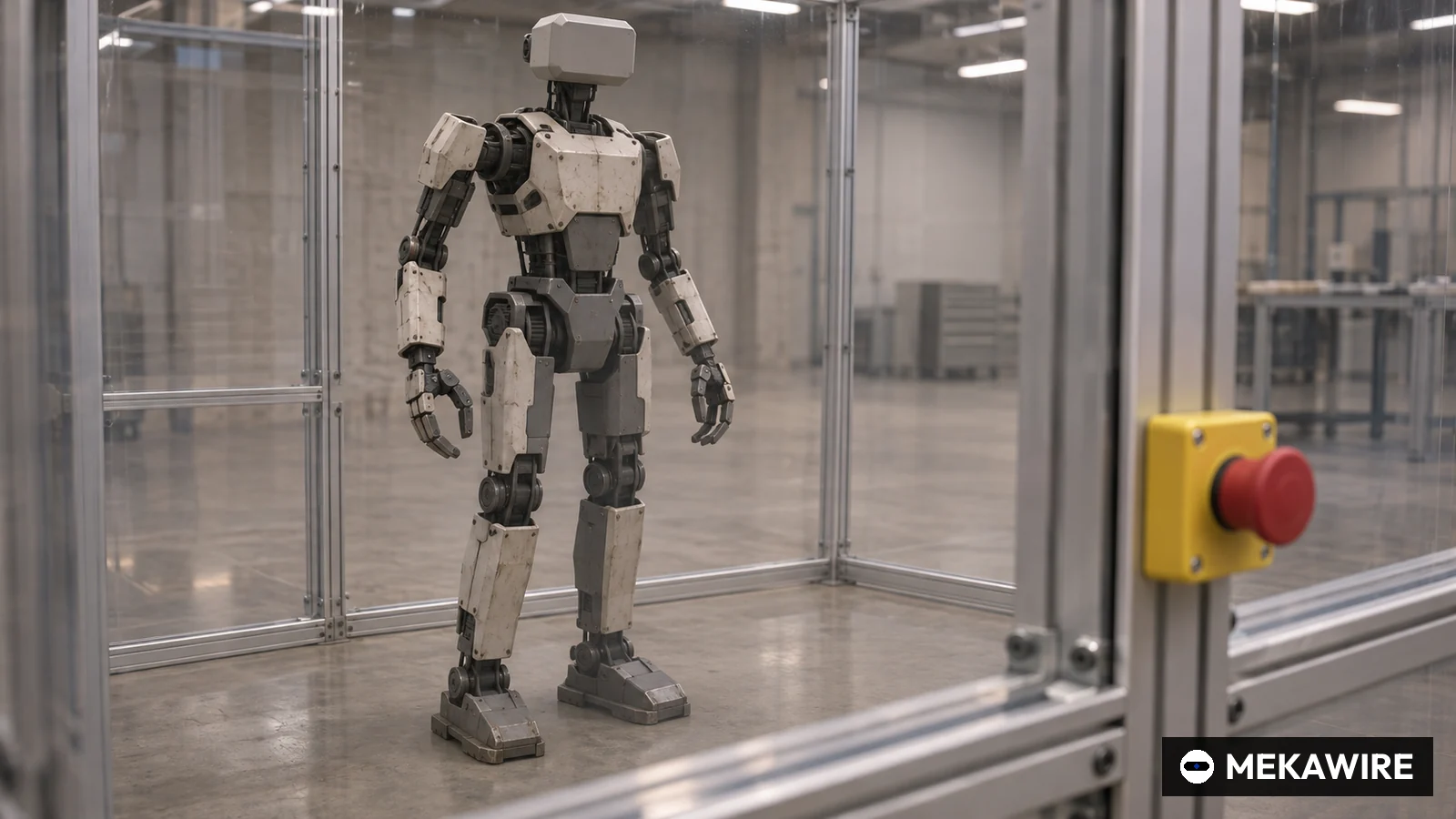
The US National Institute for Occupational Safety and Health (NIOSH) asked for public input on the research priorities and prevention needs raised by humanoid robots in workplaces, in a request for information published in the Federal Register on Nov 23 (docket CDC-2026-1882).
Its Center for Occupational Robotics Research poses eight questions, from which tasks humanoids could do to which design features and safety controls should come first. Comments are due by Feb 22, 2027. NIOSH says the request proposes no new regulations.
The US government's workplace-safety research agency has opened a formal inquiry dedicated to humanoid robots. The National Institute for Occupational Safety and Health (NIOSH), part of the CDC, said in a request for information published in the Federal Register on Nov 23 that it wants evidence on research priorities and prevention needs for humanoid robots at work. Comments are due by Feb 22, 2027, under docket CDC-2026-1882, a 91-day window (MEKAWIRE calc.).
The notice is careful about what it is not: it is for information gathering only and does not propose new regulations, requirements or policies, NIOSH said. It comes from the agency's Center for Occupational Robotics Research (CORR), which NIOSH set up in 2017 and whose work so far covers industrial, collaborative and mobile robots, exoskeletons, drones and robot-related injury claims.
Why NIOSH says humanoids are different
NIOSH writes that humanoids may combine bipedal or other human-like mobility with manipulation, perception, remote operation, autonomous functions and software that can be updated, and that these traits may raise questions not fully answered by experience with fixed industrial robots. It asks eight questions:
- 1
- What tasks could humanoids perform, and how do their risks and benefits differ from other robots?
- 2
- How might they affect workers' awareness, trust, workload, training and safety behaviour?
- 3
- Which hazards come first, and what injury, near-miss or exposure data would help?
- 4
- What tests or measures are needed in realistic work conditions?
- 5
- What helps or hinders organisations in keeping safety practices effective?
- 6
- How could sensors or wearables support worker safety around humanoids?
- 7
- Which design features and safety controls should be prioritised?
- 8
- What research, standards or partnerships should NIOSH prioritise?
Source: Federal Register notice 2026-23799, Nov 23, 2026. Wording shortened by MEKAWIRE.
As of Nov 23, 2026
The agency says it wants evidence on both potential worker-safety benefits and hazards. It also points to its sensor centre (CDRST) as relevant to robot-mounted sensors, worker-worn sensors and alarm performance.
Where this sits in Washington's robot agenda
- July 28, 2026
- FCC
- Foreign-produced advanced robotic devices added to the Covered List
- Nov 2, 2026
- White House (Federal Register)
- Proclamation adjusting imports of robotics and industrial machinery (Section 232)
- Nov 18, 2026
- FCC
- Robot Conditional Approvals reach 17, first quadrupeds
- Nov 23, 2026
- NIOSH (CDC)
- Request for information on humanoid robots at work, comments to Feb 22, 2027
Dates of publication or release; compiled by MEKAWIRE from the FCC and the Federal Register.
As of Nov 23, 2026
An earlier NIOSH notice, "Occupational Robotics Research Prioritization", appeared in the Federal Register on May 14, 2018, and its 2019 notices on mining automation research also covered robotics. On standards, MEKAWIRE's robot safety standards explainer covers ISO 10218 and the draft ISO 25785-1 for dynamically stable industrial mobile robots, a class that includes humanoids.
MEKAWIRE analysis
NIOSH is gathering evidence rather than writing rules, and the comment period gives humanoid makers a chance to inform what US worker-safety research will measure.
The questions on tests in realistic conditions (question 4) and on which design features to prioritise (question 7) are the ones that could later feed standards and employer guidance. The counter-argument is that an information request carries no regulatory force, and OSHA, not NIOSH, sets workplace rules. Bull case: makers and early users file deployment data, and US research lines up with the ISO work. Bear case: few submissions arrive, and guidance later rests on thin evidence. Signals to watch: the public comment file on regulations.gov, any NIOSH humanoid research announcement in 2027, and whether OSHA references the docket. The Department of War Conditional Approvals the FCC announced on Nov 18, which make certain foreign-produced robot models eligible for FCC equipment authorization, show the other front of US robot policy.
- CDC-2026-1882 (NIOSH-366)
- 8
- 2017
- 91 days (MEKAWIRE calc.)
- Feb 22, 2027
- none proposed (information only)
Why it matters
NIOSH is asking which jobs humanoids could perform and which design features and safety controls should get research priority. For employers planning pilots, the inquiry flags two decisions they can document now: which tasks and conditions the pilot covers, and what evidence supports the controls in place.
Rival analysis
The notice names no manufacturers and provides no comparative safety or performance data. For a buyer comparing vendors for the same task, a useful test is whether each can show that its controls work under the conditions the buyer expects on site.
Valuation context
The supplied material contains no public market capitalization, company-disclosed valuation or third-party valuation estimate. The inquiry provides no quantified compliance cost or deployment impact to use in a valuation model.
Related papers
No research papers or study results were supplied. NIOSH's 2018 occupational robotics and 2019 mining automation notices provide context for earlier research prioritization. ISO/CD 25785-1 is a draft on safety requirements for industrial mobile robots with actively controlled stability.
Supply-chain implications
The inquiry names no suppliers, components or sourcing requirements. If follow-up research identifies controls that require hardware changes, integrators would need to determine which changes their suppliers must support and which can be made at the worksite.
Signals to watch
Watch docket CDC-2026-1882 through the Feb 22, 2027 comment deadline for submissions that pair specific workplace tasks with documented hazards or tested controls. After the deadline, look for any NIOSH research agenda that identifies which tasks and controls warrant testing first.
Analyst view
The request proposes no new regulation, so the comment deadline creates no new compliance obligation. For investors assessing rollout timelines, a more useful diligence question is whether management has defined the safety evidence it needs before expanding a pilot to additional tasks or sites.
Questions you should be asking
Which tasks are employers prepared to test, and under what operating conditions? What evidence shows that the proposed controls work during those tasks and when conditions change? Who owns the decision to pause or expand a deployment if the evidence is incomplete?