RobotEra has 45 humanoid robots in parcel induction tests at China Post Hangzhou
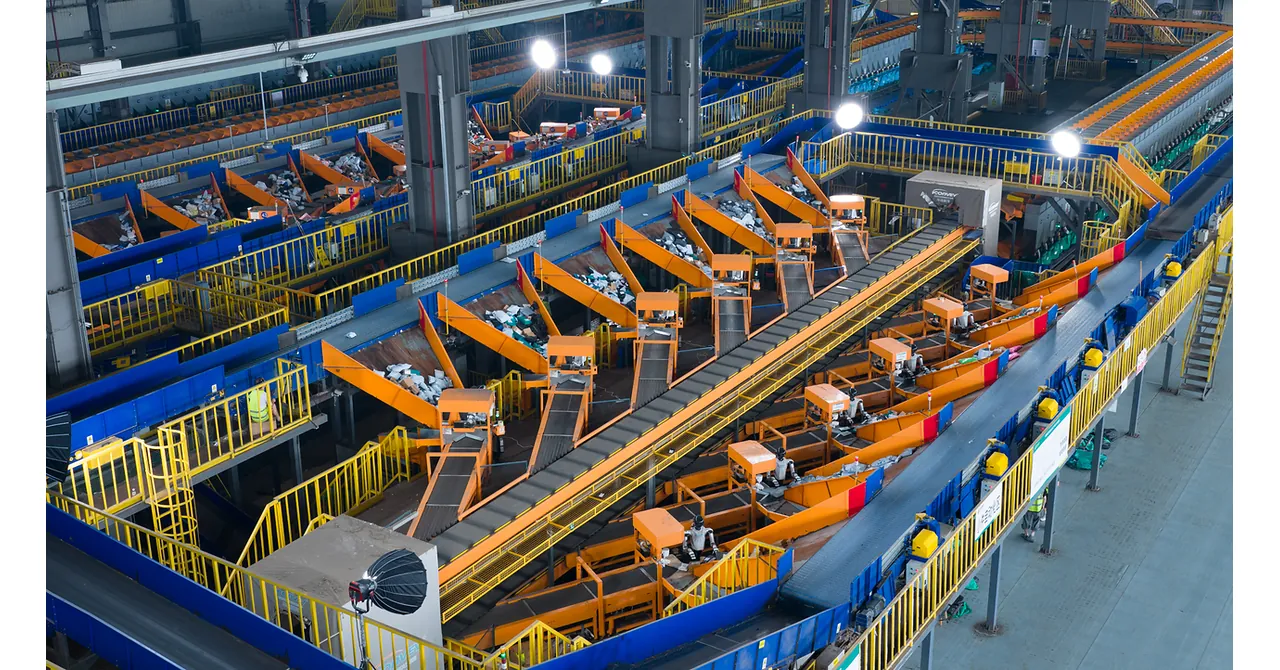
RobotEra said in an English release on Nov 26 that 45 of its humanoid robots work in parcel induction tests at China Post's Hangzhou Postal District Center, with throughput rising from 500 to 600 parcels an hour to about 1,200 in specific test periods and accuracy above 90%.
A Chinese-language RobotEra announcement dates the deployment to early September and puts the current rate above 1,500 an hour.
RobotEra (Beijing Xingdongjiyuan Technology) said in a release distributed on Nov 26 that 45 of its humanoid robots have been deployed at China Post's Hangzhou Postal District Center. China Post launched testing of the robots for parcel induction there in April 2026, and the company calls it the largest robot test deployment in comparable postal operations in China.
What the robots do on the line
According to RobotEra, the robots pick parcels, turn them to the right orientation, spot and reject irregularly shaped items, place parcels onto induction platforms and deal with operational exceptions. After several rounds of optimisation, induction throughput rose from 500 to 600 parcels an hour in the first test phase to about 1,200 parcels an hour during specific test periods, the company said. Operational accuracy is above 90%. The release says China Post's Hangzhou branch plans to add more automated equipment, including intelligent sorting and security inspection systems.
Two accounts of the same 45 robots
RobotEra's Chinese-language announcement, as carried by the industry site Aibang Robotics, gives a different timeline for the same site. It names three parties, China Post's Hangzhou branch, RobotEra and a Shenzhen company, 我能具身 (Woneng Embodied), and says the 45 robots are RobotEra M7 units handling small-parcel induction. In that version the system was deployed for testing in early September with induction at 1,200 parcels an hour, and the rate now exceeds 1,500. Guangming Online, reporting the same project, described 1,200 parcels an hour as the per-robot design rate and said deployment and testing were complete and the system in operation by the end of August. The English release dates testing to April and gives 500 to 600 parcels an hour at first and about 1,200 in specific test periods. None of the three accounts explains the difference in dates, and none says how the actual on-site rate is measured.
A third RobotEra release, of Nov 17, covered China Post Group's Guangdong branch: robots at 11 postal hubs in 8 cities, from a pilot at the Guangzhou Postal District Center that began in March, with an average induction rate above 1,500 parcels an hour and no robot count or accuracy figure.
- Start
- Testing launched April 2026
- Deployed for testing in early September
- Pilot from March 2026, Guangzhou
- Robots
- 45 humanoid robots
- 45 RobotEra M7 robots, small-parcel induction
- 11 hubs in 8 cities; count not given
- Throughput
- 500 to 600 parcels/h at first; about 1,200/h in specific test periods
- 1,200/h at deployment for testing; now above 1,500/h
- Average above 1,500 parcels/h
- Accuracy
- Above 90%
- Not given
- Not given
Figures are RobotEra's own; the Chinese announcement is as carried by Aibang Robotics. Within the English release's test periods the rate rose about 2.0 to 2.4 times (MEKAWIRE calc., 1,200 divided by 600 and by 500). Guangming Online separately reports 1,200/h as the per-robot design rate and above 1,500/h as actual on-site capacity, and says deployment and testing were complete and the fleet in operation by the end of August. None of the accounts says how the actual on-site rate is measured.
As of Nov 28, 2026
MEKAWIRE analysis
The number that matters is the accuracy above 90%, not the 1,200 parcels: it is a figure neither the Chinese announcement nor the Guangdong release gives, and it says how often the robots get the job right.
By MEKAWIRE's calculation the English release implies about 2.0 to 2.4 times the initial rate within its test periods; RobotEra's Chinese announcement reports 1,200 parcels an hour at deployment without stating the measurement basis, while Guangming Online describes 1,200 as the per-robot design rate. The accuracy figure cuts the other way: at an induction station, a share of parcels that the release does not quantify still needs handling by people or a fallback process, and the release does not say how exceptions are counted. The counter-argument is that a 45-robot fleet at one centre gives a far larger operating base than a single-robot demonstration.
RobotEra has funded this push with large rounds. The company announced a RMB 1bn strategic round in March that it said took its valuation past RMB 10bn (MEKAWIRE coverage).
What to watch
Whether China Post moves Hangzhou from testing to regular operation, whether RobotEra publishes a robot count for Guangdong, and whether either side gives a per-robot rate and an uptime figure. Those numbers, together with what the robots cost to buy and run, are what a cost-per-parcel comparison with a conventional induction line would need. The dates also need reconciling: the English release dates testing from April, the Chinese announcement dates deployment for testing to early September, and Guangming Online reported the fleet in operation by the end of August.
- April 2026 testing (English) vs early September deployment (Chinese)
- 45 humanoids at China Post Hangzhou
- Above 90%
- 11 hubs in 8 cities, average above 1,500/h (Nov 17 release)
- Above 1,500/h on site (Chinese announcement); about 1,200/h in test periods (English release)
- About 2.0 to 2.4x within English-release test periods (MEKAWIRE calc.)