Ant Group's Robbyant releases LingBot-Navi under Apache-2.0, Map 2.0 base non-commercial
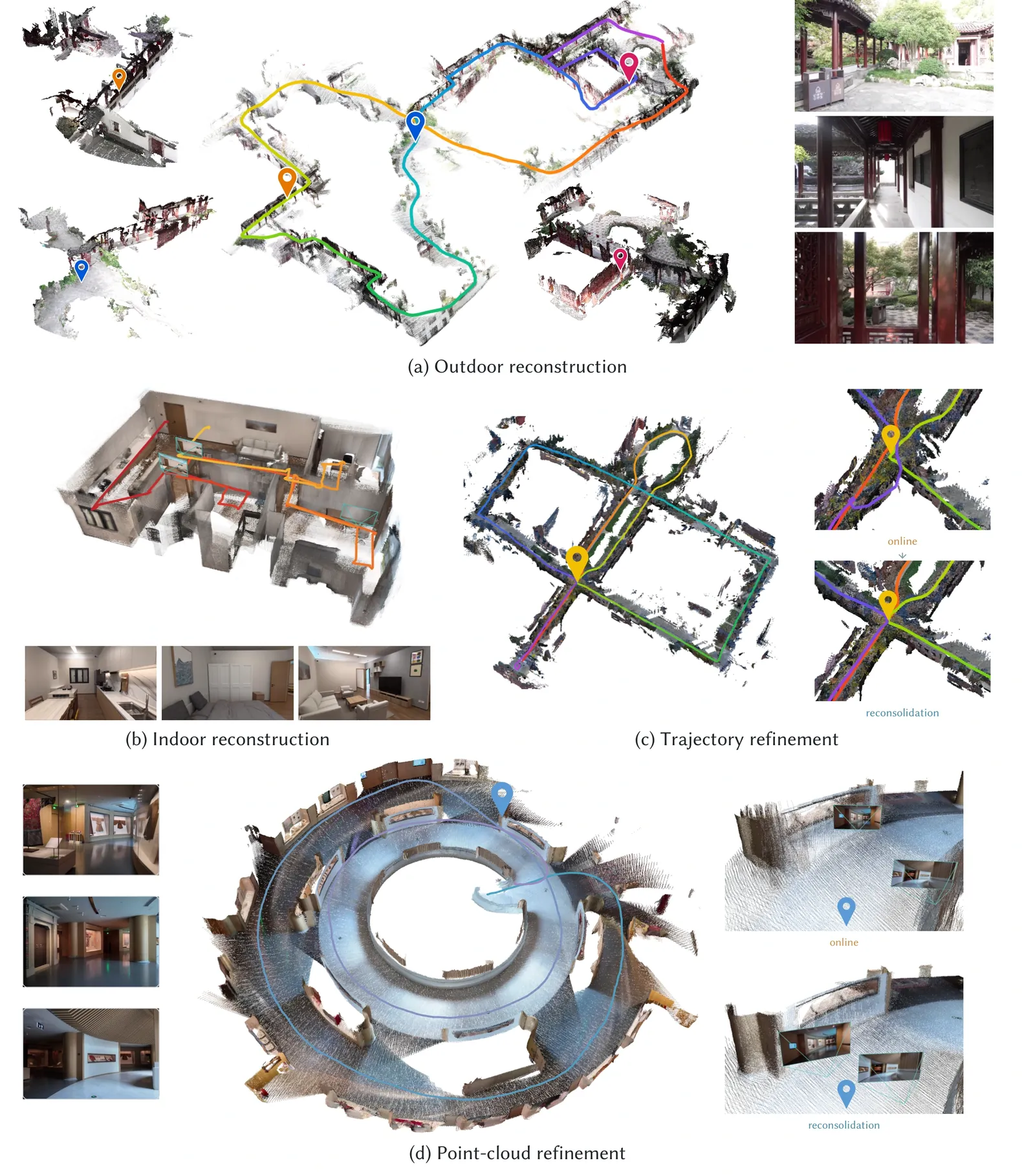
Robbyant, an embodied-AI company under Ant Group, has released LingBot-Navi, a navigation model with reusable spatial memory, under the Apache-2.0 licence, and listed the base streaming checkpoint of LingBot-Map 2.0, its 3D reconstruction model, under the non-commercial CC BY-NC 4.0 licence.
The model card says that checkpoint is not the reconsolidation version that the technical report credits with correcting drift.
Robbyant, which describes itself as an embodied-AI company under Ant Group, has published two spatial models for robots on GitHub and Hugging Face: LingBot-Map 2.0, for streaming 3D reconstruction from a single RGB camera, and LingBot-Navi, for navigation with a spatial memory. Leiphone reported the launch on Nov 27 and described LingBot-Navi as open-sourced. The licences and model cards on Robbyant's own pages show two different levels of openness.
The report's main idea is drift correction inside the model
According to the technical report on GitHub, LingBot-Map 2.0's upper layers can switch between a streaming mode and a reconsolidation mode that share the same weights and differ only in causal versus bidirectional attention. When reconsolidation is triggered, those layers re-process selected keyframes and update the model's key-value cache, so later frames read corrected context. The project page says this needs no loop detection, no pose-graph optimisation and no post-processing, the steps a classical SLAM system adds to stop errors piling up.
The report says the base model outperforms existing streaming reconstruction methods across nine settings on seven datasets, and that the feed-forward reconsolidation alone lifts it above streaming methods with loop closure and offline models on most benchmarks. Robbyant's launch materials, as relayed by QbitAI, put the online mode ahead on almost all metrics. These are the company's own results; the arXiv version is listed as coming soon and there is no independent evaluation yet.
Navi remembers a building between tasks
LingBot-Navi's README says it anchors visual features to reconstructed surfaces and stores them as compact spatial tokens, then uses a spatial memory encoder, a vision-language decoder and a trajectory decoder for object grounding, image localisation, spatial question answering and 3D route prediction. Its first public release on Nov 26 included inference code, model weights and a dataset of 511 reconstructed real-world scenes, 36 of them for testing.
What is open, and for whom
- LingBot-Map 1.0 (April 2026)
- Streaming 3D reconstruction
- Apache-2.0 (code)
- Public; about 19.1k GitHub stars, 20,857 Hugging Face downloads in the past month
- LingBot-Map 2.0 Base Streaming checkpoint
- Causal streaming 3D reconstruction; not the reconsolidation checkpoint
- CC BY-NC 4.0 (code and weights)
- Public download on Hugging Face; README and model card still call the repositories private
- LingBot-Navi model
- Spatial memory, object grounding, route prediction
- Apache-2.0
- Public on Hugging Face
- LingBot-Navi dataset
- 511 reconstructed real-world scenes, 36 for testing
- CC BY-NC-SA 4.0
- Gated on Hugging Face
Sources: Robbyant GitHub repositories and Hugging Face model and dataset cards. Star and download counts change daily.
As of Nov 27, 2026
The LingBot-Navi model is public on Hugging Face under Apache-2.0, which allows commercial use. The full Navi dataset is gated on Hugging Face under CC BY-NC-SA 4.0. For LingBot-Map 2.0, Robbyant licenses its code and the Base Streaming weights under CC BY-NC 4.0, and the model card states that this checkpoint is the pure causal streaming base model, not the mixed-mode Geometric Context Reconsolidation checkpoint. The README's download table lists only that base checkpoint, The README and the model card still say the repositories are private and need an account with access, but the Hugging Face weights link serves the file as a public download. The first LingBot-Map, released in April under Apache-2.0, shows about 19.1k GitHub stars and 20,857 Hugging Face downloads in the past month.
MEKAWIRE analysis
Robbyant has opened its navigation model for commercial use, while the Map 2.0 weights it lists are the streaming base under a non-commercial licence; the reconsolidation mode that carries the report's main claim is not in that checkpoint.
The licence choice resembles AgiBot's AGIBOT WORLD 2026 Release 4 dataset, which is also under a non-commercial licence. The strongest counter-argument is that Map 1.0 went out under Apache-2.0 and drew a large developer base, so a fuller Map 2.0 release may follow the arXiv paper. Bull case: independent tests confirm the drift-correction claim and Robbyant releases the reconsolidation checkpoint. Bear case: the gain holds only on the company's chosen datasets. Signals to watch: the arXiv release, any licence change on Map 2.0, and third-party results on KITTI and the other benchmarks the report names.
- 511 real-world scenes, 36 for testing
- Apache-2.0, public weights
- Nov 26, 2026
- About 19.1k GitHub stars, 20,857 HF downloads in the past month
- Ahead in 9 settings on 7 datasets (company report)
- CC BY-NC 4.0; listed checkpoint is the streaming base
Why it matters
LingBot-Navi's public Apache-2.0 weights give robot makers a way to test reusable spatial memory in commercial navigation stacks. The listed LingBot-Map 2.0 streaming checkpoint is under CC BY-NC 4.0, which restricts it to non-commercial use. The supplied material does not say whether Robbyant offers commercial terms for it.
Rival analysis
Robbyant reports that Map 2.0 led in nine settings across seven datasets (company report). The supplied material gives no rival names or performance margins, which limits comparisons with competing models. Map 1.0 has about 19.1k GitHub stars and logged 20,857 Hugging Face downloads in the past month, providing a baseline for developer interest in Robbyant's mapping models.
Valuation context
Robbyant is Ant Group's embodied AI company. The supplied material gives no funding stage, total funding or disclosed valuation for Robbyant. It also provides neither a market capitalization nor an independent valuation estimate for the company.
Related papers
Robbyant's Map 2.0 technical report credits the reconsolidation version with correcting drift. The model card says the listed checkpoint is the streaming base, not that version, and the supplied material does not give its drift performance. No Navi technical paper is supplied.
Supply-chain implications
A Navi dataset of 511 real-world scenes (36 for testing) is listed on Hugging Face as gated under CC BY-NC-SA 4.0, a different licence from the Apache-2.0 Navi weights. Integrators should check access and licence terms separately for the data and the weights. The supplied material identifies no hardware suppliers or manufacturing partners.
Signals to watch
Watch for independent Navi tests that measure route completion and operator interventions when robots revisit sites after layout changes. For Map 2.0, watch for a reconsolidation checkpoint with commercial terms and independent drift measurements for that version.
Analyst view
In our view Navi is the nearer-term candidate for commercial pilots because its public weights are under Apache-2.0. The supplied material gives no customer deployment results, leaving field reliability an open question.
Questions you should be asking
What compute and memory does Navi need on a target robot? How much drift accumulates in the Map 2.0 streaming base over a full shift? Does Robbyant plan to offer commercial terms for the reconsolidation weights?