Clobot and MIT start KRW 11.7bn project on safe robot recovery, Korean press reports
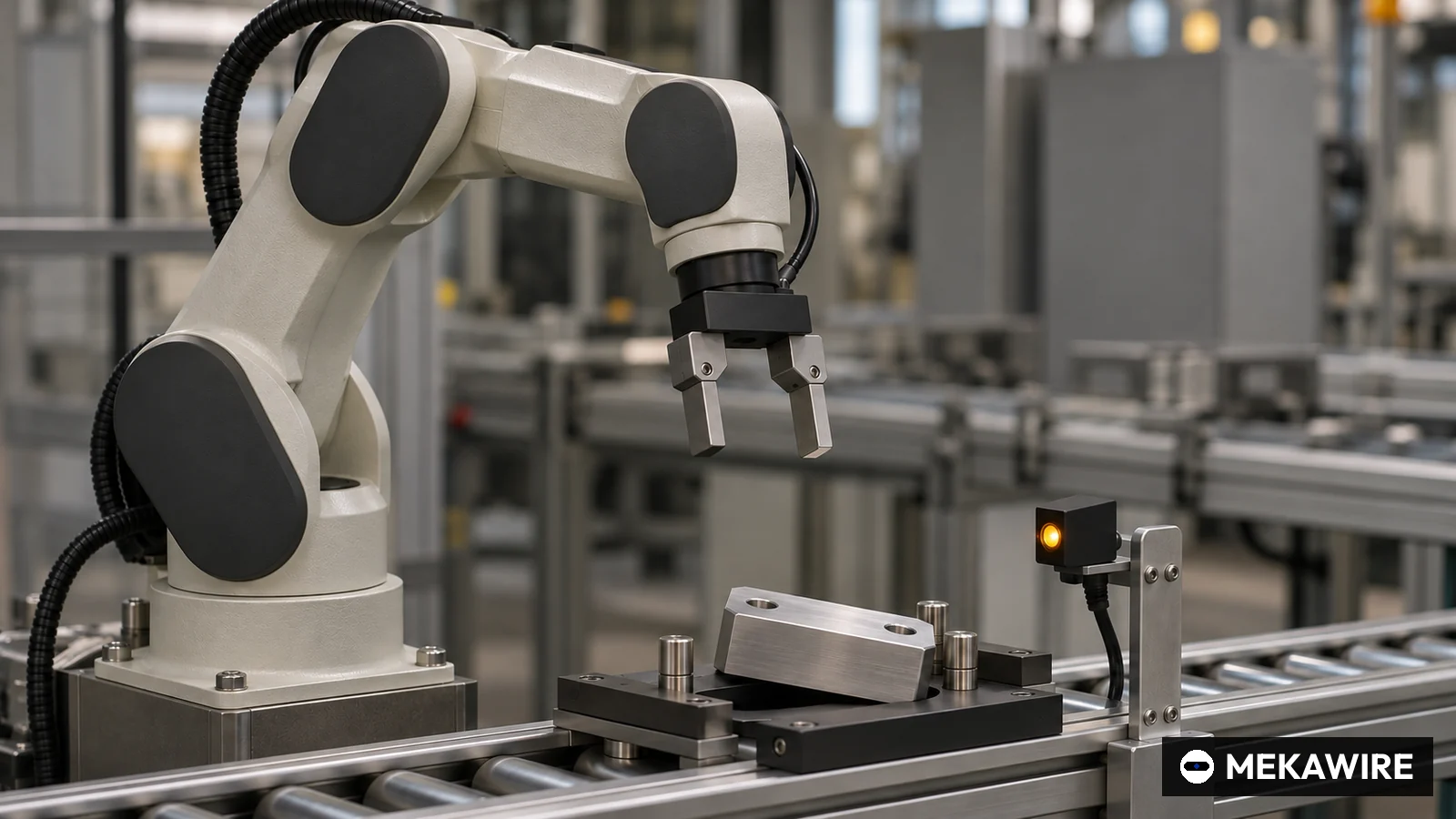
Korean robot software maker Clobot has started a roughly five-year research project with MIT's REALM Lab on robots that detect and safely recover from unexpected faults on factory lines, with a consortium budget of KRW 11.73bn including KRW 10bn of government funding, Korean outlets including Robot Newspaper and Dong-A Ilbo reported on Nov 27, citing the company. Clobot has not posted the announcement on its own site.
Clobot said it has signed an agreement with the Massachusetts Institute of Technology as the overseas partner in an international joint R&D project under the Global Industrial Technology Cooperation Center (GITCC) programme of Korea's industry ministry and the Korea Institute for Advancement of Technology (KIAT), and that the research has begun, Robot Newspaper (irobotnews) reported on Nov 27. Dong-A Ilbo and Techworld carried the same announcement. MEKAWIRE found no release on Clobot's website or a DART filing about it, so the figures below are the company's as reported.
Robots that fix the stoppage instead of waiting for a technician
According to the reports, the project is titled development of safety-intelligent vertical AI and VLA core technology for manufacturing process autonomy and exception handling, and runs for about five years. Its total budget, for the whole consortium, is KRW 11.73bn, of which KRW 10bn is government funding. Clobot leads; MIT's Reliable Autonomous Systems Lab (REALM), the Korea Electronics Technology Institute (KETI) and the auto-parts maker Hwaseung R&A are co-developers.
The aim, as reported, is to leave normal automated processes as they are and add an intelligence layer for the irregular situations that stop a line today. The researchers plan to develop a system in which several AI agents split the work of judging the situation and planning a recovery, and a vision-language-action (VLA) model translates that plan into robot motion. REALM is to contribute the safety layer, meant to check AI-generated motions before they run and correct path and speed when there is a risk of collision or excessive force. Clobot is responsible for the agent coordination system, robot execution and system integration; MIT for the safety layer and exception-handling agents; KETI for a manufacturing VLA and industrial data structure; Hwaseung R&A supplies process requirements and field data, and the technology is to be tested on its auto-parts production lines.
What Clobot's filings say about the company taking this on
- Project budget, about 5 years, whole consortium
- KRW 11.73bn
- Clobot statement as reported by Robot Newspaper
- of which government funding
- KRW 10bn (about 85%, MEKAWIRE calc.)
- Same
- Clobot Q3 2026 revenue
- KRW 21.73bn, up 102.4%
- Q3 report, DART, Nov 16
- Clobot Q3 2026 operating result
- KRW 2.07bn loss
- Q3 report, DART
- Q3 revenue without Doosan Logistics Solutions
- About KRW 10.11bn, down 5.8% (MEKAWIRE calc.)
- Q3 report, DART
Government share = 10 / 11.73. Project figures are Clobot's, as reported. Quarterly figures come from the DART filing; growth rates and revenue excluding DLS are MEKAWIRE calculations.
As of Nov 27, 2026
Clobot's third-quarter report on DART shows revenue of KRW 21.73bn, up 102.4%, and an operating loss of KRW 2.07bn. As MEKAWIRE reported on Nov 17, most of the growth came from Doosan Logistics Solutions, consolidated from Sept 1; without it, quarterly sales fell 5.8% by our calculation. The company also said, in the reported statement, that it supplies more than 130 customers in over 10 industries and leads a separate KRW 5.56bn humanoid fleet-control project.
MEKAWIRE analysis
The project lets Clobot, a fleet and orchestration software company now carrying a logistics business, buy into verified-safe robot recovery with mostly public money; the payoff depends on whether the method leaves one car-parts plant.
About 85% of the budget is government money (MEKAWIRE calc.). The strongest counter-argument is that exception handling is the hardest part of factory automation, and five-year publicly funded VLA projects often end as demonstrations. Bull case: a working recovery module ships in Clobot's orchestration platform and Hwaseung R&A keeps it on its lines. Bear case: results stay on one line and Clobot's revenue keeps relying on the acquired logistics unit. Signals to watch: Clobot's full-year 2026 report, any first test results from the Hwaseung R&A lines, and joint publications by REALM and Clobot.
- KRW 11.73bn over about 5 years, whole consortium
- Reported, citing Clobot; no company release found
- MIT REALM Lab, KETI, Hwaseung R&A
- Hwaseung R&A auto-parts lines
- KRW 21.73bn, up 102.4% (DART)
- KRW 10bn, about 85% (MEKAWIRE calc.)
Why it matters
A trial on Hwaseung R&A's auto-parts lines gives Clobot a chance to measure whether robots can safely resume production after unexpected faults. Korean outlets reported that the roughly five-year project had started, citing Clobot. Government funding covers about 85% of the KRW 11.73bn consortium budget, and Clobot's share was not reported.
Rival analysis
Clobot already sells CHAMELEON for autonomous navigation and CROMS for multi-robot control. A competitive benchmark would compare restart times and operator intervention rates under equivalent fault conditions. The supplied material names no rivals, provides no comparative results and does not say whether the recovery capability will be integrated into either product.
Valuation context
Clobot has traded on KOSDAQ since October 2024, and its August 2026 shareholder rights offering raised $81.8M. The offering amount is financing proceeds, and the supplied figures include no market cap, disclosed valuation or valuation estimate. Clobot reported KRW 21.73bn in Q3 revenue, up 102.4%. The KRW 11.73bn project budget covers the full consortium.
Related papers
No related papers or technical results were supplied. MIT's Reliable Autonomous Systems Lab is a project partner, but the supplied material gives no evidence on which fault types the system can handle or how safely it recovers.
Supply-chain implications
Hwaseung R&A provides the auto-parts production lines for testing, with MIT's REALM Lab and KETI named as consortium partners. The reporting does not identify the robot or controller suppliers or specify who will handle integration. Those details will help assess whether the approach can transfer to plants with different equipment.
Signals to watch
An announcement from Clobot could clarify its funding allocation and technical milestones. At the factory trial, watch for the range of faults tested, time to safe restart and frequency of operator intervention. A paid rollout or deployment on a second line would help gauge demand and repeatability.
Analyst view
The project gives Clobot a factory setting to test whether safe recovery reduces downtime enough to justify a commercial offering. The supplied material gives no contract value or revenue schedule for Clobot. Measured gains on the test line and a paid follow-on deployment would provide a basis for assessing the revenue opportunity.
Questions you should be asking
How much of the consortium budget is allocated to Clobot, and what costs will it cover? Which faults will the trial test, and what criteria must a robot meet before restarting? Who will own the resulting software and have the right to sell it?