Beijing stages the first World Humanoid Robot Games with 280 teams and more than 500 robots, capping a state-run August of robot showcases
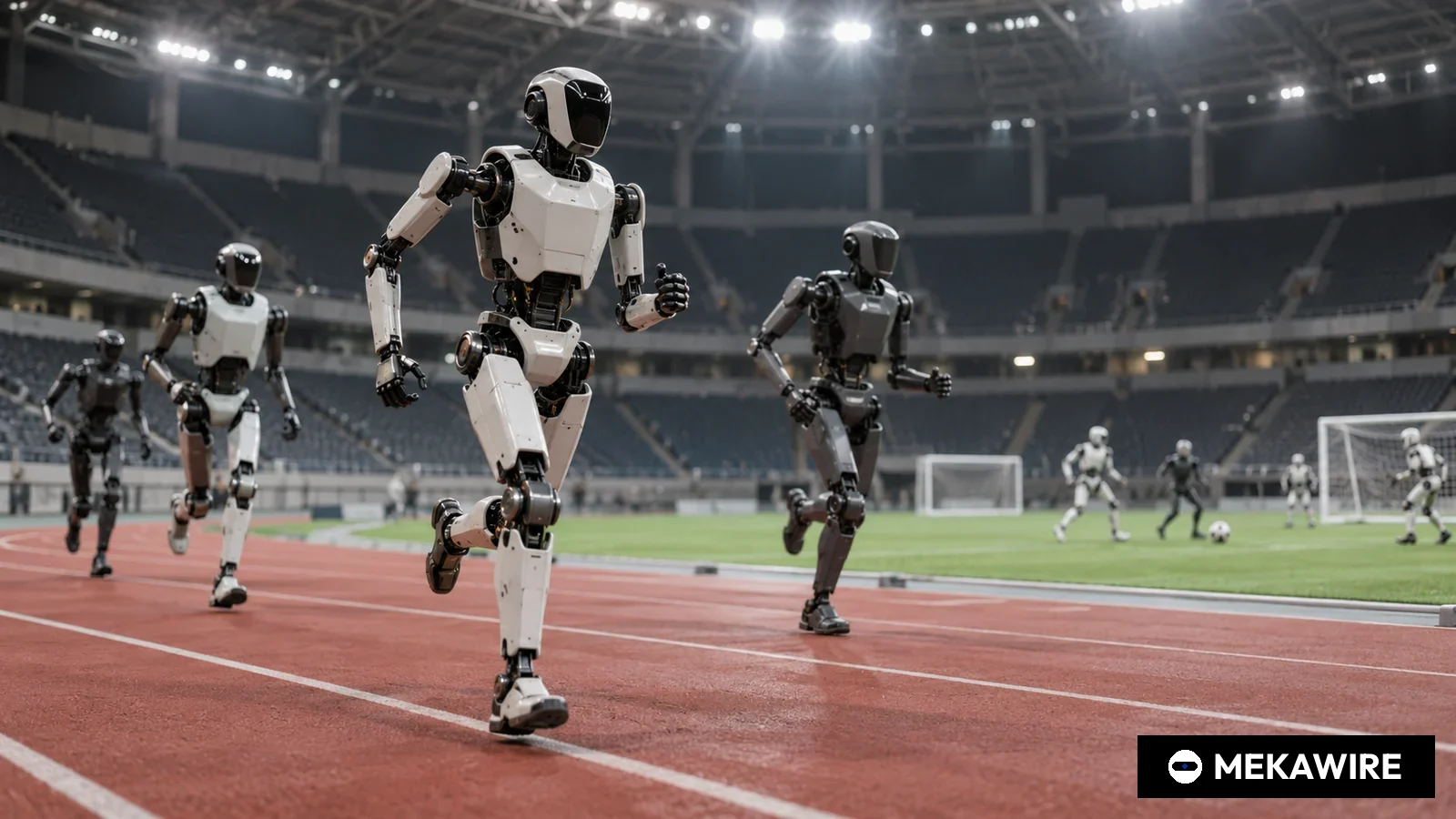
The first World Humanoid Robot Games closed in Beijing on 17 August 2025 after 487 matches in 26 events, contested by more than 500 robots from 280 teams in 16 countries, according to the Beijing Municipal Science and Technology Commission.
The games followed the 2025 World Robot Conference and a subsidised robot shopping festival in Beijing's E-Town district that the district says sold more than 190,000 robots and related products.
The first World Humanoid Robot Games ended in Beijing on 17 August 2025 after three days of competition, 26 events and 487 matches, the Beijing Municipal Science and Technology Commission said. More than 500 robots from 280 teams in 16 countries took part, covering 127 robot brands. Organisers said a second edition would be held in Beijing in August 2026, and four organisations used the closing ceremony at the National Speed Skating Oval to found a World Humanoid Robot Sports Federation.
The event grew between announcement and delivery. At a Beijing government press conference on 7 May 2025, officials described 19 main events in competitive, performance and scenario categories plus three peripheral events, 22 in all, scheduled for 15 to 17 August at the National Stadium and the National Speed Skating Oval. The games opened a day earlier, on 14 August, and the final programme ran to 26 events, according to the city's science commission and the Zhongguancun Science City account republished by the national science centre's portal.
- Events
- 22
- 26
- Teams
- No data
- 280
- Countries
- No data
- 16
- Robots (more than)
- No data
- 500
- Brands
- No data
- 127
- Matches
- No data
- 487
- Matches per event (MEKAWIRE calculation)
- No data
- 18.7
- Robots per team, lower bound (MEKAWIRE calculation)
- No data
- 1.8
Announced figures from the Beijing Municipal Government press conference of 7 May 2025 (19 main plus 3 peripheral events, 15 to 17 August). Delivered figures from the Beijing Municipal Science and Technology Commission, 18 August 2025, and the national science centre portal, 19 August 2025. Competition days count 14 to 17 August inclusive. Matches per event = 487 / 26; robots per team = 500 / 280, a lower bound because robots are given as more than 500. Figures disclosed, not estimated.
As of Oct 2, 2026
According to the May press conference, the games were co-hosted by the Beijing Municipal Government, China Media Group, the World Robot Cooperation Organization and the Asia-Pacific Robot World Cup International Council. The new federation was founded by the World Robot Cooperation Organization, the Global Digital Economy City Alliance, the Asia-Pacific Robot World Cup International Council and the Chinese Institute of Electronics, the science commission said.
The results
Tiangong, developed by the Beijing Humanoid Robot Innovation Center, won the 100 metres in 21.50 seconds, and its Tiangong Ultra variant completed the 1,500 metres using fully autonomous navigation, the science commission reported. Humanoids from Unitree Robotics won the 400 metres and the 1,500 metres; the Haidian district account names an H1 humanoid entered by Beijing Lingyi Technology as the 1,500 metres winner in 6 minutes 34.40 seconds. In five-a-side football, Tsinghua University's Hephaestus team beat the German team HTWK Robots+Nao Devils 1 to 0. A team from the Beijing Institute for General Artificial Intelligence and Unitree won the solo dance with 95.4 points, Booster Robotics fielded 25 Booster T1 robots in a five-by-five formation that moved without remote control, and ROBOTERA's full-size bipedal L7 set what the district called a new world record in the high jump. A full medal table was released only as an image.
Unitree founder and chief executive Wang Xingxing said Beijing offered unmatched talent and university resources and that the company would increase investment in its Beijing branch, according to the commission. Tang Jian, chief technology officer of the Beijing Humanoid Robot Innovation Center, said household robot products would arrive in about five years, and Lu Yu, head of the industry task force of the Beijing Economic-Technological Development Area, said robot technology was improving every month.
An August built around robots
The games were the last of three linked events. The E-Town Robot Consumption Festival ran from 2 to 17 August, and the 2025 World Robot Conference ran from 8 to 12 August at the Beiren Yichuang International Convention and Exhibition Center in the same development zone, according to the conference organiser. The city government said the conference drew more than 200 exhibitors with more than 1,500 exhibits, including more than 100 product launches, nearly double the 2024 figure, and 50 humanoid makers, with exhibitor numbers up 25 percent on 2024. Its side competitions listed more than 6,000 teams and more than 10,000 contestants from more than 10 countries. JD.com was named exclusive global strategic partner and listed nearly 1,000 robot products on its platform.
- E-Town Robot Consumption Festival
- 2 to 17 Aug
- No data
- 190,000
- Sales more than RMB330 million
- World Robot Conference 2025
- 8 to 12 Aug
- 200
- 1,500
- More than 100 launches; 50 humanoid makers; exhibitors up 25% on 2024
- World Humanoid Robot Games
- 14 to 17 Aug
- 280
- 500
- 127 brands; 487 matches
Festival figures from the Beijing Economic-Technological Development Area, 25 August 2025 (units are robots and related products sold). Conference figures from the Beijing municipal government, 3 August 2025, and the conference organiser (exhibits, not products). Games figures from the Beijing Municipal Science and Technology Commission. Figures disclosed, not estimated.
As of Oct 2, 2026
The development zone said the festival generated more than RMB330 million in sales of robot products and in its shopping districts, with more than 190,000 robots and related products sold. Online sales on JD exceeded RMB170 million, district-funded robot consumption vouchers drove more than RMB70 million of sales, and the six shopping districts recorded more than 1.6 million visits and more than RMB160 million in sales. A store for embodied AI robots logged frequent orders in the millions of yuan within 16 days, with orders above RMB1 million accounting for 25 percent, the zone said.
- Total robot products and shopping districts
- 330
- 100
- Online sales on JD
- 170
- 51.5
- Sales driven by robot consumption vouchers
- 70
- 21.2
- Six shopping districts
- 160
- 48.5
Sales from the Beijing Economic-Technological Development Area. Share = component / 330, rounded to one decimal, a MEKAWIRE calculation. Components overlap and are not additive. All amounts are given as more than the figure shown. Figures disclosed, not estimated.
As of Oct 2, 2026
The industrial base behind the show
The science commission said Beijing accounts for about one third of China's humanoid robot industry, that the city's robot industry revenue grew by nearly 40 percent in the first half of 2025, and that it is home to 57 specialised small giant robot companies, 30 humanoid whole-machine developers and 33 surgical robot registration certificates. Haidian district alone counts 186 embodied AI robot companies, 24 of them humanoid makers, and the district relayed a claim by dexterous hand maker Linkerbot that it holds more than 80 percent of China's market for high degree of freedom hands and more than 50 percent globally.
The closest comparison in Japan is also government-run. Japan's Ministry of Economy, Trade and Industry and NEDO staged the World Robot Summit 2020 in Aichi and Fukushima in September and October 2021, a competition built around industrial, disaster and service tasks rather than athletics. Korea's humanoid policy has been organised mainly through industry groupings such as the K-Humanoid Alliance launched by its industry ministry.
What the sprints and football tested was basic physical competence: balance at speed, recovery from contact and perception of a moving ball. Organisers singled out Tiangong Ultra and the Booster T1 formation as autonomous, which implies that other entries may have relied on human operators, but neither the city nor the organisers disclosed how many robots ran without remote control, how many falls occurred or how many robots finished their events. Sales figures from the festival cover robots and related products and shopping district turnover together, and part of that demand was bought with public vouchers.
MEKAWIRE analysis
Beijing has turned humanoid robots into a public spectacle and a subsidised consumer category in the same month, which builds a domestic market for its own makers faster than any rival city but says little yet about factory readiness.
The evidence is in the scale. In 17 days Beijing put more than 500 competing robots, 50 humanoid exhibitors at the World Robot Conference and more than 190,000 retail units in front of the public, and the city tied the events to its industrial base of 30 humanoid developers and a robot industry that grew nearly 40 percent in the first half. Unitree's chief executive responded by pledging more investment in Beijing, which is exactly the outcome a city government wants from an event like this.
The strongest counter-argument is that sport is a weak proxy for useful work. A 100 metre time of 21.50 seconds and a 1,500 metre time of 6 minutes 34.40 seconds measure gait and balance, not grasping, endurance on a shift or cost per task, and the organisers did not disclose autonomy rates. About a fifth of festival sales were driven by vouchers, by MEKAWIRE calculation, so the consumer signal is partly bought.
Bull case. Annual games and the World Robot Conference become a standing test bench where Chinese makers iterate in public every year, attract talent and capital to Beijing, and feed the same robots into scenario events such as sorting and cleaning that move closer to paid work. The federation gives China a say in how humanoid competition rules and categories are written internationally.
Bear case. The events stay showcases, voucher-driven demand fades after subsidies end, and the gap between remote-controlled performance and autonomous industrial deployment persists. Investors then discount the spectacle and judge Chinese humanoid makers on delivered units and revenue, where the numbers remain small.
Signals to watch.
- August 2026, the second World Humanoid Robot Games in Beijing, and whether organisers disclose autonomy rates and completion counts.
- August 2026, the next World Robot Conference in Beijing E-Town, for exhibitor and humanoid maker counts against 2025.
- Half-year 2026 results from listed humanoid makers, for delivered units that test whether the August 2025 demand persisted.
- First World Humanoid Robot Games, Beijing, 14 to 17 August 2025
- 280 teams, 16 countries, more than 500 robots, 127 brands
- World Humanoid Robot Sports Federation, four founding organisations
- 26 events, 487 matches (22 events announced on 7 May 2025)
- Tiangong, Beijing Humanoid Robot Innovation Center, 21.50 seconds
- Unitree H1 entered by Beijing Lingyi Technology, 6:34.40
- August 2026, Beijing
- More than RMB330 million sales, more than 190,000 units; vouchers drove more than RMB70 million
- Tsinghua Hephaestus beat HTWK Robots+Nao Devils 1 to 0
- 8 to 12 August; more than 200 exhibitors, more than 100 launches, 50 humanoid makers
Why it matters
The games mark the point at which a Chinese city government moved humanoid robots from trade fair stands into a ticketed public competition with an international federation attached. Beijing packaged three events into 17 days, a consumer festival, the World Robot Conference and the games, and reported the outcome in industrial terms: humanoid share of the national industry, revenue growth and the number of whole-machine developers.
For makers, the events work as a free marketing channel and a recruiting tool. Unitree's pledge to expand its Beijing branch and the visibility given to Beijing Humanoid Robot Innovation Center, Booster Robotics and ROBOTERA show how the city uses the stage to pull companies and talent toward its development zones.
Rival analysis
Unitree was the commercial winner, taking the 400 and 1,500 metres and appearing in the winning dance entry with BIGAI, which reinforces its role as the default hardware platform for Chinese teams. The Beijing Humanoid Robot Innovation Center, a state-backed developer, used the 100 metres and an autonomous 1,500 metres run to showcase Tiangong. Booster Robotics, whose T1 robots are used in football, chose a 25-robot autonomous formation to make its case.
Outside China, the comparison is uneven. Japan's World Robot Summit, run by METI and NEDO, last held its finals in 2021 and focuses on industrial, disaster and service tasks. US and European humanoid developers did not feature among the reported winners, and the only foreign team named in the government accounts was Germany's HTWK Robots+Nao Devils, the football finalist.
Valuation context
No transaction values were attached to the games themselves. The disclosed money figures come from the E-Town festival: more than RMB330 million in sales, more than RMB170 million of it on JD, and more than RMB70 million driven by vouchers. By MEKAWIRE calculation vouchers account for about 21.2 percent of the total and JD for about 51.5 percent, with the caveat that the categories overlap.
Those sums are small against the valuations of Chinese humanoid makers. The festival is better read as a test of consumer appetite for robot products, much of it low-priced, than as evidence of revenue that will scale for humanoid developers.
Supply-chain implications
The games showcased the Beijing supply base that the city wants to build around humanoids: whole-machine makers, dexterous hands from Linkerbot, which claims more than 80 percent of China's high degree of freedom hand market, and AI developers such as BIGAI. Haidian alone lists 186 embodied AI companies across what it calls the brain, cerebellum and body of the robot.
The disclosed figures say nothing about actuators, reducers, batteries or chips, where costs and bottlenecks for humanoids sit. The concentration of winning entries on Unitree hardware suggests that teams are buying a small number of platforms and differentiating in software.
Signals to watch
The second games in August 2026 will show whether organisers publish harder data, such as autonomy rates, completion counts and failures, rather than only winners and records. The next World Robot Conference in Beijing E-Town is the second check, on whether exhibitor and humanoid maker counts keep rising from more than 200 and 50.
On the commercial side, watch for whether Beijing repeats or enlarges its robot consumption vouchers and whether Unitree and other makers report retail and education sales separately from industrial deliveries.
Analyst view
Thesis. Beijing is using state-run spectacle and consumer subsidies to build demand and talent pull for its humanoid makers, which strengthens the domestic ecosystem but does not yet show industrial readiness. Confidence is medium. The participation and sales figures come from government sources and are specific, but the organisers withheld the data that would show technical maturity, including autonomy rates and completion counts.
We expect the games to become an annual fixture and to shift gradually toward scenario events that resemble paid work, because that is where the city's industrial policy points.
Questions you should be asking
How many of the more than 500 robots competed autonomously, and how many events were completed without human intervention?
How much of the festival's more than 190,000 units were humanoid or embodied AI robots rather than toys, cleaning robots and accessories, and will Beijing keep paying vouchers after the 2025 edition?