1X unveils NEO Gamma, a quieter home humanoid in a knitted suit, and begins internal home testing
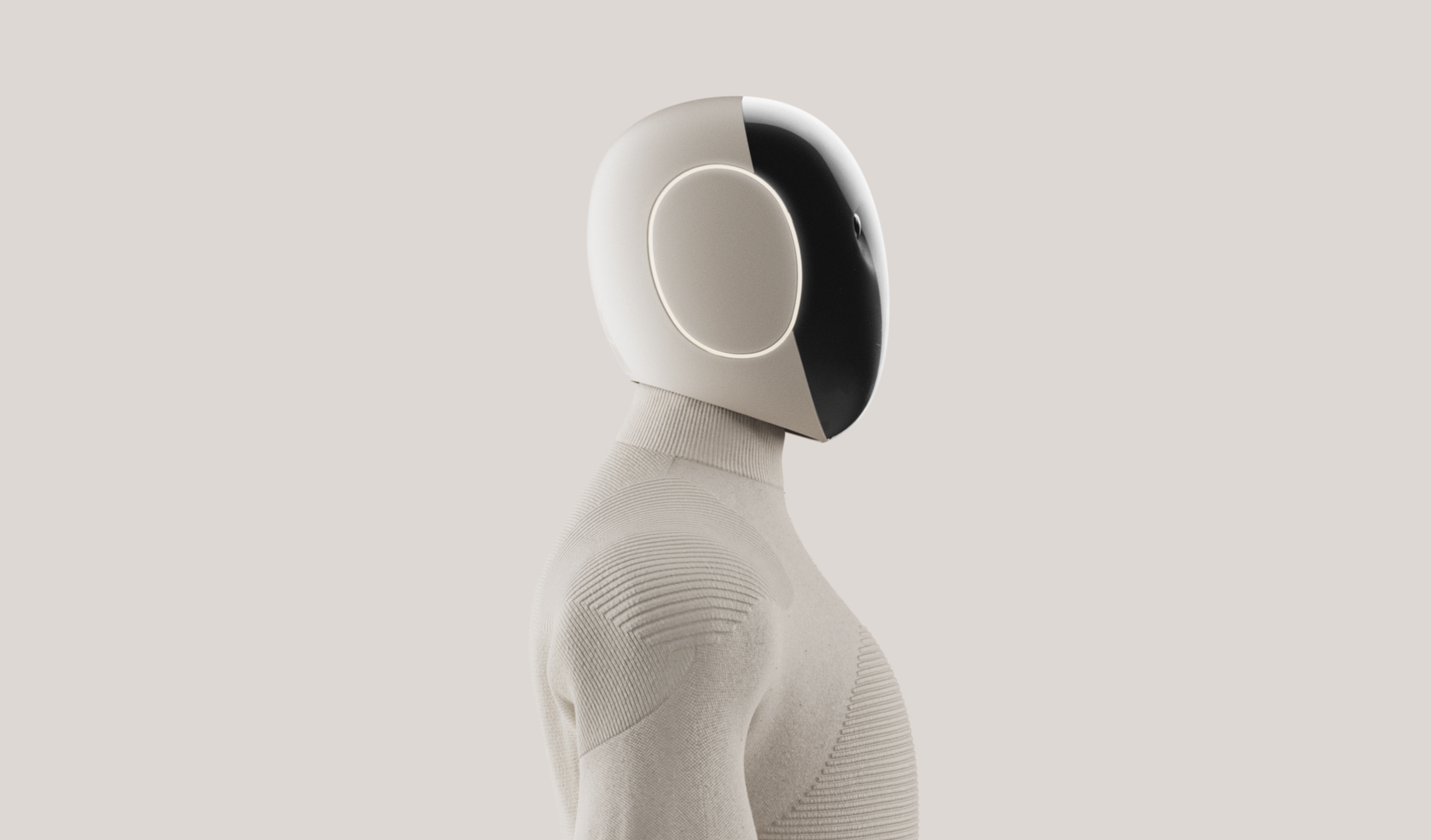
1X Technologies on Feb. 21, 2025 unveiled NEO Gamma, a redesigned version of its NEO home humanoid that the company says is 10 decibels quieter and ten times more reliable than before, wears a seamless knitted nylon suit and walks with a controller learned from human motion capture.
The Palo Alto company said the design lets it start internal home testing, but disclosed no price, delivery date or physical specifications.
1X Technologies on Feb. 21, 2025 unveiled NEO Gamma, the latest version of its NEO humanoid robot for the home, calling it the next generation of its home humanoids with changes across both hardware and artificial intelligence. The Palo Alto, California company said the new design opens the way to internal home testing, which it described as a first step toward fully autonomous humanoids. 1X did not give a price, a delivery date or basic specifications such as height, weight or battery life.
The numbers 1X published are relative rather than absolute. The company said NEO Gamma operates about 10 decibels more quietly than before, which it compared with the sound level of a refrigerator, and that hardware reliability has improved tenfold. Its whole-body control skills run at 100 Hz, meaning the control policy updates 100 times a second. For hearing and speech, the robot carries four directional microphones with beamforming and echo cancellation, plus three speakers: one in the chest for voice and two in the pelvis for sound in every direction.
The most visible change is on the outside. NEO Gamma wears a knitted suit and matching shoes that 1X said are 3D printed from soft, durable nylon on a Japanese Shima Seiki machine, using a whole-garment seamless knitting process so the fabric follows the body without hindering movement. Illuminated "Ear Rings" on the head give people nearby real-time visual feedback about what the robot is doing. Beneath the fabric, the joints are moved by 1X's own Tendon Drive actuation, which is now encased in soft covers that the company said improve passive safety. 1X called safety its top priority.
On the software side, 1X described three pieces. A whole-body controller, trained with reinforcement learning on human motion capture data, lets NEO walk with a natural human gait and arm swing, squat to pick things up from the floor and sit in chairs while keeping its balance. A visual manipulation model can pick up a wide variety of objects in different settings, including environments it did not see during training, according to the company. Underneath both sits the approach 1X describes as neural networks trained to predict teleoperated actions directly from raw sensor data.
Chief executive Bernt Børnich tied the release to a single goal, saying every engineering and design decision was made to get NEO into customers' homes as quickly as possible. In his account, homes provide the real-world context and the diversity of data that humanoids need to become more intelligent and more autonomous. That argument explains why a company competing in a capital-intensive field has put its effort into noise, fabric and soft covers rather than payload or speed.
1X was founded in 2014 as Halodi Robotics by Børnich, according to the company's website. It raised $23.5 million in a Series A2 round in March 2023 led by OpenAI, then announced a $100 million Series B on Jan. 13, 2024, led by EQT Ventures with Samsung NEXT joining as a new investor and Sandwater, Skagerak Capital and Nistad group participating. At the time 1X said it had raised more than $125 million in under 12 months and would use the money to bring NEO to market, support enterprise customers in logistics and guarding, and scale its data collection for embodied AI. On Jan. 27, 2025, less than four weeks before the Gamma reveal, 1X acquired Kind Humanoid, a Palo Alto start-up founded by former Stanford scientist and Google robotics team member Christoph Kohstall, which had developed a bipedal home and healthcare humanoid called Mona. Terms were not disclosed.
The timing put 1X next to a louder rival. One day earlier, on Feb. 20, 2025, Figure AI introduced Helix, a vision-language-action model that Figure said runs entirely on embedded low-power GPUs, was trained on about 500 hours of teleoperated demonstrations and lets its robots pick up thousands of household objects they have never encountered. Helix pairs a 7-billion-parameter vision-language model running at 7 to 9 Hz with an 80-million-parameter policy running at 200 Hz. Figure raised $675 million in a Series B in February 2024, and Apptronik announced a $350 million Series A on Feb. 13, 2025. Against those sums, 1X's last disclosed round is the smallest of the three, yet it is the one that has defined its flagship product around the home from the start.
- 1X Technologies
- 2014
- Series B
- 100,000,000
- 2024-01-13
- Apptronik
- 2016
- Series A
- 350,000,000
- 2025-02-13
- Figure AI
- No data
- Series B
- 675,000,000
- 2024-02-29
- Agility Robotics
- 2015
- Series B
- 150,000,000
- 2022-04-22
- Sanctuary AI
- 2018
- Series A
- 58,500,000
- 2022-03-02
Latest round with a disclosed amount announced on or before Feb. 21, 2025, from company or investor releases; strategic rounds without disclosed amounts excluded. Figures disclosed, not estimated. Founding year shown as — where not verified.
As of Feb 21, 2025
The technical choices are easier to read once the terms are unpacked. A tendon drive moves a joint by pulling on cable-like tendons from motors placed elsewhere in the body, which can make limbs lighter and more compliant when they touch people or furniture; 1X has not published the internal details of its version. Learning locomotion from motion capture means the controller is rewarded for moving like a recorded human, which tends to produce gaits that look natural to onlookers. Predicting teleoperated actions is a form of imitation learning in which a human pilots the robot and the network learns to map what the robot sees to what the human did.
For the wider industry, NEO Gamma is a statement about what a home robot has to get right before it can be useful. A refrigerator-level hum, fabric instead of hard shells and lights that signal intent address acceptance by the people who live with the machine, which matters in a home in a way it does not in a fenced factory cell. The disclosed AI capabilities, walking, sitting, squatting and picking up objects, are the foundations of household work rather than household work itself.
Several questions remain open. 1X gave no autonomy metrics, so it is unclear how much of NEO's behaviour in homes will be autonomous and how much will depend on remote operators. The tenfold reliability gain was stated without a baseline or test method. No home safety certification was mentioned, and without a price there is no way to judge whether a household market exists at the cost NEO will need to carry. The company is also smaller in disclosed funding than Figure or Apptronik.
The next markers are concrete. Investors and rivals will watch for results from the internal home tests, for any announcement of a price or reservation process, and for a new funding round that would show whether 1X can finance production. Figure's decision to pitch Helix around household objects one day earlier suggests the two companies will be compared directly through 2025.
MEKAWIRE analysis
NEO Gamma shows 1X betting that social acceptability in the home, not raw capability, is the first bottleneck for consumer humanoids, and that homes are the data source that will close the capability gap later.
The evidence sits in what 1X chose to quantify. The headline numbers are a 10 dB noise reduction and a tenfold reliability gain, not payload, speed or task success rates. The knit suit, the soft covers over the Tendon Drive and the Ear Rings all target how a person feels sharing space with the robot. Børnich's own framing, that homes provide the context and data diversity for humanoids to grow in autonomy, makes the home a training ground as much as a market. The Kind Humanoid acquisition a month earlier added a team that had also designed for homes.
The strongest counter-argument is that a home robot that cannot yet do chores autonomously is a data collection platform that customers would be paying to host. Figure's Helix release, with a specific data budget of about 500 hours and onboard inference, offered more measurable AI claims than 1X did for Gamma. If general-purpose manipulation arrives first in factories and warehouses, where tasks are narrower and buyers pay for labour, 1X may find itself designing the friendliest robot in a market that is not yet ready to buy.
Bull case: Internal home testing generates diverse data that rivals focused on factories do not collect, and 1X's teleoperation-to-autonomy pipeline turns it into skills faster than expected. A soft, quiet, safe design becomes a regulatory and consumer advantage once home robots are reviewed by safety bodies and families. 1X converts that head start into a priced product while competitors are still adapting industrial machines.
Bear case: Without disclosed autonomy metrics, home deployments lean heavily on remote operators, raising privacy concerns and costs that consumers will not accept. Better-funded rivals such as Figure and Apptronik bring household capability through more capable models and greater scale. 1X's smaller balance sheet limits how long it can sustain hardware iteration before revenue.
Signals to watch:
- Mid-2025: whether 1X publishes any data or footage from internal home testing that separates autonomous from teleoperated behaviour.
- By end-2025: whether 1X announces a consumer price, reservations or a first external home program for NEO.
- Next 12 months: whether 1X discloses a funding round above its $100 million Series B of January 2024, which would indicate capacity to move toward production.
- 4 beamforming microphones, 3 speakers
- About 10 dB quieter, refrigerator-level per 1X
- NEO Gamma home humanoid
- Feb. 21, 2025
- Internal home testing
- Acquired Kind Humanoid, Jan. 27, 2025 (terms undisclosed)
- 10x hardware reliability gain (company claim)
- Whole-body control at 100 Hz, learned via RL from human motion capture
- Price, delivery date, height, weight, battery
- $100M Series B, Jan. 13, 2024, led by EQT Ventures
Why it matters
NEO Gamma is the clearest statement yet from any well-funded humanoid developer that the home is the first market, not a later extension of factory work. 1X has organised the release around acceptance criteria, noise, softness, visual signalling and passive safety, which are irrelevant in a fenced industrial cell but decisive in a living room. That gives the rest of the industry a reference point for what a consumer humanoid has to look and sound like.
It also matters for data strategy. Børnich explicitly frames homes as the source of real-world context and data diversity. If 1X can run internal home tests at scale, it will accumulate a type of data that factory-first companies do not collect, and its approach of training networks to predict teleoperated actions from raw sensors turns that data directly into policy.
Rival analysis
Figure AI is the most direct comparison because its Helix release on Feb. 20, 2025 also pointed at household objects. Helix came with more specific technical disclosure: a 7-billion-parameter vision-language model at 7 to 9 Hz, an 80-million-parameter policy at 200 Hz, about 500 hours of teleoperated data and fully onboard inference. 1X disclosed control rate and a generalisation claim for its manipulation model, but no model sizes, data volumes or success rates.
Apptronik, with a $350 million Series A announced Feb. 13, 2025, and Agility Robotics, whose last disclosed priced round was a $150 million Series B in 2022, have no announced home product. Sanctuary AI's last disclosed priced round was $58.5 million in 2022. Among this group, 1X is the only company whose flagship product is defined around the home, which differentiates it but also isolates it if the home market develops slowly.
Valuation context
1X has not disclosed a valuation for any round. Its known capital is the $23.5 million Series A2 of March 2023 led by OpenAI and the $100 million Series B of January 2024 led by EQT Ventures, with the company saying it had raised more than $125 million in under 12 months at that point.
That places 1X well below Figure's $675 million Series B and Apptronik's $350 million Series A in disclosed funding. A home robot programme that needs hardware iteration, home testing and eventually manufacturing will require more capital, so a new round is the most likely next financial event. Its terms will indicate how investors price a home-first strategy against factory-first rivals.
Supply-chain implications
Two supply choices stand out. The Tendon Drive is 1X's own actuation design, which reduces exposure to standard reducer suppliers if it scales, although the company has not published the bill of materials. The knitted suit is made on a Japanese Shima Seiki whole-garment knitting machine, which brings a Japanese textile machinery maker visibly into a humanoid bill of materials.
The audio stack, four beamforming microphones and three speakers, is consumer electronics territory and should be sourceable at scale. The open supply questions are batteries, compute and the sensor suite, none of which 1X detailed for Gamma.
Signals to watch
First, footage or data from internal home testing, particularly anything that separates autonomous behaviour from teleoperation. Second, any consumer pricing, reservation system or external pilot homes, which would turn NEO from a research platform into a product. Third, a funding announcement, including whether strategic investors with consumer electronics or home appliance businesses participate.
Fourth, whether 1X discloses model details comparable to Figure's Helix disclosure, which would allow like-for-like comparison of the two home-oriented AI stacks. Fifth, any safety certification or standards work for humanoids in homes.
Analyst view
Thesis: 1X is right that acceptance and data are the gating factors for home humanoids, but NEO Gamma is a platform for learning rather than a product, and the company's capital position is the binding constraint on how long it can stay in that phase.
Confidence: medium. The design choices are coherent and verified on 1X's own page, and the acquisition of Kind Humanoid shows strategic consistency. Confidence is held back because 1X published no autonomy metrics, no baseline for its reliability claim, no price and no specifications, so the commercial path cannot yet be modelled.
Questions you should be asking
How much of NEO Gamma's in-home behaviour will be autonomous, and how much will rely on remote teleoperators? What is the baseline and test method behind the tenfold reliability claim? What price point does 1X believe a household will pay, and does that cover the cost of the hardware?
How does 1X plan to address privacy for a robot with four directional microphones and cameras inside private homes? Will the Kind Humanoid team and its Mona healthcare work feed into NEO, and does that point to elder care as an early use case? What safety standard will 1X test against before placing NEO in customers' homes?