AgiBot puts 1,000+ robots into 20-plus Chinese universities: RMB 200M with software
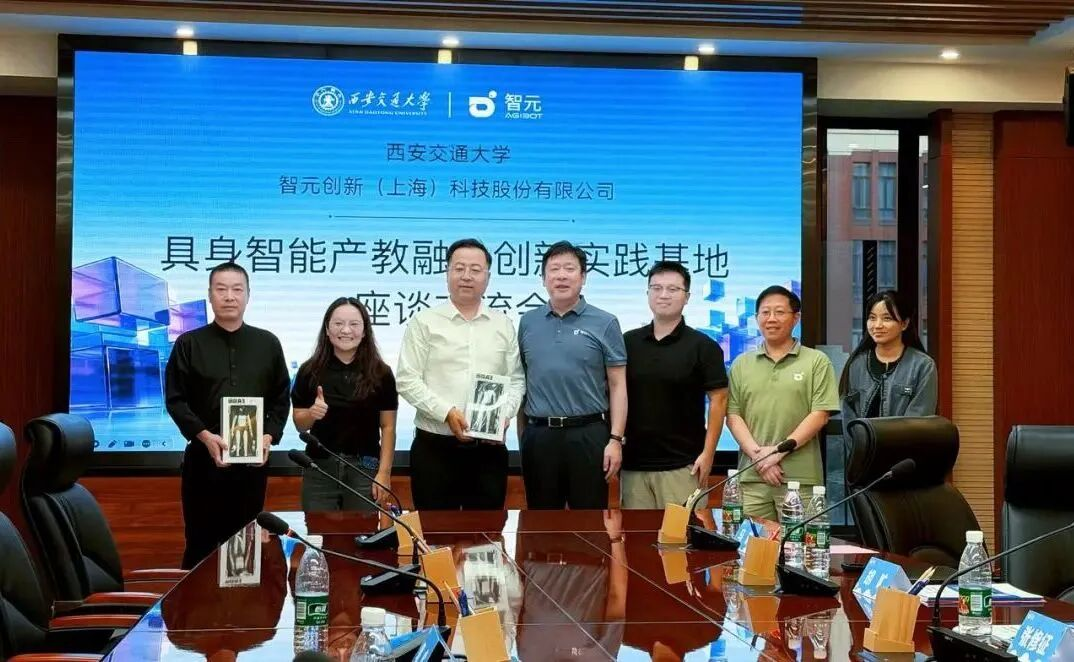
AgiBot said on Oct 16 it is placing more than 1,000 humanoid and quadruped robots plus its AIMA development platform in 20-plus Chinese universities including Peking and Tsinghua, a package it values at RMB 200 million, drawn from its five-year Yuansheng ecosystem plan of more than RMB 2 billion.
[AgiBot](/companies/agibot), the Shanghai humanoid maker, is placing more than 1,000 of its robots in Chinese universities, a commitment it values at RMB 200 million including software, the company said in a press release on Oct 16. More than 20 universities are in the first batch, among them Peking University, Tsinghua University, Zhejiang University, Shanghai Jiao Tong University, Xi'an Jiaotong University, South China University of Technology, Southeast University and Sun Yat-sen University.
The programme is a large, itemised payout from the Yuansheng ecosystem plan, which AgiBot announced at its partner conference on April 17 with more than RMB 2 billion to be spent over five years. Against that pledge, and against the company's own disclosed scale, the university deal is small in money and large in hardware. That gap is what makes it worth reading closely.
What AgiBot is handing over, and what it keeps
The robots span the company's whole body line-up: wheeled Genie units, half-size Lingxi humanoids, full-size Expedition humanoids and the D1 quadrupeds from its Kuta line, AgiBot said. Each university also gets access to AIMA, AgiBot's development platform, which bundles the LinkSoul agent platform, the LinkCraft creation tool and the Genie Studio workflow platform. The release says the value of robots plus software memberships reaches RMB 200 million.
The universities and AgiBot will co-develop courses, run joint research topics and train students on the machines through what the company calls embodied-AI industry-education innovation platforms. AgiBot said it will later set up a dedicated fund for textbooks, research projects and teacher training. It did not say how many robots each university receives or when deliveries finish.
The teaching model is built around a double track, physical robots in the lab and AgiBot's software for development, so that students go from model training and algorithm debugging to building and deploying tasks on a real machine, the release says. Around it sits a ladder of contests: the LinkCraft competition that AgiBot hosts with the talent exchange centre of the Ministry of Industry and Information Technology (MIIT), an AgiBot service-robot track in the 2026 RoboCom developer contest, and the AGIBOT World Challenge held alongside academic conferences. Joint labs, open research challenges and a sponsorship scheme for young scholars complete the set. Each of these runs on AgiBot hardware or data.
A tenth of the fleet, a tenth of the pledge
- 2025 revenue
- more than RMB 1bn
- 2026-04-17
- RMB 200M = at most 20%
- Cumulative humanoid output
- 10,000th unit
- 2026-03-30
- 1,000+ robots = about a tenth
- Yuansheng ecosystem plan (5 years)
- more than RMB 2bn
- 2026-04-17
- RMB 200M = at most 10%
- Value per donated robot
- RMB 200M / 1,000+ units
- 2026-10-16
- at most RMB 200,000, software included
- Ecosystem reach
- 237 institutions, 500+ partners, 70,000+ subscribed developers
- 2026-10-16
- first batch: 20+ universities
Company-disclosed figures from AgiBot releases (Apr 17 and Oct 16, 2026) as stored by MEKAWIRE. Method: programme value divided by each marker; because the markers are floors ('more than'), the shares are upper bounds. Disclosed, not estimated.
As of Oct 19, 2026
Our arithmetic on the disclosed figures gives three ratios. The RMB 200 million equals at most 10% of the five-year Yuansheng budget and at most a fifth of AgiBot's 2025 revenue, which it put at more than RMB 1 billion. The 1,000-plus robots equal about a tenth of the 10,000 humanoids the company said it had built by March 30. Dividing the value by the robot count gives at most RMB 200,000 per unit with software included.
The release also gives the reach of the wider plan 182 days after launch: 237 research institutions, more than 500 ecosystem partners, more than 10,000 application developers and more than 70,000 subscribed developers.
MEKAWIRE analysis
AgiBot is buying the default position in Chinese robotics classrooms, so that the next cohort of embodied-AI engineers learns its hardware and its AIMA software first.
The evidence is in the mix. The donation covers every body type the company sells and ties each to AgiBot's own software stack, which is how industrial software vendors have long seeded universities. The cost is moderate by its own yardsticks, and part of the RMB 200 million is software priced by AgiBot itself. The strongest counter-argument is that this is inventory and marketing dressed as philanthropy: robots placed in labs count as deployments, and the per-unit value is set by the giver. Without a disclosed accounting treatment, the headline value cannot be checked.
For Chinese rivals the move raises the bar for campus presence. Unitree listed on Shanghai's STAR Market in August, and AgiBot itself opened a Hong Kong office this month with joint labs with local universities in its plans.
Bull case: student projects and joint research turn into AgiBot-trained graduates and AIMA applications, widening the developer base faster than rivals can. Bear case: the robots sit idle after the first course, and the AIMA user numbers stay subscriptions rather than shipped applications.
What would change our view: the dedicated fund's size and first grants; a per-university robot count; and AIMA application numbers in AgiBot's next ecosystem update.
- A dedicated fund for courses, research and teacher training (size not disclosed)
- 237 institutions, 500+ partners, 10,000+ app developers, 70,000+ subscribed developers
- Genie wheeled, Lingxi half-size, Expedition full-size humanoids; D1 quadrupeds
- 1,000+ AgiBot robots plus AIMA software memberships to Chinese universities
- 20+ universities incl. Peking, Tsinghua, Zhejiang, SJTU, XJTU, SCUT, Southeast, Sun Yat-sen
- Yuansheng ecosystem plan, more than RMB 2bn over five years (Apr 17, 2026)
- RMB 200 million in total (company-set, software included)
Why it matters
Talent is the binding constraint in embodied AI, and whoever trains the students shapes which hardware and software they reach for later. AgiBot has attached a company-disclosed value and a four-figure robot count to a university programme, which makes its size measurable. The deal also gives AgiBot a large, low-risk deployment base for collecting data and feedback.
Rival analysis
Unitree, listed on the STAR Market since August, raises money from public investors; AgiBot is spending on placing machines and binding them to a software platform. AgiBot's own Hong Kong push (office opened Oct 9 with joint labs in its plans) points the same way.
Valuation context
AgiBot has not disclosed a valuation in MEKAWIRE's verified rows. The programme's RMB 200 million is at most a fifth of 2025 revenue (more than RMB 1bn) and at most a tenth of the five-year Yuansheng budget. Because the value is set by AgiBot and includes its own software memberships, it is better read as list value than cash outlay.
Supply-chain implications
The 1,000-plus units come from AgiBot's existing lines (Genie, Lingxi, Expedition, D1). Diverting a tenth of cumulative output into campuses tests after-sales capacity across many sites. The release names no component partners.
Signals to watch
The size and first awards of the dedicated university fund; whether AgiBot publishes per-university unit counts; the next Yuansheng ecosystem update with AIMA application numbers; competitions run on the donated robots, such as the LinkCraft contest organised with the MIIT talent exchange centre.
Analyst view
Thesis: a developer-ecosystem play priced at list value. Confidence: medium. The robot count and the university names are concrete, but the cash cost and the delivery schedule are not disclosed, so the economic weight of the programme cannot yet be measured.
Questions you should be asking
How many robots has each university received, and by when will all 1,000 be delivered? How is the RMB 200 million split between hardware and software memberships? Who services the robots on campus? Do the universities own the hardware or hold it on loan? How large is the planned dedicated fund?