Tesla clears Fremont's Model S and X lines for Optimus and sends its first robots to an in-house academy as quarterly capex jumps to $5.8 billion
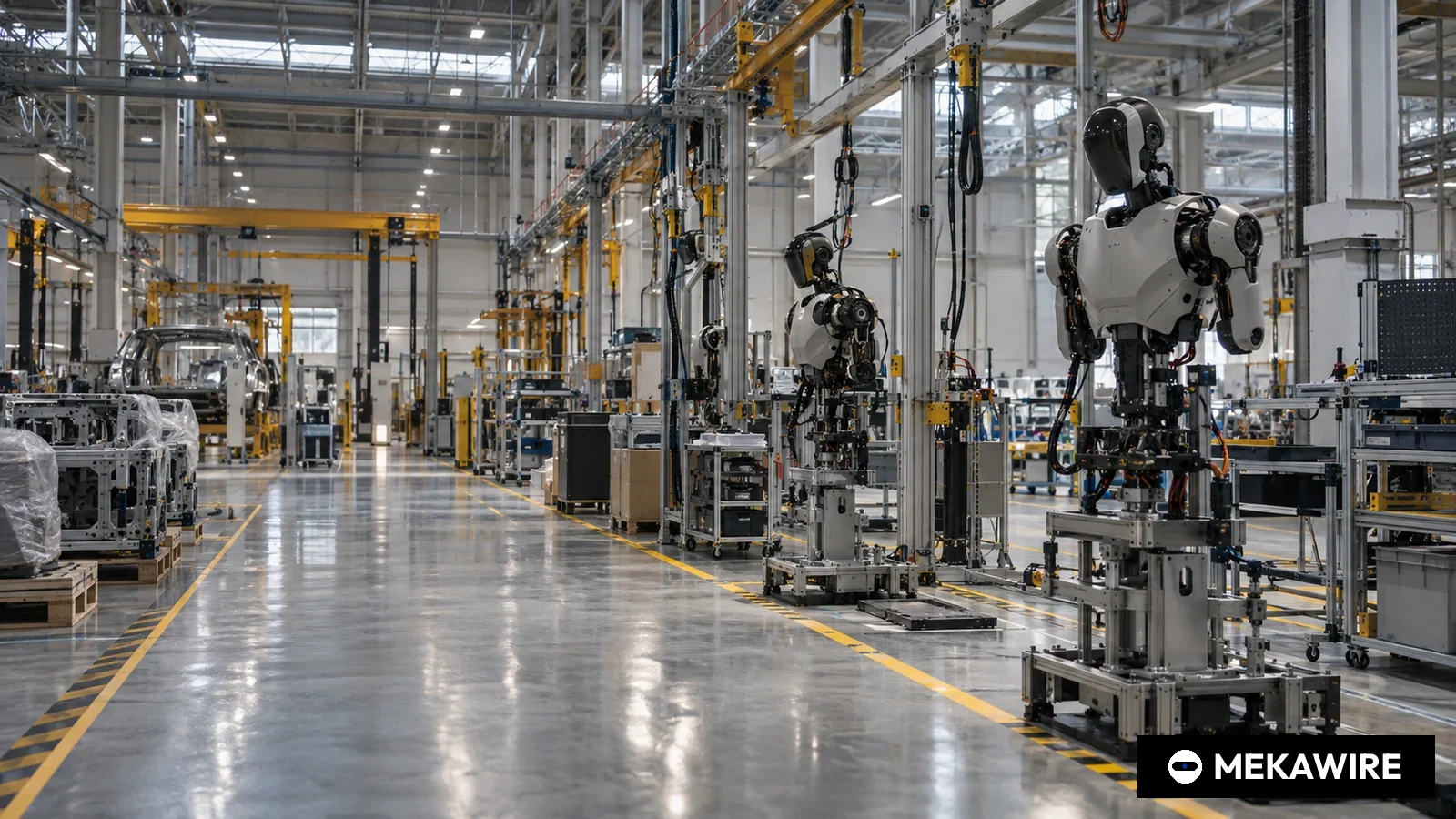
Tesla said in its second-quarter 2026 update, released on July 22, that it has decommissioned the Model S and Model X lines in Fremont and is installing first-generation Optimus production lines, with production expected soon and the first robots reserved for an internal Optimus Academy that collects training data.
Capital expenditure rose to $5.79 billion from $2.49 billion in the first quarter and free cash flow turned negative at minus $1.09 billion, while the update gave no robot unit count, no capacity figure and no date for Optimus Gen 3.
Tesla has moved Optimus from a slide to a factory floor. In its second-quarter 2026 update, posted after the US market close on July 22, the company said it has decommissioned the manufacturing lines for the Model S and Model X at its Fremont, California plant and is installing the first-generation production lines for its humanoid robot, where it expects production to start soon.
The first robots off those lines will stay in-house. Tesla wrote that the initial Optimus builds will be used in what it calls the Optimus Academy, for training data collection and further development of the robot's functions. At Gigafactory Texas, the site Tesla named in April for a later and much larger robot line, site development continued and building construction is now in full swing, the update said. Its capacity table still lists Optimus in both California and Texas with the status "Construction" and no capacity number, the same entry as three months earlier.
The numbers around the robot
The quarter that paid for this was mixed. Revenue rose 26% to $28.24 billion from $22.50 billion a year earlier, and Tesla said trailing twelve-month revenue passed $100 billion for the first time. Gross margin fell to 16.8% from 21.1% in the first quarter. Research and development expense climbed to $2.37 billion, up 49% from $1.59 billion a year earlier and 22% from the first quarter, and income from operations dropped to $398 million, a 1.4% operating margin against 4.1% in the second quarter of 2025. Net income attributable to common stockholders was $1.11 billion.
Spending is the bigger story. Capital expenditure reached $5.79 billion in the quarter, 2.32 times the $2.49 billion of the first quarter and 142% above the year-earlier level. The 10-Q puts first-half capex at $8.28 billion. With operating cash flow of $4.70 billion, free cash flow was minus $1.09 billion, the only negative quarter in the five-quarter history Tesla printed. Cash, cash equivalents and investments ended June at $43.52 billion, down from $44.74 billion at the end of March. Tesla does not say how much of the capex went to Optimus; the same update also describes Cybercab production, a Semi factory in Nevada, Megafactory Texas, AI training compute and a semiconductor fab in Austin.
- Q2 2025
- 22,496
- 1589
- 923
- 4.1
- 2394
- 146
- 36,782
- Q3 2025
- 28,095
- 1630
- 1624
- 5.8
- 2248
- 3990
- 41,647
- Q4 2025
- 24,901
- 1783
- 1409
- 5.7
- 2393
- 1420
- 44,059
- Q1 2026
- 22,387
- 1946
- 941
- 4.2
- 2493
- 1444
- 44,743
- Q2 2026
- 28,236
- 2371
- 398
- 1.4
- 5789
- -1092
- 43,524
From the financial summary in Tesla's Q2 2026 Update. Free cash flow = operating cash flow minus capital expenditure, as defined by Tesla. Q2 2026 capex is 2.32 times Q1 2026 (5,789 / 2,493) and up 142% year on year (5,789 / 2,394).
As of Oct 3, 2026
What changed since April
Set against the first-quarter update, the language is more concrete about buildings and less specific about scale. In April Tesla said preparations for its first large-scale Optimus factory would begin shortly in the second quarter, that the first-generation line in Fremont was designed for 1 million robots a year, and that it was preparing Gigafactory Texas for a second-generation line designed for long-term annual capacity of 10 million. The July text reports the car lines gone and installation under way, but does not restate either capacity figure. The outlook sentence changed from lines installed "in anticipation of volume production" to "in anticipation of production in 2026". Tesla made a similar edit for the Semi and Megapack 3, dropping "volume" there too, so the change may reflect house style rather than a narrower plan.
- Fremont line
- Preparations for first production line under way
- First-generation line to replace Model S and X lines
- Model S and X lines decommissioned; first-generation lines being installed
- Stated capacity
- Eventual 1 million robots a year
- Fremont line designed for 1 million a year; Texas line for 10 million long term
- Not restated in the text
- Start of production
- Planned before end of 2026
- Lines installed in anticipation of volume production
- Expected soon; outlook says production in 2026
- Gen 3
- Unveiling planned for Q1 2026
- Not mentioned
- Not mentioned
- First use of output
- Not stated
- Not stated
- Optimus Academy, training data collection
- Capacity table status (California / Texas)
- California: Construction
- Construction / Construction
- Construction / Construction
Wording paraphrased from Tesla's Q4 2025, Q1 2026 and Q2 2026 updates (SEC 8-K Exhibit 99.1 and ir.tesla.com). No figures estimated.
As of Oct 3, 2026
The Gen 3 thread has gone quiet. In its fourth-quarter 2025 update in January, Tesla said it planned to unveil the Gen 3 version of Optimus in the first quarter of 2026, calling it the first design meant for mass production, and set start of production on the first line before the end of 2026. Neither the April nor the July update mentions Gen 3 or an unveiling. The end-2026 production goal survives in writing; the design that is supposed to be built on the new lines has not been described in a Tesla filing since January.
Compute and the academy
The academy makes sense next to the compute disclosures. Tesla said Cortex 2, its Texas training cluster, supports both vehicle and humanoid robot autonomy software and will ramp further through the year, and that onsite compute in Texas more than doubled, measured in megawatts, during the first half of 2026. Humanoid makers are short of real-world robot data in a way car makers with millions of camera-equipped vehicles are not. A fleet of early robots doing scripted and repeated tasks inside Tesla's own buildings is a way to manufacture that data before selling the product.
The rest of the business is pulling on the same engineers. Tesla produced 451,758 vehicles and delivered 480,126 in the quarter and deployed 13.5 GWh of storage. Cybercab began production at Gigafactory Texas, with a listed capacity of more than 125,000 units, and the Semi line in Nevada is in commissioning.
How rivals compare
Competitors are already shipping and counting. Figure AI said in April that its BotQ line had reached a rate of one Figure 03 robot per hour and that more than 350 had been delivered, and in June put the robot on BMW's Spartanburg floor; its last disclosed valuation was $39 billion after a Series C of more than $1 billion. Agility Robotics agreed in June to list through Churchill Capital Corp XI at a $2.5 billion pre-money equity value, with a Foxconn-led PIPE of about $200 million. In China, UBTech sold 921 full-size humanoids in the first half of 2026, Unitree raised RMB6.10 billion in its STAR Market listing in August, and AgiBot rolled out its 20,000th robot in September. Tesla has not published a single Optimus unit figure.
- Tesla
- US
- Q2 2026 capital expenditure
- 2026-07-22
- 5789
- USD
- No data
- 1,000,000
- Figure AI
- US
- Series C
- 2025-09-16
- 1000
- USD
- 39
- 12,000
- Agility Robotics
- US
- PIPE alongside SPAC merger
- 2026-06-24
- 200
- USD
- 2.5
- 10,000
- Apptronik
- US
- Series A-X
- 2026-02-11
- 520
- USD
- No data
- No data
- 1X Technologies
- US
- Series B
- 2024-01-13
- 100
- USD
- No data
- 10,000
- UBTech Robotics
- CN
- Placing of new H shares
- 2025-11-25
- 3109.04
- HKD
- No data
- 5,000
- Unitree Robotics
- CN
- STAR Market IPO, gross proceeds
- 2026-08-19
- 6099.32
- CNY
- 60.99
- No data
- AgiBot
- CN
- Tender offer for control of Swancor (total cost)
- 2025-10-30
- 1997
- CNY
- No data
- No data
Amounts as disclosed, not converted. Tesla capacity is the Fremont design figure from the Q1 2026 update; Figure is BotQ's initial line; Agility is RoboFab; 1X is Hayward; UBTech is its 2026 capacity target. Agility valuation is pre-money equity value in the SPAC deal; Unitree value is issue price times post-IPO shares; AgiBot amount is the tender offer cost computed from filings. Tesla Q2 capex / Figure Series C floor = 5,789 / 1,000 = 5.8x. — = unknown.
As of Oct 3, 2026
Risks and open questions
The update leaves the commercial questions unanswered. Tesla gives no count of robots built, no external customer, no price, no named supplier for actuators, hands or batteries, and no split of capex by programme. Reserving the first output for an internal academy implies the robot is not yet ready for paying work outside Tesla. Margins are thin, R&D is rising fast, and the company is funding several factory ramps at once from a cash pile that shrank in the quarter.
The next checkpoints are close. Tesla typically publishes third-quarter production and deliveries in early October and its third-quarter update in late October, where the Optimus row in the capacity table will show whether Fremont has moved beyond "Construction". The January 2026 target of starting production before the end of 2026 is the hard deadline Tesla set for itself.
MEKAWIRE analysis
Tesla's July update turns Optimus into a concrete floor-space and capex commitment, but by sending the first robots to an internal academy and leaving its capacity figures out of the text, it signals that 2026 is a data-gathering year for the robot, not a shipping year.
The evidence is in the sequencing. The Model S and X lines are physically gone, which is costly to reverse, and capex more than doubled in one quarter. Yet the only stated use of early output is training data collection, the Gen 3 design promised for the first quarter has not appeared in two consecutive updates, and the 1 million and 10 million figures from April were not repeated.
The strongest counter-argument is that Tesla has always built manufacturing first and told the story later. Removing a premium car line to make room for robots is not something a company does for a demonstration, and the academy approach mirrors how Tesla used its car fleet to train driving software. Silence on capacity in one update is not a retraction.
Bull case: Fremont starts output before December, the academy fleet produces training data at a scale no start-up can match, and a production-intent Gen 3 appears by early 2027 with a cost structure borrowed from automotive. Tesla's $43.5 billion of cash and investments lets it absorb several quarters of negative free cash flow while rivals depend on venture rounds.
Bear case: the line starts but output stays internal through 2027 because the robot cannot do enough useful work, while capex for compute, Cybercab and the chip fab keeps free cash flow negative. Chinese makers that already sell thousands of units on thin prices set the cost benchmark before Optimus reaches a customer.
Signals to watch:
- Early October 2026: Tesla's third-quarter production and deliveries release, for any mention of Optimus output.
- Late October 2026: the third-quarter update, for the Optimus status in the capacity table and any return of Gen 3 or the 1 million figure.
- 31 December 2026: the end-2026 start of production target set in the January update.
- Model S and X lines decommissioned; first-generation Optimus lines being installed, production expected soon
- Q2 2026 Update, posted after US market close on 22 July 2026 (8-K Item 2.02)
- $5.79 billion (Q1: $2.49 billion); first-half capex $8.28 billion
- $28.24 billion, up 26% year on year
- Used in an internal Optimus Academy for training data collection
- Minus $1.09 billion
- $2.37 billion, up 49% year on year
- Site development continued, building construction in full swing; Optimus status Construction
- $398 million, 1.4% margin
- $43.52 billion at 30 June 2026
Why it matters
This is the first quarter in which Tesla reported an irreversible physical step for Optimus. Decommissioning the Model S and X lines removes a product family that defined the brand, and installing robot tooling in a permitted automotive plant shortens the path from prototype to output compared with a greenfield site. For suppliers and rivals, Fremont is now a real line whose status can be tracked quarter by quarter in Tesla's own capacity table.
The academy disclosure matters as much as the line. Tesla is telling investors that the first robots are an instrument for collecting training data, not inventory for sale. That frames 2026 output as an internal cost centre and pushes any revenue contribution from Optimus beyond the current year, which is how investors should read the absence of unit, price or customer data.
Rival analysis
Figure AI is the closest US analogue: it builds its own robots at BotQ, reported a rate of one Figure 03 per hour and more than 350 delivered by April 29, and has a paying automotive deployment at BMW Spartanburg. Agility Robotics has paid Digit deployments and more than $300 million of contracted orders disclosed in its SPAC materials, and 1X has a 10,000-unit factory in Hayward aimed at homes. Each of these has published output or order figures; Tesla has published design capacity only.
In China the comparison is harsher on volume. UBTech sold 921 full-size humanoids in the first half of 2026 and AgiBot passed its 20,000th robot in September, while Unitree is now a listed company with H1 2026 revenue of RMB1.15 billion. None of them has Tesla's balance sheet or in-house AI compute, but all of them are accumulating field hours and customer feedback that Tesla's academy is designed to replicate internally.
Valuation context
Tesla does not value Optimus separately, so the useful comparison is spending. Second-quarter capex of $5.79 billion is about 5.8 times the floor of Figure's Series C ($1 billion) and roughly 29 times the Foxconn-led PIPE in Agility's listing ($200 million). Even if only a small share of Tesla's capex goes to robots, the company can outspend private humanoid makers without raising capital.
The constraint is cash generation rather than cash on hand. Free cash flow was minus $1.09 billion in the quarter and operating margin was 1.4%, so the robot programme is being funded from a $43.52 billion reserve rather than from current earnings. Private peers are valued on option value ($39 billion for Figure, $2.5 billion pre-money for Agility); Tesla's robot option is embedded in a company whose core margins are compressing.
Supply-chain implications
Tesla names no Optimus suppliers in the Q2 update, the Q1 update or the 10-Q. The robot's bill of materials is dominated by actuators, which suppliers such as Hyundai Mobis have described as more than 60% of humanoid material cost in their own disclosures; reducers, screws, motors and hands are where component makers in Japan, Korea and China compete for humanoid business.
The Q1 update described a first-generation line designed for 1 million robots a year. A line of that size would require component volumes far beyond what any humanoid supplier ships today, which is why component makers watch Tesla's capacity table closely. Harmonic Drive Systems reported North American orders of ¥7.08 billion in April to June 2026 without naming customers, a reminder that supplier data rarely confirms a single programme.
Signals to watch
Watch the capacity table first. A change in the Fremont Optimus row from Construction to pilot production or production in the third-quarter update would be the first formal confirmation that the line is running. A capacity number in that row would show whether the 1 million design figure still stands.
Second, watch for Gen 3. Tesla promised a first-quarter 2026 unveiling in January and has not mentioned it since in its updates. Third, watch capex and free cash flow: another quarter of capex near $6 billion with negative free cash flow would test the outlook statement that Tesla will maintain a strong balance sheet while funding long-term capacity expansion.
Analyst view
Thesis: Optimus has become a real manufacturing programme in 2026, but the July disclosure points to internal use and data collection through at least the end of the year, with no external revenue before 2027. Confidence: medium.
We hold medium confidence because the physical evidence (decommissioned car lines, capex doubling, compute expansion) is strong and verifiable, while the commercial evidence is absent: no unit counts, customers, prices or Gen 3 specification. The confidence would rise to high if the third-quarter update shows Fremont in production and restates a capacity figure, and fall to low if the end-2026 start slips without explanation.
Questions you should be asking
How many Optimus units does Tesla expect the Fremont lines to build in 2026, and how many will go to the Optimus Academy rather than factory work?
Is the first-generation Fremont line still designed for 1 million robots a year, and is the Gigafactory Texas building for the second-generation line on the same schedule as described in April?
When will Tesla show the Gen 3 design it said it would unveil in the first quarter of 2026, and how much of second-quarter capex relates to Optimus?