Ultra raises $50M Series A led by Framework for its OP1 packing robots
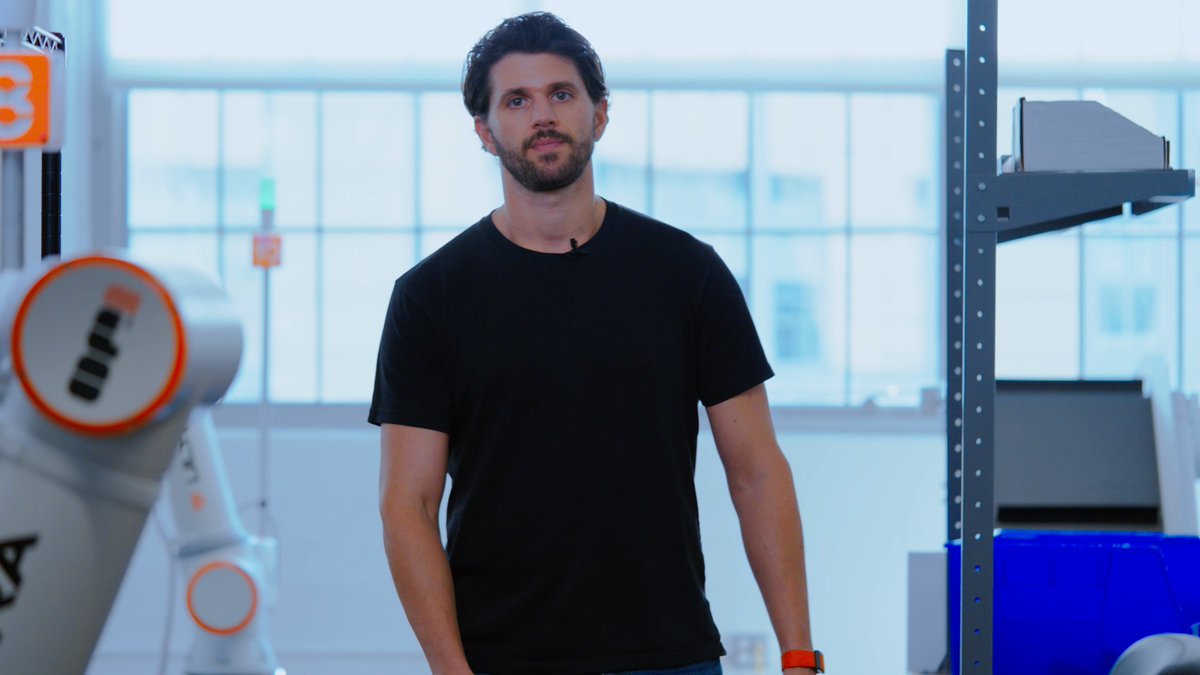
Ultra, the Brooklyn maker of the OP1 warehouse packing robot, said on X on Oct 9 that it has raised $62M in total, including a $50M Series A led by Framework Ventures. In MEKAWIRE's data it is the second-largest warehouse-automation round of the past 12 months after Mytra's $120M and the largest Series A in that set.
Ultra, a two-year-old Brooklyn company that rents out arm-based robots for warehouse packing, has raised a $50M Series A led by Framework Ventures, the company said in a post on its X account on Oct 9. Ultra put its total funding at $62M including the new round. Its website now leads with the announcement.
The company framed the raise around deployment rather than research. Robotics has a distribution problem, it wrote: making a robot impressive in a controlled setting is relatively easy, while putting it into the open world, keeping it running and earning the trust of the people beside it, again and again, is the hard part.
What OP1 does on a warehouse floor
Ultra's website describes Operator, or OP1, as a multi-purpose AI robot for packing, sorting and kitting that can run up to 24 hours a day. The published specifications are a 5 by 5 ft footprint, a work area of up to 10 by 10 ft, vertical reach from 0 to 10 ft, up to 10 lb per arm and power from a standard 120 V outlet with a 10 A peak draw. The site lists deployments in New York, Atlanta, Carlstadt in New Jersey and Austin, where it says six OP1s run side by side, and says the robots were packing orders within hours of delivery.
The model inside matters as much as the hardware. When Physical Intelligence laid out its plan on Feb 24 to sell its robot models to other hardware makers, it named Ultra as a partner and reported a full packing shift at 96.4% autonomy, MEKAWIRE reported at the time.
- Mytra
- Series C
- $120M
- 2026-01-15
- Ultra
- Series A
- $50M
- 2026-10-09
- Gather AI
- Series B
- $40M
- 2026-02-09
- Tutor Intelligence
- Series A
- $34M
- 2025-12-01
- Unbox Robotics
- Series B
- $28M
- 2026-01-21
- Destro AI
- Seed
- $8M
- 2026-09-29
- Avatar Robotics
- Seed
- $6.5M
- 2026-08-05
Disclosed amounts in MEKAWIRE's database, companies with primary category warehouse automation. Ultra share = 50 / 286.5 = about 17%.
As of Oct 18, 2026
MEKAWIRE analysis
Ultra is a deployment company built on someone else's robot brain: the $50M buys installers, service and fleet data, not a foundation model.
In MEKAWIRE's database, six warehouse-automation rounds with disclosed amounts were announced in the 12 months before Ultra's: $236.5M in total. Adding Ultra's $50M makes $286.5M, of which Ultra holds about 17% (50 / 286.5). Only Mytra's $120M Series C in January was larger, and Ultra's round is about 1.5 times Tutor Intelligence's $34M Series A, the next-largest Series A in the set (50 / 34). Figures are disclosed amounts only, as of Oct 18, 2026.
The bull case is that small, outlet-powered robots that plug into existing packing stations sell faster than fixed automation, and every shift feeds training data back to the model partner. The bear case is that Ultra depends on Physical Intelligence for the intelligence layer while competing with well-funded integrators; if model access gets expensive or exclusive elsewhere, the margin sits with the model provider. Ultra has disclosed neither revenue nor fleet size.
What to watch
Fleet size and the number of customer sites in Ultra's next update, whether it names new states beyond the four on its site, and any change in its model partnership with Physical Intelligence.
- Framework Ventures
- $50M Series A
- 5 x 5 ft footprint, up to 10 lb per arm, 120 V outlet (10 A peak)
- Ultra (Ultra Robotics), Brooklyn, New York, established 2024
- OP1 Operator robot for packing, sorting and kitting
- X post, Oct 9, 2026
- New York, Atlanta, Carlstadt (NJ), Austin (company site)
- Physical Intelligence (pi0.6 packing shift at 96.4% autonomy, Feb 24)
- $62M including the Series A (company post)
Why it matters
Ultra is a test of the 'robot brain as a service' model: a hardware and operations company that buys its intelligence from Physical Intelligence. A $50M Series A signals that investors will fund the deployment layer separately from the model makers.
Warehouse packing is a labour-heavy, repetitive task in e-commerce fulfilment; outlet-powered robots that sit at existing stations lower the barrier compared with fixed automation lines.
Rival analysis
In MEKAWIRE's warehouse-automation set, the closest comparisons are Mytra ($120M Series C, Jan 2026), Gather AI ($40M Series B), Tutor Intelligence ($34M Series A) and Unbox Robotics ($28M Series B). Tutor is the nearest model: AI-driven arms at packing and kitting stations. Ultra's round is larger than Tutor's by about 1.5 times.
Valuation context
No valuation was disclosed. Total funding of $62M including the Series A implies $12M raised earlier; Ultra did not break that down in its post. Without revenue or fleet figures, any valuation inference would be an estimate and is not made here.
Supply-chain implications
OP1 is a two-arm station on casters powered from a standard outlet. Ultra has not disclosed its arm or gripper suppliers. The model layer comes from Physical Intelligence, which concentrates a key dependency on one partner.
Signals to watch
Fleet size and sites; new states; pricing disclosure; any change to the Physical Intelligence partnership; follow-on rounds by rivals such as Tutor Intelligence.
Analyst view
Confidence medium that the round accelerates deployments in the US; low on unit economics because Ultra has disclosed no revenue, no fleet count and no price.
Questions you should be asking
How many OP1s are deployed and at how many customers? What share of the $50M goes to field service versus engineering? Is the Physical Intelligence relationship exclusive in either direction?