Origin raises $20M for OG-1 wall-finishing robots: Accel and Zacua co-lead
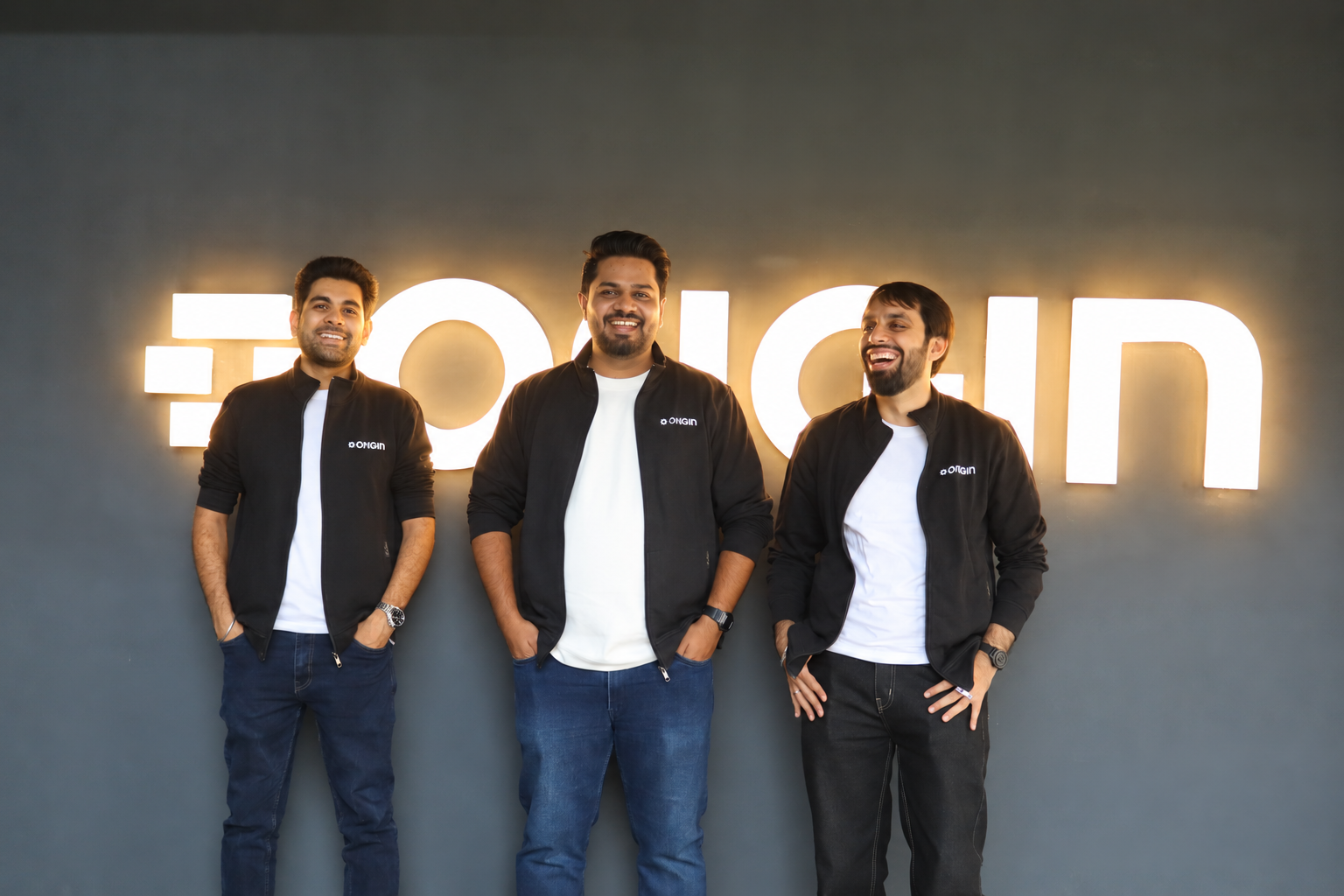
Origin, a San Francisco start-up whose OG-1 robot applies compound, sands and primes interior walls, came out of stealth on Oct 15 with $20M in total funding co-led by Accel and Zacua Ventures, and is targeting 150 deployed robots by the end of 2027.
Origin, a San Francisco company that builds a robot to finish interior walls, came out of stealth on Oct 15 with $20M in total funding co-led by Accel and Zacua Ventures, the company said in a release on its website. Unilazer Ventures, Schema Ventures, Z21, ISAI and Imad Ventures also invested, together with angel investors from Anduril, Skild AI, 1X and Tesla. Accel published its own investment note the same day. Origin did not split the $20M into rounds, and Accel's note says the team reached live customer deployments before raising a Series A.
The money buys robots on job sites, not more research
Origin said most of the funding will go into building out its fleet of OG-1 robots, with the rest paying for larger customer pilots in the US and Europe and for extending the platform to more interior trades. It named pilots with two of the largest drywall finishing contractors in the US and said further pilots are scheduled in Germany, Sweden, France and Saudi Arabia. The company is targeting 150 robots deployed by the end of 2027 and plans to add taping, drywall installation, drilling and conduit installation on the same hardware.
OG-1 applies joint compound, sands and primes walls. According to the company it moves on a three-wheeled base with a 360-degree view, reaches up to 14 feet, and holds sanding pressure steady against the wall through real-time force control; it works beside crews without a cordoned-off area. The software, which Origin calls a Construction Action Model, has three layers: a reasoning system that plans sub-tasks, an action policy that navigates, finds where to work and chooses tools, and a controller that executes the motion. It is trained on high-fidelity simulation and data from live sites. Crews still handle site mapping and material refills, the release said.
Origin was founded in early 2025 by Yogesh Ghaturle, Ashish Daga and Tushar Makkar and put its first robots on New York job sites within 10 months, it said. Ghaturle previously founded Perpule, a point-of-sale software company that Amazon acquired in 2021. Origin's website counts more than 100,000 square feet completed and 5,000 hours worked, which gives at least 20 square feet per robot hour (100,000 / 5,000, MEKAWIRE calculation). The company also claims three times human speed but has not published how it measured that. Zacua founding partner Vivin Hegde has joined the board.
- 2026-10-15
- Total funding disclosed at launch, not split into rounds
- $20M
- Accel and Zacua Ventures (co-leads)
Source: Origin release and Accel investment note, Oct 15, 2026.
As of Oct 18, 2026
MEKAWIRE analysis
Origin is raising like a seed-stage software company while promising a hardware fleet: $20M is small against the category's recent cheques, so the 150-robot target depends on a priced round before 2027.
In MEKAWIRE's database, construction-robot companies disclosed five rounds in the 12 months to Oct 18, 2026, for $562M including Origin's. Origin's $20M is the smallest of the five and 3.6% of the total (20 / 562); the median of the other four is $120M. The nearest precedent is Canvas, the San Francisco drywall-finishing robot maker whose core technology JLG acquired in January 2026, according to MEKAWIRE's company profile: a single-trade wall robot did not become a standalone company. Origin's answer is a multi-trade platform driven by one foundation model. Accel has already backed physical AI at far larger scale through Mind Robotics, which raised a $500M Series A in March. The strongest case for Origin is that wall finishing is repetitive, labour-heavy and measurable per square foot, so a robot can be priced on output rather than on hours.
- Bedrock Robotics
- US
- Series B
- $270M
- 2026-02-04
- ICON
- US
- Series D
- $200M
- 2026-10-13
- Reframe Systems
- US
- Venture round
- $40M
- 2026-08-31
- Monumental
- NL
- Series B
- $32M
- 2026-07-15
- Origin
- US
- Total at launch
- $20M
- 2026-10-15
Disclosed amounts, companies with primary category construction robots, as of 2026-10-18; not estimates. Origin share = 20 / 562 = 3.6%. Median of the other four = (40 + 200) / 2 = $120M.
As of Oct 18, 2026
Three things would test that view: whether the two US contractor pilots turn into fleet orders, the first deployment in Germany, Sweden or France, and a disclosed robot count against the 150 target. A priced Series A, which Accel's note implies has not happened yet, would show what investors pay for that progress.
- Vivin Hegde, Zacua Ventures
- Two large US drywall finishing contractors; Germany, Sweden, France, Saudi Arabia scheduled
- 150 robots deployed by end-2027
- Origin (Artila Robotics Inc.), San Francisco, founded early 2025
- $20M total, co-led by Accel and Zacua Ventures
- OG-1 wall-finishing robot: compound, sanding, priming, up to 14 ft
- 100,000+ sq ft completed, 5,000 hours (company site)
- Unilazer Ventures, Schema Ventures, Z21, ISAI, Imad Ventures; angels from Anduril, Skild AI, 1X, Tesla
Why it matters
Interior finishing is one of the few construction trades where output is measured per square foot, which lets a robot be sold on results. Origin is the first company in MEKAWIRE's construction-robot set to target drywall finishing since Canvas sold its core technology to JLG in January 2026.
Rival analysis
Against the other four construction-robot companies with disclosed rounds in the past 12 months (Bedrock Robotics, ICON, Reframe Systems, Monumental), Origin is the only one working inside finished interiors. Bedrock automates excavators, ICON prints walls, Reframe builds homes in factories and Monumental lays bricks. Its closest direct rival in MEKAWIRE data, Canvas, is no longer independent.
Valuation context
No valuation was disclosed. Origin's $20M equals 3.6% of the $562M the category disclosed in 12 months. Accel's note says the company reached customer deployments before a Series A, so the $20M should be read as pre-Series A capital.
Supply-chain implications
OG-1 is a wheeled base with arms and interchangeable power tools. The company has not named component suppliers or a contract manufacturer; it says the platform is ready for manufacturing at scale.
Signals to watch
Conversion of the two US drywall contractor pilots into fleet orders; the first European pilot (Germany, Sweden, France) and Saudi Arabia; a disclosed deployed-robot count against the 150 target for end-2027; a priced Series A.
Analyst view
Thesis: a credible multi-trade platform at seed scale. Confidence: medium. The site numbers (100,000 square feet, 5,000 hours) show real use, but the three-times-speed claim is unaudited and the fleet target needs more capital.
Questions you should be asking
How many OG-1 units are deployed today? Is OG-1 sold, leased or charged per square foot? Who manufactures the robot? How was three times human speed measured, and on which surfaces?