ARM Institute wins nearly $90 million from the Department of War to put robots, AI and drones into 12 military manufacturing sites
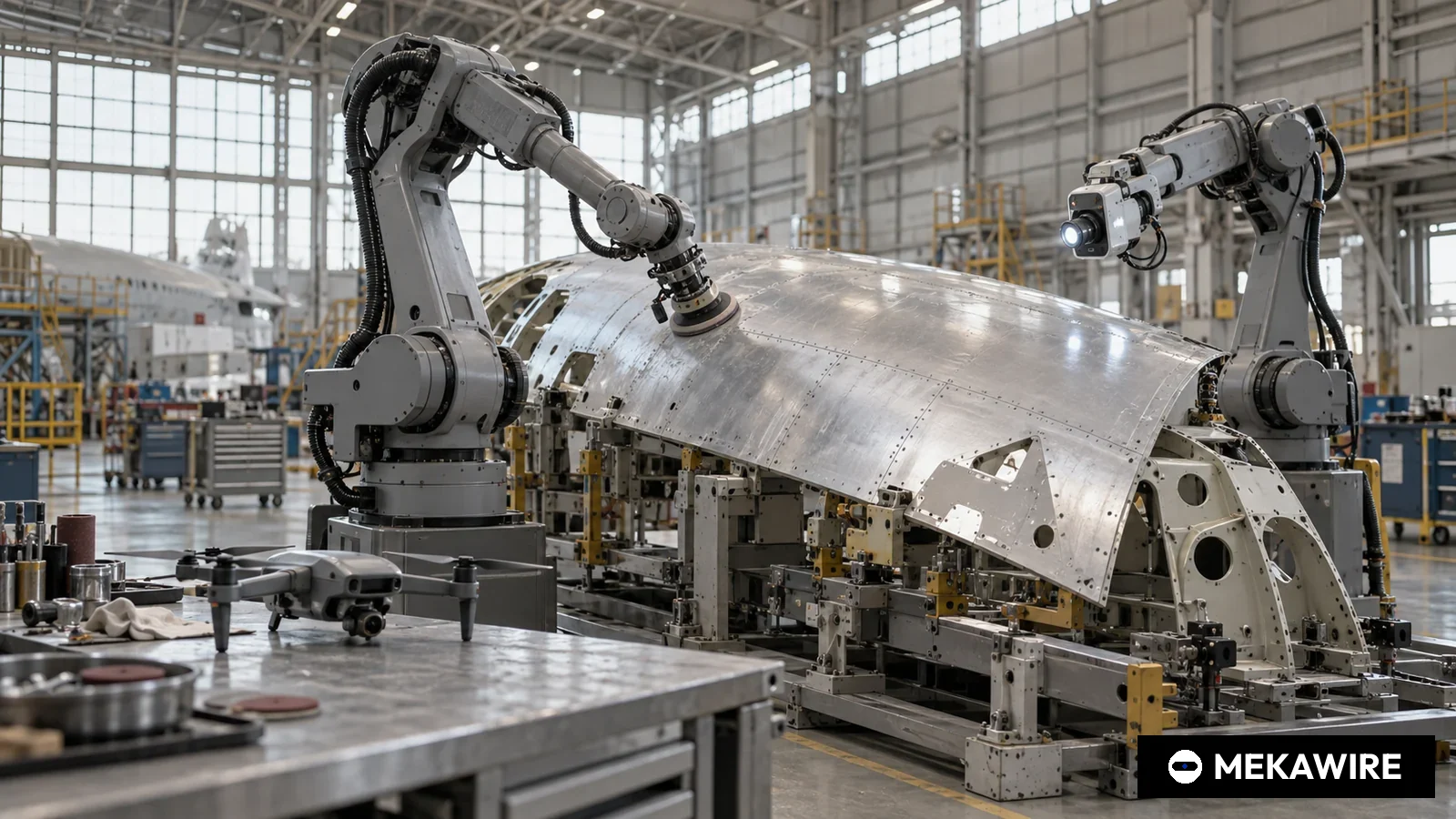
The Pittsburgh-based ARM Institute said on Sept. 3, 2026 that the Department of War's manufacturing technology office awarded it nearly $90 million for ten projects under the Organic Industrial Base Modernization Challenge.
Fifteen member organizations must deliver working robotics and AI solutions at 12 military manufacturing sites within two years, each paired with a workforce plan.
The Advanced Robotics for Manufacturing (ARM) Institute in Pittsburgh said on Sept. 3, 2026 that it has been awarded nearly $90 million for ten projects that will bring robotics, artificial intelligence and drones into the US military's own production and maintenance sites. The money comes from the Office of the Under Secretary of War Manufacturing Technology Office (OSW ManTech) through its Organic Industrial Base (OIB) Modernization Challenge, according to the institute's release.
Fifteen ARM member organizations will deliver working solutions at 12 military manufacturing sites across the United States within a two-year timeframe, the institute said. Ten projects and 12 sites put the average at no more than about $9 million per project and $7.5 million per site, a MEKAWIRE calculation from the published totals. The release did not name the projects, the companies or the sites, and it did not say how the total is split.
The stated targets are specific in kind. ARM said the work will improve safety in energetics production, raise manufacturing quality with AI, speed mission readiness with drones and remove production bottlenecks with robotics, across several military branches. Every solution carries a workforce readiness plan led by the institute, covering the skills the new equipment needs, upskilling of the current workforce and recruitment. "Innovation cannot exist in a vacuum. A skilled workforce is needed to support these technologies," Chief Workforce Officer Lisa Masciantonio said in the release.
Chief Executive Jorgen Pedersen said the award recognizes the institute's leadership in manufacturing modernization and "the key role our member consortium plays in these efforts," calling the programme a "historic effort to modernize the Organic Industrial Base." The organic industrial base is the military's government-owned manufacturing and maintenance capacity, as distinct from the private defense contractors that build most new weapons.
The award is large by the institute's own standards. In January 2024 ARM announced a continuation agreement with the Pentagon's ManTech programme worth $35.4 million through 2028, with an option to renew for another five years that would bring the total possible investment to $70.4 million over ten years. The new OIB money is about 2.5 times that five-year base, according to a MEKAWIRE calculation (90 / 35.4). At the time ARM said it had funded more than 150 robotics and workforce projects and had grown to more than 400 members; its current release cites a consortium of more than 500 member organizations and partners. The institute was founded in 2017.
- ARM Institute (robotics, AI, drones)
- 2026-09-03
- 90
- 10
- 12
- 9
- Two-year delivery
- America Makes with NCDMM (additive manufacturing)
- 2026-08-10
- 15
- 6
- No data
- No data
- Awards up to US$15M as published
- LIFT project call (advanced materials)
- 2026-03
- No data
- No data
- No data
- No data
- Expected awards US$10M to 15M each; max 24 months; target start Oct. 1, 2026
ARM total published as 'nearly $90M', used as 90. Average per project = total / projects, an upper bound and a MEKAWIRE calculation. America Makes states 'awards up to $15M' without saying whether that is per award or in total, so no average is derived. LIFT row from its March 2026 call instructions. Figures disclosed, not estimated.
As of Oct 3, 2026
ARM was not the only recipient. The challenge was issued earlier in 2026 to the network of Manufacturing Innovation Institutes. On Aug. 10, America Makes and the National Center for Defense Manufacturing and Machining (NCDMM) in Youngstown, Ohio, named six winners of the same challenge with awards of up to $15 million: Honeywell, HRL Laboratories, Machina Labs, Accenture Federal Services, Stratasys and REM Surface Engineering. Machina Labs, which raised a $124 million Series C in February, won with a project titled "Edge Factories for Production of Low-Cost Weapon Systems." The Manufacturing USA listing for the additive track said typical awards would run $10 million to $15 million per project, with up to $25 million for larger concepts, and took applications from March 5 to April 2, 2026. LIFT, the advanced materials institute, told its members in March that the period of performance may not exceed 24 months, that projects may require cost share and that the target start date was Oct. 1, 2026.
The paperwork also tracks the department's rebranding. The March call documents named the issuing office OSD ManTech; by the August and September announcements it had become OSW ManTech under the Department of War, formerly the Department of Defense.
Several questions remain open. ARM has not said which of its members lead which projects, which depots, arsenals or plants will host them, or whether members contribute cost share on top of the federal money. Pilot lines inside government facilities have historically struggled to move into sustained procurement once demonstration funding ends, and the two-year clock leaves little room for qualification work on energetics lines, where safety rules are strict.
MEKAWIRE analysis
The award turns the ARM Institute from a research grant-maker into a delivery contractor for the Pentagon's own plants, and its real test is whether ten pilots become funded production capability after the two-year window closes.
The evidence for a shift is in the terms. The OIB money is roughly two and a half times ARM's five-year base agreement, it is tied to named outcomes at 12 operating military sites rather than to open research calls, and each project must ship with a workforce plan. That is a deployment brief, not a technology roadmap.
The strongest counter-argument is scale. About $90 million spread across ten projects and 12 sites buys pilot cells, not factory transformation, and the release discloses no project names, no host sites and no follow-on funding line. Without those, the programme could repeat the pattern of well-reviewed demonstrations that never reach a programme of record.
Bull case: robotics integrators and drone suppliers in the ARM consortium gain reference installations inside government plants, where qualification is the hardest barrier. If the depots adopt the cells, the services could fund replication across sister sites from sustainment budgets, giving small US robotics firms recurring defense revenue.
Bear case: two years is short for safety-critical energetics and depot work, and cost share may squeeze smaller members. If the department's priorities shift or follow-on money is not budgeted, the cells stay as one-off pilots and the headline figure overstates the market created.
- ARM Institute OIB Modernization award
- US
- USD
- 90
- Two years
- Defense manufacturing award, 10 projects
- ARM Institute ManTech continuation agreement (base)
- US
- USD
- 35.4
- Through 2028
- Cooperative agreement, renewable five years
- K-Moonshot AI humanoid programme (KIST, LG affiliates)
- KR
- KRW
- 50,400
- 2026 to 2030
- R&D programme (35.4bn won government)
- Humanoid core parts (sensors, actuators, batteries)
- KR
- KRW
- 62,000
- 2027 budget proposal
- Budget line
- Humanoid safety certification centre, Daegu
- KR
- KRW
- 9,681
- 2026 to 2030
- Government funding cap
- National Growth Fund stake in Wonik Robotics
- KR
- KRW
- 150,000
- Payment Nov. 20, 2026 (scheduled)
- State equity
- AI robotics strategy
- JP
- JPY
- No data
- Targets to 2040
- Strategy; 20 trillion yen market goal, no budget figure
Amounts as published in each primary source and in earlier MEKAWIRE articles, not converted between currencies. Ratio of the OIB award to ARM's base agreement = 90 / 35.4 = 2.5x (MEKAWIRE calculation). Figures disclosed, not estimated.
As of Oct 3, 2026
Signals to watch:
- Oct. 1, 2026: the target project start date set in the OIB call instructions; watch whether ARM projects are under contract by then.
- Nov. 17 to 19, 2026: ARM's 10th annual member meeting in Pittsburgh, the likeliest venue for naming project leads and host sites.
- 2028: ARM's $35.4 million continuation agreement is funded through 2028 and carries a five-year renewal option; renewal terms will show whether the OIB model becomes core funding.
- Nearly US$90 million
- 12 military manufacturing sites in the US
- OSW ManTech, Department of War
- 10, led by the ARM Institute and its members
- Sept. 3, 2026
- Organic Industrial Base (OIB) Modernization Challenge
- Working solutions within two years
- US$35.4 million through 2028 (Jan. 2024)
- 15 member organizations
- About US$9 million or less (MEKAWIRE calculation)
Why it matters
The OIB challenge is the clearest sign yet that US defense manufacturing money is moving from research toward installed equipment inside government plants. ARM's release frames every project around a delivered solution at an operating site within two years, with a workforce plan attached, which is a different contract shape from the open project calls that built the institute.
For robotics suppliers, the government-owned base is a hard market to enter because qualification, safety approval and security rules favour incumbents. A funded pilot at a depot or ammunition plant is a reference that is difficult to buy any other way, and ten of them arriving at once could set the template for how the services specify robotics and AI on maintenance and energetics lines.
Rival analysis
Within the same challenge, America Makes and NCDMM took the additive manufacturing track, naming six winners on Aug. 10 including Honeywell, HRL Laboratories, Machina Labs, Accenture Federal Services, Stratasys and REM Surface Engineering. LIFT ran a parallel call for advanced materials with expected awards of $10 million to $15 million each. ARM's nearly $90 million for ten projects is the largest institute-level total disclosed so far, but other institutes have not all published results.
At the company level, venture-backed defense manufacturers such as Machina Labs ($124 million Series C in February 2026) are competing for the same depot modernization work, alongside large primes and systems integrators. ARM's advantage is a consortium of more than 500 members that can assemble integrator, robot maker and university teams quickly; its weakness is that it does not own production capacity.
Valuation context
The disclosed figures allow only simple ratios. The award is about 2.5 times ARM's $35.4 million five-year base agreement and about 1.3 times the $70.4 million ten-year maximum if renewed (MEKAWIRE calculations, 90 / 35.4 and 90 / 70.4). The average is no more than about $9 million per project and $7.5 million per site.
Those sizes match the $10 million to $15 million award band other institutes advertised, which suggests the department set a common ticket size across tracks. For private robotics firms, a share of a $9 million project is small against venture rounds in the sector, but its value lies in qualification inside government facilities rather than in revenue.
Supply-chain implications
The focus areas map onto known bottlenecks in the government-owned base: energetics production where manual handling creates safety risk, inspection and quality where AI vision can cut rework, and maintenance flows where drones can speed inspection and readiness checks. Each implies demand for robot arms, end effectors, vision systems, edge computing and integration services, plus explosion-proof and secure-network variants that few suppliers stock.
Security and sourcing rules for defense sites typically favour domestic or allied hardware and software. Members that can certify supply chains and cybersecurity for operational technology networks will be advantaged; those relying on foreign-made components may face restrictions at host sites.
Signals to watch
First, the Oct. 1, 2026 target start date written into the OIB call instructions, and whether ARM and its members announce signed project agreements around it. Second, the ARM member meeting in Pittsburgh on Nov. 17 to 19, 2026, where project leads and host installations may be disclosed.
Third, the FY2027 defense appropriations and ManTech budget lines, which will show whether OIB modernization is a one-off challenge or a recurring account. Fourth, the 2028 decision on ARM's continuation agreement renewal option.
Analyst view
Thesis: the award is a meaningful step toward installed robotics in the US government-owned industrial base, but its industrial impact depends on follow-on funding that has not been disclosed. Confidence: medium.
Reasons for medium rather than high: the total, project count, member count, site count and two-year horizon are confirmed on ARM's own release, and the parallel America Makes and LIFT documents confirm the programme's structure. But no project names, host sites, cost-share terms or transition budgets are public, so the size of the eventual market cannot be judged.
Questions you should be asking
Which 15 members lead or deliver the ten projects, and which of the 12 sites belong to which service? How much of the nearly $90 million is already obligated, and is member cost share required on top?
What metrics will the department use to decide which pilots are replicated across sister depots, and from which budget? How will the energetics safety projects be qualified within two years?